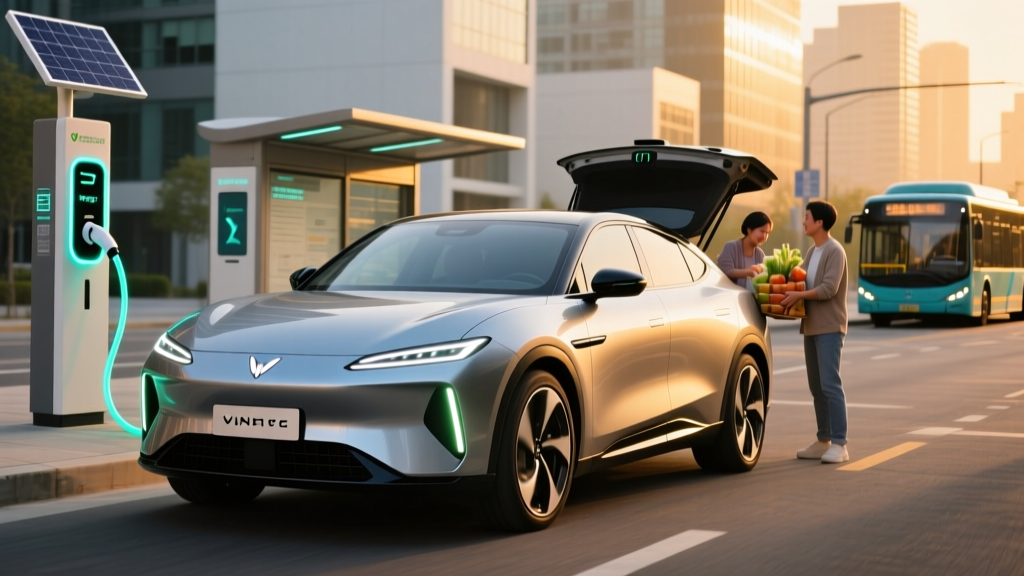
VinFast Auto has been one of the most polarizing names in the EV space since the Vietnamese automaker launched into the U.S. market. The VF 8, a midsize electric SUV aimed squarely at the Tesla Model Y and Hyundai Ioniq 5 segment, is the brand's volume play — and for 2026, it arrives with meaningful updates to battery capacity, software stability, and charging performance that address many of the early-production complaints. After spending time with the current model year and cross-referencing EPA data on fueleconomy.gov, here is what real buyers need to know before signing on the dotted line.
Quick Verdict: Where the VF 8 Stands in 2026
The 2026 VinFast VF 8 is a genuinely competitive midsize electric SUV that finally delivers on the promise of its spec sheet. With an EPA-estimated 264 miles of range (Eco trim), dual-motor AWD as standard, and a class-leading 10-year/125,000-mile battery warranty, it makes a credible case against established rivals. Its weaknesses — middling efficiency, an infotainment system that still lags behind Korean and American competitors, and limited public charging network optimization — are real but no longer deal-breaking. For buyers who prioritize warranty coverage and distinctive styling over peak efficiency, the VF 8 deserves a test drive.
| Spec | VF 8 Eco | VF 8 Plus |
|---|---|---|
| EPA Range | 264 mi | 243 mi |
| Battery (usable) | 82 kWh (NMC) | 82 kWh (NMC) |
| Drivetrain | Dual-motor AWD | Dual-motor AWD |
| Horsepower | 349 hp | 402 hp |
| 0–60 mph | 5.3 sec | 4.5 sec |
| DC Fast Charge (peak) | 155 kW | 155 kW |
| 10–80% DC Time | ~31 min | ~31 min |
| Level 2 Charge Rate | 11 kW | 11 kW |
| MPGe (combined) | 87 MPGe | 82 MPGe |
| Cargo (rear seats up) | 26.3 cu ft | 26.3 cu ft |
| Cargo (rear seats folded) | 58.7 cu ft | 58.7 cu ft |
| Base MSRP | $46,000 | $52,000 |
Range, Battery Chemistry, and Real-World Efficiency
The 2026 VF 8 uses an 87.7 kWh gross (82 kWh usable) nickel-manganese-cobalt (NMC) lithium-ion battery pack. VinFast stuck with NMC chemistry rather than shifting to lithium iron phosphate (LFP), which means higher energy density and better cold-weather performance at the cost of a slightly lower cycle life compared to LFP packs found in some Tesla Model Y Standard Range variants.
EPA Range: 264 miles (Eco) / 243 miles (Plus)
Real-World Expectation: In mixed driving at 65–75 mph highway speeds, expect approximately 220–240 miles from the Eco trim. In sustained cold weather (below 32°F / 0°C), range drops to roughly 180–200 miles due to cabin heating demands and reduced battery chemistry efficiency. City driving with regenerative braking set to maximum can push closer to or slightly above the EPA figure.
At 87 MPGe combined (Eco), the VF 8 trails efficiency leaders like the Hyundai Ioniq 5 (114 MPGe combined) and the Tesla Model Y Long Range (122 MPGe combined). This is the trade-off for the VF 8's heavier curb weight (~5,500 lbs) and less aerodynamic profile. Over 15,000 miles per year, the efficiency gap translates to roughly $120–$180 in additional electricity costs compared to a Model Y — noticeable but not catastrophic.
Charging Performance: DC Fast and Home Level 2
Charging speed remains one of the most scrutinized metrics for EV buyers, and the VF 8's 155 kW peak DC fast-charge rate places it in the middle of the pack — adequate for road trips but not class-leading.
| Charge Level | Power | Speed / Time |
|---|---|---|
| Level 1 (120V household) | ~1.4 kW | ~4 mi/hr added |
| Level 2 (240V home/public) | 11 kW | ~33 mi/hr added; full charge in ~8 hr |
| DC Fast Charge (CCS) | 155 kW peak | 10–80% in ~31 min; tapers significantly above 80% |
The charge curve matters here. The VF 8 holds near its 155 kW peak from roughly 10% to 45% state of charge (SoC), then steps down to approximately 100 kW through 65%, and further to around 60 kW by 80%. Above 80%, charging slows to under 30 kW — typical behavior for NMC chemistry with active thermal management, but it means that charging from 80–100% at a DC station is not time-efficient. On road trips, plan to charge in the 10–80% window and skip topping off unless you have time to spare.
For home charging, the 11 kW onboard charger is competitive. A full 0–100% charge takes approximately 8 hours on a Level 2 home charger (such as a ChargePoint Home Flex or Tesla Wall Connector with J1772 adapter), meaning overnight charging easily replenishes even a fully depleted battery. Note that VinFast uses the CCS1 connector in North America; if you rely on Tesla Superchargers, you will need a NACS-to-CCS adapter (available from VinFast and third-party suppliers) as the Supercharger network continues its transition to NACS-only access.
Performance and Driving Dynamics
Both VF 8 trims come with dual-motor all-wheel drive as standard — there is no single-motor RWD option. The Eco trim produces 349 horsepower and 369 lb-ft of torque, delivering a 5.3-second 0–60 mph time that is quick enough for confident highway merging. The Plus trim bumps output to 402 hp and 457 lb-ft, cutting the sprint to 4.5 seconds.
Ride quality is where the VF 8 surprises. The suspension tuning, developed with input from Magna Steyr, is composed over rough pavement and avoids the overly stiff calibration that plagues some performance-oriented EVs. Steering is light and somewhat numb — this is a comfort-tuned SUV, not a canyon carver. Regenerative braking offers three levels of intensity plus a one-pedal driving mode, though the pedal feel in one-pedal mode lacks the progressive modulation found in Hyundai's system.
Interior, Cargo Space, and Technology
The VF 8's cabin is spacious for its class. Rear-seat legroom measures 39.4 inches, which accommodates adults comfortably on longer trips. Cargo volume behind the second row is 26.3 cubic feet — slightly less than the Model Y's 30.2 cu ft — expanding to 58.7 cu ft with the 60/40 split rear seats folded. There is no front trunk (frunk); the space under the hood houses drive electronics.
The centerpiece of the interior is a 15.6-inch center touchscreen running VinFast's proprietary infotainment OS. The 2026 model year brings improved responsiveness and a redesigned UI after earlier software drew criticism for sluggishness and an over-reliance on touchscreen controls. Wireless Apple CarPlay and Android Auto are now standard, and a head-up display (HUD) is included on Plus trims. However, the system still lacks the intuitive polish of Hyundai's or Tesla's interfaces, and voice command recognition is inconsistent.
Driver-assistance features fall under VinFast's ADAS suite, which includes adaptive cruise control, lane centering, automatic emergency braking, blind-spot monitoring, and rear cross-traffic alert. This is a SAE Level 2 system — meaning the driver must remain fully engaged with hands on the wheel and eyes on the road at all times. It is not a self-driving system. The lane-centering function is competent on well-marked highways but can hunt in faded lane markings or construction zones.
Pricing, Trims, and Federal Tax Credit Eligibility
The 2026 VF 8 is offered in two trims:
- VF 8 Eco: $46,000 MSRP (before destination)
- VF 8 Plus: $52,000 MSRP (before destination)
Destination charges add approximately $1,350. The Plus trim adds a panoramic glass roof, head-up display, premium audio, heated and ventilated front and rear seats, and a upgraded interior material package.
| Trim | MSRP | Est. Federal Credit | Effective Price |
|---|---|---|---|
| VF 8 Eco | $46,000 | Up to $7,500* | ~$38,500 |
| VF 8 Plus | $52,000 | Up to $7,500* | ~$44,500 |
*Federal §30D tax credit eligibility depends on buyer income, battery component and critical mineral sourcing requirements, and MSRP caps. Per IRS guidelines, the credit can be transferred to the dealer at point of sale as an upfront discount. Consult a tax professional for your specific situation.
The VF 8 Eco falls under the $80,000 MSRP cap for SUVs under §30D rules. However, the critical minerals and battery component sourcing requirements have tightened significantly. VinFast has been working to localize battery supply chains, but buyers should verify current-year eligibility on the fueleconomy.gov tax credit lookup tool before purchase, as qualification status can change with model-year production updates.
Income caps also apply: modified adjusted gross income (MAGI) must not exceed $300,000 for joint filers, $225,000 for heads of household, or $150,000 for individual filers.
Warranty Coverage: A Standout Advantage
VinFast offers one of the most comprehensive warranty packages in the EV market:
- Battery warranty: 10 years / 125,000 miles (capacity retention above 70%)
- Powertrain warranty: 10 years / 125,000 miles
- Bumper-to-bumper: 7 years / 75,000 miles
- Roadside assistance: 7 years / 75,000 miles
For context, most competitors offer 8-year/100,000-mile battery warranties. VinFast's extra two years and 25,000 miles of battery coverage provide meaningful peace of mind, particularly for buyers concerned about long-term degradation and replacement cost. The 70% capacity retention threshold is standard for the industry — if your battery drops below 70% of original capacity within the warranty period, VinFast will repair or replace it.
Pros and Cons
Pros
- Class-leading 10-yr/125,000-mi battery and powertrain warranty
- Standard dual-motor AWD across all trims
- Comfortable, well-damped ride quality
- Spacious rear seat with 39.4 inches of legroom
- Distinctive exterior design stands out in a crowded segment
- Competitive pricing after potential tax credit
Cons
- Below-average efficiency (87 MPGe combined) vs. rivals
- DC fast-charge speed (155 kW peak) lags 200+ kW competitors
- Infotainment system improved but still not best-in-class
- No front trunk (frunk) for additional storage
- Cargo space (26.3 cu ft) trails Model Y and Ioniq 5
- Tax credit eligibility uncertain due to battery sourcing rules
Who Should Buy the VinFast VF 8?
The VF 8 is best suited for buyers who:
- Prioritize warranty coverage — the 10-year battery warranty is a genuine differentiator for long-term ownership confidence.
- Want standard AWD — no need to pay extra for a dual-motor upgrade; it comes on every VF 8.
- Commute and road-trip moderately — 264 miles of EPA range handles most daily driving and weekend trips with planned charging stops.
- Value distinctive design — the VF 8's Pininfarina-penned styling turns heads in a way that the ubiquitous Model Y does not.
It is less ideal for efficiency-obsessed buyers who want to minimize kWh consumption, road-trippers who regularly drive 400+ miles between stops (the 155 kW charge rate adds time), or those who need maximum cargo flexibility.
Frequently Asked Questions
What is the real-world range of the VinFast VF 8?
The EPA rates the VF 8 Eco at 264 miles and the Plus at 243 miles. In real-world highway driving at 70+ mph, expect 220–240 miles (Eco). Cold weather below freezing reduces this to approximately 180–200 miles. City driving with strong regenerative braking can match or slightly exceed the EPA figure.
How fast does the VF 8 charge at home and on the road?
At home on a Level 2 (240V) charger, the VF 8 accepts up to 11 kW, adding about 33 miles of range per hour and fully charging in roughly 8 hours. On DC fast chargers, it peaks at 155 kW and charges from 10–80% in approximately 31 minutes. Charging slows significantly above 80% SoC.
Does the VinFast VF 8 qualify for the $7,500 federal EV tax credit?
Potentially. The VF 8 Eco ($46,000 MSRP) and Plus ($52,000 MSRP) both fall under the $80,000 SUV MSRP cap. However, eligibility under IRS §30D also depends on battery component sourcing, critical mineral requirements, and buyer income limits ($150K individual / $300K joint). The credit can be applied at point of sale as an instant discount. Always verify current eligibility on fueleconomy.gov and consult a tax professional.
Is the VF 8 worth buying over a Tesla Model Y or Hyundai Ioniq 5?
It depends on your priorities. The Model Y offers superior efficiency (122 MPGe), faster Supercharger access, and more cargo space. The Ioniq 5 delivers faster DC charging (up to 240 kW) and better efficiency. The VF 8 counters with a longer battery warranty, standard AWD at a competitive price, and distinctive styling. If warranty peace of mind and all-weather capability top your list, the VF 8 is worth a serious look.
What connector does the VF 8 use for charging?
The VF 8 uses the CCS1 connector for DC fast charging and the J1772 connector for Level 2 AC charging in North America. To access Tesla Superchargers, you will need a NACS-to-CCS adapter, which VinFast and third-party manufacturers supply.
What is the battery replacement cost out of warranty?
VinFast has not published an official out-of-warranty battery replacement price for the VF 8. Based on comparable NMC packs in the 82 kWh range, industry estimates place full replacement between $12,000 and $18,000 including labor — a significant expense that underscores the value of the 10-year warranty coverage.