The BMW i4 Powertrain: What Replaces the Engine?
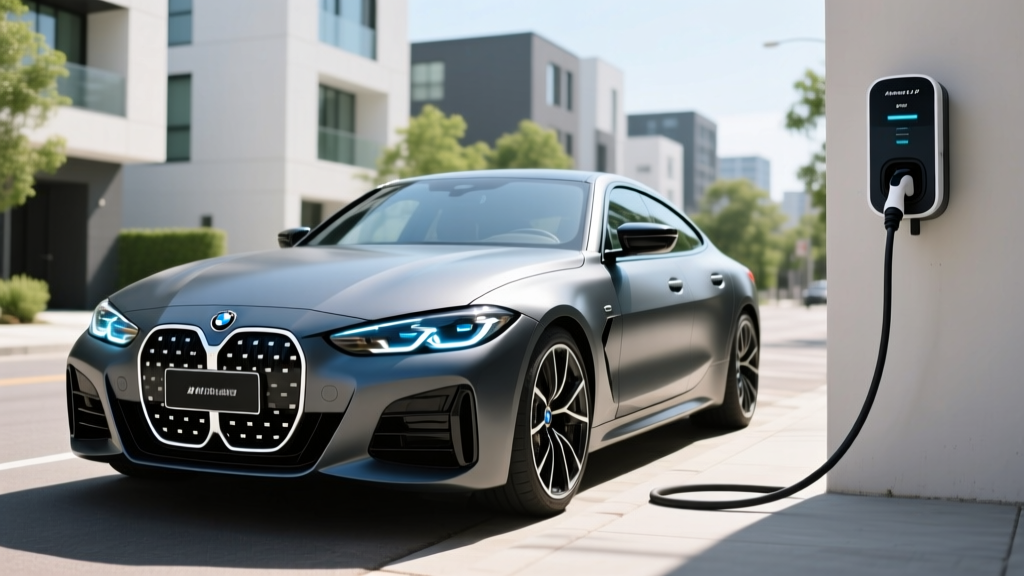
Search for "BMW i4 engine" and you'll find a common misconception. The BMW i4 has no internal combustion engine at all. It's a battery-electric gran coupe built on BMW's CLAR platform, powered by one or two electric motors drawing from a lithium-ion battery pack. What enthusiasts colloquially call the "i4 engine" is actually BMW's fifth-generation eDrive system — a highly integrated electric motor, power electronics, and single-speed reduction gearbox housed in a single unit.
For the 2025–2026 model years, BMW offers the i4 in three primary configurations in the US market: the single-motor rear-wheel-drive eDrive40, the dual-motor all-wheel-drive xDrive40, and the performance-tuned dual-motor M50. Each uses BMW's current-excitation synchronous motor (EESM) technology rather than permanent-magnet motors, giving BMW precise control over power delivery without relying on rare-earth magnets.
| Spec | eDrive40 | xDrive40 | M50 |
|---|---|---|---|
| Drivetrain | RWD (single motor) | AWD (dual motor) | AWD (dual motor) |
| Horsepower | 335 hp | 396 hp | 536 hp |
| Torque | 317 lb-ft | 443 lb-ft | 586 lb-ft |
| 0–60 mph | 5.5 sec | 4.6 sec | 3.3 sec (3.7 w/o boost) |
| Battery (usable) | 81.5 kWh NMC | 81.5 kWh NMC | 81.5 kWh NMC |
| EPA Range | 307 mi (19" wheels) | 282 mi | 245–270 mi |
| MPGe (combined) | 109 MPGe | 100 MPGe | 91 MPGe |
| Efficiency | 31 kWh/100mi | 34 kWh/100mi | 37 kWh/100mi |
| Max DC Charge | 205 kW | 205 kW | 205 kW |
| 10–80% DC Time | ~31 min | ~31 min | ~31 min |
| Level 2 Rate | 11 kW (~37 mi/hr) | 11 kW (~37 mi/hr) | 11 kW (~37 mi/hr) |
| Base MSRP | $57,900 | $61,900 | $69,900 |
Sources: EPA Fueleconomy.gov, BMW USA spec sheets. MPGe and range vary by wheel size and options. M50 0–60 time includes Sport Boost activation.
Real-World Range: What You'll Actually See
EPA sticker: 307 miles (19" aero wheels, 18" option can push to ~307–318 mi depending on MY). Expect 250–275 miles in mixed highway driving at 70–80 mph, and 210–240 miles in freezing temperatures (below 32°F) with cabin heating active. City and suburban driving with regenerative braking can approach or even slightly exceed the EPA figure.
The i4's 81.5 kWh usable battery (gross capacity is approximately 83.9 kWh) uses NMC (nickel manganese cobalt) chemistry — BMW sources cells from Samsung SDI and CATL depending on production batch. NMC offers higher energy density than LFP, which is necessary to fit this capacity into the i4's sedan floorpan, but it does mean BMW recommends daily charging to 80–90% rather than 100% for long-term battery health.
On a real-world road trip at sustained 75 mph in 65°F weather, the eDrive40 typically delivers 3.1–3.3 miles per kWh, translating to roughly 255–270 miles before you'd want to stop. The M50, with its dual motors and stickier performance tires, drops to around 2.7–2.9 mi/kWh on the same route — plan for 215–235 usable highway miles.
Cold weather is the i4's biggest range enemy, as it is for most EVs without a dedicated heat pump circuit optimized for extreme cold. BMW does include a heat pump in the i4 (standard from the 2024 model year forward), which mitigates but doesn't eliminate winter range loss. Expect a 20–30% reduction in sub-freezing conditions, consistent with industry averages for NMC packs.
Charging Speed and Infrastructure
The i4's 205 kW peak DC fast-charge rate places it solidly in the second tier of EV charging — behind Hyundai/Kia's 800V architecture (350 kW) but ahead of many legacy competitors still stuck at 150 kW. On a 350 kW Electrify America or Tesla Supercharger V4 station (with NACS adapter, included with 2025+ models), the i4 sustains roughly 180–205 kW from 10–40% state of charge before tapering progressively.
| Level | Power | Speed (approx.) | Use Case |
|---|---|---|---|
| Level 1 (120V) | 1.4 kW | ~4–5 mi/hr | Emergency / overnight trickle |
| Level 2 (240V, 48A) | 11 kW (vehicle-limited) | ~37 mi/hr | Home daily charging, full in ~8.5 hrs |
| DC Fast Charge | 205 kW peak | ~190 mi in 30 min | Road trips, 10–80% in ~31 min |
The charge curve matters more than peak kW. The i4 holds above 150 kW until roughly 55% SoC, then tapers to ~100 kW by 70%, and drops below 50 kW above 85%. This is why BMW's 10–80% claim of 31 minutes is honest — but a 10–95% fill will take closer to 50–55 minutes. Plan road-trip stops around 10–80% fills for optimal time efficiency.
For home charging, the i4's onboard charger accepts up to 11 kW on Level 2 (48 amps on a 60-amp circuit). A full charge from empty takes roughly 8.5 hours. Most owners charging overnight from 20–80% will need only 4–5 hours. Installation of a 240V/60A circuit typically runs $800–$2,000 depending on panel proximity and local permitting; a panel upgrade from 100A to 200A service adds $1,500–$3,500 if needed.
Connector note: Starting with the 2025 model year, BMW equips US-market i4 models with a native NACS (Tesla-style) charge port. A CCS-to-NACS adapter is available for older CCS1-equipped i4s (2022–2024). This opens access to the Tesla Supercharger network — currently the most reliable DC fast-charging infrastructure in North America.
Performance and Driving Dynamics
The "engine" question resolves quickly behind the wheel. The eDrive40's 335 hp and instant 317 lb-ft of torque deliver a 5.5-second 0–60 mph time that matches or beats the gasoline BMW 440i it effectively replaces. The single-motor RWD layout preserves the rear-drive balance BMW enthusiasts expect, and the i4's curb weight of roughly 4,680 lbs (about 600 lbs more than a gas 4 Series Gran Coupe) is managed well by the low-slung battery pack.
The M50 is a different animal. With 536 hp and Sport Boost engaged (a 10-second burst function), it hits 60 mph in 3.3 seconds — faster than an M4 Competition in a straight line. The dual-motor AWD system can torque-vector front-to-rear, and the adaptive M suspension manages the extra mass competently on twisty roads. The tradeoff is efficiency: the M50's 91 MPGe combined is roughly 18% lower than the eDrive40.
All i4 models feature BMW's adaptive recuperation system, which uses radar and navigation data to modulate regenerative braking intensity. Approaching a slower car or a speed-limit reduction, the i4 increases regen automatically. On open road, it coasts freely. You can also select manual regen levels or enable BMW's "B mode" for aggressive one-pedal driving around town.
Pricing, Tax Credits, and Ownership Costs
| Trim | Base MSRP | As-Tested (typical) | §30D Credit Eligible? |
|---|---|---|---|
| eDrive40 | $57,900 | $62,000–$66,000 | See eligibility notes below |
| xDrive40 | $61,900 | $66,000–$71,000 | See eligibility notes below |
| M50 | $69,900 | $74,000–$82,000 | See eligibility notes below |
Federal tax credit (§30D) eligibility for the BMW i4 is complicated. Under current IRS rules, the i4 faces several hurdles:
- MSRP cap: Sedans must be under $55,000 MSRP to qualify. The i4 eDrive40 starts at $57,900 — above the cap. However, if BMW classifies the Gran Coupe body style as a "SUV" for IRS purposes (as they successfully did for certain crossovers), the cap rises to $80,000. Check the current IRS eligible-vehicle list at irs.gov before purchasing.
- Income cap: Modified adjusted gross income must not exceed $150,000 (single), $225,000 (head of household), or $300,000 (joint filing).
- Battery sourcing: At least 50% of battery component value must be manufactured or assembled in North America (phasing up annually), and a percentage of critical minerals must be US-sourced or from FTA-partner countries. BMW's reliance on Samsung SDI and CATL cells — manufactured primarily in South Korea and China — has historically made the i4 ineligible for the full $7,500 credit, though partial credit ($3,750 for meeting one requirement) may apply in certain model years.
- Point-of-sale transfer: If eligible, you can transfer the credit to the dealer at purchase for an immediate price reduction rather than waiting for tax filing.
Bottom line: Do not assume the i4 qualifies for the $7,500 federal credit. Verify on the IRS eligible-vehicle list for the specific model year and production batch. BMW's own website and your local dealer should confirm current eligibility. State incentives (California's CVRP, Colorado's innovative motor vehicle credit, etc.) may stack on top but vary by jurisdiction — check your state's energy office.
Five-year ownership costs favor the i4 over a gas 4 Series primarily through fuel savings (electricity at $0.14/kWh national average = ~$0.043/mile vs. premium gasoline at ~$0.16/mile for the 440i). Insurance premiums for the i4 run 10–20% higher than the gas equivalent, and BMW's maintenance costs remain premium-tier even without oil changes. Depreciation has been steeper than Tesla but is stabilizing as the EV market matures.
Interior, Cargo, and Daily Practicality
The i4 shares the 4 Series Gran Coupe's cabin, which means premium materials, a driver-focused cockpit, and BMW's Curved Display running iDrive 8.5. The 14.9-inch touchscreen and 12.3-inch instrument cluster merge behind a single glass panel. Wireless Apple CarPlay and Android Auto are standard, along with a Harman Kardon surround-sound system on most trims.
Cargo space: The i4 offers 16.6 cubic feet behind the rear seats (the liftback hatch is more practical than a traditional sedan trunk) and 45.2 cu ft with the 40/20/40 rear seats folded. There is no front trunk (frunk) — BMW uses that space for power electronics. Rear legroom is 34.9 inches, adequate for adults on shorter trips but tighter than a Tesla Model 3's 35.3 inches.
Driver assistance: BMW's Driving Assistant Professional package ($1,700) adds Highway Assistant (hands-off, eyes-on driving up to 85 mph on divided highways), automatic lane-change assist, and extended traffic jam assist. This is an SAE Level 2 system — the driver must remain attentive and keep eyes on the road, monitored by a cabin-facing camera. It is not autonomous driving. The standard Driving Assistant includes forward collision warning, automatic emergency braking, lane departure warning, and blind-spot detection.
Pros and Cons: The Honest Assessment
- Class-leading driving dynamics — genuine BMW steering feel and chassis balance in an EV
- 307-mile EPA range (eDrive40) is competitive and real-world achievable in moderate conditions
- 205 kW DC charging with NACS access (2025+) opens Supercharger network
- Premium interior quality exceeds Tesla Model 3 and rivals Mercedes EQB/Polestar 2
- Adaptive recuperation reduces brake wear and simplifies daily driving
- Liftback cargo area more practical than typical sedan trunks
- Federal tax credit eligibility uncertain — MSRP and battery-sourcing rules are obstacles
- No frunk; cargo space is liftback-only
- Rear seat legroom is tight for taller passengers on long trips
- 20–30% cold-weather range loss is significant in northern climates
- DC charge speed (205 kW) trails Hyundai Ioniq 6 (350 kW on 800V architecture)
- M50 efficiency penalty is steep — 245 mi EPA on 19" performance wheels
Who Should Buy the BMW i4?
Choose the i4 eDrive40 if: You want a premium electric daily driver with genuine BMW driving dynamics, commute under 60 miles round-trip with home charging, and value interior quality over cutting-edge charge speed. It's the best value in the lineup and the efficiency sweet spot.
Choose the i4 M50 if: You prioritize acceleration and handling over range, have reliable home and destination charging, and view the car as a performance vehicle that happens to be electric. Accept the 245-mile EPA range as the tradeoff.
Look elsewhere if: You need maximum range (consider the Hyundai Ioniq 6 at 361 mi EPA or Tesla Model 3 Long Range at 341 mi), you require guaranteed $7,500 federal tax credit eligibility, you regularly carry rear-seat adults on long trips, or you live in a region with limited DC fast-charging infrastructure and need every mile of range.
Warranty and Long-Term Battery Outlook
BMW covers the i4's high-voltage battery for 8 years or 100,000 miles (whichever comes first) against defects and capacity loss below 70% of original capacity. The general vehicle warranty is 4 years/50,000 miles, with 4 years of complimentary scheduled maintenance — a genuine value-add that Tesla doesn't match.
NMC battery degradation in BMW's Gen5 eDrive system has proven moderate in early real-world data. Owners report approximately 5–8% capacity loss over the first 50,000 miles, with degradation curves flattening significantly after the initial break-in period. Following BMW's recommendation to charge to 80–90% daily (reserving 100% for road trips) and preconditioning the battery before DC fast charging will help preserve long-term State of Health (SoH).
Battery replacement cost, should it be needed out of warranty, is estimated at $12,000–$18,000 for the full pack — though individual module replacement may be possible at lower cost. BMW has not published official module-replacement pricing.
Frequently Asked Questions
Does the BMW i4 have an engine?
No. The BMW i4 is a fully electric vehicle (BEV) with no internal combustion engine. It uses BMW's fifth-generation eDrive electric motor system. The eDrive40 has one rear motor (335 hp); the xDrive40 and M50 have dual motors (396 hp and 536 hp respectively).
What is the real-world range of the BMW i4?
The eDrive40 is EPA-rated at 307 miles. In real-world highway driving at 70–80 mph in moderate temperatures, expect 250–275 miles. In freezing weather, expect 210–240 miles. The M50 delivers roughly 215–235 highway miles in moderate conditions.
Does the BMW i4 qualify for the $7,500 federal EV tax credit?
Likely not the full amount. The i4's MSRP exceeds the $55,000 sedan cap (unless classified as an SUV by the IRS, which raises the cap to $80,000), and its battery sourcing from Samsung SDI/CATL has historically failed to meet critical-mineral and component-manufacturing requirements. Always verify current eligibility on the IRS eligible vehicle list before purchasing. Income caps also apply.
How fast does the BMW i4 charge at home and on the road?
At home on a Level 2 (240V/48A) charger, the i4 accepts up to 11 kW, adding roughly 37 miles of range per hour — a full charge takes about 8.5 hours. On DC fast chargers, it peaks at 205 kW and charges from 10–80% in approximately 31 minutes.
Is the BMW i4 better than the Tesla Model 3?
It depends on priorities. The i4 offers superior interior materials, a more traditional driving experience, and liftback practicality. The Model 3 Long Range delivers more EPA range (341 mi), faster DC charging (250 kW), guaranteed Supercharger access, and a lower starting price ($44,130). The Model 3 is more likely to qualify for the federal tax credit. For driving engagement and build quality, the i4 wins; for value and efficiency, the Model 3 leads.
What battery chemistry does the BMW i4 use?
The BMW i4 uses NMC (nickel manganese cobalt) lithium-ion cells supplied by Samsung SDI and CATL. NMC offers high energy density suited to the i4's packaging constraints but benefits from daily charging to 80–90% rather than 100% to maximize long-term battery health.