Who Actually Makes the Lucid Vehicle?
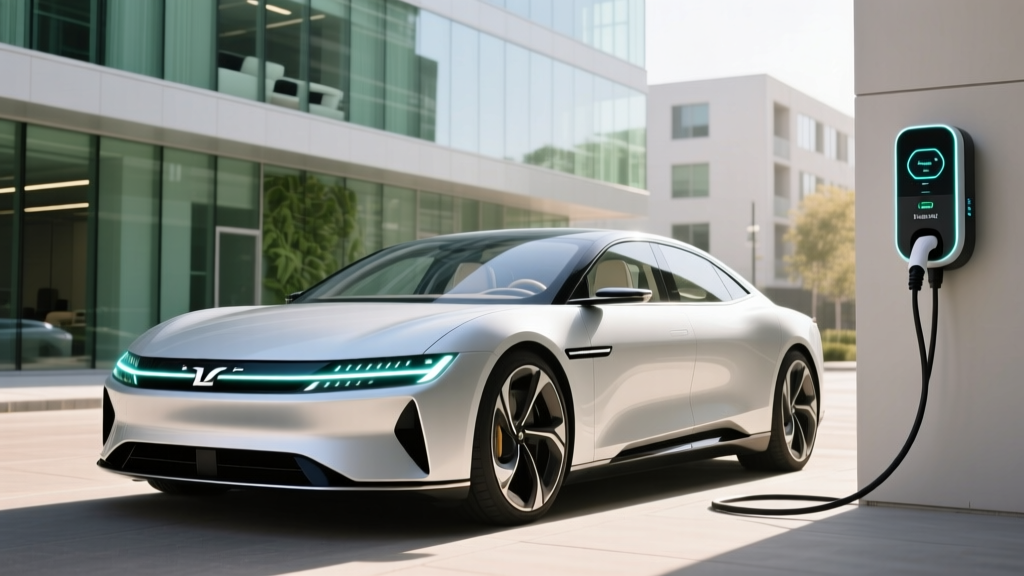
The short answer: Lucid Group, Inc. — a publicly traded American EV company headquartered in Newark, California, with its production facility in Casa Grande, Arizona (branded AMP-1). Lucid began life in 2007 as Atieva, a battery-technology supplier, before pivoting to building its own luxury sedan. The company went public via a SPAC merger in July 2021 and began delivering the Lucid Air sedan later that year. Former Tesla Model S chief engineer Peter Rawlinson has led the company as CEO and CTO through most of its development arc, and Lucid's powertrain tech now supplies Aston Martin's upcoming EVs — a validation of its engineering depth.
For shoppers asking "who makes the Lucid vehicle," the bigger question is whether the company's in-house motor, inverter, and battery-pack engineering actually translates into a better ownership experience than a Tesla Model S, Mercedes EQS, or BMW i7. This review walks through the 2026 Lucid Air lineup with the numbers that matter.
2026 Lucid Air at a Glance: Specs That Matter
| Spec | Air Pure RWD | Air Touring AWD | Air Grand Touring | Air Sapphire |
|---|---|---|---|---|
| EPA Range | 419 mi | 425 mi | 516 mi | 427 mi |
| Battery (usable) | 88 kWh NMC | 112 kWh NMC | 112 kWh NMC | 118 kWh NMC |
| Horsepower | 430 hp | 620 hp | 819 hp | 1,234 hp |
| 0-60 mph | 5.0 s | 3.4 s | 3.0 s | 1.89 s |
| Drivetrain | RWD (single motor) | AWD (dual) | AWD (dual) | AWD (tri-motor) |
| MPGe (combined) | 140 MPGe | 131 MPGe | 131 MPGe | 115 MPGe |
| Efficiency | 24 kWh/100mi | 26 kWh/100mi | 26 kWh/100mi | 29 kWh/100mi |
| Base MSRP | $69,900 | $77,900 | $125,900 | $249,000 |
Source: EPA / fueleconomy.gov and Lucid Motors official specifications. Figures reflect 2026 model-year trims.
Real-World Range: What the 516-Mile Sticker Actually Means
EPA sticker: up to 516 miles (Grand Touring with 19" Aero wheels).
Real-world expectation: 380–440 miles on a mixed highway trip at 70–75 mph; 300–340 miles in sub-freezing winter conditions with cabin heat.
Lucid's efficiency advantage is genuine. The Air's permanent-magnet reluctance motors and 900V+ electrical architecture waste less energy as heat than rival sedans. On a Los Angeles-to-Las Vegas run at 75 mph and 70°F, the Grand Touring typically delivers around 420 miles before hitting a 10% state of charge. Push to 85 mph or encounter headwinds through the desert, and that number drops toward 370.
Cold weather is the equalizer. At 25°F, expect 20–25% range reduction on any EV, and the Air is no exception — preconditioning the battery while plugged in mitigates some loss. The Pure RWD's smaller 88 kWh pack is more sensitive to cold because it has less thermal mass to buffer, so northern-climate buyers should lean toward the 112 kWh Touring or Grand Touring if range predictability matters.
Charging: 300 kW Peak, But Read the Curve
| Charging Level | Power | Speed / Time |
|---|---|---|
| Level 1 (120V household) | ~1.4 kW | ~4 miles per hour |
| Level 2 (240V home, 48A) | 11.5 kW | ~38 miles per hour |
| DC Fast Charge (peak) | 300 kW | 10–80% in ~20 min (Grand Touring) |
| DC Fast Charge (sustained avg 10–80%) | ~200 kW avg | ~250 miles added in 20 min |
Lucid's 900V architecture allows the Grand Touring to hit 300 kW at compatible chargers (Ionity in Europe, select Electrify America 350-kW stalls in the U.S.). However, that peak only holds between roughly 10% and 35% state of charge. Above 50%, the curve tapers sharply, and above 80% it slows to under 50 kW — standard lithium-ion behavior to protect the NMC cells.
For home charging, Lucid includes a mobile connector and offers the Lucid Connected Home Wallbox at 11.5 kW (48 amps on a 60-amp circuit). A full overnight charge from 20% adds roughly 300 miles — more than enough for any daily commute. Expect $800–$1,500 for a professional Level 2 install depending on panel proximity; homes with older 100-amp panels may need a $2,000–$3,500 service upgrade.
Connector note: 2026 Air models ship with a NACS (Tesla-style) charge port, opening access to the Tesla Supercharger network via native plug. Earlier CCS-equipped Airs can use Lucid's NACS adapter for Supercharger access.
Pricing, Trims, and the Federal Tax Credit Reality
| Trim | MSRP | §30D Credit Eligible? | Effective Price* |
|---|---|---|---|
| Air Pure RWD | $69,900 | Potentially — see rules | ~$62,400 if eligible |
| Air Touring AWD | $77,900 | No — above MSRP cap | $77,900 |
| Air Grand Touring | $125,900 | No — above MSRP cap | $125,900 |
| Air Sapphire | $249,000 | No — above MSRP cap | $249,000 |
*Effective price assumes full $7,500 §30D credit applied at point of sale.
Under IRS §30D rules, the sedan MSRP cap is $55,000 — which immediately disqualifies every Air trim except potentially the Pure RWD when optioned at its base sticker. However, Lucid has structured the Pure's base configuration at $69,900, which still exceeds the cap. As of the current tax year, no Lucid Air trim qualifies for the new-vehicle §30D credit on MSRP grounds alone.
There are two workarounds worth discussing with a tax professional:
- Commercial clean vehicle credit (§45W): If purchased through a business entity, the Air may qualify for up to $7,500 under different rules that lack the MSRP cap.
- Used EV credit (§25E): A pre-owned Air sold for $25,000 or less could qualify a lower-income buyer for up to $4,000 — rare in the current market but theoretically possible on high-mileage examples.
Income caps for §30D apply regardless: $150,000 single / $300,000 joint MAGI. Always verify against the latest IRS guidance before purchase.
Driving Dynamics, Interior, and Tech
Lucid's engineering signature is miniaturization. The Air's drive units are small enough to preserve a genuine rear-seat footwell and a 32 cu-ft trunk plus a 10 cu-ft frunk — more total cargo volume than a Model S. Rear legroom measures 37.6 inches, comfortably fitting six-foot adults on long trips.
The 34-inch curved "Glass Cockpit" display floats above the dash, with a secondary lower touchscreen handling climate and media. Software updates are OTA. The available DreamDrive Pro ADAS suite uses 32 sensors including LiDAR and offers highway lane-centering and adaptive cruise — SAE Level 2, meaning the driver must remain engaged and eyes-forward at all times. It is not autonomous driving.
Ride quality is a standout: the Air uses a multi-link front and integral-link rear suspension with available air springs, delivering a compliant grand-touring feel closer to a Porsche Taycan than a Tesla. Cabin noise at 70 mph measures around 64 dB — among the quietest in the segment.
Notable drawbacks: The Air's infotainment, while visually striking, lacks native Apple CarPlay and Android Auto (Lucid uses its own phone projection). The service-center network remains sparse outside California, Arizona, Texas, Florida, and the Northeast — plan logistics if you live in the Mountain West or Plains. Rear visibility is compromised by the sloping roofline; the digital rearview mirror helps but has a learning curve.
Warranty and Long-Term Ownership
- Basic vehicle: 4 years / 50,000 miles
- Battery & drive units: 8 years / 100,000 miles (12 years / unlimited miles on the battery for the original purchaser on some 2024+ model years)
- Capacity retention: Lucid warrants the pack will retain at least 70% of original capacity within the warranty period — consistent with industry norms
NMC chemistry in the Air delivers high energy density but is slightly more prone to calendar degradation than LFP. Best practice: set daily charge limit to 80% and only charge to 100% before long trips. Owners reporting into high-mileage forums show roughly 6–8% capacity loss at 60,000 miles — in line with liquid-cooled NMC packs industry-wide.
Who Should Buy the Lucid Air — And Who Shouldn't
Choose the Lucid Air if: You want the longest-range luxury sedan on the market, value efficiency over badge prestige, regularly drive 300+ miles between charges, and live within reach of a Lucid service center.
Look elsewhere if: You need third-row seating (consider the Rivian R1S), want the widest public charging network without adapters (Tesla Model S), or prioritize dealer-based service infrastructure (Mercedes EQS, BMW i7).
For road-trippers and high-mileage commuters, the Grand Touring's 516-mile EPA rating is genuinely transformative — you can drive LA to San Francisco on a single charge at legal highway speeds. Families who prioritize cargo flexibility may prefer Lucid's upcoming Gravity SUV, but as a sedan, the Air's interior volume is class-leading.
Pros and Cons
Pros
- Longest EPA range of any production sedan (516 mi)
- Class-leading efficiency (26 kWh/100mi)
- Spacious rear seat and frunk+trunk combo
- 300-kW peak charging on 900V architecture
- NACS native port on 2026 models
Cons
- No federal §30D credit eligibility (MSRP cap)
- Limited service-center footprint nationally
- No native Apple CarPlay / Android Auto
- Premium pricing; Touring starts at $77,900
- LiDAR-equipped DreamDrive still Level 2, not autonomous
Frequently Asked Questions
Who owns Lucid Motors?
Lucid Group, Inc. is publicly traded (NASDAQ: LCID). Saudi Arabia's Public Investment Fund (PIF) holds roughly 60% of shares, making it the dominant investor but not a traditional parent company. Manufacturing is American — the Casa Grande, Arizona plant is the company's sole production site.
What is the real-world range of the Lucid Air?
Expect 380–440 miles on a 70-mph highway trip in moderate weather for the Grand Touring, and roughly 300–340 miles in sub-freezing conditions. The Pure RWD delivers around 320–360 highway miles real-world.
How fast does the Lucid Air charge at home and on the road?
At home on a 48-amp Level 2 charger, the Air gains roughly 38 miles per hour. On a 300-kW DC fast charger, the Grand Touring reaches 80% from 10% in about 20 minutes, adding roughly 250 miles of range.
Does the 2026 Lucid Air qualify for the federal EV tax credit?
Under current §30D rules, no — the $55,000 sedan MSRP cap disqualifies every Air trim. Business buyers may be eligible under §45W; consult a tax professional. Always verify current-year rules at IRS.gov.
Is the Lucid Air worth buying over a Tesla Model S or Mercedes EQS?
The Air wins on range, efficiency, and rear-seat space. The Model S wins on Supercharger network access (though NACS narrows this gap) and software maturity. The EQS wins on dealer service infrastructure and brand cachet. If range-per-charge is your top priority, the Air Grand Touring has no equal.
Is Lucid's DreamDrive actually self-driving?
No. DreamDrive Pro is an SAE Level 2 driver-assistance system — the driver must remain attentive, hands on or near the wheel, and ready to take over. Only Level 4 services like Waymo operate without a human driver in geofenced areas.