Quick Verdict: The EV That Powers Your Life Beyond the Road
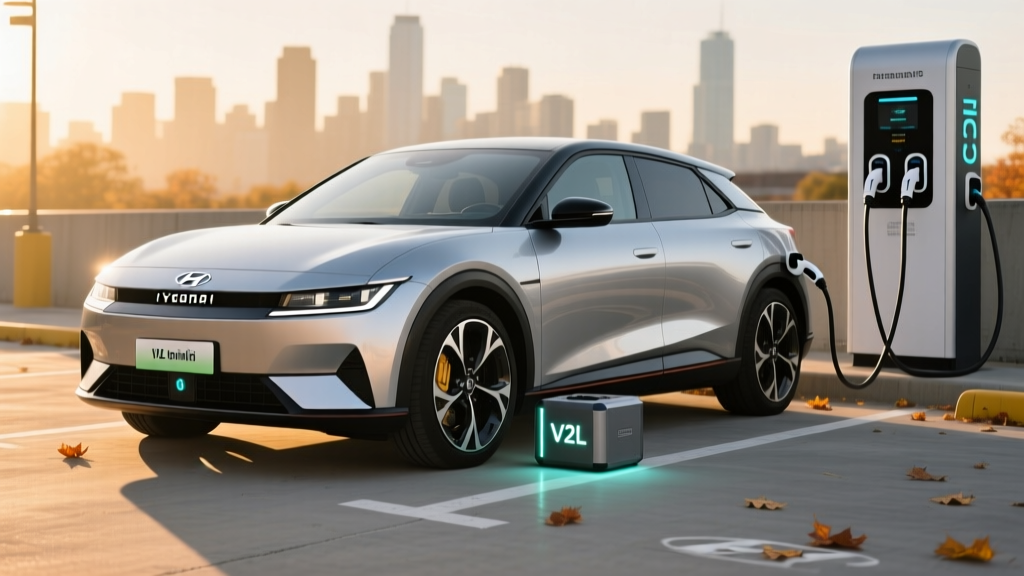
The 2026 Hyundai Ioniq 5 isn't just a commuter — it's a rolling generator. With its Vehicle-to-Load (V2L) system capable of delivering up to 3.6 kW of continuous AC power, the Ioniq 5 can run everything from a campsite coffee maker to a sump pump during an outage. But beyond that party trick, it's a genuinely excellent electric crossover: fast-charging on 800V architecture, spacious, and priced to capture the full federal tax credit. If you need an EV that does double duty as a backup power source, the V2L-equipped Ioniq 5 is the segment benchmark.
| Spec | SE/SEL RWD | SEL AWD | Limited AWD | XRT AWD |
|---|---|---|---|---|
| EPA Range | 303 mi | 290 mi | 263 mi | 258 mi |
| Usable Battery | 84 kWh (NMC 811 lithium-ion) | |||
| Horsepower | 168 hp | 320 hp | 320 hp | 320 hp |
| 0–60 mph | 7.0 sec | 4.5 sec | 4.5 sec | 4.5 sec |
| Peak DC Charge | 250 kW (800V architecture) | |||
| 10–80% DC Time | ~18 minutes | |||
| Level 2 Home Charge | 10.9 kW (~37 mi/hr) | |||
| V2L Output | 3.6 kW continuous (interior outlet + exterior adapter) | |||
| EPA Efficiency | 134 MPGe | 113 MPGe | 110 MPGe | 107 MPGe |
| Base MSRP | $42,600 | $46,600 | $52,200 | $49,600 |
Real-World Range: What the EPA Sticker Doesn't Tell You
The RWD Long Range Ioniq 5 posts an EPA-estimated 303 miles, which is competitive with the Tesla Model Y Long Range (320 mi) and well ahead of the Ford Mustang Mach-E Extended Range RWD (~320 mi on paper, but AWD only). The dual-motor AWD drops to 290 miles, and the Limited AWD — with its larger 20-inch wheels and heavier equipment load — falls to 263 miles.
EPA 303 mi (RWD Long Range). Expect ~260–275 mi on mixed highway driving at 70 mph in moderate temperatures. In sustained winter conditions (below 30°F), plan for ~220–240 mi — the Ioniq 5's standard heat pump helps, but cold still saps 15–25% of capacity. City regenerative braking can push returns close to the EPA figure or slightly above. The AWD Limited's 263-mi EPA rating translates to roughly ~220 mi highway in fair weather.
Hyundai equips the Ioniq 5 with a standard heat pump across all trims, which is critical for preserving range in cold climates — something not every competitor includes. The 84 kWh usable battery uses NMC (nickel-manganese-cobalt) chemistry, prioritizing energy density over the cycle-life longevity of LFP packs found in some Tesla and BYD models.
Charging Speed: 800V Architecture Still Sets the Pace
The Ioniq 5's 800-volt electrical architecture remains one of its strongest engineering advantages. On a 350 kW DC fast charger (such as Electrify America's newest stalls), the Ioniq 5 peaks at 250 kW and sustains above 200 kW through the 10–60% state of charge window. The 10–80% charge takes approximately 18 minutes — among the fastest in the sub-$60K EV segment.
| Charge Level | Power (kW) | Rate / Time | Connector |
|---|---|---|---|
| Level 1 (120V outlet) | ~1.4 kW | ~5 mi/hr | J1772 / NACS |
| Level 2 (240V home) | 10.9 kW | ~37 mi/hr; full charge ~8.5 hr | J1772 / NACS |
| DC Fast Charge (peak) | 250 kW | 10–80% in ~18 min | CCS1 (native) / NACS (adapter) |
Charging curve reality: Peak 250 kW only holds between roughly 10–55% SoC. After 60%, the rate tapers to ~150 kW, and above 80% it drops sharply to protect battery longevity — a ~45-minute session to 100% is typical. For road trips, plan stops at 10–80% to minimize time at the charger.
For 2026, Hyundai ships the Ioniq 5 with a CCS1 port natively but includes a NACS adapter for Tesla Supercharger access. The onboard charger accepts up to 10.9 kW on Level 2, meaning a full overnight charge on a 48-amp home circuit is standard.
V2L Explained: 3.6 kW of Onboard Power
This is where the "V2L Ioniq 5" search earns its keep. The Vehicle-to-Load system delivers 3.6 kW of continuous AC power — enough to simultaneously run a refrigerator (~800W), several LED lights (~100W total), a laptop charger (~90W), and a space heater (~1,500W) without tripping the system.
How it works:
- Interior V2L outlet: A standard 120V AC outlet located under the rear bench seat (SEL and above trims). Plug in directly like a wall outlet.
- Exterior V2L adapter: Plugs into the charge port and provides a weatherproof 120V/240V outlet. Available as an accessory (~$350 MSRP).
- Battery management: You can set a minimum SoC reserve (e.g., 20%) so V2L won't drain your driving range below a safe threshold.
Practical use cases:
- Tailgating and camping — power a portable fridge, blender, electric grill, or TV
- Job site — run power tools (circular saw ~1,800W, drill ~600W) without a generator
- Home backup — during outages, run essentials (fridge, Wi-Fi router, lights) for 12–24+ hours depending on SoC
- Remote work — power a full laptop + monitor setup from the back seat
For context, 3.6 kW is roughly equivalent to a standard 30-amp RV outlet. It's more than the Ford F-150 Lightning's Pro Power Onboard base system (2.0 kW) but less than the Lightning's max 9.6 kW option. For most non-construction scenarios, 3.6 kW is plenty.
Performance and Driving Dynamics
The single-motor RWD Ioniq 5 makes 168 hp and hits 60 mph in 7.0 seconds — adequate for merging and passing but not thrilling. The dual-motor AWD variants (320 hp, 4.5 sec 0–60) feel properly quick, with instant torque that makes highway overtakes effortless.
Ride quality is composed and slightly firm, tuned for European-style composure rather than plush American isolation. The steering is precise if light, and the low center of gravity (battery pack under the floor) keeps body roll well-controlled through corners. Regenerative braking offers four levels selectable via steering-wheel paddles, including an i-Pedal mode for true one-pedal driving down to a full stop.
Towing: The AWD Ioniq 5 is rated for 2,300 lbs (braked trailer). That's enough for a small utility trailer or a pair of jet skis, but not a travel trailer. The RWD is not rated for towing.
Interior, Cargo, and Technology
The Ioniq 5's cabin uses Hyundai's "Parametric Pixel" design language — retro-futuristic, airy, and genuinely spacious. The flat floor (no transmission tunnel) and long 118.1-inch wheelbase create rear-seat legroom that embarrasses many midsize SUVs.
- Front headroom: 39.6 in
- Rear legroom: 39.4 in (class-leading — beats the Model Y's ~36 in)
- Cargo behind rear seats: 27.2 cu ft
- Cargo with rear seats folded: 59.3 cu ft
- Frunk (front trunk):strong> 2.0 cu ft (AWD) / 3.4 cu ft (RWD) — enough for a charging cable bag, not a suitcase
Tech highlights:
- Dual 12.3-inch curved displays (instrument cluster + infotainment) with wireless Apple CarPlay and Android Auto
- Hyundai Digital Key 2 (NFC + UWB) — use your phone as the key fob
- Highway Driving Assist 2 (HDA2) — SAE Level 2 adaptive cruise + lane centering with lane-change assist
- Remote Smart Parking Assist — the car parks itself in tight spaces while you stand outside
- Over-the-air (OTA) software updates for powertrain, ADAS, and infotainment
Notable drawbacks: The touch-capacitive climate controls below the main screen are fiddly to use while driving. The frunk is disappointingly small on AWD models. And the swooping roofline cuts into rearward visibility — a backup camera is essential, though standard.
Pricing, Trims, and Federal Tax Credit
The 2026 Ioniq 5 lineup starts at $42,600 for the SE Standard Range (smaller 58 kWh battery, 245-mi range) and climbs to $52,200 for the Limited AWD. The volume seller is the SEL AWD at $46,600 — well-equipped with V2L, heated seats, and HDA2.
| Trim | MSRP | Est. §30D Credit | Effective Price |
|---|---|---|---|
| SE Standard Range RWD | $42,600 | Up to $7,500 | ~$35,100 |
| SE Long Range RWD | $45,100 | Up to $7,500 | ~$37,600 |
| SEL AWD | $46,600 | Up to $7,500 | ~$39,100 |
| XRT AWD | $49,600 | Up to $7,500 | ~$42,100 |
| Limited AWD | $52,200 | Up to $7,500 | ~$44,700 |
Tax credit eligibility (IRS §30D — 2026 rules): The Ioniq 5 qualifies for up to $7,500 in federal tax credits, but eligibility depends on several conditions that vary by buyer:
- MSRP cap: The Ioniq 5 is classified as an SUV, so the cap is $80,000 — all trims clear this easily.
- Income cap: Modified AGI must not exceed $150,000 (single), $225,000 (head of household), or $300,000 (joint).
- Battery sourcing: The $7,500 credit splits into two $3,750 halves — one for critical minerals and one for battery component manufacturing. Hyundai has shifted significant battery sourcing to the U.S. (via the Georgia Metaplant), and as of 2026, most Ioniq 5 trims qualify for the full $7,500. However, sourcing requirements tighten annually — always verify on the fueleconomy.gov tax credit lookup for your specific VIN before purchasing.
- Point-of-sale transfer: Since 2024, buyers can transfer the credit to the dealer for an immediate price reduction at purchase rather than waiting to claim it on their tax return.
Check current eligibility details at IRS.gov §30D or consult a tax professional — rules and sourcing certifications can change mid-year.
Warranty and Long-Term Ownership
Hyundai backs the Ioniq 5 with one of the strongest warranty packages in the EV segment:
- Battery & powertrain: 10 years / 100,000 miles (covers battery capacity below 70% of original)
- New vehicle limited: 5 years / 60,000 miles
- Anti-perforation: 7 years / unlimited miles
- Roadside assistance: 5 years / unlimited miles
The 70% capacity retention threshold over 10 years is standard for the industry. Real-world degradation data from 2022–2024 Ioniq 5 owners shows an average of ~5–7% loss after 60,000 miles, which is within expectations for NMC chemistry with active thermal management. Hyundai's 800V system and battery preconditioning for DC fast charging help mitigate long-term degradation from repeated high-power charging.
How It Stacks Up Against Key Rivals
The Ioniq 5 competes in the most crowded EV crossover segment. Here's how it compares on the metrics that matter:
- vs. Tesla Model Y Long Range AWD ($48,000, 320 mi EPA): The Model Y wins on range and Supercharger network access (though the gap is closing with NACS adapters). The Ioniq 5 wins on interior space, V2L capability, ride comfort, and physical controls. Charging speed is comparable.
- vs. Ford Mustang Mach-E Extended Range AWD (~$48,000, 290 mi EPA): The Mach-E is sportier to drive but lacks V2L, charges slower (~150 kW peak), and has a tighter rear seat. The Ioniq 5 is the more practical family hauler.
- vs. Kia EV6 GT-Line AWD (~$48,500, 274 mi EPA): The EV6 shares the Ioniq 5's 800V platform and 250 kW charging. It's styled more aggressively with slightly less rear headroom and cargo space. V2L is available. Pick the EV6 for sportier looks, the Ioniq 5 for practicality.
Choose the Model Y if: Maximum range and the densest fast-charging network are your top priorities, and you prefer Tesla's software ecosystem.
Choose the Mach-E if: You want sportier handling and Ford's dealer network, and don't need V2L.
- Class-leading 250 kW DC charging (18 min 10–80%)
- 3.6 kW V2L — genuine utility for camping, outages, job sites
- Spacious rear seat (39.4 in legroom) with flat floor
- Standard heat pump across all trims
- 10-year/100,000-mile battery warranty
- Full $7,500 §30D credit eligibility (most trims, qualifying buyers)
- Small frunk (2.0 cu ft AWD), especially vs. Mach-E and F-150 Lightning
- Touch-capacitive climate controls are distracting while driving
- RWD base model feels underpowered at 168 hp
- Limited AWD range drops to 263 mi EPA due to 20-inch wheels
- CCS1 native port requires adapter for Tesla Superchargers
- No Level 3/4 autonomous driving option (HDA2 is Level 2 only)
Who Should Buy the V2L Ioniq 5?
Best for: Outdoor enthusiasts who camp or tailgate regularly, homeowners in areas prone to power outages, tradespeople who need portable power without a gas generator, and families who want a spacious, fast-charging daily driver with the flexibility to power devices beyond the car itself.
Less ideal for: High-mileage road-trippers who prioritize maximum range over features (consider the Model Y Long Range or Ioniq 5 RWD and skip the big wheels). Those who need serious towing capacity should look at the F-150 Lightning or Rivian R1S.
Frequently Asked Questions
What is the real-world range of the 2026 Hyundai Ioniq 5?
The EPA rates the RWD Long Range at 303 miles, but expect ~260–275 miles in mixed highway driving and ~220–240 miles in cold winter conditions. The AWD Limited's 263-mi EPA rating yields roughly 220 miles highway in fair weather. The standard heat pump helps mitigate cold-weather losses compared to EVs without one.
How fast does the Ioniq 5 charge at home and on DC fast chargers?
On a 350 kW DC fast charger, the Ioniq 5 peaks at 250 kW and charges from 10–80% in about 18 minutes. At home on a Level 2 (240V, 48-amp) charger, it accepts 10.9 kW, adding about 37 miles of range per hour and fully charging in roughly 8.5 hours.
Does the 2026 Ioniq 5 qualify for the $7,500 federal EV tax credit?
Most trims qualify for the full $7,500 under IRS §30D for 2026, as Hyundai has shifted battery sourcing to its Georgia plant. However, eligibility depends on your income (AGI caps of $150K single / $300K joint), and sourcing rules tighten annually. Verify your specific VIN at fueleconomy.gov and consult a tax professional. The credit can be transferred to the dealer at point of sale for an instant price reduction.
How much power does the Ioniq 5's V2L system provide?
The V2L system delivers 3.6 kW of continuous AC power — enough to run a refrigerator, several lights, a laptop, and a space heater simultaneously. You can set a battery reserve threshold (e.g., 20% SoC) so V2L doesn't deplete your driving range. Power is available via an interior 120V outlet (under the rear seat) and an exterior charge-port adapter.
Is the Ioniq 5 worth buying over the Tesla Model Y or Ford Mach-E?
The Ioniq 5 wins on interior space, V2L capability, DC charging speed, and ride comfort. The Model Y wins on range and Supercharger density (though the gap is narrowing with adapters). The Mach-E is sportier but charges slower and lacks V2L. If V2L and passenger space are priorities, the Ioniq 5 is the stronger pick.
What is the Ioniq 5's battery warranty?
Hyundai covers the battery and powertrain for 10 years or 100,000 miles, whichever comes first. The warranty covers battery capacity degradation below 70% of the original capacity. Real-world data from early Ioniq 5 owners shows ~5–7% degradation after 60,000 miles.
Sources: EPA Fueleconomy.gov, Hyundai News, IRS §30D Clean Vehicle Credits