Quick Verdict: The Internet's Favorite EV Still Delivers in 2026
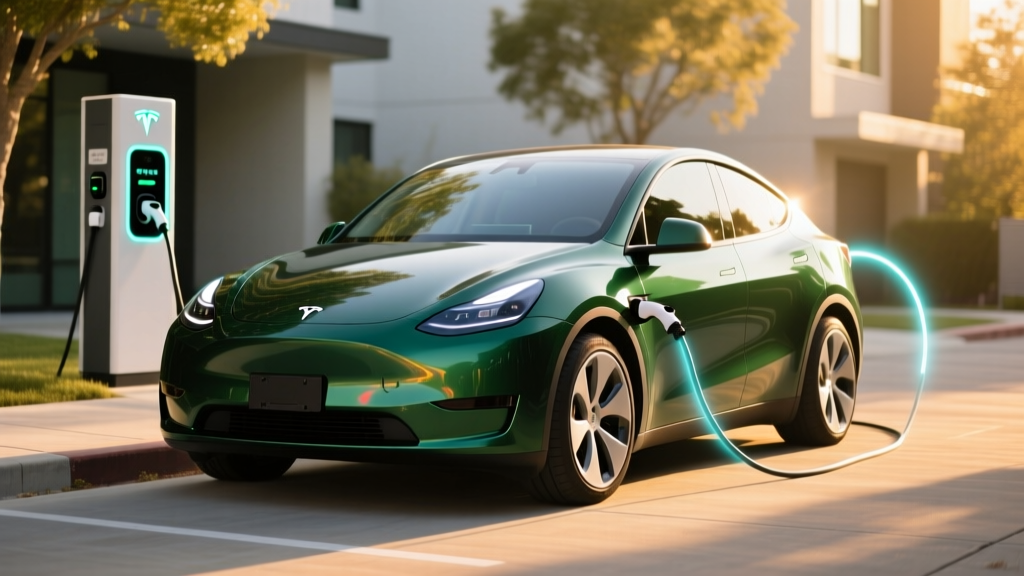
Few vehicles dominate online discourse the way Tesla does. Search internet Tesla on any platform and you'll find polarized takes, viral drag races, and endless Supercharger selfies. But strip away the noise, and the 2026 Tesla Model Y Long Range AWD remains one of the most capable electric SUVs you can actually buy — not just talk about online.
With an EPA-estimated 320 miles of range, a 250 kW DC fast-charge peak, and access to the largest charging network in North America, the refreshed Model Y (internally codenamed "Juniper") addresses the loudest criticisms of its predecessor: ride harshness, cabin minimalism, and aging styling. It's not perfect — the lack of physical controls and Tesla's panel-gap inconsistency still draw ire — but for buyers who want a do-it-all electric SUV with best-in-class charging infrastructure, the 2026 Model Y earns its internet fame.
2026 Tesla Model Y Core Specifications
| Spec | Long Range AWD | Performance |
|---|---|---|
| EPA Range | 320 mi | 295 mi |
| Battery (usable) | 78.1 kWh (NMC) | 78.1 kWh (NMC) |
| Drivetrain | Dual-motor AWD | Dual-motor AWD |
| Horsepower | 384 hp | 456 hp |
| 0–60 mph | 4.8 sec | 3.5 sec |
| Top Speed | 125 mph | 155 mph |
| MPGe (combined) | 122 MPGe | 111 MPGe |
| Efficiency | 28 kWh/100 mi | 30 kWh/100 mi |
| Max DC Charge Rate | 250 kW | 250 kW |
| 10–80% DC Time | ~25 min | ~25 min |
| Level 2 (11.5 kW) | ~44 mi/hr | ~44 mi/hr |
| Cargo (rear seats up) | 30.2 cu ft | 30.2 cu ft |
| Cargo (rear seats down) | 72.1 cu ft | 72.1 cu ft |
| Rear Legroom | 41.6 in | 41.6 in |
| Base MSRP | $47,990 | $54,990 |
| Battery Warranty | 8 yr / 120,000 mi | 8 yr / 120,000 mi |
Source: fueleconomy.gov and Tesla specifications. Prices exclude destination fee ($1,390).
Real-World Range: What the EPA Sticker Doesn't Tell You
EPA Estimate: 320 miles (Long Range AWD)
Real-World Highway (70–75 mph): ~265–280 miles
Real-World City/Mixed: ~295–310 miles
Cold Weather (below 30°F): ~225–260 miles (20–30% reduction)
The 2026 Model Y Long Range's 320-mile EPA figure is competitive with the Hyundai Ioniq 5 (310 mi) and the Ford Mustang Mach-E Extended Range (320 mi). But EPA tests are conducted on a dynamometer under moderate temperatures with no HVAC load — conditions that rarely match a Tuesday morning commute in January or a 75-mph interstate run in July.
In sustained highway driving at 70–75 mph with moderate climate control, expect roughly 265 to 280 miles before the battery indicator hits 5%. That's a meaningful 40–55 mile gap from the sticker. Cold weather amplifies this: the Model Y's heat pump (standard since 2021) mitigates some loss, but lithium-ion chemistry inherently struggles below freezing. Budget-conscious road trippers should plan charging stops at roughly 200-mile intervals in winter to maintain a safety buffer.
City driving with regenerative braking engaged recovers energy that highway driving cannot, which is why mixed and urban use cases track closer to the EPA number. If your commute is mostly stop-and-go under 50 mph, 300+ miles is achievable in mild weather.
Charging Speed: Supercharger Network Dominance
Charging infrastructure is where Tesla's internet reputation actually holds up. The Supercharger network now exceeds 6,500 stalls across North America, and with the opening of the network to NACS-equipped non-Tesla EVs, reliability and coverage have only improved through increased investment.
| Charging Level | Power | Speed | Typical Use Case |
|---|---|---|---|
| Level 1 (120V) | ~1.4 kW | ~5 mi/hr | Emergency / overnight trickle |
| Level 2 (240V, 48A) | 11.5 kW | ~44 mi/hr | Home / workplace daily charging |
| DC Fast (V3 Supercharger) | 250 kW peak | 10–80% in ~25 min | Road trips, rapid top-ups |
| DC Fast (V4 Supercharger) | 350 kW capable | 10–80% in ~20 min* | Newer corridor stations |
*The 2026 Model Y's onboard architecture peaks at ~250 kW intake even at V4 stalls; future OTA updates may unlock higher rates.
Understanding the charge curve: Peak kW is not sustained kW. The Model Y hits 250 kW only between roughly 10–30% state of charge (SoC). From 30–60%, it sustains around 150–180 kW. Above 80%, the battery management system tapers to ~40–60 kW to protect the NMC cells from lithium plating. This is why the 10–80% metric matters far more than peak kW alone — it represents the usable fast-charging window.
For home charging, a Tesla Wall Connector on a 60-amp circuit delivers the full 11.5 kW, adding roughly 44 miles of range per hour. A full 0–100% charge takes about 8 hours — ideal for overnight replenishment. Installation costs typically range from $500 to $2,000 depending on your electrical panel's capacity and the distance from panel to charger. Homes with older 100-amp service panels may require a $1,500–$3,000 panel upgrade.
Performance and Driving Dynamics
The 2026 Model Y Long Range AWD pairs a permanent-magnet rear motor with an induction front motor for a combined 384 horsepower. The 0–60 mph sprint takes 4.8 seconds — quick enough to merge confidently and overtake without drama, though the Performance trim's 3.5-second run caters to those who prioritize acceleration above all.
The Juniper refresh brought meaningful chassis improvements. Revised damper tuning and additional sound deadening reduce the crashy ride quality that plagued pre-2025 Model Ys over broken pavement. The cabin is noticeably quieter at highway speeds. Steering remains precise but artificially weighted — a common Tesla trait that some drivers adapt to quickly and others never fully embrace.
Regenerative braking offers two modes: Standard (strong enough for one-pedal driving in most conditions) and Low (more traditional coasting feel). Tesla removed the "creep" and "roll" stop modes in late 2025, consolidating to a single Hold mode that brings the car to a complete stop and holds it without brake pedal input.
Tech, Interior, and the Minimalism Debate
The 15.4-inch center touchscreen remains the nerve center of every vehicle function — climate, mirrors, glovebox, and wiper controls all route through it. The 2026 refresh adds a second 8-inch screen for rear passengers (climate and media controls) and ventilated front seats across all trims, addressing two of the most persistent complaints.
Autopilot and FSD (Supervised): Standard Autopilot includes Traffic-Aware Cruise Control and Autosteer (lane centering) — both SAE Level 2 driver-assistance systems that require continuous driver supervision. Full Self-Driving (Supervised), available as a $8,000 option or $99/month subscription, adds automatic lane changes, intersection navigation, and Smart Summon. Despite the name, FSD remains Level 2: you must keep your eyes on the road and hands available to take over at any moment. This is not autonomous driving; Tesla's camera-only vision stack still struggles with construction zones, faded lane markings, and heavy rain.
Autopilot and FSD (Supervised) are SAE Level 2 systems. The driver must remain fully engaged, monitor the road, and be prepared to intervene instantly. These are not self-driving systems. Misuse has led to documented collisions and NHTSA investigations.
The interior material quality improved with Juniper — soft-touch surfaces replaced hard plastics on the dashboard and door panels — but it still doesn't match the perceived luxury of a BMW iX or Genesis Electrified GV70 at similar price points. The panoramic glass roof is a highlight, flooding the cabin with light, though it contributes to solar heat gain in summer (the included tint panel helps).
Pricing, Trims, and Federal Tax Credit Eligibility
| Trim | Base MSRP | Est. After §30D Credit | Key Features |
|---|---|---|---|
| Long Range AWD | $47,990 | ~$40,490* | 320 mi range, dual motor, ventilated seats |
| Performance | $54,990 | ~$47,490* | 295 mi, 3.5s 0–60, track mode, 21" wheels |
*Tax credit estimates assume full $7,500 eligibility under IRS §30D. Actual credit depends on individual tax liability, income caps, and battery-sourcing compliance. Consult a tax professional.
Federal §30D Tax Credit Rules (2026):
- Credit amount: Up to $7,500 (split between critical minerals and battery component requirements)
- Income caps: Modified AGI must not exceed $150,000 (single), $225,000 (head of household), or $300,000 (joint)
- MSRP cap: SUVs/vans/pickups must be under $80,000 — both Model Y trims qualify
- Battery sourcing: Increasingly strict critical-mineral and battery-component rules may reduce the credit to $3,750 or $0 depending on the specific battery batch. Tesla sources LFP cells from CATL for the RWD Model Y, which may not qualify for the full credit; the Long Range AWD's NMC pack has historically qualified for the full $7,500, but verify current-year sourcing at irs.gov
- Point-of-sale transfer: The credit can be applied at purchase to reduce your out-of-pocket cost, rather than waiting for a tax return
Who Should Buy the 2026 Tesla Model Y?
✅ Choose the Model Y if:
- You road-trip frequently and need reliable, widespread DC fast-charging
- You want the strongest over-the-air update ecosystem in the industry
- Your household needs 30+ cu ft of cargo space with a flat load floor
- You value a large third-party app and accessory community (the "internet Tesla" effect)
- You want a proven platform with extensive real-world reliability data
❌ Look elsewhere if:
- You prefer physical buttons, knobs, and a traditional instrument cluster
- You want luxury-grade interior materials at this price point (consider BMW iX, Genesis GV70 Electrified)
- You need third-row seating (Kia EV9 or Rivian R1S offer it)
- You're uncomfortable with Tesla's camera-only Autopilot approach vs. lidar/radar redundancy
- You want a non-Tesla EV to diversify from a single brand ecosystem
2026 Tesla Model Y vs. Key Competitors
| Spec | Tesla Model Y LR AWD | Hyundai Ioniq 5 Limited | Ford Mach-E ER AWD |
|---|---|---|---|
| EPA Range | 320 mi | 310 mi | 320 mi |
| Battery | 78.1 kWh (NMC) | 84.0 kWh (NMC) | 91.0 kWh (NMC) |
| Max DC Charge | 250 kW | 240 kW (350 capable) | 150 kW |
| 10–80% Time | ~25 min | ~18 min (at 350 kW) | ~38 min |
| 0–60 mph | 4.8 sec | 5.1 sec | 5.1 sec |
| Base MSRP (comparable) | $47,990 | $52,600 | $48,995 |
| Charging Network | Supercharger (native) | NACS adapter / IONNA | NACS adapter / BlueOval |
| Cargo (rear up) | 30.2 cu ft | 27.2 cu ft | 29.7 cu ft |
The Ioniq 5 charges faster at compatible 350 kW stations and offers 800V architecture, but its smaller cargo area and less mature charging network access (pending wider IONNA rollout) are trade-offs. The Mach-E is a solid alternative with Ford's dealer network behind it, but its 150 kW charge ceiling is the weakest in this comparison — a significant road-trip disadvantage.
Ownership Costs and Warranty
Tesla's basic vehicle warranty covers 4 years / 50,000 miles. The battery and drive unit warranty extends to 8 years / 120,000 miles, guaranteeing at least 70% capacity retention over that period. Tesla's NMC packs have demonstrated strong longevity in fleet data — most Model Y batteries show 5–8% degradation at 100,000 miles based on crowdsourced telemetry.
Insurance remains a pain point. The Model Y consistently ranks among the more expensive EVs to insure, with national averages around $2,400–$3,000/year depending on state, driving history, and coverage level. Tesla Insurance is available in select states and may offer competitive rates, though claims processing has drawn mixed reviews.
Electricity costs for charging vary dramatically by location. At the national average of $0.16/kWh and the Model Y's 28 kWh/100 mi efficiency, fueling costs roughly $4.48 per 100 miles — compared to $12–$14 for a comparable gas SUV at 25 MPG and $3.50/gallon. Home charging on off-peak rates can drop this below $3.00 per 100 miles.
Frequently Asked Questions
What is the real-world range of the 2026 Tesla Model Y?
The EPA rates the Long Range AWD at 320 miles. Real-world highway driving at 70–75 mph typically yields 265–280 miles. Cold weather (below 30°F) can reduce range to 225–260 miles. City driving with regen braking recovers more energy, often reaching 295–310 miles in mild conditions.
How fast does the Model Y charge at home and on the road?
On a Level 2 home charger (11.5 kW / 48A), the Model Y adds about 44 miles of range per hour, fully charging overnight in ~8 hours. At a V3 Supercharger, it peaks at 250 kW and charges from 10–80% in approximately 25 minutes. The charge curve tapers significantly above 80% SoC.
Does the 2026 Tesla Model Y qualify for the $7,500 federal tax credit?
The Long Range AWD has historically qualified for the full $7,500 under IRS §30D, but eligibility depends on battery-sourcing rules that tighten annually, plus buyer income caps ($150K single / $300K joint) and the $80K SUV MSRP cap. The point-of-sale transfer option lets you apply the credit at purchase. Always verify current eligibility at irs.gov before committing.
Is the Model Y worth buying over the Hyundai Ioniq 5 or Ford Mach-E?
The Model Y wins on Supercharger network access, cargo space, and software maturity. The Ioniq 5 charges faster (at 350 kW stations) and has a more driver-focused interior with physical controls. The Mach-E offers a strong value proposition but lags significantly in DC charging speed. Your decision should hinge on road-trip frequency, interior preference, and charging access.
Is Tesla's Autopilot actually self-driving?
No. Autopilot and FSD (Supervised) are SAE Level 2 driver-assistance systems. You must keep your eyes on the road, hands available, and be ready to take over at any moment. Tesla's camera-only system does not use lidar or radar redundancy, and has documented limitations in construction zones, heavy rain, and faded lane markings.
What's the biggest drawback of the 2026 Model Y?
The all-touchscreen interface remains the most polarizing aspect. Adjusting mirrors, changing wiper speed, and modifying climate settings all require navigating menus or using the touchscreen — a frustration for drivers who prefer tactile controls. Panel gap inconsistency at delivery is another common complaint, though Tesla's Fremont and Austin build quality has improved incrementally.