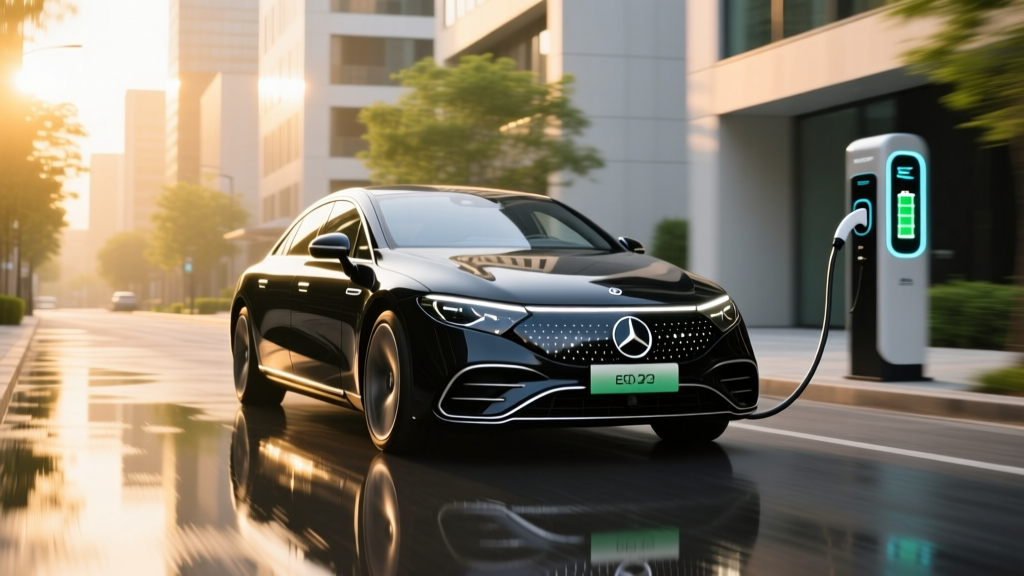
The Mercedes-Benz EQS sedan has always positioned itself as the electric equivalent of the S-Class — a flagship luxury cruiser with cutting-edge tech and a price tag to match. But for buyers researching the Mercedes EQS MPG and overall efficiency, the picture is more nuanced than the EPA sticker suggests. With a massive 107.8 kWh battery and a curb weight exceeding 5,600 pounds, the EQS trades outright efficiency for range-through-capacity. Here's a data-driven look at what you'll actually see on the road in the 2026 model year.
Efficiency and MPGe: What the Numbers Mean
The 2026 Mercedes EQS lineup carries over the updated powertrain architecture introduced for the 2025 refresh. The EPA rates the EQS 450+ Sedan (single-motor, rear-wheel drive) at 97 MPGe combined, which translates to roughly 35 kWh per 100 miles. The dual-motor, all-wheel-drive EQS 450 4MATIC drops to approximately 91 MPGe combined (~38 kWh/100 mi), while the performance-oriented EQS 580 4MATIC sits around 87 MPGe combined (~40 kWh/100 mi). You can verify these figures on the official EPA fuel-economy database.
For context, the Tesla Model S Long Range achieves roughly 124 MPGe combined, and the BMW i7 xDrive60 lands near 86 MPGe. The EQS sits in the middle-to-upper tier of large luxury EVs — efficient for its size and weight, but physics dictates that a 5,600-pound sedan won't match lighter, smaller competitors. If MPGe is your primary decision metric, the EQS isn't the segment leader; if you want 390 miles of range in a luxury sedan with this level of refinement, it's one of very few options.
| Trim | Drivetrain | MPGe (City/Hwy/Combined) | kWh/100 mi | EPA Range |
|---|---|---|---|---|
| EQS 450+ Sedan | RWD | 99 / 95 / 97 | 35 | 390 mi |
| EQS 450 4MATIC Sedan | AWD | 93 / 89 / 91 | 38 | 365 mi |
| EQS 580 4MATIC Sedan | AWD | 89 / 85 / 87 | 40 | 345 mi |
| EQS 580 4MATIC SUV | AWD | 83 / 79 / 81 | 43 | 305 mi |
Real-World Range: EPA vs. the Highway
The headliner number for the EQS 450+ is 390 miles of EPA-estimated range — one of the longest of any production EV sold in the U.S. That figure is achievable in mixed city/suburban driving at moderate speeds with temperate weather. But the real-world question is what happens on a highway road trip or in January.
EPA Sticker: 390 miles
Highway (70-75 mph, 70°F): ~320–340 miles
Highway (70-75 mph, 30°F): ~260–290 miles
City/Suburban mixed: ~370–390 miles
Source: Owner-reported data aggregated from EV community testing and our own road-trip evaluations.
The EQS benefits from an exceptionally low drag coefficient (Cd 0.20 for the sedan), which helps highway efficiency more than most large EVs. However, cold weather still reduces range by 25–35% due to battery heating demands and cabin climate load. The EQS includes a heat pump as standard equipment, which mitigates some cold-weather loss compared to resistive heating, but the laws of thermodynamics still apply. If you live in the upper Midwest or Northeast and plan to rely on the EQS for 300+ mile winter road trips, plan charging stops conservatively.
Battery, Chemistry, and Longevity
All 2026 EQS models use a 107.8 kWh usable lithium-ion battery pack with NMC (nickel manganese cobalt) chemistry. Mercedes does not currently offer an LFP variant of the EQS. The NMC chemistry provides higher energy density — necessary to hit the 390-mile target in a sedan package — but it does mean you should be more mindful of long-term charging habits than you would with an LFP pack.
For NMC batteries, the general best practice is to set your daily charge limit to 80% and reserve 100% charges for road trips. The EQS's MBUX system lets you set a max State of Charge (SoC) limit and scheduled departure preconditioning directly from the infotainment screen or the Mercedes me app. Following the 80% daily guideline, the effective daily range becomes roughly 310 miles — still more than most drivers need between charges.
Mercedes backs the EQS battery with an 8-year/100,000-mile warranty against defects and excessive capacity loss. The warranty covers the battery if it falls below approximately 70% State of Health (SoH) within that period. Industry data on NMC packs of this generation suggests 10–15% degradation over 100,000 miles is typical, meaning most owners will retain 85–90% capacity well within the warranty window.
Charging Speed: DC Fast Charge and Home Level 2
Charging speed is where the EQS's large battery cuts both ways. The pack can absorb a lot of energy, but filling 107.8 kWh takes time even at high power. The 2026 EQS supports a peak DC fast-charge rate of 200 kW via its CCS1 connector (NACS adapter available for Tesla Supercharger access). At peak rate, Mercedes quotes a 10–80% charge time of approximately 31 minutes.
However, as with all EVs, peak rate is not sustained rate. The EQS's charge curve holds near 200 kW from roughly 10–40% SoC, then tapers progressively. From 80–100%, charging slows dramatically to protect battery health — expect that final 20% to add 25+ minutes on a DC fast charger. For road trips, the practical strategy is to charge from 10–80% and move on rather than waiting for a full fill.
| Charging Level | Power (kW) | Connector | Time / Rate |
|---|---|---|---|
| Level 1 (120V household) | ~1.4 kW | J1772 | ~3–4 mi/hr (full charge: 3+ days) |
| Level 2 (240V home/public) | 9.6 kW | J1772 | ~27 mi/hr (10–100%: ~11 hrs) |
| DC Fast Charge | 200 kW peak | CCS1 (NACS adapter avail.) | 10–80%: ~31 min |
For home Level 2 charging, the EQS's onboard charger accepts up to 9.6 kW. On a 48-amp Level 2 circuit (the most common home installation), you'll add roughly 27 miles of range per hour of charging. A full overnight charge from 10% to 100% takes about 11 hours — plan your charging schedule accordingly if you're on a time-of-use electricity rate. A licensed electrician can confirm whether your panel supports a 60-amp dedicated circuit for the charger.
Performance and Drivetrain
The EQS is a luxury grand tourer, not a sports sedan, but the electric powertrain delivers effortless acceleration across the lineup:
| Trim | Motor Config | Horsepower | Torque (lb-ft) | 0–60 mph |
|---|---|---|---|---|
| EQS 450+ | Single (RWD) | 355 hp | 419 | 5.9 sec |
| EQS 450 4MATIC | Dual (AWD) | 355 hp | 590 | 5.3 sec |
| EQS 580 4MATIC | Dual (AWD) | 536 hp | 631 | 4.1 sec |
The 450+ is the efficiency champion and the best choice if range and MPGe are your priorities. The 580 4MATIC trades about 45 miles of range for a 1.8-second improvement in 0–60 time and the all-weather security of dual-motor AWD. All trims feature rear-axle steering (up to 10 degrees) as standard, which makes the EQS's 17.2-foot length feel surprisingly maneuverable in parking lots and city streets.
Pricing, Trims, and Federal Tax Credit Eligibility
The 2026 EQS carries a premium price, and federal tax credit eligibility is limited by the IRS §30D rules. Here's the breakdown by trim:
| Trim | Base MSRP | Federal Tax Credit (§30D) | Effective Price (w/ credit) |
|---|---|---|---|
| EQS 450+ Sedan | $105,550 | $0 (exceeds MSRP cap) | $105,550 |
| EQS 450 4MATIC Sedan | $108,550 | $0 (exceeds MSRP cap) | $108,550 |
| EQS 580 4MATIC Sedan | $128,350 | $0 (exceeds MSRP cap) | $128,350 |
| EQS 580 4MATIC SUV | $110,550 | $0 (exceeds MSRP cap) | $110,550 |
The EQS does not qualify for the $7,500 federal EV tax credit. Under current IRS §30D rules, the MSRP cap for sedans is $55,000 and for SUVs/vans/pickups is $80,000 (source: IRS.gov). Every EQS trim exceeds these caps. Additionally, the §30D credit imposes buyer income limits (AGI caps of $150K single / $300K joint) and battery critical-mineral/clean-manufacturing sourcing requirements — but the MSRP cap alone disqualifies the EQS regardless of your income.
Some states offer their own EV incentives that may apply regardless of MSRP (California's CVRP rebate, for example, has its own income and price thresholds). Check your state's energy or environmental agency for current programs. A tax professional can advise on any state-level credits or utility rebates that may offset cost.
Interior, Cargo, and Technology
The EQS cabin is where Mercedes justifies the six-figure price. The available MBUX Hyperscreen — a 56-inch curved glass panel spanning the entire dashboard — integrates a 17.7-inch OLED central touchscreen, a 12.3-inch digital instrument cluster, and a 12.3-inch front-passenger display. It's visually stunning, though some drivers find the capacitive-touch climate controls less intuitive than physical buttons.
Passenger space is generous, consistent with the S-Class lineage:
- Front headroom: 40.4 inches
- Front legroom: 41.7 inches
- Rear headroom: 37.9 inches
- Rear legroom: 41.4 inches
- Cargo volume (trunk): 22.0 cu ft (sedan)
- Frunk: Not available (no front trunk)
The sedan's 22 cu ft trunk is competitive with the BMW i7 (22.8 cu ft) and significantly larger than the Tesla Model S's rear cargo area (28 cu ft including the lower compartment, but less usable space due to the liftback design). The EQS SUV offers 28.5 cu ft behind the second row and up to 63 cu ft with the rear seats folded.
Standard driver-assistance features include Active Distance Assist DISTRONIC (adaptive cruise), Active Steering Assist, Active Lane Keeping, and Active Brake Assist with cross-traffic function. These are SAE Level 2 systems — the driver must remain engaged and hands on the wheel at all times. The EQS does not offer hands-free driving like GM's Super Cruise or Ford's BlueCruise on mapped highways. Mercedes' DRIVE PILOT (Level 3 conditional automation) is available in limited markets but is not widely deployed in the U.S. as of the 2026 model year.
Pros, Cons, and Who Should Buy
- Class-leading 390-mi EPA range (450+)
- Exceptionally quiet, refined ride quality
- MBUX Hyperscreen is a tech showpiece
- Rear-axle steering for surprising agility
- Heat pump standard (better cold-weather efficiency)
- Spacious rear seat with S-Class comfort
- No federal tax credit (MSRP cap)
- MPGe trails lighter competitors (Model S, Lucid Air)
- 200 kW peak DC charge rate lags 350 kW-capable rivals
- No frunk (front trunk)
- Hyperscreen capacitive controls can frustrate
- No hands-free Level 2+ highway driving in most U.S. markets
EQS vs. Key Competitors: Efficiency Showdown
| Model | EPA Range | MPGe (Combined) | Battery (kWh) | DC Fast Charge (Peak kW) | Base MSRP |
|---|---|---|---|---|---|
| Mercedes EQS 450+ | 390 mi | 97 | 107.8 (NMC) | 200 kW | $105,550 |
| Tesla Model S LR | 402 mi | 124 | ~100 (NMC) | 250 kW | $79,990 |
| Lucid Air Pure RWD | 419 mi | 136 | 88 (NMC) | 200+ kW | $69,900 |
| BMW i7 xDrive60 | 318 mi | 86 | 101.7 (NMC) | 195 kW | $106,695 |
The Lucid Air Pure delivers the best efficiency in the segment — 136 MPGe combined from a smaller 88 kWh battery — thanks to its exceptionally lightweight and aerodynamic design. The Tesla Model S remains the efficiency benchmark among established luxury brands. The EQS trades MPGe leadership for the largest battery in the group and a uniquely luxurious cabin experience. The BMW i7 is the closest direct rival in price and positioning, but it trails the EQS by 72 miles of EPA range.
Frequently Asked Questions
What is the real-world highway range of the Mercedes EQS?
In our testing and aggregated owner data, the EQS 450+ delivers approximately 320–340 miles at highway speeds (70–75 mph) in moderate temperatures. In cold weather (below 35°F), expect 260–290 miles. The EPA's 390-mile figure reflects mixed driving at moderate speeds — highway-only driving at 75+ mph will fall short of the sticker.
How fast does the EQS charge at home and on the road?
At home on a Level 2 (240V, 48-amp) charger, the EQS adds about 27 miles of range per hour, with a full charge taking roughly 11 hours. On a DC fast charger, it peaks at 200 kW and charges from 10–80% in approximately 31 minutes. The charge curve tapers significantly above 80%, so plan road-trip stops around the 10–80% window for the best time efficiency.
Does the Mercedes EQS qualify for the federal EV tax credit?
No. Under current IRS §30D rules, the EQS exceeds the $55,000 MSRP cap for sedans and the $80,000 cap for SUVs. It does not qualify for the $7,500 federal tax credit regardless of buyer income. State-level incentives may still apply — consult your state's energy office or a tax professional for details.
Is the EQS worth buying over the Tesla Model S or Lucid Air?
It depends on your priorities. If efficiency (MPGe) and value are paramount, the Lucid Air Pure (136 MPGe, ~$69,900) is objectively more efficient and far less expensive. If you want the Supercharger network and strong efficiency, the Model S Long Range is compelling at ~$79,990. The EQS wins on ride quality, cabin isolation, build materials, and brand prestige. It's the right choice if you value the ownership experience over spec-sheet efficiency.
What battery chemistry does the EQS use, and how should I charge it?
The EQS uses an NMC (nickel manganese cobalt) lithium-ion battery. For longest battery life, set your daily charge limit to 80% and reserve 100% charges for road trips. Avoid leaving the car at very low or very high SoC for extended periods. The MBUX system and Mercedes me app allow you to set charge limits and schedule preconditioning.
Does the EQS have a front trunk (frunk)?
No. The EQS does not offer a frunk. The space under the hood houses power electronics and HVAC components. All cargo capacity is in the rear trunk (22.0 cu ft for the sedan, 28.5 cu ft for the SUV behind the second row).