The U.S. Postal Service is undergoing one of the largest fleet electrification efforts in American history, backed by billions in federal funding. If you're researching postal service electric vehicle funding — whether as a taxpayer, an EV-curious buyer, or a fleet manager — here's what you need to know right now.
Quick Answer: USPS EV Funding in 2026
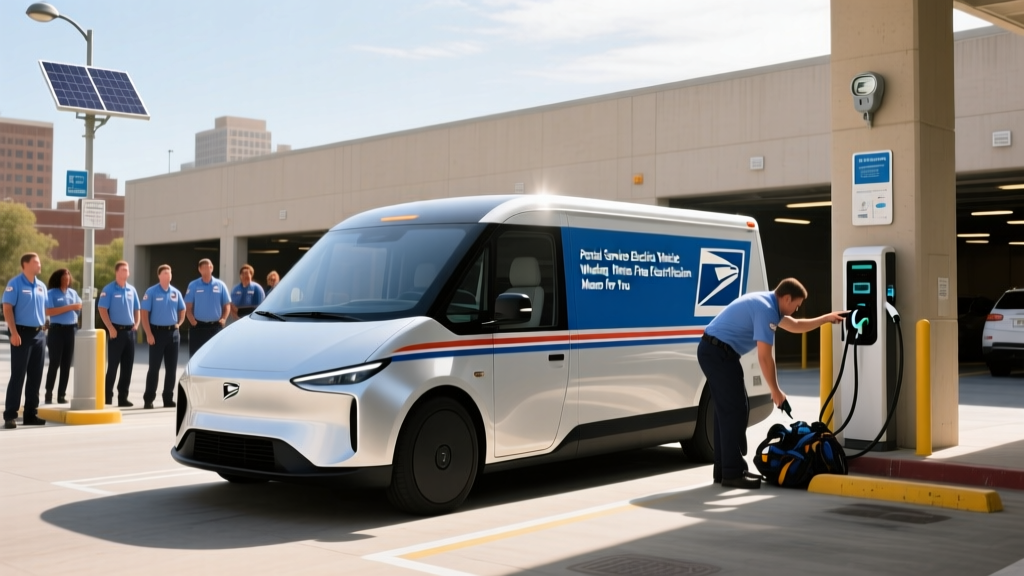
The USPS has committed to purchasing at least 66,000 battery-electric delivery vehicles by 2028, funded through approximately $3.1 billion from the Inflation Reduction Act (IRA) and USPS internal capital. The primary vehicle is the Oshkosh NGDV (Next Generation Delivery Vehicle), a purpose-built electric mail truck with an EPA-estimated range of ~150 miles. The total Next Generation fleet order stands at 106,000 vehicles, with 60,000+ slated to be fully electric and the remainder low-emission gasoline.
The Funding Breakdown: Where the Billions Are Going
The postal service electric vehicle funding story involves multiple legislative and internal funding streams that evolved significantly between 2022 and 2026.
| Funding Source | Amount | Purpose | Status (2026) |
|---|---|---|---|
| Inflation Reduction Act (IRA) §60101 | $3.0 billion | EV procurement + charging infrastructure | Actively deploying |
| USPS internal capital investment | ~$1.3 billion (initial NGDV contract) | Oshkosh contract for 50,000 NGDVs (later expanded) | Deliveries underway since 2024 |
| Congressional appropriations (FY23-26) | Variable supplemental | Facility upgrades, depot chargers | Ongoing |
The original USPS plan under Postmaster General Louis DeJoy in early 2022 called for only 10% electric vehicles in the NGDV order — a decision that drew sharp criticism from the EPA, environmental groups, and congressional Democrats. The IRA's passage in August 2022 fundamentally changed the calculus, injecting $3 billion specifically for USPS fleet electrification and enabling the revised commitment to 66,000+ BEVs.
The Oshkosh NGDV: Specs, Range, and Real-World Performance
The NGDV is not a repurposed consumer EV. It's a ground-up commercial vehicle built by Oshkosh Defense on a dedicated platform, designed for the specific stop-and-go, low-speed, high-idle-duty cycle of mail delivery.
| Specification | NGDV Electric (BEV) | NGDV Gasoline (ICE) | Legacy Grumman LLV |
|---|---|---|---|
| Powertrain | Battery electric | 2.0L turbo 4-cyl | 2.5L 4-cyl (1987-era) |
| Battery / Fuel | ~95 kWh (NMC chemistry) | 15-gal tank | 12-gal tank |
| Range (EPA est.) | ~150 miles | ~280 miles | ~170 miles |
| Cargo volume | 155 cu ft | 155 cu ft | 120 cu ft |
| MPGe / MPG | ~2.0 kWh/mi (~169 MPGe) | ~8.2 MPG combined | ~8.2 MPG combined |
| Charging / Refuel | Level 2 AC (~19.2 kW); ~5 hrs to full | ~5 min at pump | ~4 min at pump |
| Annual fuel/energy cost* | ~$1,200–$1,600 | ~$4,800–$5,600 | ~$5,000–$5,800 |
| Maintenance (annual est.) | ~$800–$1,200 | ~$2,500–$3,500 | ~$4,000–$5,500 |
*Based on 14,000 mi/yr average USPS route, $0.13/kWh commercial rate, $3.60/gal gasoline. Actual costs vary by region and utility rates.
The real-world range picture for the NGDV BEV deserves nuance. The ~150-mile EPA estimate reflects the vehicle's unique duty cycle: average speeds of 15–25 mph, hundreds of stops per route, and extensive use of regenerative braking. In this stop-and-go profile, EVs actually perform closer to their rated range than they do in highway driving. However, cold-weather routes in northern states can see 20–30% range reduction, dropping effective range to 105–120 miles. For most urban and suburban routes averaging 20–40 miles daily, this remains adequate — but rural routes pushing 70+ miles per day in winter conditions require careful route planning.
Charging Infrastructure: The Hidden Cost in Postal Electrification
Vehicle procurement is only half the equation. The USPS operates roughly 31,000 facilities nationwide, and equipping them with depot-level charging represents a massive infrastructure challenge that postal service electric vehicle funding must also address.
Each NGDV BEV requires a dedicated or shared Level 2 AC charger at its home depot. At ~19.2 kW per charger, a facility with 50 electric trucks needs approximately 960 kW of continuous charging capacity — equivalent to the peak load of a small neighborhood. Many older USPS facilities have electrical panels and service drops far below this capacity, requiring utility upgrades, new transformers, and potentially $150,000–$500,000 per facility in electrical work alone.
| Infrastructure Component | Cost Range (Per Facility) | Notes |
|---|---|---|
| Level 2 chargers (50 units) | $75,000–$150,000 | Commercial-grade, networked |
| Electrical panel/service upgrade | $100,000–$350,000 | Varies by existing capacity |
| Utility transformer upgrade | $50,000–$200,000 | Depends on local utility |
| Software/management platform | $10,000–$30,000/yr | Charge scheduling, load balancing |
| Total (50-vehicle depot) | $235,000–$730,000 | Before utility rebates |
As of early 2026, the USPS has been prioritizing EV deployment at facilities where existing electrical infrastructure can support charging with minimal upgrades — typically urban and suburban delivery offices in states with robust utility grids. Rural facilities and those in areas with aging electrical infrastructure face longer timelines.
Why Taxpayers and EV Buyers Should Care
You might wonder why a government fleet procurement story matters to individual EV shoppers. The postal service electric vehicle funding program has several downstream effects on the consumer EV market:
1. Charging Infrastructure Spillover
USPS depot charging installations often require utility upgrades that increase grid capacity in surrounding areas. In some communities, USPS-driven transformer upgrades have made it easier for nearby residential customers to install home Level 2 chargers without expensive service upgrades.
2. Commercial EV Validation at Scale
When the federal government commits to 66,000 electric vehicles for daily mission-critical use, it validates EV reliability for commercial fleet buyers. This accelerates adoption by FedEx, UPS, Amazon, and municipal fleets — which in turn drives down battery costs and expands the charging network for everyone.
3. The Cost-Savings Argument for Your Own EV Decision
The USPS's own analysis projects $4.3 billion in lifetime fuel and maintenance savings across the electric NGDV fleet compared to the gas alternative. The same economics apply to consumer EVs, just at a different scale.
Decision Framework: Should You Go Electric Like the USPS?
Choose a BEV if:
- Your daily driving is under 80% of the vehicle's EPA range (leaving buffer for cold weather and detours)
- You have access to home Level 2 charging or reliable workplace charging
- You drive 10,000+ miles per year (higher mileage = faster payback on the EV premium)
- You qualify for the §30D federal tax credit (up to $7,500, subject to MSRP caps, income limits, and battery sourcing requirements)
Choose a PHEV or stick with ICE if:
- You regularly drive 300+ miles in a single day without predictable charging stops
- You lack home or workplace charging access and live in an area with sparse public DC fast charging
- Your annual mileage is under 6,000 miles (the fuel savings won't offset the EV premium in a reasonable timeframe)
- You live in an extreme cold-weather climate (consistently below 0°F) and cannot garage your vehicle
Real Costs and Savings: EV vs Gas for Fleet and Consumer
The economic case for postal electrification mirrors the consumer EV ownership equation. Here's how the numbers compare over a realistic ownership horizon.
| Cost Category (5-Year / 70,000 mi) | BEV (NGDV or Consumer Equivalent) | Gasoline Vehicle (ICE) |
|---|---|---|
| Purchase price (base) | $52,000–$62,000 (NGDV); $38,000–$55,000 (consumer) | $32,000–$38,000 (fleet); $28,000–$42,000 (consumer) |
| Federal tax credit | N/A (government fleet); up to $7,500 (consumer) | $0 |
| Fuel / electricity (70,000 mi) | $6,000–$8,000 | $18,000–$24,000 |
| Maintenance | $4,000–$6,000 | $10,000–$15,000 |
| Insurance (est.) | $7,500–$10,000 | $6,000–$8,500 |
| 5-Year Total Cost | $57,500–$76,000 (fleet) / $45,500–$65,500 (consumer w/ credit) | $56,000–$77,000 (fleet) / $44,000–$65,500 (consumer) |
The takeaway: EVs typically cost more upfront but break even or save money over 5 years through dramatically lower fuel and maintenance costs. The USPS expects its electric NGDVs to achieve cost parity with gas trucks around year 4–5 of a 15-year service life — after which the savings compound significantly.
For consumers, the math depends heavily on your specific situation. A buyer who qualifies for the full $7,500 §30D credit and charges at home on a time-of-use plan at $0.09/kWh will see much faster payback than someone paying $0.45/kWh at public DC fast chargers.
Common Misconceptions About USPS EV Funding
| Myth | Fact |
|---|---|
| "The USPS is buying only electric trucks." | The current plan includes both BEVs (~60,000+) and low-emission gasoline vehicles (~40,000) within the 106,000 total NGDV order. |
| "Electric mail trucks can't handle rural routes." | Most USPS routes average 20–40 miles/day. The ~150-mile range covers the vast majority of routes, though some long rural routes require gasoline NGDVs or mid-day charging. |
| "This is wasting taxpayer money on unproven technology." | EVs are deployed in commercial fleets by UPS (1,000+ EVs), FedEx (500+ EVs), and Amazon (100,000 Rivian EDVs ordered). The technology is proven for delivery duty cycles. The USPS's own Inspector General and the EPA have confirmed the lifecycle cost advantage. |
| "EV batteries will need expensive replacement mid-life." | Commercial-grade NMC batteries in delivery vehicles are warrantied for 8–10 years / 100,000+ miles. Degradation of 10–15% over that period is typical, which still leaves adequate range for most routes. The Oshkosh NGDV battery warranty covers capacity retention above 70% for the warranty term. |
| "The funding was purely political." | While the IRA funding was indeed a legislative decision, the USPS's own lifecycle cost analysis supported electrification on economic grounds. The initial 90%-gas plan under DeJoy was the outlier that drew bipartisan criticism, including from the EPA and the USPS Office of Inspector General. |
What First-Time EV Buyers Can Learn From the USPS
The Postal Service's electrification journey offers practical lessons for any buyer considering their first EV:
Route analysis matters. The USPS doesn't assign EVs to routes that exceed their range. You should apply the same logic: map your typical weekly driving, add a 20–30% cold-weather buffer, and ensure the EV you choose covers your needs on the worst day, not the average day.
Charging infrastructure is the bottleneck, not the vehicles. The USPS has acknowledged that depot charging installation is the pacing item for fleet rollout — not vehicle production. For consumers, this translates to: sort out your home charging situation before you buy. A Level 2 home charger ($500–$1,500 installed, depending on electrical work needed) is the single most important EV ownership investment.
Total cost of ownership tells the real story. Sticker price alone is misleading. The USPS chose electrification because lifetime operating costs are dramatically lower, even with higher upfront investment. Use the DOE's EV cost calculator at fueleconomy.gov to model your specific situation with local electricity and gasoline prices.
Cold weather is real, but manageable. Northern-state USPS facilities are getting EVs, but with route adjustments and charging buffer planning. If you live in Minnesota or Maine, expect 20–30% winter range loss and choose accordingly — or consider a PHEV as a bridge technology.
Frequently Asked Questions
How many electric vehicles does the USPS plan to have on the road?
The current commitment is at least 66,000 battery-electric NGDVs by 2028, with deliveries beginning in 2024 and ramping through 2028. The total NGDV order (electric + gasoline) is approximately 106,000 vehicles replacing the aging Grumman LLV fleet.
Who makes the USPS electric mail truck?
Oshkosh Defense, a subsidiary of Oshkosh Corporation, manufactures the NGDV at a dedicated facility in Spartanburg, South Carolina. The electric powertrain components are sourced from multiple suppliers, with final assembly and integration by Oshkosh.
Can I buy a USPS NGDV for personal use?
No. The NGDV is a government fleet vehicle not available for consumer purchase. However, the Oshkosh NGDV platform shares conceptual DNA with commercial delivery EVs like the Rivian EDV (Amazon) and the BrightDrop Zevo (GM/FedEx), and the broader commercial EV market offers accessible alternatives for fleet buyers.
How does USPS EV funding affect my taxes?
The $3 billion in IRA funding for USPS electrification comes from the broader Inflation Reduction Act appropriations. The USPS EV program does not directly affect individual tax liability. However, the same IRA that funded USPS electrification also extended and modified the §30D consumer EV tax credit, which can reduce your federal tax burden by up to $7,500 when purchasing a qualifying new EV — subject to MSRP caps ($55,000 for cars, $80,000 for SUVs/trucks/vans), adjusted gross income limits ($150K single / $300K joint), and battery component/critical mineral sourcing requirements per IRS guidelines.
Are electric mail trucks reliable enough for daily delivery?
Early deployment data from 2024–2025 pilot routes indicates the NGDV BEV meets reliability targets for standard delivery routes. The stop-and-go duty cycle is actually favorable for EVs — regenerative braking reduces brake wear, and the electric drivetrain has far fewer moving parts than the 1987-era Grumman LLV it replaces. Long-term fleet reliability data (5+ years) is still being accumulated.
What happens when an NGDV battery degrades below useful range?
When an NGDV's battery degrades to the point that it can no longer complete its assigned route (typically around 70% state of health), the USPS can reassign it to shorter routes, replace the battery pack, or retire the vehicle. Battery replacement costs for commercial packs of this size are estimated at $15,000–$25,000 in 2026, though this is expected to decline as battery manufacturing scales.