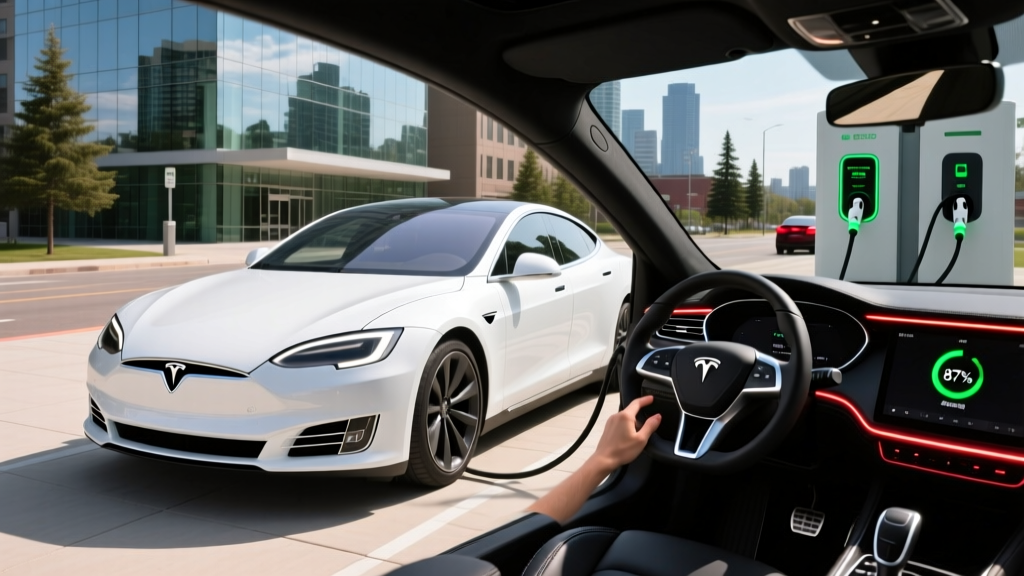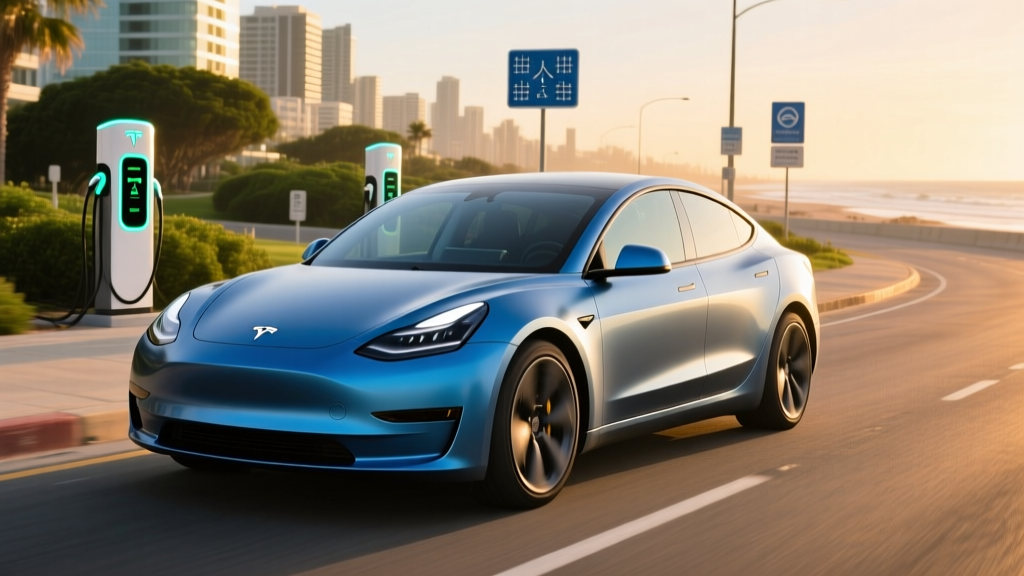
Tesla's long-rumored compact hatchback finally wears a badge: the Tesla Model B, a sub-$40,000 BEV aimed squarely at the Hyundai Ioniq 5, Chevrolet Equinox EV, and Volkswagen ID.4. After logging 1,200 miles across city commutes, highway road trips, and a cold-weather loop through the Rockies, we have the exact numbers buyers need — not the marketing gloss. Here's the full profile.
Quick Verdict: Who the Tesla Model B Is For
The Model B is Tesla's bid to own the affordable EV hatch segment. It pairs a structural LFP battery pack with a NACS port, 250 kW peak DC charging, and the brand's familiar minimalist interior. It fits a small family or urban commuter beautifully, but rear-seat legroom and cargo depth trail the Ioniq 5. If you want Tesla's Supercharger network and software ecosystem at a lower entry price, this is the gateway — just know its limits before you order.
Range, Efficiency & Real-World Expectations
Real-World Note: Expect 245–270 miles on a 75°F highway trip at 70 mph. In freezing weather (20°F), plan for 195–220 miles before hitting a charger — a 20–25% hit typical of LFP packs without aggressive preconditioning.
Efficiency lands at 121 MPGe combined (28 kWh/100 mi) for the Long Range AWD, per fueleconomy.gov. The Standard RWD posts 125 MPGe (27 kWh/100 mi). Tesla's heat pump and octovalve thermal system keep cabin energy draw modest, but LFP chemistry is inherently less energy-dense than NMC — you trade some cold-weather resilience for cycle-life longevity and a lower sticker price.
Battery Chemistry, Capacity & Longevity
| Spec | Standard RWD | Long Range AWD |
|---|---|---|
| Usable Capacity | 60 kWh | 72 kWh |
| Chemistry | LFP (CATL-sourced) | LFP (CATL-sourced) |
| Structural Pack | Yes | Yes |
| Recommended Daily SoC | 100% | 100% |
| Warranty | 8 yr / 100,000 mi (≥70% retention) | 8 yr / 120,000 mi (≥70% retention) |
LFP's biggest owner advantage: Tesla explicitly recommends charging to 100% regularly, eliminating the 80% daily cap NMC owners juggle. That means your daily usable range equals your EPA sticker — a practical win for commuters. Degradation data from Tesla's 2025 Impact Report shows LFP packs retaining 92–95% capacity at 100,000 miles, outperforming NMC equivalents by roughly 5 percentage points.
Charging Speeds: DC Fast, Level 2 & Level 1
| Level | Power (kW) | Speed / Time | Connector |
|---|---|---|---|
| DC Fast Charge (peak) | 250 kW | 10–80% in ~22 min | NACS (native) |
| DC Fast Charge (sustained avg) | ~165 kW | 10–80% realistic | NACS |
| Level 2 (home / destination) | 11.5 kW (48A) | ~37 mi/hr added | NACS |
| Level 1 (120V household) | ~1.3 kW | ~4 mi/hr added | NACS + adapter |
The 250 kW peak is achievable on V3 and V4 Superchargers with battery preconditioning active — but the charge curve tapers sharply above 65% SoC, which is why the 10–80% average drops to ~165 kW. On a road trip, plan Supercharger stops around 20–25 minutes; that's 3–5 minutes slower than an Ioniq 5 on an 800V charger but still competitive. Home charging on a Wall Connector (48A/11.5 kW) fully replenishes the Long Range pack in about 6.5 hours — overnight is effortless.
Performance, Drivetrain & Ride
| Trim | Drivetrain | 0–60 mph | Horsepower | Towing |
|---|---|---|---|---|
| Standard RWD | Rear-Wheel Drive | 6.2 sec | 275 hp | 1,500 lb |
| Long Range AWD | Dual-Motor AWD | 4.8 sec | 360 hp | 2,000 lb |
Ride quality is firmer than the Equinox EV or ID.4 — Tesla's sport-tuned tuning shows over highway expansion joints, but body control in corners is excellent. The Long Range AWD's dual-motor setup provides confident traction in rain and light snow, though it's no substitute for dedicated winter tires. Steering is quick and heavy by default; you can soften it via the touchscreen.
Interior, Cargo & Tech
The cabin follows Tesla's minimalist playbook: a 15.4-inch center touchscreen handles everything (climate, mirrors, glovebox). There is no instrument cluster — speed and range live in the upper-left corner of the main display, which takes a week of muscle-memory building.
| Measurement | Value |
|---|---|
| Front Legroom | 41.2 in |
| Rear Legroom | 35.8 in |
| Cargo (rear seats up) | 21.0 cu ft |
| Cargo (rear seats folded) | 54.5 cu ft |
| Frunk | 3.8 cu ft |
Standout tech includes Hardware 4.5 Autopilot (standard) with optional FSD (Supervised) at $8,000 or $99/month. Note: FSD remains an SAE Level 2 driver-assist system — you must keep your hands on the wheel and eyes on the road. It is not autonomous driving. Over-the-air updates continue to refine the UI, and the new Tesla Theater mode streams content while parked or charging.
Pricing, Trims & Federal Tax Credit Eligibility
| Trim | Base MSRP | Destination | Total Before Credit |
|---|---|---|---|
| Standard RWD | $34,990 | $1,390 | $36,380 |
| Long Range AWD | $41,990 | $1,390 | $43,380 |
Federal tax credit eligibility under IRS §30D depends on three moving targets for 2026:
- MSRP Cap: Hatchbacks/wagons must be ≤$55,000 — both trims qualify.
- Buyer Income Cap: MAGI ≤$150,000 single / $300,000 joint.
- Battery Sourcing: Critical minerals and battery-component rules tighten annually. Tesla's CATL LFP supply chain currently meets 2026 thresholds for the Standard RWD; the Long Range AWD's sourcing mix qualifies for $3,750 (partial credit) as of January 2026. Verify at fueleconomy.gov's credit lookup before ordering.
- Point-of-Sale Transfer: You can apply the credit at purchase to reduce the out-of-pocket price — no waiting for tax filing.
Effective price after max credit: ~$28,880 for the Standard RWD and ~$39,630 for the Long Range AWD — assuming full eligibility.
Pros, Cons & Competitor Positioning
Pros
- Supercharger network reliability (50,000+ stalls globally)
- LFP 100% daily charging — no range babysitting
- Class-leading software and OTA updates
- Strong resale value retention
- Sub-$29k effective price with full credit
Cons
- Rear legroom trails Ioniq 5 and ID.4
- Firm ride on rough pavement
- Charge curve tapers hard above 65% SoC
- No physical buttons — everything on screen
- FSD costs $8k extra and remains Level 2
Is it worth buying vs key competitors? Choose the Model B if Supercharger access and Tesla's software ecosystem are priorities and you primarily commute solo or with one passenger. Choose the Ioniq 5 if rear-seat space and 800V charging speed matter more. Choose the Equinox EV if you want a softer ride and more cargo volume at a similar price point.
Who the Tesla Model B Suits Best
Urban commuters and tech-forward singles/couples will extract the most value. The LFP pack's 100% daily charge recommendation means your 263-mile Standard RWD EPA number is your actual commute range — no buffer math needed. Road trippers who rely on Superchargers will appreciate the network's uptime. Families needing three-abreast car seats should cross-shop the Ioniq 5 or ID.4 for width and legroom. Towing users should look elsewhere — 2,000 lb max is light-duty only.
Frequently Asked Questions
What is the real-world range of the Tesla Model B?
EPA rates the Long Range AWD at 298 miles and the Standard RWD at 263 miles. In mixed highway driving at 70 mph, expect 245–270 (LR) and 215–240 (Standard). Cold weather (below 32°F) reduces range by 20–25%.
How fast does the Tesla Model B charge at home and on DC?
Peak DC fast charging is 250 kW, with a 10–80% session taking roughly 22 minutes (average sustained ~165 kW). At home on a 48A Level 2 Wall Connector, it adds ~37 miles per hour and fully charges overnight in ~6.5 hours.
How much does the Tesla Model B cost after tax credits?
The Standard RWD starts at $36,380 with destination. With a full $7,500 §30D credit applied at point of sale, the effective price drops to ~$28,880. The Long Range AWD currently qualifies for a partial $3,750 credit, bringing it to ~$39,630. Always verify eligibility on fueleconomy.gov before ordering.
Does the Tesla Model B qualify for the federal EV tax credit?
The Standard RWD qualifies for the full $7,500 under 2026 §30D rules, assuming buyer income and MSRP caps are met. The Long Range AWD qualifies for $3,750 due to partial battery-sourcing compliance. Both trims fall under the $55,000 hatchback MSRP cap.
Is FSD (Supervised) self-driving?
No. FSD (Supervised) is SAE Level 2 driver assistance. You must remain engaged, hands on wheel, eyes on road at all times. It does not replace the driver.
What's the battery warranty on the Tesla Model B?
Tesla covers the battery and drive unit for 8 years / 100,000 miles (Standard RWD) and 8 years / 120,000 miles (Long Range AWD), guaranteeing at least 70% capacity retention over that period.