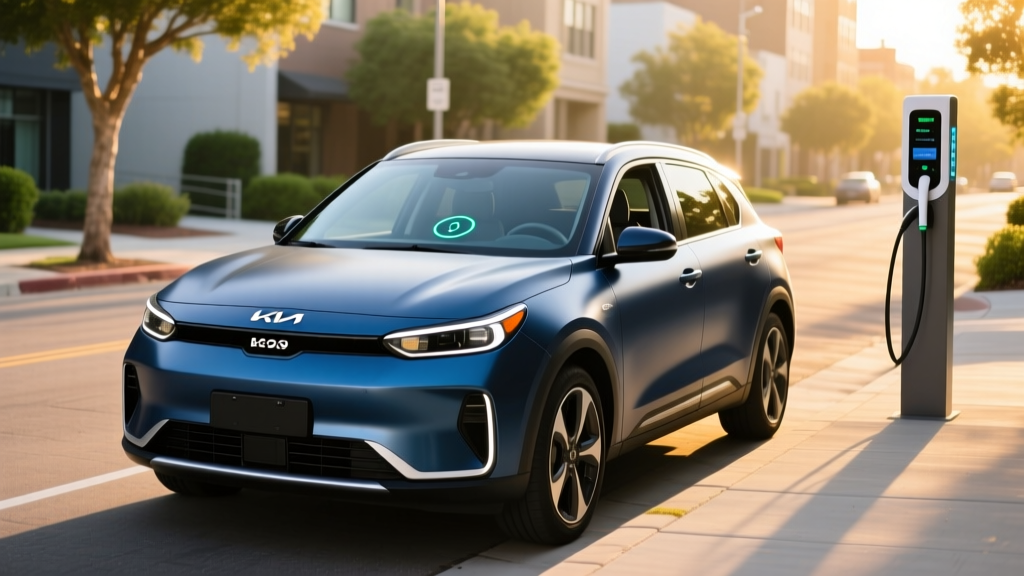
Buying a pre-owned electric vehicle is one of the smartest ways to enter the EV market without paying new-car premiums — and the federal used car EV credit makes it even more attractive. Officially known as the Previously Owned Clean Vehicle Credit (IRS §25E), this incentive can knock up to $4,000 off your purchase price or tax liability, provided you and the vehicle meet a strict set of requirements that differ significantly from the new-vehicle §30D credit.
But tax credits are only one piece of the ownership-cost equation. Insurance, charging, maintenance, and depreciation all shape what you actually spend over five years. This guide walks through the used car EV credit rules for 2026, then builds a full total-cost-of-ownership picture so you can decide whether a pre-owned EV beats a comparable gas car in your driveway.
How the Used Car EV Credit Works (IRS §25E)
Unlike the new-vehicle credit, which is governed by §30D and caps at $7,500, the used car EV credit falls under IRS §25E. The maximum benefit is $4,000 or 30% of the sale price, whichever is lower. That means a $10,000 used EV yields a $3,000 credit, while anything priced at $13,334 or above hits the $4,000 ceiling.
§25E Used Car EV Credit Eligibility Checklist
- Vehicle price cap: Sale price must not exceed $25,000.
- Vehicle age: Must be at least two model years older than the calendar year of purchase (a 2026 purchase requires a 2024 or older model year).
- Buyer income limits (MAGI): $75,000 single / $112,500 head of household / $150,000 joint filers.
- Dealer requirement: Vehicle must be purchased from a licensed dealer (private-party sales do not qualify).
- First transfer since new: The credit applies only to the first qualified resale since the vehicle was originally sold new — a car that already triggered the used credit cannot trigger it again.
- Battery capacity: Minimum 7 kWh battery pack.
- Use case: Must be for personal use, primarily in the United States.
- Filing frequency: You can only claim this credit once every three years.
A critical nuance: as of 2024, the §25E credit can be transferred to the dealer at the point of sale, effectively functioning as an instant discount rather than a tax-time refund. This point-of-sale transfer option continues into 2026, making the credit accessible even to buyers who owe little or no federal income tax — provided the dealer is registered with the IRS Energy Credits Online portal. Always confirm your dealer's registration before signing paperwork.
5-Year Total Cost of Ownership: Used EV vs. Used Gas Car
To make the math concrete, let's compare a representative used EV against a similarly priced used gas car over five years and 75,000 miles (15,000 miles/year). We'll use a 2022 Hyundai Kona Electric (EPA 258-mile range, 64 kWh battery) at roughly $18,000 used, versus a 2022 Honda HR-V AWD at roughly $19,000 used.
| Cost Category | Used EV (Kona Electric) | Used Gas (Honda HR-V) | Notes |
|---|---|---|---|
| Purchase Price | $18,000 | $19,000 | Average used market, early 2026 |
| Federal Tax Credit | −$4,000 | $0 | §25E, assuming eligibility |
| Effective Purchase | $14,000 | $19,000 | After credit applied at POS |
| Fuel/Energy (5 yr) | $4,050 | $9,375 | See cost-per-mile math below |
| Maintenance (5 yr) | $1,800 | $3,750 | EV: no oil, fewer brake pads |
| Insurance (5 yr) | $9,500 | $7,500 | EV premiums ~15-25% higher |
| Depreciation (5 yr) | $6,500 | $7,000 | Resale at year 10: ~$7,500 EV / ~$12,000 gas |
| Total 5-Year Cost | $35,850 | $46,625 |
The used EV wins by roughly $10,775 over five years, driven primarily by the tax credit, energy savings, and lower maintenance. Insurance is the one line item where the EV costs more — a reality we'll unpack below.
Charging vs. Gas: Real Cost Per Mile
The fuel-cost gap between an EV and a gas car depends heavily on how and where you charge. Here's the breakdown using 2026 national averages:
EV Charging Cost Per Mile
Assumptions: 2022 Kona Electric, EPA-rated 28 kWh/100 mi. Home charging at $0.16/kWh (national residential average), with 15% of miles on DC fast charging at $0.42/kWh.
- Blended energy cost: ~$0.20/kWh
- Cost per mile: $0.054
- Annual cost (15,000 mi): $810
- 5-year cost: $4,050
Gas Vehicle Cost Per Mile
Assumptions: 2022 Honda HR-V AWD, EPA 27 MPG combined. Gasoline at $3.50/gallon (2026 average).
- Cost per mile: $0.125
- Annual cost (15,000 mi): $1,875
- 5-year cost: $9,375
The per-mile energy cost for the EV is less than half that of the gas car. If you have access to workplace charging, time-of-use utility rates (off-peak at $0.08–$0.10/kWh), or solar panels, the EV number drops even further — potentially to $0.02–$0.03 per mile. Conversely, if you rely entirely on DC fast charging at highway rates ($0.45–$0.55/kWh), the EV cost climbs to around $0.12–$0.15 per mile, nearly matching gas. Home Level 2 charging is the economic keystone of EV ownership.
Maintenance Savings: What You Actually Skip
EVs eliminate several routine maintenance items that gas-car owners accept as unavoidable. The savings are real but not infinite — tires, cabin air filters, wiper blades, and brake fluid still require attention.
| Maintenance Item | Gas Car (5 yr / 75k mi) | EV (5 yr / 75k mi) | EV Savings |
|---|---|---|---|
| Oil Changes (synthetic, every 7,500 mi) | $750 (10 changes) | $0 | $750 |
| Engine Air Filter | $150 | $0 | $150 |
| Spark Plugs | $300 | $0 | $300 |
| Brake Pads (front + rear) | $800 | $200 | $600 |
| Transmission Fluid | $200 | $0 | $200 |
| Tires (EVs wear ~15% faster due to weight/torque) | $1,000 | $1,150 | −$150 |
| Cabin Air Filter, Wipers, Fluid | $350 | $350 | $0 |
| Coolant / Misc. | $200 | $100 | $100 |
| Total | $3,750 | $1,800 | $1,950 |
Regenerative braking is the unsung hero here. Because regen handles most deceleration, EV brake pads routinely last 100,000+ miles. Some owners report original brake pads at 150,000 miles. The trade-off is tire wear: EVs are heavier and deliver instant torque, which accelerates tread wear. Budget for one extra tire rotation or replacement set over five years compared to a gas car.
Insurance: The Cost EV Owners Can't Ignore
EV insurance premiums are typically 15–25% higher than equivalent gas vehicles, according to industry data. Several factors drive this:
- Higher repair costs: EV battery packs and specialized power electronics are expensive to replace after a collision. A minor rear-end impact that totals a battery can push repair costs above the vehicle's value.
- Specialized labor: High-voltage system repairs require certified technicians, and fewer shops have this capability, raising labor rates.
- Parts availability: EV-specific components (inverters, onboard chargers, thermal management parts) can have longer lead times.
- Vehicle value: Even used, EVs often carry higher book values than comparable gas cars, increasing comprehensive and collision premiums.
For our Kona Electric vs. HR-V comparison, expect roughly $1,900/year for the EV versus $1,500/year for the gas car — a $2,000 gap over five years. However, insurers like State Farm, Progressive, and Geico increasingly offer EV-specific discounts (up to 10%) for vehicles with advanced ADAS features. Always quote multiple insurers and ask specifically about EV or green-vehicle discounts before purchasing.
Depreciation and Resale Value Trends
EV depreciation has been volatile. During 2022–2023, used EV prices spiked alongside new-vehicle shortages, then corrected sharply in 2023–2024 as new EV price cuts (led by Tesla) cascaded through the used market. As of early 2026, the depreciation picture has stabilized:
- Average 5-year EV depreciation: 50–60% of original MSRP (vs. 40–50% for mainstream gas crossovers).
- Battery health matters: A used EV with verified State of Health (SoH) above 85% commands a $1,500–$3,000 premium over one with degraded batteries.
- Brand divergence: Teslas and Hyundai/Kia EVs have held value better than some luxury EVs (Jaguar I-PACE, Audi e-tron) that suffered steep first-year drops.
When buying used, request a battery health report (many manufacturers provide this through the dealer or telematics). The federal battery warranty mandate requires 8 years/100,000 miles for emissions-related components, which includes the traction battery on PZEV/EVs — meaning a 2022 model should still carry factory battery coverage through 2030 or 100,000 miles. Verify this with the manufacturer before purchase.
State, Local, and Utility Incentives
Beyond the federal §25E credit, many states and utilities offer additional rebates — but these vary dramatically by jurisdiction. Examples current as of early 2026:
- Colorado: State tax credit of up to $3,500 for used EVs under $25,000 (income-dependent).
- California (CVRP): Up to $1,000–$2,500 rebate for low/moderate-income buyers on used EVs, stackable with federal.
- Utility rebates: Many utilities (PG&E, Xcel Energy, ConEdison) offer $250–$1,000 rebates for home Level 2 charger installation, or off-peak charging credits.
Check your state energy office and utility provider for current programs — amounts and eligibility change frequently. The AFDC State Laws and Incentives database is the most comprehensive resource.
Putting It All Together: Who Benefits Most from the Used EV Credit?
The used car EV credit is most valuable for buyers who meet three conditions simultaneously:
- Income within MAGI limits ($75K single / $150K joint) — high earners are excluded entirely.
- Access to home Level 2 charging — without it, you lose the per-mile fuel-cost advantage and may pay DC fast-charging rates that rival gasoline.
- Driving patterns that suit the vehicle's real-world range — a used Kona Electric delivers roughly 220–240 highway miles on a charge (below the 258 EPA sticker), and cold weather can reduce that to 170–190 miles. If your daily round trip exceeds this, you'll need mid-day charging.
If all three conditions align, the §25E credit effectively drops your purchase price by 18–22%, and the five-year operating savings (fuel + maintenance − insurance penalty) add another $3,000–$4,000 in net benefit versus a comparable gas car. That's a compelling case for electrification at a fraction of new-EV pricing.
Frequently Asked Questions
Can I claim the used car EV credit if I also claimed the new EV credit in a prior year?
Yes. The §25E (used) and §30D (new) credits are separate provisions. However, you can only claim the §25E used credit once every three years. If you claimed it in 2024, you cannot claim it again until 2027.
Does the used car EV credit work with point-of-sale transfer?
Yes, starting in 2024, the §25E credit can be transferred to a registered dealer at the point of sale, reducing your purchase price directly. The dealer must be enrolled in the IRS Energy Credits Online system. Confirm this before signing a purchase agreement.
What if my income exceeds the MAGI limit in the year I claim the credit?
The credit is disallowed if your modified adjusted gross income exceeds the threshold ($75K single / $112.5K HOH / $150K joint) in either the year of purchase or the prior year — whichever is lower. If you're near the limit, consult a tax professional about timing strategies.
Are Tesla vehicles eligible for the used car EV credit?
Yes, provided the specific vehicle meets all §25E requirements (price under $25,000, at least two model years old, first qualified resale, 7+ kWh battery). Used Model 3s from 2021–2022 frequently fall within the $25,000 cap in 2026.
How do I verify a used EV's battery health before buying?
Request a State of Health (SoH) report from the dealer or manufacturer. Some brands (Hyundai, Kia, Tesla via the app) provide this directly. Third-party services like Recurrent offer battery health assessments. Look for SoH above 85% — below 80% may indicate accelerated degradation, especially in hot climates or vehicles frequently DC fast-charged to 100%.
Is the used EV credit refundable?
No, the §25E credit is nonrefundable, meaning it can only reduce your tax liability to zero — it cannot generate a refund beyond what you owe. However, the point-of-sale transfer option effectively bypasses this limitation by applying the credit as a purchase-price reduction regardless of your tax liability.
Tax credit rules referenced reflect IRS guidance current as of early 2026. Eligibility requirements, income caps, and program availability are subject to legislative change. Consult IRS Publication 5866 or a qualified tax professional before relying on credit amounts in purchase decisions. Range, efficiency, and pricing figures sourced from fueleconomy.gov and manufacturer specifications.