The Short Answer on Canada-China EV Trade
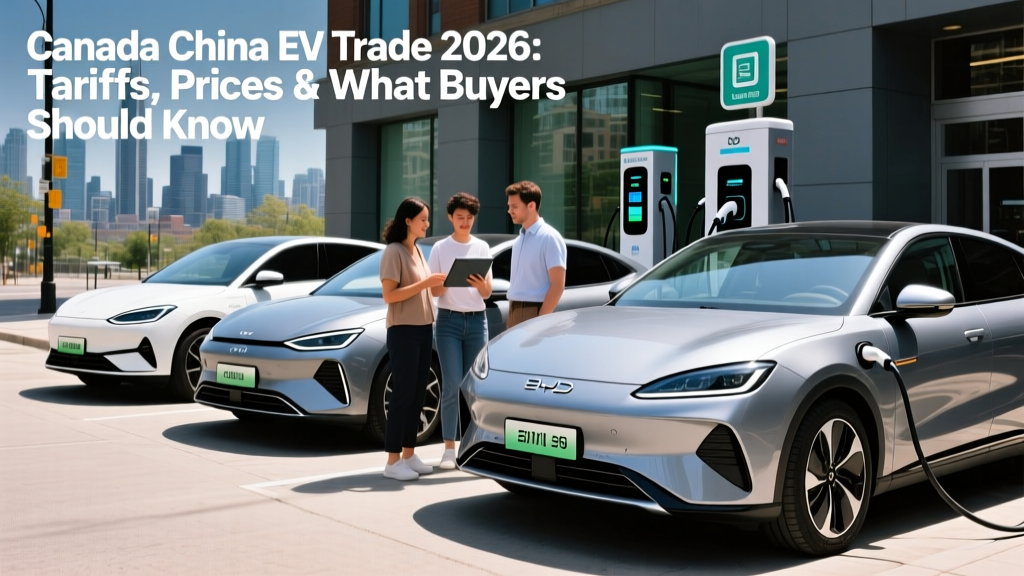
As of 2026, Canada imposes a 100% surtax on all Chinese-made electric vehicles — effectively doubling their import price and removing models like the BYD Dolphin, MG4 EV, and base Tesla Model 3 (Shanghai-built) from competitive pricing. The tariff, enacted in October 2024 and maintained through 2026, means Canadian buyers will pay $40,000–$55,000+ CAD for vehicles that would otherwise land in the $22,000–$30,000 range. Canadian EV buyers must now choose between higher-priced non-Chinese EVs, hybrids, or the limited inventory of pre-tariff stock.
Why Canada Slapped a 100% Tariff on Chinese EVs
In August 2024, Canada announced it would mirror U.S. trade policy by applying a 100% additional duty on EVs manufactured in China, effective October 1, 2024. The policy targeted a wave of affordable Chinese EVs — from BYD, MG (SAIC), Polestar (Volvo/Geely, China-assembled), and even Tesla's Shanghai-built Model 3 — that threatened to undercut legacy automakers' Canadian pricing by 40–60%.
The stated goals were twofold: protect Canada's domestic auto manufacturing sector (which includes Stellantis, Honda, and Toyota plants in Ontario) and counter what Western governments characterize as unfair state subsidies in China's EV industry. According to Finance Canada's official tariff announcement, the surtax applies to all vehicles classified under HS code 8703.80 (pure battery-electric vehicles) that originate from China, regardless of the brand badge on the hood.
The practical result? A BYD Atto 3 (known globally as the Yuan Plus) with a pre-tariff landed cost of roughly $28,000 CAD now carries a price tag north of $56,000 CAD — eliminating its primary value proposition overnight.
Which EVs Are Affected (and Which Aren't)
The tariff is origin-based, not brand-based. A Volvo-branded vehicle assembled in China is hit; a Tesla built in Fremont, California is not. Here's how major models break down for Canadian buyers in 2026:
| Vehicle | Assembly Location | Tariff Applied? | Approx. Pre-Tariff Price (CAD) | Post-Tariff Price (CAD) |
|---|---|---|---|---|
| Tesla Model 3 RWD | Shanghai, China (some trims) | Yes (China-built units) | ~$44,000 | ~$88,000* |
| Tesla Model 3 RWD | Fremont / Austin, USA | No | ~$44,000 | ~$44,000 |
| BYD Dolphin | Shenzhen, China | Yes | ~$24,000 | ~$48,000 |
| MG4 EV | Shanghai, China | Yes | ~$26,000 | ~$52,000 |
| Polestar 2 | Luqiao, China | Yes | ~$52,000 | ~$104,000 |
| Hyundai Ioniq 5 | Ulsan, S. Korea / Ellabell, GA (USA) | No | ~$53,000 | ~$53,000 |
| Ford Mustang Mach-E | Cuautitlán, Mexico | No | ~$52,000 | ~$52,000 |
| Volvo EX30 | Zhangjiakou, China | Yes | ~$45,000 | ~$90,000 |
*Tesla has shifted most North American deliveries to U.S.-built units to avoid this tariff. Verify VIN origin (starts with 5YJ = USA, 7SA/L = China) before purchase.
The Real Cost: EV vs Gas vs Hybrid in Canada (2026)
With Chinese-made budget EVs priced out of the market, Canadian buyers face a narrower field. Let's compare what a typical Canadian commuter (20,000 km/year, mixed city/highway, Ontario electricity rates at ~$0.17/kWh, gas at ~$1.55/L) actually spends across three realistic options:
| Category | Hyundai Ioniq 5 Preferred (BEV) | Toyota RAV4 Hybrid XLE (HEV) | Honda CR-V EX-L AWD (Gas) |
|---|---|---|---|
| Purchase Price (MSRP + freight) | $56,500 | $40,200 | $43,800 |
| Federal iZEV Rebate | −$5,000 | $0 | $0 |
| Provincial Rebate (QC example) | −$7,000 | $0 | $0 |
| Net Purchase | $44,500 | $40,200 | $43,800 |
| Fuel/Energy (5 yr / 100,000 km) | $3,400 (17 kWh/100km) | $7,750 (6.7 L/100km) | $11,625 (7.5 L/100km) |
| Maintenance (5 yr) | $1,800 | $3,600 | $4,200 |
| Insurance (5 yr avg) | $11,500 | $8,800 | $9,200 |
| Total 5-Year Cost | $61,200 | $60,350 | $68,825 |
| Cost per km | $0.61 | $0.60 | $0.69 |
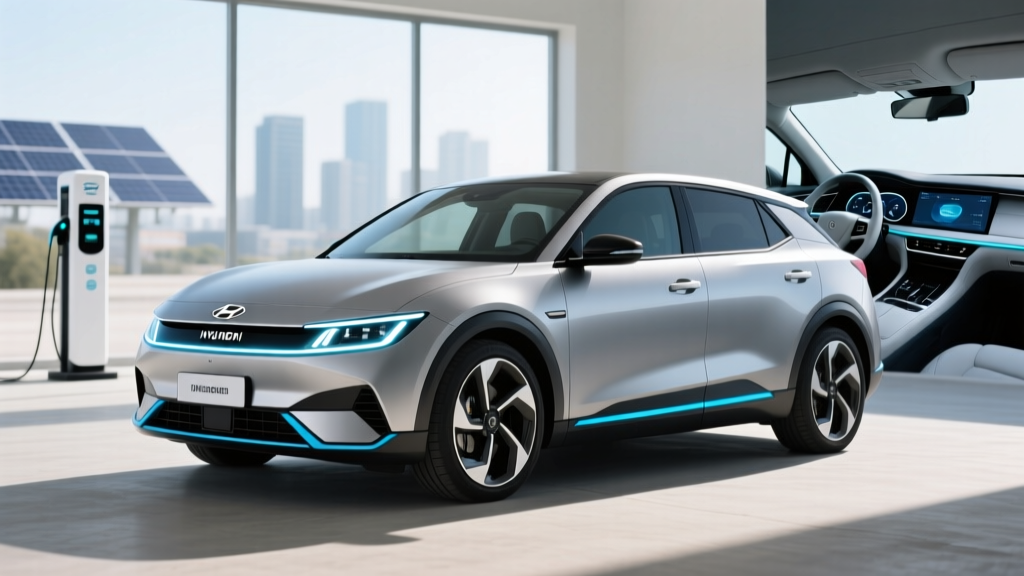
The Ioniq 5's EPA-rated range of 488 km (303 miles, Long Range AWD with the 84 kWh NMC battery) holds up reasonably in Canadian summers but expect a 25–35% reduction in deep winter (−20°C), bringing real-world highway range to roughly 320–360 km. The heat pump (standard on Canadian trims) helps preserve cabin comfort without gutting the battery, but cold-soaked DC fast charging will still taper: peak 240 kW drops to ~120 kW if you arrive at the charger without preconditioning.
What Chinese EVs Would Have Cost Without the Tariff
This is the opportunity cost Canadian buyers are absorbing. Vehicles that sell for $25,000–$35,000 CAD in Europe, Australia, and Southeast Asia are now effectively banned from the Canadian market by price:
- BYD Dolphin (44.9 kWh LFP battery, 340 km WLTP range, 95 HP) — would have been Canada's cheapest new EV at ~$24,000 CAD. Post-tariff: ~$48,000.
- MG4 EV (64 kWh NMC, 450 km WLTP, 204 HP, 0-100 in 7.9s) — a legitimate Ioniq 5 rival at one-third the price. Post-tariff: ~$52,000.
- BYD Seal (82.5 kWh LFP Blade battery, 570 km WLTP, 313 HP, 0-100 in 5.9s) — a Tesla Model 3 fighter at ~$38,000 CAD pre-tariff. Post-tariff: ~$76,000.
- Volvo EX30 (69 kWh NMC, 475 km WLTP, 272 HP) — Volvo's entry-level EV, assembled in China. Post-tariff price nearly doubled.
For context, the average new vehicle transaction price in Canada in early 2026 sits around $55,000 CAD. The tariff pushes most Chinese EVs above that average, stripping away the one advantage — affordability — that made them disruptive.
Common Misconceptions About Canada's China EV Tariff
| Myth | Fact |
|---|---|
| "The tariff bans Chinese EVs entirely." | No — it adds a 100% surtax. They can still be imported, but at double the price, making them uncompetitive. |
| "All Teslas are affected." | Only Shanghai-built Teslas. Tesla shifted Canadian deliveries to U.S.-built (Fremont/Austin) units in late 2024 to avoid the surtax. |
| "Chinese EVs are low quality." | BYD, NIO, and Zeekr score well in Euro NCAP testing. The MG4 earned a 5-star Euro NCAP rating. Quality is not the policy's rationale — trade protection is. |
| "The tariff protects Canadian-made EVs." | Canada currently has no mass-market EVs assembled domestically. The tariff protects future planned production (Stellantis LG battery plant, Honda EV hub in Ontario) more than current output. |
| "I can import one personally and skip the tariff." | The 100% surtax applies to all imports under HS 8703.80 from China, including personal imports. CBSA collects it at the border. |
Canadian EV Ownership: Cold Weather, Charging, and Real-World Range
Regardless of where your EV was built, Canadian ownership means confronting three realities:
Cold-Weather Range Loss
Lithium-ion batteries lose efficiency in freezing temperatures. At −15°C to −25°C, expect 30–40% range reduction on short trips (the battery spends energy heating itself and the cabin). Longer drives stabilize somewhat once the pack warms. Vehicles with a heat pump (Ioniq 5, Model Y, EV6) lose 20–30% instead of 35–45%. LFP chemistry (used by BYD's Blade battery and Tesla's base Model 3 RWD) is slightly more cold-sensitive than NMC at the cell level, though pack-level thermal management matters more than chemistry alone.
Home Charging Access
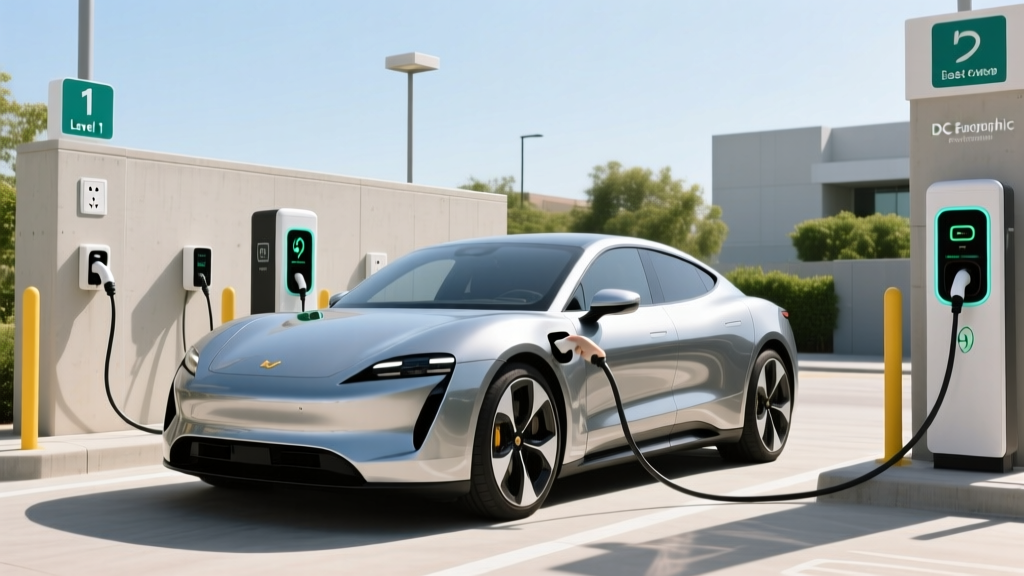
Canada's housing stock — particularly condos in Toronto, Vancouver, and Montreal — doesn't always support Level 2 home charging. If you live in a single-family home with a garage, a 240V / 48A Level 2 charger (like a ChargePoint Home Flex or Grizzl-E Smart, both assembled in North America) costs $800–$1,400 CAD installed assuming your panel has capacity. A 200-amp panel upgrade adds $2,000–$4,000 CAD. Condo owners should check strata/HOA rules and available amperage before committing to an EV.
Public Charging Reliability
Canada's public DC fast-charging network is growing but uneven. Electrify Canada, Petro-Canada (Suncor), and Tesla Superchargers (now opening to NACS-equipped non-Tesla EVs) cover major corridors like the 401, Trans-Canada, and Highway 1. Rural and northern routes remain charging deserts. If your commute is under 80 km round-trip and you can charge at home, public charging reliability matters far less.
Your Decision Framework: What Should a Canadian EV Buyer Do in 2026?
Choose a non-Chinese BEV (Ioniq 5, Model Y, EV6, Mach-E, Equinox EV) if:
- You have reliable Level 2 home or workplace charging
- Your daily driving is under 120 km and you take road trips ≤2x/month
- You qualify for the federal iZEV rebate ($5,000 for vehicles under $55,000 base MSRP) and/or provincial incentives (Quebec's $7,000, BC's up to $4,000 income-tested)
- You plan to keep the vehicle 7+ years to amortize the higher purchase price
Choose a hybrid (RAV4 Hybrid, CR-V Hybrid, Tucson Hybrid) if:
- You lack home charging access and rely on street parking
- You regularly drive in −25°C+ conditions with no garage
- Your budget is under $45,000 CAD and you can't wait for rebate processing
- You take frequent long road trips through rural areas with sparse charging
Wait and watch the Canada-China EV trade situation if:
- You were specifically targeting a sub-$35,000 EV (the segment the tariff eliminated)
- Chinese OEMs like BYD announce Canadian- or Mexico-based assembly to bypass the tariff (no confirmed plans as of early 2026, but industry analysts consider it possible by 2027–2028)
- You're within 12 months of a planned purchase and want to see if tariff negotiations shift
The Tax Credit and Rebate Landscape for Canadian EV Buyers
Canada's federal iZEV program offers a $5,000 rebate on BEVs and long-range PHEVs with a base MSRP under $55,000 CAD (higher trims can push the final price above $65,000 as long as the base trim qualifies). Several provinces stack additional incentives:
- Quebec: Up to $7,000 (reducing annually — verify current amount at Roulez Vert)
- British Columbia: Up to $4,000, income-tested (phased out for household incomes over $145,000)
- PEI, Nova Scotia, New Brunswick: Various provincial rebates ranging $2,000–$5,000
- Ontario: No provincial rebate currently (cancelled in 2018)
These rebates make non-Chinese EVs like the Hyundai Kona Electric ($46,000 CAD MSRP, 420 km EPA range, 65 kWh NMC battery) and base Tesla Model 3 RWD ($44,000 CAD, 438 km EPA, 60 kWh LFP) viable — but only if the vehicle isn't tariffed out of contention.
Frequently Asked Questions
Does the 100% tariff apply to plug-in hybrids from China?
No. The tariff targets pure battery-electric vehicles (HS 8703.80). Plug-in hybrids (classified under different HS codes) are not currently subject to the 100% surtax, though the Canadian government has signaled it may review this.
Can I buy a used Chinese-made EV in Canada and avoid the tariff?
The tariff applies at the point of import, not at resale. Any Chinese-manufactured EV already in Canada before October 2024 was imported under the old rules. Used inventory of these vehicles is extremely limited.
Will BYD or MG start building cars in Canada or Mexico to avoid the tariff?
As of early 2026, no Chinese OEM has announced a North American assembly plant specifically to serve Canada. BYD is building a plant in Mexico, but vehicles produced there would still face scrutiny under CUSMA (USMCA) rules of origin and potential U.S. tariffs if they cross the border. This remains a developing situation.
Is a Tesla Model 3 built in Shanghai still a good buy if I can find pre-tariff stock?
Pre-tariff Shanghai-built Model 3s are essentially gone from Canadian dealer lots. If you find one, verify the tariff was already paid at import (check the bill of sale and CBSA documentation). The Shanghai Model 3 is mechanically identical to the U.S.-built version — same 60 kWh LFP battery, ~438 km EPA range, 283 HP, 0-100 km/h in 6.1 seconds.
How does this affect EV adoption rates in Canada?
Canada's EV market share was approximately 12% of new vehicle sales in 2024. The tariff removes the lowest-price EV tier, which analysts at Clean Energy Canada estimate could slow adoption by 1–3 percentage points in 2025–2026, particularly among cost-sensitive buyers who would have been first-time EV adopters.
What about EV batteries — are all of them from China regardless of where the car is assembled?
Partially true. China controls roughly 75% of global battery cell production. Even EVs assembled in Korea, Japan, or the U.S. often use cells from CATL or BYD. However, the Canadian tariff targets vehicle assembly origin, not battery origin — so a Hyundai Ioniq 5 with CATL cells but assembled in Korea faces no surtax. The federal iZEV program does not currently include battery-sourcing requirements the way the U.S. §30D tax credit does.