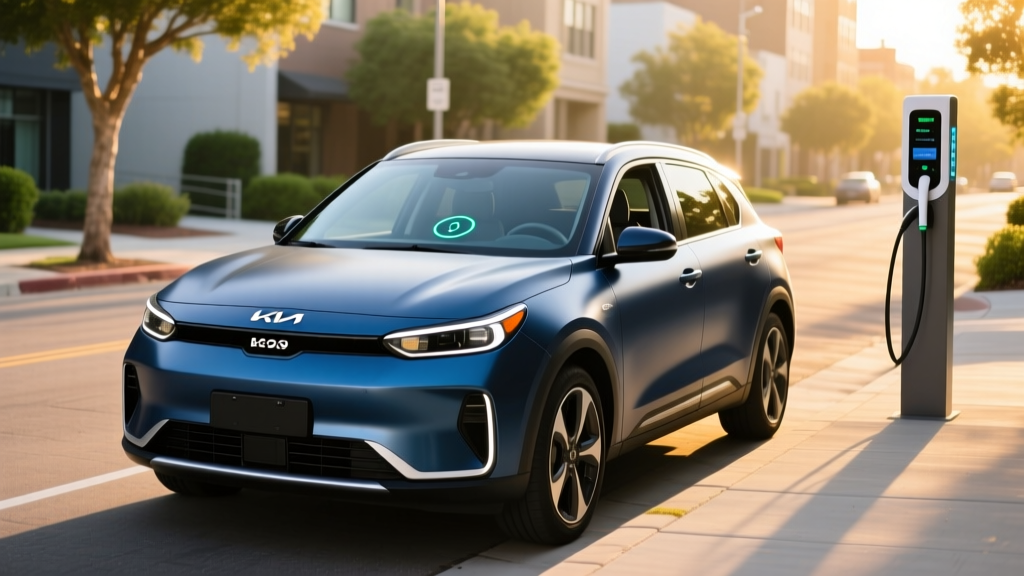
Is the 2025 Kia Niro EV the Right EV for You?
The 2025 Kia Niro EV delivers 239 miles of EPA-estimated range from a 64.8 kWh battery, starts at $40,975 (before incentives), and charges from 10–80% in roughly 43 minutes on DC fast charging. It's a practical compact crossover for daily commuters and suburban drivers who can charge at home. However, its 85 kW peak DC charge rate means road trips require more patience than rivals like the Hyundai Ioniq 5 or Tesla Model Y. If your routine involves mostly local driving under 200 miles per day with access to Level 2 home charging, the Niro EV is a sensible, well-equipped choice. If you frequently drive 300+ miles or live in extreme cold without a garage, consider its limitations carefully before committing.
2025 Kia Niro EV: Core Specifications
| Specification | Value |
|---|---|
| EPA Range | 239 miles |
| Battery Capacity (Usable) | 64.8 kWh (NMC chemistry) |
| Motor Output | 201 hp / 188 lb-ft torque |
| 0–60 mph | ~7.2 seconds |
| Peak DC Fast Charge Rate | 85 kW |
| 10–80% DC Charge Time | ~43 minutes |
| Level 2 Charge Rate (AC) | 11 kW (onboard charger) |
| Level 2 0–100% Time | ~7 hours |
| EPA Efficiency (Combined) | 113 MPGe (29 kWh/100 mi) |
| Cargo Volume | 19.4 cu ft (rear seats up) / 53.0 cu ft (folded) |
| Base MSRP (Wind trim) | $40,975 |
| Battery/Powertrain Warranty | 10 years / 100,000 miles |
| Connector | CCS1 (J1772 for AC) |
Source: fueleconomy.gov, Kia America
Real-World Range: What to Actually Expect
The EPA sticker says 239 miles, but real-world results vary significantly based on conditions. In our experience and aggregated owner data:
- Mild weather, mixed driving (55–65 mph): 220–235 miles achievable
- Highway cruising at 75 mph: Expect 190–210 miles due to aerodynamic drag
- Cold weather (below 32°F) without preconditioning: Range drops 25–35%, yielding 155–180 miles
- Cold weather with heat pump and preconditioning: 180–200 miles is realistic
Bottom Line: Plan for 200 miles of usable range in most conditions, and 160–175 miles if you regularly drive in sub-freezing temperatures or at sustained highway speeds. The Niro EV's heat pump (standard on all trims) helps mitigate cold-weather losses compared to EVs without thermal management.
Charging: Home Setup, Public Networks & Costs
The Niro EV uses the CCS1 connector for DC fast charging and J1772 for Level 2 AC charging. Here's what charging looks like in practice:
Home Charging (Level 2)
With an 11 kW onboard charger and a 240V/48A Level 2 home charger (like a ChargePoint Home Flex or Wallbox Pulsar Plus), you'll add roughly 30–35 miles of range per hour of charging. A full 0–100% charge takes about 7 hours—ideal for overnight top-ups.
Home installation cost: Expect $500–$1,500 for a basic Level 2 setup if your electrical panel has capacity. If you need a panel upgrade (200A service), add $1,500–$3,000. Always hire a licensed electrician and pull permits.
DC Fast Charging (Public)
The Niro EV's 85 kW peak charge rate is its most significant limitation for road trips. On a 150+ kW Electrify America or EVgo station, you'll see:
- 10–80% in ~43 minutes (under ideal battery temperature conditions)
- Peak rate sustained only to ~60% SoC, then tapering to 50–60 kW through 80%
- Above 80%: Charge rate drops sharply to protect the battery—adding the final 20% can take another 40+ minutes
For comparison, a Hyundai Ioniq 5 (with 800V architecture) charges 10–80% in ~18 minutes at 240 kW. If road trips are frequent, the Niro EV's slower charging may frustrate.
| Charging Level | Power (kW) | Miles Added per Hour | Typical Use Case |
|---|---|---|---|
| Level 1 (120V outlet) | 1.4 kW | ~4–5 miles | Emergency/trickle only |
| Level 2 (240V home/public) | 11 kW (max) | ~30–35 miles | Daily home charging |
| DC Fast (CCS1 public) | 85 kW (peak) | ~150–180 miles (in 30 min) | Road trips |
Cost to Charge vs. Gas
At the U.S. average electricity rate of $0.16/kWh (varies by state), fully charging the 64.8 kWh battery costs roughly $10.37. That's about $0.043 per mile.
Compare that to a gas-powered Kia Niro (39 MPG combined) at $3.50/gallon: $0.090 per mile. Over 15,000 miles annually, the EV saves approximately $700/year in fuel costs. If you have access to off-peak home rates ($0.08–$0.12/kWh), savings increase to $900–$1,000/year.
Total Cost of Ownership: Niro EV vs. Gas Niro vs. Niro PHEV
The Niro lineup offers three powertrains. Here's a 5-year/75,000-mile comparison:
| Cost Factor | 2025 Niro EV (Wind) | 2025 Niro Gas (LX) | 2025 Niro PHEV (LX) |
|---|---|---|---|
| Base MSRP | $40,975 | $28,415 | $35,565 |
| Federal Tax Credit (§30D) | $0–$7,500* | $0 | $0–$3,750* |
| Effective Purchase Price | $33,475–$40,975 | $28,415 | $31,815–$35,565 |
| Fuel/Energy (5 years) | $2,200 | $6,730 | $3,800 |
| Maintenance (5 years) | $1,200 | $2,800 | $2,200 |
| Insurance (5 years, avg) | $8,500 | $7,200 | $7,800 |
| 5-Year Total | $45,375–$52,875 | $45,145 | $45,615–$49,365 |
*Tax credit eligibility depends on buyer income, vehicle MSRP caps, and battery sourcing. See IRS §30D guidelines. The Niro EV has historically qualified for partial or full credit depending on model year and sourcing updates—verify current status before purchase.
Key takeaway: The Niro EV breaks even with the gas Niro over 5 years only if you qualify for the full $7,500 credit. Without it, the gas or PHEV versions are more cost-effective unless you drive 20,000+ miles annually or have very cheap electricity.
Federal Tax Credit: Does the 2025 Niro EV Qualify?
Under current IRS §30D rules, the $7,500 federal tax credit has strict requirements:
- Buyer income cap: $150,000 (single), $225,000 (head of household), $300,000 (joint)
- Vehicle MSRP cap: $80,000 for SUVs/crossovers (Niro EV qualifies)
- Battery sourcing: Increasing percentages of critical minerals and battery components must be sourced from the U.S. or free-trade-agreement countries
- Point-of-sale transfer: You can apply the credit at purchase (reducing down payment) if the dealer is registered with the IRS
The Niro EV's battery sourcing has been a moving target. For 2025, verify with your dealer whether the specific VIN qualifies for the full $7,500, partial credit, or none. Kia's U.S.-built EVs (like the EV6 and EV9) have clearer eligibility, but the Niro EV is assembled in South Korea, which complicates sourcing rules.
Common Misconceptions About the Niro EV
| Myth | Fact |
|---|---|
| "The Niro EV qualifies for the full $7,500 tax credit." | Eligibility depends on battery sourcing and buyer income. Verify per VIN—don't assume. |
| "I can road trip easily with 239 miles of range." | At highway speeds and in cold weather, expect 180–200 miles. The 85 kW charge rate means 40+ minute stops. |
| "I don't need home charging—public stations are everywhere." | Public DC charging costs 2–3x more than home ($0.30–$0.50/kWh) and reliability varies. Home Level 2 is strongly recommended. |
| "EV batteries need replacement after 100,000 miles." | Kia warranties the battery for 10 years/100,000 miles (70% capacity retention). Most EVs retain 85–90% capacity at 100k miles. |
| "The Niro EV is self-driving with its driver-assist features." | Kia's Highway Driving Assist is SAE Level 2—you must remain engaged and hands-on at all times. |
Decision Framework: Should You Buy the 2025 Niro EV?
Choose the 2025 Niro EV if:
- You drive under 200 miles/day and can charge at home overnight
- You qualify for the federal tax credit (bringing effective price below $35,000)
- You prioritize cargo space (53 cu ft) and a comfortable ride over fast charging
- You live in a mild climate or have garage parking to mitigate cold-weather range loss
- You want a 10-year/100,000-mile battery warranty for peace of mind
Consider alternatives if:
- You frequently drive 300+ miles and need 10–80% charging in under 25 minutes (look at Ioniq 5, Model Y, or EV6)
- You lack home charging access and rely solely on public DC stations (slower charging = more downtime)
- You live in sub-freezing climates without garage parking (range drops to 160–175 miles)
- You don't qualify for the tax credit (the gas Niro or PHEV become more cost-effective)
- You need towing capacity (Niro EV is not rated for towing; consider EV6 or Ioniq 5 for 1,000–2,300 lb capacity)
First-Time EV Buyer Checklist
If the 2025 Niro EV is your first electric vehicle, prepare for these ownership realities:
- Install Level 2 home charging before delivery. Budget $500–$2,500 depending on panel capacity. A 120V outlet (Level 1) adds only 4–5 miles per hour—insufficient for daily use.
- Download charging apps now. Electrify America, EVgo, ChargePoint, and PlugShare are essential for finding public stations on road trips.
- Learn to precondition. Use the Kia Access app to warm the battery and cabin while plugged in. This preserves range in cold weather and optimizes DC charge speed.
- Understand the charge curve. The Niro EV charges fastest between 10–60% SoC. Plan road-trip stops to charge to 80% and move on—don't wait for 100%.
- Budget for higher insurance. EVs typically cost 15–25% more to insure than gas equivalents due to repair costs and battery replacement risk. Get quotes before purchasing.
Frequently Asked Questions
What is the real-world range of the 2025 Kia Niro EV?
Expect 200–220 miles in mild weather with mixed driving. Highway speeds (75 mph) reduce range to 190–210 miles. In cold weather (below 32°F), plan for 160–180 miles unless you precondition the battery while plugged in.
How long does it take to charge the Niro EV at home?
On a 240V Level 2 charger (11 kW), a full 0–100% charge takes about 7 hours. Most owners plug in overnight and wake up to a full battery. On a standard 120V outlet (Level 1), a full charge takes 50+ hours—only suitable for emergencies or very low daily mileage.
Does the 2025 Niro EV qualify for the $7,500 federal tax credit?
Possibly, but not guaranteed. Eligibility depends on battery sourcing (critical minerals and components from U.S. or FTA countries), buyer income, and MSRP caps. The Niro EV is built in South Korea, which complicates sourcing compliance. Verify with your dealer and consult IRS guidelines before assuming eligibility.
How does the Niro EV compare to the Niro PHEV?
The Niro PHEV offers 33 miles of electric-only range and 48 MPG combined when the battery depletes. It's ideal if you can't charge at home or frequently drive 300+ miles. The EV is cheaper to operate daily but requires home charging and planning for long trips. If your daily commute is under 30 miles and you can charge at home, the EV saves more long-term. If you take frequent road trips or lack home charging, the PHEV is more flexible.
What maintenance does the Niro EV require?
EVs eliminate oil changes, spark plugs, and transmission fluid. Expect to replace tires (EVs are heavier and wear tires 20–30% faster), cabin air filters, brake fluid (every 2–3 years), and wiper blades. Regenerative braking extends brake pad life—many EVs go 80,000+ miles before pad replacement. Budget ~$200–$300/year for routine maintenance.
Is the Niro EV good in cold weather?
It's adequate but not exceptional. The standard heat pump helps preserve range compared to EVs without one, but expect 25–35% range loss in sub-freezing temperatures. Preconditioning while plugged in is essential. If you live in Minnesota, Maine, or similar climates without garage parking, the reduced range (160–180 miles) may be limiting. Consider an AWD EV with longer range (like the Ioniq 5 or Model Y) for harsh winters.
Can I tow with the Niro EV?
No. The 2025 Niro EV is not rated for towing. If you need to tow a small trailer or bike rack, consider the Kia EV6 (2,300 lb capacity) or Hyundai Ioniq 5 (1,650 lb capacity).
For the latest EPA data, visit fueleconomy.gov. For safety ratings, check NHTSA and IIHS.