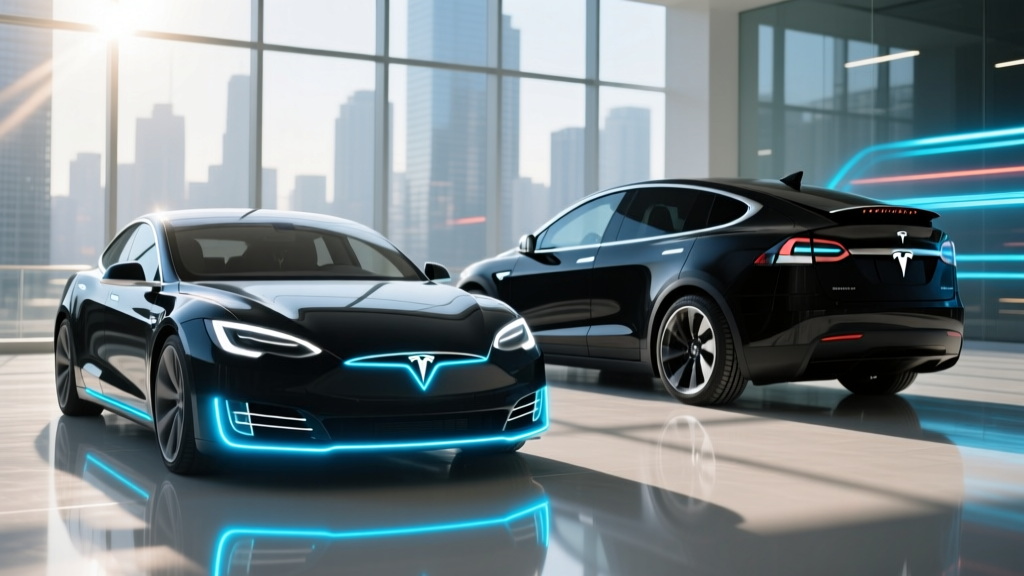
Tesla vehicles are as much about software as they are about batteries and motors, and few features capture that ethos better than the automaker's hidden easter eggs. Among the most searched is a feature that turns the car's instrument cluster into a neon-lit, retro-futuristic dashboard reminiscent of the 1982 sci-fi film Tron. If you've been searching for what is Tron Mode Tesla, you've found the definitive guide — but this article goes beyond the gimmick. We'll break down the 2026 Tesla Model S and Model X, the two vehicles where this easter egg lives, with the exact range, charging, pricing, and ownership data you need to decide if either flagship is worth its premium.
What Is Tron Mode on a Tesla?
Tron Mode is a hidden software easter egg available on the Tesla Model S and Model X. When activated, it transforms the driver's instrument cluster (the small screen behind the steering wheel) into a glowing blue-and-orange grid interface inspired by the light-cycle sequences from Disney's Tron and Tron: Legacy. The speedometer, energy consumption graph, and navigation elements are overlaid with a digital-grid aesthetic that looks like you're piloting a light cycle through the Grid.
⚡ How to Activate Tron Mode
On a 2026 Model S or Model X, navigate to Controls → Software → tap and hold the model name (e.g., "Model S") for approximately 3 seconds. An on-screen keyboard appears. Type "TRON" and press Enter. The instrument cluster will immediately switch to the Tron interface. To revert, repeat the process and type "EXIT" or restart the vehicle.
This feature is purely cosmetic — it does not alter performance, range, or any vehicle system. It's one of dozens of Tesla easter eggs (alongside emissions-testing mode, Mars Rover mode, and the Santa Christmas costume), but it remains one of the most visually striking. Note: Tron Mode is only available on the Model S and Model X with the current software stack. The Model 3 and Model Y use a different instrument cluster architecture and do not support this easter egg as of early 2026.
2026 Tesla Model S: Range, Battery, and Efficiency
| Spec | Long Range | Plaid |
|---|---|---|
| EPA Range | 402 miles | 359 miles |
| Battery (usable) | ~95 kWh (NMC) | ~95 kWh (NMC) |
| Drivetrain | Dual-motor AWD | Tri-motor AWD |
| Horsepower | 670 hp | 1,020 hp |
| 0-60 mph | 3.1 sec | 1.99 sec |
| MPGe (combined) | 120 MPGe | 116 MPGe |
| Efficiency | 28 kWh/100 mi | 29 kWh/100 mi |
| Max DC Charge Rate | 250 kW | 250 kW |
| 10-80% DCFC Time | ~27 min | ~27 min |
| Level 2 (11.5 kW) | ~41 mi/hr | ~41 mi/hr |
| Base MSRP | $79,990 | $94,990 |
🛣️ Real-World Range: Model S Long Range
EPA sticker: 402 miles. In real-world mixed driving at 70-75 mph on the highway, expect approximately 330-350 miles. In cold weather (below 32°F / 0°C), highway range can drop to 280-310 miles due to battery thermal management demands and cabin heating. City driving with regenerative braking recovers energy and can push closer to the EPA figure. The Model S uses a resistive heater on older builds but newer 2025-2026 units incorporate a heat pump, reducing cold-weather losses to roughly 15-20% compared to 25-30% on earlier model years.
The Model S Long Range remains one of the longest-range production EVs sold in the United States. Its ~95 kWh usable NMC (nickel-manganese-cobalt) battery pack delivers outstanding energy density, though it does not use the LFP (lithium iron phosphate) chemistry found in the Standard Range Model 3 and Model Y. NMC offers higher energy density but is more sensitive to sustained 100% state-of-charge storage — Tesla recommends daily charging to 80-90% for longevity.
According to fueleconomy.gov, the 2026 Model S Long Range achieves 120 MPGe combined (28 kWh per 100 miles), making it one of the most efficient large luxury sedans on the market. The Plaid variant, with its tri-motor setup producing 1,020 hp, sacrifices a modest 4 MPGe for supercar-rivaling acceleration.
Charging Speed: DC Fast Charging and Home Level 2
| Level | Power | Speed | Notes |
|---|---|---|---|
| Level 1 (120V) | ~1.4 kW | ~3-5 mi/hr | Emergency/trickle only |
| Level 2 (240V, 48A) | 11.5 kW | ~41 mi/hr | Overnight full charge in ~10 hrs |
| DC Fast Charge | Peak 250 kW | ~200 mi in 15 min | 10-80% in ~27 min; tapers above 80% |
The Model S and Model X use the NACS (North American Charging Standard) connector natively — Tesla's proprietary plug that has now been adopted as the industry standard by Ford, GM, Rivian, Hyundai, and most other automakers. This means access to the full Tesla Supercharger network, which remains the most reliable and widespread DC fast-charging network in North America with over 20,000 stalls.
On a V3 or V4 Supercharger, the Model S peaks at 250 kW. However, that peak is not sustained. The charging curve tapers significantly above 60% state of charge. In practice, the 10-80% charge takes approximately 27 minutes under ideal conditions (battery preconditioned, moderate ambient temperature). Charging from 80-100% can add another 20-25 minutes — a common characteristic of NMC chemistry. Always precondition the battery by navigating to a Supercharger in the Tesla navigation system; this warms the pack and enables faster charge acceptance.
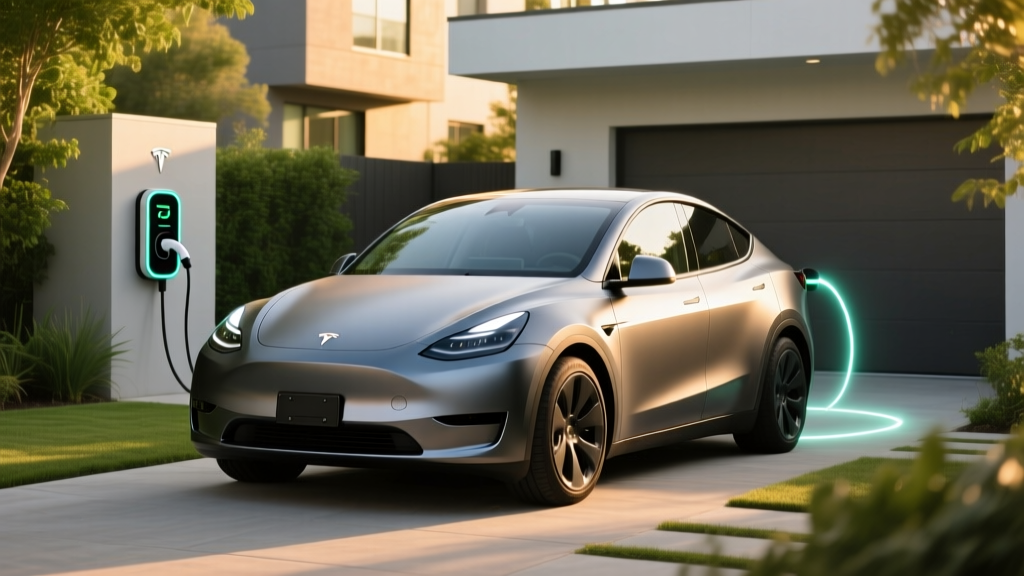
At home on a Tesla Wall Connector (or any J3480/NACS Level 2 station) at 48 amps / 11.5 kW, you'll add roughly 41 miles of range per hour, meaning a full charge from near-empty takes about 10 hours — easily accomplished overnight.
2026 Tesla Model X: The Family SUV with Tron Mode
The Model X shares the same platform, battery, and powertrain architecture as the Model S but in a three-row SUV body with the signature Falcon Wing rear doors. Tron Mode is available on the Model X as well, activated via the same hidden keyboard method.
| Spec | Long Range | Plaid |
|---|---|---|
| EPA Range | 348 miles | 326 miles |
| Battery (usable) | ~95 kWh (NMC) | ~95 kWh (NMC) |
| Drivetrain | Dual-motor AWD | Tri-motor AWD |
| Horsepower | 670 hp | 1,020 hp |
| 0-60 mph | 3.8 sec | 2.5 sec |
| Cargo (behind 2nd row) | 44.0 cu ft | 44.0 cu ft |
| Cargo (max, all folded) | 85.1 cu ft | 85.1 cu ft |
| Towing Capacity | 5,000 lbs | 5,000 lbs |
| Base MSRP | $84,990 | $99,990 |
🛣️ Real-World Range: Model X Long Range
EPA sticker: 348 miles. The Model X's larger frontal area and greater weight reduce real-world highway range to roughly 285-310 miles at 70-75 mph. Cold-weather highway driving (sub-freezing) can bring this down to 240-270 miles. If you tow, expect range to drop dramatically — towing a 3,500-lb trailer can cut range by 40-50%, yielding as little as 175-210 miles per charge.
The Model X offers seating for up to seven passengers (with the optional third row), though the third row is best suited for children. Second-row legroom is generous at 40.9 inches, and the Falcon Wing doors provide dramatic curb appeal and genuinely useful access in tight parking spaces — though they can be slow to open and close compared to conventional doors.
Technology, Autopilot, and Driver Assistance
Both the Model S and Model X come standard with Basic Autopilot, which includes Traffic-Aware Cruise Control and Autosteer (lane centering). This is a SAE Level 2 driver-assistance system — the driver must keep hands on the wheel and remain fully attentive at all times.
⚠️ SAE Automation Level: Level 2 — Not Self-Driving
Tesla's Autopilot and optional Full Self-Driving (Supervised) are classified as SAE Level 2 systems. This means the vehicle can simultaneously control steering and speed, but the human driver is responsible for monitoring the road and intervening immediately. FSD (Supervised), available as a $8,000 option or $99/month subscription, adds automatic lane changes, traffic light/stop sign recognition, and Navigate on Autopilot — but it still requires active driver supervision. Only Level 4 robotaxi services like Waymo operate without a human driver.
The 2026 Model S and Model X feature a 17-inch center touchscreen running Tesla's latest software (v12.x), a 12.3-inch driver instrument cluster, a 22-speaker audio system, and a secondary 8-inch rear-seat entertainment screen. The yoke steering wheel remains standard (a conventional round wheel is available as a no-cost option). HEPA air filtration with Bioweapon Defense Mode is included — genuinely effective for wildfire smoke and urban pollution.
Pricing, Tax Credits, and Total Cost
| Model / Trim | Base MSRP | §30D Credit Eligible? | Effective Price (if eligible) |
|---|---|---|---|
| Model S Long Range | $79,990 | ⚠️ See below | $72,490 – $79,990 |
| Model S Plaid | $94,990 | ❌ Over MSRP cap | $94,990 |
| Model X Long Range | $84,990 | ⚠️ See below | $77,490 – $84,990 |
| Model X Plaid | $99,990 | ❌ Over MSRP cap | $99,990 |
Federal tax credit eligibility for the Model S and Model X is complicated and frequently changes. Under IRS §30D rules for 2026, new EVs must meet several criteria to qualify for up to $7,500 in federal tax credits (which can now be transferred to the dealer as a point-of-sale discount):
- MSRP cap: Sedans (Model S) must have an MSRP at or below $55,000. SUVs, vans, and trucks (Model X) must be at or below $80,000. This means the Model S (starting at $79,990) does not qualify for the new-vehicle credit. The Model X Long Range ($84,990) exceeds the $80,000 SUV cap by $4,990 and does not qualify either.
- Buyer income cap: Modified adjusted gross income must not exceed $300,000 (joint), $225,000 (head of household), or $150,000 (single).
- Battery sourcing: A percentage of critical minerals and battery components must be sourced from the US or free-trade-agreement countries. Tesla's US-built packs partially qualify, but final eligibility depends on the specific production batch.
Bottom line: As of early 2026, neither the Model S nor the Model X qualifies for the $7,500 federal new-vehicle tax credit due to MSRP caps. Always verify current eligibility at fueleconomy.gov and consult a tax professional before purchasing. See IRS.gov §30D for the latest rules.
Warranty, Reliability, and Ownership Costs
Tesla covers the Model S and Model X with the following warranty:
- Basic vehicle: 4 years / 50,000 miles
- Battery & drive unit: 8 years / 150,000 miles (Long Range), 8 years / 150,000 miles (Plaid)
- Battery capacity retention threshold: Tesla warrants that the battery will retain at least 70% of its original capacity during the warranty period
NMC batteries in the Model S/X have demonstrated strong longevity in fleet data. Most units retain 88-92% capacity after 100,000 miles based on aggregated owner reports. However, a full battery pack replacement out of warranty costs approximately $13,000-$18,000 depending on the variant — a figure to factor into long-term ownership planning.
Insurance premiums for the Model S and Model X are among the highest in the EV segment. Expect $2,800-$4,200/year depending on your state, driving record, and coverage level. Tesla offers its own insurance product in many states, which uses real-time driving data to set premiums — often competitive for safe drivers.
✅ Pros
- Class-leading range (402 mi EPA, Model S LR)
- Supercharger network access (most reliable in US)
- Tri-motor Plaid performance (1.99 sec 0-60)
- Over-the-air updates add features continuously
- Excellent HEPA air filtration
- Tron Mode and other easter eggs add delight
❌ Cons
- High MSRP — no federal tax credit eligibility
- Insurance costs above segment average
- Plaid range drops to 326-359 mi
- Model X Falcon Wing doors slow and complex
- Yoke steering divisive (round wheel optional)
- Interior material quality lags Mercedes/Porsche at this price
Model S/X vs. Key Competitors
The 2026 Model S competes against the Lucid Air (516 mi EPA, $74,900+), the Mercedes-Benz EQS (390 mi, $105,550+), and the Porsche Taycan (283-318 mi, $92,250+). The Model S Long Range's advantage is the combination of 402 miles of range, Supercharger access, and a sub-$80K price that undercuts most luxury competitors. However, the Lucid Air Pure offers more range at a lower starting price, and the Taycan delivers superior build quality and handling dynamics.
The Model X faces less direct competition. The Rivian R1S (410 mi, $84,900+) offers better off-road capability and a more rugged design. The BMW iX (324 mi, $87,250+) provides a more luxurious interior. The Model X's unique selling proposition remains the Falcon Wing doors, up to 7 seats, and Supercharger access.
Who Should Buy the Model S or Model X?
🎯 Decision Framework
Choose the Model S Long Range if: You want the longest-range luxury sedan with Supercharger access, commute 40+ miles daily, and value software features and easter eggs like Tron Mode.
Choose the Model S Plaid if: You want supercar acceleration (1.99 sec 0-60) in a daily-drivable sedan and can accept the range and price trade-offs.
Choose the Model X if: You need three rows, tow occasionally (up to 5,000 lbs), and want an EV SUV with Supercharger access for family road trips.
Look elsewhere if: You need the $7,500 federal tax credit (both models exceed MSRP caps), prioritize interior luxury over tech, or want a more affordable entry point (consider Model 3/Y or used EV credits).
Frequently Asked Questions
What is Tron Mode on a Tesla and is it safe to use while driving?
Tron Mode is a cosmetic easter egg that changes the instrument cluster's visual theme to a Tron-inspired neon grid. It is purely aesthetic and does not affect vehicle operation. However, activating it requires typing on a hidden keyboard via the touchscreen — which should only be done while the vehicle is parked. Once activated, it is safe to view while driving as it does not obscure speed or navigation data.
Does Tron Mode work on the Model 3 or Model Y?
No. As of early 2026, Tron Mode is only available on the Model S and Model X. The Model 3 and Model Y do not have a dedicated instrument cluster behind the steering wheel (all information is displayed on the central screen), which is why this particular easter egg is not supported on those vehicles.
What is the real-world range of the 2026 Tesla Model S?
The EPA rates the Model S Long Range at 402 miles. In real-world highway driving at 70-75 mph, expect 330-350 miles. In cold weather (below freezing), highway range drops to approximately 280-310 miles. City driving with regenerative braking can approach the EPA figure.
How fast does the Model S charge on a Supercharger?
The Model S peaks at 250 kW on a V3/V4 Supercharger. A 10-80% charge takes approximately 27 minutes with a preconditioned battery. The charge rate tapers above 80%, so a full 10-100% session takes roughly 50 minutes. At home on Level 2 (11.5 kW), expect about 41 miles of range per hour of charging.
Does the Tesla Model S or Model X qualify for the federal EV tax credit?
As of early 2026, neither model qualifies for the $7,500 §30D new clean vehicle credit. The Model S ($79,990+) exceeds the $55,000 sedan MSRP cap. The Model X ($84,990+) exceeds the $80,000 SUV MSRP cap. Buyers should check fueleconomy.gov for any updates, as eligibility rules can change. A tax professional can advise on state-level incentives that may still apply.
Is the Tesla Model S worth buying over the Lucid Air?
The Model S Long Range offers 402 miles of EPA range at $79,990 with access to the Supercharger network — a significant practical advantage for road trips. The Lucid Air Pure starts lower ($74,900) and offers up to 516 miles of range, but relies on Electrify America and other third-party networks. If Supercharger reliability is your priority, the Model S wins. If maximum range and a more spacious rear seat matter more, the Lucid Air is compelling.
How long does the Tesla Model S battery last?
Tesla warrants the Model S battery for 8 years / 150,000 miles with at least 70% capacity retention. Real-world fleet data suggests most NMC packs retain 88-92% capacity at 100,000 miles. With proper care (avoiding sustained 100% storage, using preconditioning for DCFC), the battery should last 200,000+ miles before degradation becomes significant. A full replacement costs $13,000-$18,000 out of warranty.