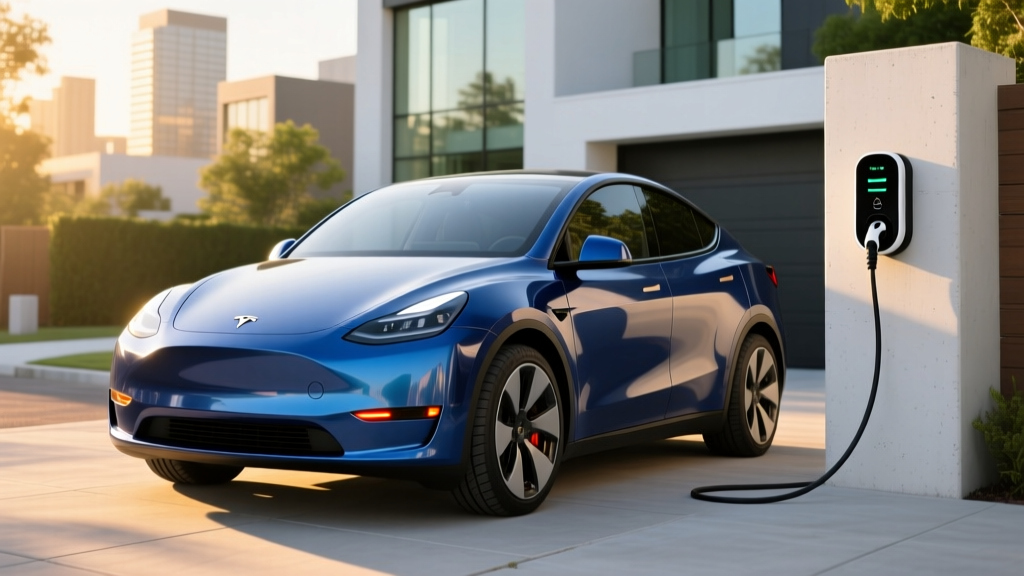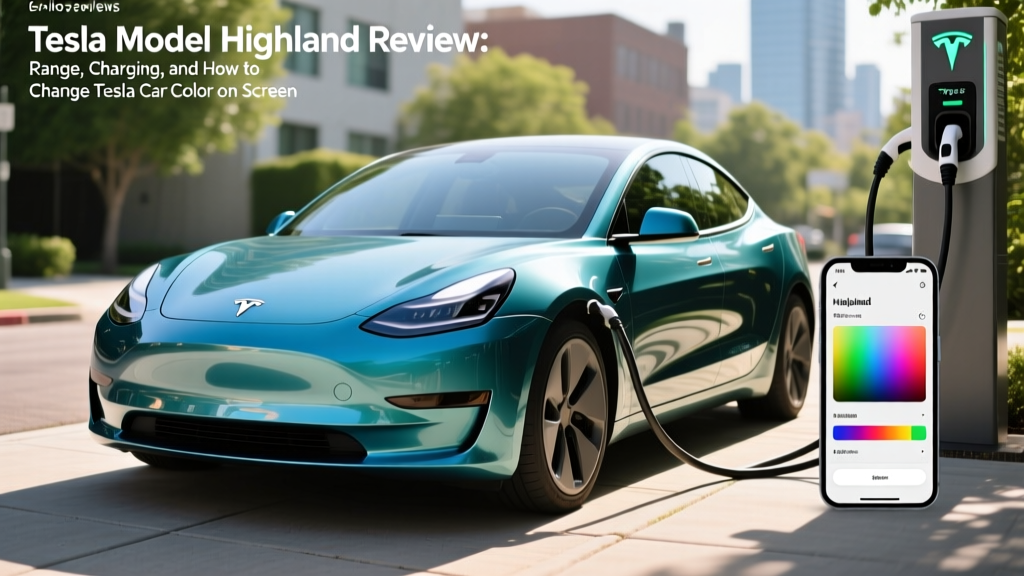
The Tesla Model 3 "Highland" refresh transformed Tesla's entry-level sedan from a segment leader into a genuinely refined electric vehicle. Quieter, better-riding, and packed with thoughtful interior upgrades, the current Model 3 remains the default recommendation for buyers entering the EV space — or existing owners looking to customize their experience, right down to how to change Tesla car color on screen.
This review covers everything a prospective buyer needs: real-world range, DC fast-charging behavior, home charging economics, federal tax credit eligibility under IRS §30D, and whether the Model 3 still holds its ground against the Hyundai Ioniq 6, BMW i4, and Polestar 2 in 2026.
2026 Tesla Model 3: Core Specifications
| Spec | Model 3 RWD | Model 3 Long Range AWD | Model 3 Performance |
|---|---|---|---|
| EPA Range | 341 miles | 363 miles | 315 miles |
| Battery (usable) | ~57.5 kWh (LFP) | ~75 kWh (NMC) | ~75 kWh (NMC) |
| Drivetrain | RWD, single motor | AWD, dual motor | AWD, dual motor |
| Horsepower | 271 hp | 384 hp | 510 hp |
| 0–60 mph | 5.8 sec | 4.2 sec | 2.9 sec |
| Peak DC Charge Rate | 170 kW | 250 kW | 250 kW |
| 10–80% DC Time | ~25 min | ~27 min | ~27 min |
| Level 2 (11.5 kW) | ~44 mi/hr | ~44 mi/hr | ~44 mi/hr |
| MPGe (combined) | 132 MPGe | 124 MPGe | 113 MPGe |
| kWh/100 mi | 25 | 27 | 30 |
| Cargo (trunk + frunk) | 23 cu ft (trunk) + 3.1 cu ft (frunk) | 23 + 3.1 cu ft | 23 + 3.1 cu ft |
| Rear Legroom | 35.3 in | 35.3 in | 35.3 in |
| Base MSRP (2026) | $38,990 | $44,990 | $52,990 |
| Warranty (battery) | 8 yr / 100,000 mi | 8 yr / 120,000 mi | 8 yr / 120,000 mi |
Sources: fueleconomy.gov, Tesla official specifications. Pricing reflects 2026 MSRP before destination; tax credit eligibility varies — see §30D section below.
Real-World Range: What the EPA Sticker Doesn't Tell You
Real-World Highway (70 mph, 72°F): ~290–310 miles
Real-World Highway (32°F, winter): ~240–270 miles
City/Mixed Commute: ~330–350 miles (regen-friendly stop-and-go)
The Model 3 Long Range AWD carries a 363-mile EPA estimate, but EPA testing favors lower-speed, mixed driving cycles with generous regenerative braking recovery. On sustained highway runs at 70 mph in mild weather, expect to use about 280–310 miles of the battery before needing a charge. In freezing temperatures, lithium-ion chemistry internal resistance rises and cabin heating (even with the Model 3's efficient heat pump) draws significant energy — budget 20–25% range loss in deep winter.
The RWD trim with its LFP (lithium iron phosphate) battery behaves differently. LFP cells tolerate regular 100% charging without accelerated degradation, meaning RWD owners can charge to full daily without the SoC anxiety NMC owners manage by capping at 80–90%. This partially offsets the RWD's smaller battery in daily commuting scenarios.
Charging Speed: DC Fast Charging and Home Level 2
| Charging Method | Power (kW) | Miles Added per Hour | Notes |
|---|---|---|---|
| Level 1 (120V / 12A) | 1.4 kW | ~3–5 mi/hr | Emergency/trickle only |
| Level 2 (240V / 48A) | 11.5 kW | ~44 mi/hr | Home Wall Connector; full charge ~8 hrs (LR) |
| Level 2 (240V / 32A) | 7.7 kW | ~30 mi/hr | Mobile Connector on 240V outlet |
| DC Fast (V3 Supercharger) | 250 kW peak | — | 10–80% in ~27 min; tapers hard above 80% |
| DC Fast (RWD, V3) | 170 kW peak | — | 10–80% in ~25 min |
Tesla's V3 Supercharger network remains the most reliable public DC fast-charging ecosystem in the US. The Long Range and Performance trims peak at 250 kW, but sustained rates matter more: the charge curve holds above 200 kW from roughly 10–40% SoC, then tapers progressively. Plan to charge to 80% and go — the 80–100% top-off can add another 20+ minutes for diminishing range gains.
For home charging, Tesla's Wall Connector at 48 amps (11.5 kW) replenishes roughly 44 miles of range per hour, easily covering daily needs with an overnight session. Installation typically requires a 60-amp dedicated circuit. Expect $800–$2,000 for a professional install depending on panel proximity; a panel upgrade to 200A service can add $2,000–$4,000 if your home has older 100A service.
Since 2024, Tesla opened its Supercharger network to non-Tesla EVs via the NACS connector standard. For Model 3 owners, this means the network is only getting denser and better-maintained as adoption scales — a genuine ownership advantage over CCS-dependent rivals.
How to Change Tesla Car Color on Screen
One of the most-searched personalization features for Tesla owners is how to change Tesla car color on screen — meaning the digital vehicle render displayed on the center touchscreen. Here's exactly how it works:
Changing the On-Screen Vehicle Color
- Tap the car icon at the bottom-left of your touchscreen to open Controls.
- Select Software from the left-hand menu.
- Tap on the vehicle image at the top of the Software panel.
- A color palette appears — select from available colors (including some not offered for your specific model, as Tesla includes fantasy colors for the render).
- Tap Save or simply exit; the change applies instantly to the touchscreen render and the Tesla mobile app vehicle graphic.
Important caveat: This changes only the digital representation of your car on screen — not the physical paint. It's a cosmetic personalization for the UI. Tesla does not currently offer a factory paint-color-change service post-delivery; physical color changes require a wrap or respray.
Vinyl Wrap vs. Respray
If you're looking to change the actual exterior color, a full vinyl wrap typically costs $2,500–$5,000 and is reversible. A professional respray runs $4,000–$8,000+ and may affect resale value. Either way, you can then match the on-screen render to your new real-world color using the steps above.
Pricing, Trims, and Federal Tax Credit Eligibility
| Trim | Base MSRP | Destination | Est. §30D Credit | Effective Price* |
|---|---|---|---|---|
| Model 3 RWD | $38,990 | $1,390 | Up to $7,500 | ~$32,880 |
| Model 3 Long Range AWD | $44,990 | $1,390 | Up to $7,500 | ~$38,880 |
| Model 3 Performance | $52,990 | $1,390 | Up to $7,500 | ~$46,880 |
*Effective price assumes full §30D credit eligibility. Actual credit depends on battery sourcing, buyer income, and MSRP caps. Credit can now be transferred to the dealer at point of sale as an instant discount per IRS §30D rules.
§30D Tax Credit Requirements (2026)
- MSRP cap: Sedans must be ≤ $55,000. All Model 3 trims qualify.
- Buyer income cap: MAGI ≤ $150,000 (single), $225,000 (head of household), $300,000 (joint).
- Battery sourcing: Critical minerals and battery components must meet phased-in domestic/free-trade sourcing thresholds. Tesla's US-built LFP and NMC packs have largely met these requirements for the full $7,500, but verify the current VIN-eligible list on the IRS clean vehicle credit page before purchasing.
- Point-of-sale transfer: You can elect to transfer the credit to Tesla at delivery, reducing your out-of-pocket cost immediately rather than waiting for a tax return offset.
Technology, Driver Assistance, and Interior
The Highland refresh brought significant interior improvements: ventilated front seats, ambient lighting, a rear passenger touchscreen, acoustic glass across all windows (dramatically reducing cabin noise), and revised suspension tuning that eliminates much of the pre-refresh harshness over broken pavement.
The 15.4-inch center touchscreen handles all vehicle controls — there are no physical buttons for climate, mirrors, or glovebox. This remains polarizing. New owners typically adapt within a week, but the lack of a dedicated climate knob or physical defrost button is a legitimate ergonomic complaint for some drivers.
Autopilot and FSD (Supervised)
Tesla Autopilot and Full Self-Driving (Supervised) are driver-assistance systems, not autonomous driving. The driver must remain engaged, hands on wheel (or torque-verified), and eyes on road at all times. NHTSA continues to monitor Tesla's Autopilot safety record. Do not treat FSD as self-driving — it is not SAE Level 4.
Basic Autopilot (traffic-aware cruise + lane centering) is standard. Enhanced Autopilot ($6,000) adds lane-change assist, autosteer on highways, and summon. FSD (Supervised) at $8,000 or $99/month adds traffic-light/stop-sign recognition and city-street autosteer. FSD capability has improved substantially through 2025's v13 neural-network overhaul, but it still requires active supervision and makes occasional errors at complex intersections and construction zones.
Pros, Cons, and Who Should Buy
Pros
- Class-leading efficiency (25 kWh/100mi on RWD)
- Supercharger network access — most reliable US DC charging
- Highland NVH improvements are substantial
- LFP battery on RWD allows daily 100% charging
- Strong resale value relative to EV segment average
- OTA updates continuously add features
Cons
- No physical buttons — all controls via touchscreen
- Rear visibility is limited; relies on cameras
- FSD costs extra and still requires full supervision
- Turn signal stalks removed (capacitive buttons on wheel)
- Insurance premiums 15–30% above segment average
- No Apple CarPlay / Android Auto
Who the Model 3 Suits Best
- Daily commuters: RWD at $32,880 (after credit) with 341 miles of range is arguably the best value in EVs.
- Road-trip families (small): Long Range AWD handles 300-mile legs comfortably on Superchargers, though rear seat space is tighter than a Model Y.
- Tech-forward buyers: If you want the most integrated software/charging ecosystem and don't mind touchscreen-only controls.
- Not ideal for: Large families needing easy rear car-seat access, buyers who demand physical controls, or anyone needing towing (Model 3 is not rated for towing in the US).
Model 3 vs. Key Competitors
Against the Hyundai Ioniq 6 (EPA 361 mi, ~$42,000): the Ioniq 6 matches range and offers a more conventional interior with physical climate controls, but charges on the CCS network (less reliable than Superchargers in most US regions) unless equipped with the newer NACS adapter.
Against the BMW i4 eDrive40 (EPA 301 mi, ~$57,000): the i4 offers superior build quality and a more traditional luxury feel, but costs significantly more and delivers less range.
Against the Polestar 2 (EPA 320 mi, ~$49,000): attractive design and CarPlay support, but lower efficiency, slower DC charging, and a smaller service network.
The Model 3's combination of range, efficiency, Supercharger access, and post-credit pricing remains difficult to beat on pure value — provided you accept the touchscreen-centric interface.
Frequently Asked Questions
What is the real-world range of the Tesla Model 3?
EPA rates the Long Range AWD at 363 miles, but expect 290–310 miles on sustained highway drives in mild weather and 240–270 miles in freezing conditions. The RWD's LFP battery can be charged to 100% daily, making its 341-mile EPA figure more usable day-to-day.
How fast does the Model 3 charge?
On a V3 Supercharger (250 kW peak), the Long Range and Performance trims charge 10–80% in approximately 27 minutes. The RWD peaks at 170 kW, taking about 25 minutes. At home on a 48A Level 2 Wall Connector, expect ~44 miles of range per hour.
Does the Tesla Model 3 qualify for the federal EV tax credit?
All Model 3 trims fall under the $55,000 sedan MSRP cap. The full $7,500 §30D credit is available if your MAGI is within limits ($150K single / $300K joint) and the battery meets current-year critical-mineral and component sourcing requirements. Verify on IRS.gov and confirm the VIN eligibility at purchase. The credit can be transferred at point of sale.
How do I change my Tesla's car color on the touchscreen?
Go to Controls → Software → tap the vehicle image → select a color from the palette. This changes the digital render on your screen and in the Tesla app, not the physical paint. For an actual color change, consider a vinyl wrap ($2,500–$5,000).
Is the Model 3 worth buying in 2026 vs. competitors?
For efficiency, charging infrastructure access, and post-credit value, the Model 3 RWD and Long Range remain segment benchmarks. If physical controls, Apple CarPlay, or a traditional luxury interior are non-negotiable, the Ioniq 6 or BMW i4 may suit you better — at a higher price or lower efficiency.
What is the Model 3 battery warranty?
Tesla covers the battery and drive unit for 8 years / 100,000 miles on the RWD and 8 years / 120,000 miles on Long Range and Performance, with a minimum 70% capacity retention threshold during the warranty period.