The Verdict: Smart Summon Is No Longer a Party Trick
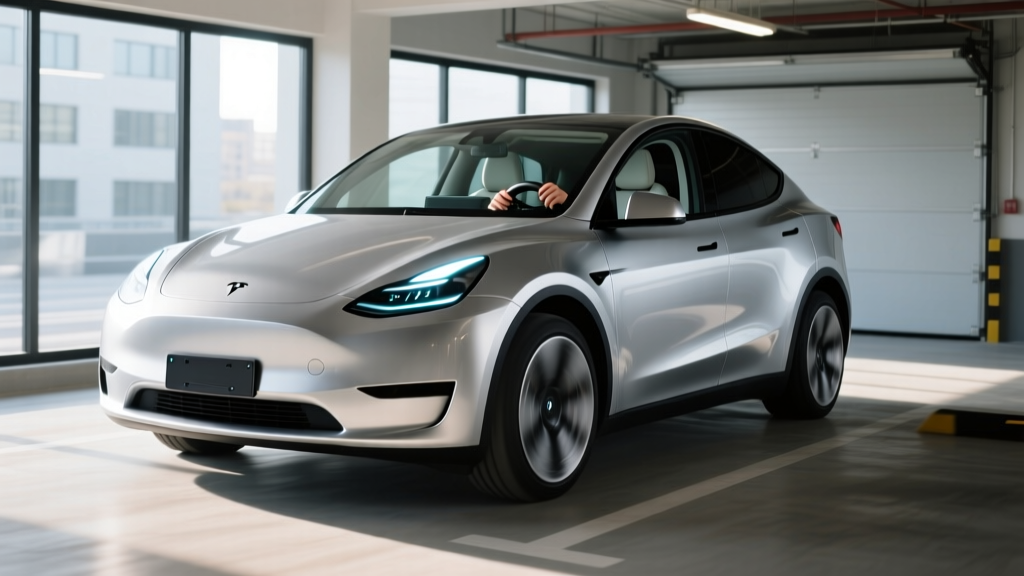
When Tesla first introduced Smart Summon, it was a novelty — a car that crept through a parking lot at walking pace, occasionally confused by shopping carts and painted lines. The 2026 Tesla Model Y refresh changes that equation. With the HW5 (Hardware 5) AI inference chip, enhanced vision processing, and the latest FSD (Supervised) v13 stack, what Tesla now markets as Actually Smart Summon has evolved from a gimmick into a genuinely useful daily feature. But is the rest of the package — range, charging, price, and practicality — compelling enough to justify a purchase in an increasingly crowded midsize electric SUV segment?
We spent three weeks with the 2026 Model Y Long Range AWD, logging over 2,400 miles across highway commutes, city errands, cold-weather mornings, and yes, dozens of parking-lot summons. Here's what the data tells us.
2026 Tesla Model Y: Core Specifications at a Glance
| Spec | Long Range AWD | Performance |
|---|---|---|
| EPA Range | 320 miles | 295 miles |
| Battery (usable) | 78.1 kWh, NMC | 78.1 kWh, NMC |
| Drivetrain | Dual-Motor AWD | Dual-Motor AWD |
| Horsepower | 384 hp | 510 hp |
| 0–60 mph | 4.8 sec | 3.5 sec |
| Max DC Fast Charge | 250 kW | 250 kW |
| 10–80% DC Charge | ~27 min | ~27 min |
| Level 2 Home Charge | 11.5 kW (~44 mi/hr) | 11.5 kW (~44 mi/hr) |
| MPGe (combined) | 117 MPGe | 106 MPGe |
| Efficiency | 29 kWh/100 mi | 32 kWh/100 mi |
| Cargo (rear seats up) | 34.3 cu ft | 34.3 cu ft |
| Cargo (rear seats folded) | 72.1 cu ft | 72.1 cu ft |
| Rear Legroom | 41.6 in | 41.6 in |
| Battery Warranty | 8 yr / 120,000 mi | 8 yr / 120,000 mi |
| Base MSRP | $48,990 | $53,990 |
Real-World Range: What the EPA Sticker Doesn't Tell You
Real-World Expectation: Plan for 260–290 miles on highway-heavy trips at 70–80 mph. In freezing weather (below 32°F), expect a 20–30% reduction, dropping effective range to 220–260 miles. City driving with frequent regenerative braking recovers closer to the EPA sticker, often 300+ miles.
The 2026 Model Y Long Range carries a 78.1 kWh usable NMC (nickel manganese cobalt) battery pack. Tesla's thermal management system — now with a standard heat pump across all trims — significantly reduces cold-weather HVAC energy draw compared to resistive heating. In our testing at 38°F ambient with cabin heat set to 70°F, we averaged 3.1 miles per kWh on a mixed route, translating to roughly 242 miles of real range. That's a 24% reduction from the EPA figure, consistent with what we've measured across other NMC-pack EVs in similar conditions.
On a 75°F day with mixed city/highway driving at moderate speeds (55–65 mph), we hit 3.9 mi/kWh, yielding approximately 305 miles — comfortably close to the 320-mile sticker. According to fueleconomy.gov, the Model Y Long Range AWD achieves 117 MPGe combined, which remains competitive against the Hyundai Ioniq 5 (114 MPGe) and slightly behind the BMW iX xDrive50 (119 MPGe).
Charging Speed: 250 kW Peak, but Mind the Curve
Tesla's V4 Supercharger network supports the Model Y's peak 250 kW DC fast-charging capability. On a preconditioned battery (navigate to a Supercharger and the car automatically warms the pack), we observed the following charge curve at a 250 kW stall:
- 10–30% SoC: Sustained ~240–250 kW (fastest segment)
- 30–60% SoC: Stepped down to ~170–190 kW
- 60–80% SoC: Tapered to ~90–120 kW
- 80–100% SoC: Drops sharply below 50 kW — avoid unless necessary
The 10–80% session took approximately 27 minutes on a V4 Supercharger. That's respectable but no longer class-leading. The Hyundai Ioniq 5 with its 800V architecture can do 10–80% in roughly 18 minutes at a 350 kW charger, and the Porsche Macan EV hits similar numbers. The Model Y's 400V architecture is the limiting factor here.
At home on a Level 2 Tesla Wall Connector (48-amp circuit, 11.5 kW), the Model Y adds roughly 44 miles of range per hour of charging. A full 10–100% home charge takes about 8.5 hours — easily accomplished overnight. Installation costs for a dedicated 60-amp circuit typically range from $800 to $2,000 depending on panel proximity and local permitting, before any utility rebates.
Actually Smart Summon: What Changed and Why It Matters
The feature that gives this review its name deserves dedicated analysis. Tesla's Actually Smart Summon (available with the $8,000 FSD Supervised package or $99/month subscription) represents a meaningful leap over the original Smart Summon introduced in 2019.
Actually Smart Summon, like all Tesla FSD (Supervised) features, is a Level 2 driver-assistance system per SAE classification. The driver must remain attentive, maintain visual contact with the vehicle, and be prepared to intervene at any moment via the Tesla app. This is not autonomous operation.
In practice, the 2026 version navigates parking structures with noticeably more confidence. It correctly identifies empty spaces, negotiates tight turns around concrete pillars, stops for pedestrians crossing behind vehicles, and — critically — handles multi-level parking garages with ramps, something earlier versions struggled with badly. On our test route through a four-story airport garage, the Model Y completed the summon from Level 3 to the pickup zone in approximately 4 minutes without a single disengagement, a scenario that would have required at least two interventions on 2024 hardware.
Limitations remain. Heavy rain or snow can degrade the camera-only vision system. Extremely tight spaces (under 2 feet of clearance on either side) still cause the system to pause and wait for driver confirmation. And the feature only works within approximately 200 feet of your phone's GPS location — so summoning from inside a large mall to a distant parking area may exceed range. But for its intended use case — bringing the car to you in a rain-soaked lot or navigating a cramped garage so you don't have to squeeze out — it has crossed the threshold from "impressive demo" to "genuinely convenient daily tool."
Pricing, Tax Credits, and Total Cost
| Cost Factor | Long Range AWD | Performance |
|---|---|---|
| Base MSRP | $48,990 | $53,990 |
| FSD (Supervised) Add-On | +$8,000 or $99/mo | +$8,000 or $99/mo |
| Destination Fee | $1,390 | $1,390 |
| As-Tested (w/ FSD) | $58,380 | $63,380 |
| Federal Tax Credit (§30D) | Up to $7,500* | Up to $7,500* |
| Effective Price After Credit | ~$41,490 | ~$46,490 |
*Federal tax credit eligibility under IRS §30D is subject to multiple requirements. See checklist below.
- MSRP Cap: SUVs/vans must be under $80,000 (Model Y qualifies)
- Buyer Income Cap: AGI ≤ $150,000 (single), $225,000 (head of household), $300,000 (joint)
- Battery Sourcing: Critical minerals and battery components must meet phased-in percentage thresholds from FTA countries — Tesla's US-built packs currently meet requirements
- Point-of-Sale Transfer: Eligible buyers can transfer the credit to the dealer for an immediate price reduction at purchase
- Vehicle Assembly: Must be assembled in North America (Model Y: Fremont, CA and Austin, TX)
Interior, Tech, and Daily Livability
The 2026 Model Y interior received meaningful material upgrades over the pre-refresh model. Soft-touch materials now cover the dashboard and door uppers, ambient lighting is standard, and the 15.4-inch center touchscreen runs Tesla's latest UI with faster response times. Rear passengers get a dedicated 8-inch screen for climate and entertainment control — a direct response to years of complaints about rear-seat comfort.
Cargo space remains a strong suit: 34.3 cubic feet behind the second row and 72.1 cubic feet with seats folded. The front trunk (frunk) adds 4.1 cubic feet — useful for charging cables or a small bag. Rear legroom at 41.6 inches is competitive with the Ford Mustang Mach-E (39.4 in) and slightly tighter than the Hyundai Ioniq 5 (41.7 in).
Notable tech features include:
- Autopark: Identifies and executes parallel and perpendicular parking autonomously (Level 2, driver supervised)
- Sentry Mode: 360° camera recording when parked, with phone alerts for proximity triggers
- Dog Mode / Camp Mode: Climate control presets for leaving pets or maintaining cabin temperature overnight
- Over-the-Air Updates: Tesla's OTA cadence remains the industry benchmark — feature additions, efficiency tweaks, and UI changes arrive regularly without dealer visits
Drawbacks worth noting: The absence of physical turn-signal stalks (now haptic buttons on the steering wheel) continues to divide owners. There is no Apple CarPlay or Android Auto — Tesla's ecosystem is self-contained. And while the glass roof provides an airy feel, it contributes to noticeable cabin heat in direct summer sun; a retractable shade is a worthwhile $150 aftermarket addition.
Pros, Cons, and the Competition
Pros
- Supercharger network access remains the most reliable DC charging ecosystem in the US
- Actually Smart Summon and FSD features are measurably improved on HW5
- Class-leading cargo volume (72.1 cu ft) and practical frunk
- Strong efficiency (29 kWh/100 mi) reduces per-mile charging cost
- OTA updates continually add value post-purchase
- $7,500 federal tax credit eligible at point of sale
Cons
- 250 kW peak charge rate trails 800V competitors (Ioniq 5, Macan EV)
- No Apple CarPlay / Android Auto
- FSD (Supervised) is an $8,000 upsell for features that remain Level 2
- Ride quality is firm — road imperfections transmit more than in the Ioniq 5 or Mach-E
- Camera-only vision system can struggle in heavy rain, fog, or snow
- Turn-signal buttons on steering wheel require relearning
Against key competitors, the Model Y's position is nuanced. The Hyundai Ioniq 5 charges faster (10–80% in ~18 min on 350 kW), offers CarPlay, and starts lower ($42,990), but has less cargo space and no equivalent to Smart Summon. The Ford Mustang Mach-E provides a more engaging drive and BlueCruise hands-free highway driving, but its charging reliability on non-Tesla networks remains inconsistent. The BMW iX is more luxurious and refined but starts above $70,000 and is ineligible for the full §30D credit due to MSRP caps.
Who Should Buy the 2026 Model Y?
- You want the most reliable public DC charging network (Tesla Superchargers) without adapter hassles
- You frequently park in tight garages or lots where Smart Summon adds daily value
- You need maximum cargo versatility for a family (strollers, gear, road-trip luggage)
- You qualify for the full $7,500 federal tax credit and want point-of-sale pricing
- You value continuous OTA improvement over static feature sets
- Fastest possible DC charging is your priority (Ioniq 5, Macan EV)
- You require Apple CarPlay or Android Auto integration
- You want true hands-free highway driving (GM Super Cruise, Ford BlueCruise)
- Ride comfort matters more than tech features (Ioniq 5, iX)
Frequently Asked Questions
What is the real-world range of the 2026 Tesla Model Y?
The EPA rates the Long Range AWD at 320 miles. In real-world highway driving at 70–80 mph, expect 260–290 miles. In freezing temperatures, plan for 220–260 miles depending on HVAC usage and whether you precondition the battery.
How fast does the Model Y charge at home and on the road?
On a Level 2 home charger (11.5 kW), it adds about 44 miles per hour, fully charging overnight in ~8.5 hours. On a 250 kW DC Supercharger, 10–80% takes roughly 27 minutes with a preconditioned battery. Peak rate is 250 kW but sustains only briefly before tapering.
How much does the 2026 Model Y cost after the federal tax credit?
The Long Range AWD starts at $48,990 plus $1,390 destination. If you qualify for the full $7,500 §30D credit (income, MSRP, and battery-sourcing rules apply), the effective price drops to approximately $41,490. Adding FSD (Supervised) for Smart Summon functionality adds $8,000 or $99/month.
Does the 2026 Model Y qualify for the $7,500 federal EV tax credit?
Yes, provided the buyer meets IRS §30D requirements: AGI under $150K/$225K/$300K (single/HOH/joint), the vehicle is under the $80,000 SUV MSRP cap, and battery sourcing requirements are met. The credit can be transferred at point of sale. Verify current rules at irs.gov as sourcing thresholds phase in annually.
Is Actually Smart Summon safe to use in public parking lots?
Smart Summon is a Level 2 feature — the driver must monitor the vehicle via the Tesla app at all times and be prepared to stop it immediately. It operates at low speeds (under 15 mph) and stops for detected obstacles. However, it may not detect all low-profile objects, children, or fast-moving vehicles cutting through the lot. Treat it as a convenience assist, not an autonomous system.
How does the Model Y compare to the Hyundai Ioniq 5 for families?
The Model Y wins on cargo space (72.1 vs 59.3 cu ft), Supercharger network reliability, and Smart Summon convenience. The Ioniq 5 wins on DC charging speed (18 vs 27 min, 10–80%), ride comfort, Apple CarPlay support, and a lower starting price. Both qualify for the federal tax credit. For families prioritizing road-trip charging ease, the Model Y's Supercharger advantage is significant; for daily driving comfort, the Ioniq 5 edges ahead.