The Short Answer: No Tacoma EV Exists Yet — Here's What Toyota Offers Instead
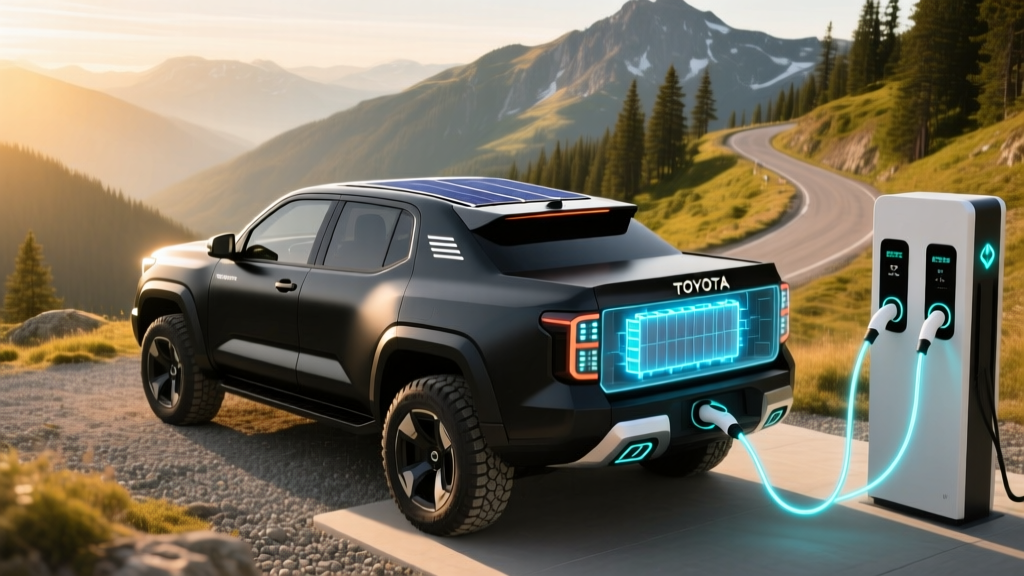
As of early 2026, Toyota has not released or officially announced a battery-electric Toyota Tacoma EV. There is no EPA range, no pricing, and no on-sale date for an all-electric Tacoma. Toyota's mid-size truck strategy currently centers on the i-FORCE MAX hybrid powertrain, available across SR5 and above trims, delivering an EPA-estimated 23 MPG combined — roughly a 15–20% efficiency gain over the base turbo-four. For buyers specifically searching for a "Toyota Tacoma EV," the practical options right now are: (1) buy the Tacoma Hybrid and benefit from lower fuel consumption without range or charging compromises, or (2) wait and monitor Toyota's electrification roadmap while considering all-electric truck alternatives like the Ford F-150 Lightning or Rivian R1T if a BEV is non-negotiable.
Why Toyota Hasn't Built an Electric Tacoma (Yet)
Toyota's global battery-electric lineup has expanded — the bZ4X crossover and upcoming bZ-series models signal intent — but the mid-size truck segment presents unique engineering hurdles that explain the delay:
- Towing and payload physics: A Tacoma rated to tow 6,000+ lbs would require a massive battery pack (likely 120+ kWh usable) to maintain acceptable range under load. That adds weight, cost, and packaging challenges to a body-on-frame platform.
- Off-road durability requirements: Tacoma buyers expect Trailhunter and TRD Pro trims to handle rocks, water crossings, and extreme articulation. Battery-pack vulnerability and thermal management in these conditions require purpose-built engineering, not just a swapped powertrain.
- Charging infrastructure gaps: Mid-size truck buyers frequently tow through rural corridors and remote trailheads where DC fast-charging remains sparse. Toyota has historically avoided launching EVs into use cases where the charging network can't yet support them.
- Hybrid bridge strategy: The i-FORCE MAX hybrid lets Toyota deliver fuel savings, maintain towing capability, and leverage existing fueling infrastructure — a pragmatic middle ground while solid-state battery tech and charging networks mature.
Toyota's chief engineer for the current-generation Tacoma, Mike Sweers, has acknowledged in industry interviews that an electric Tacoma is a matter of "when, not if," but the company has committed to no public timeline. Toyota's broader bZ electric series and its multi-pathway electrification strategy suggest a BEV pickup is in development, but likely not before the 2027–2028 model year at the earliest.
Tacoma i-FORCE MAX Hybrid: The Real 2026 Electrified Option
For buyers who want an electrified Tacoma today, the i-FORCE MAX hybrid is the only factory offering. Here's what the numbers look like for the 2026 model year:
| Spec | i-FORCE MAX Hybrid | Base i-FORCE Turbo (Non-Hybrid) |
|---|---|---|
| Powertrain | 2.4L turbo + electric motor | 2.4L turbo inline-4 |
| Combined Output | 326 hp / 465 lb-ft | 278 hp / 317 lb-ft |
| EPA MPG (Combined) | 23 MPG | 20–21 MPG |
| Max Towing | 6,000 lbs | 6,500 lbs |
| Battery | ~1.87 kWh (NiMH, not plug-in) | N/A |
| 0–60 mph (est.) | ~6.5 sec | ~7.5 sec |
| Starting MSRP (SR5) | ~$40,990 | ~$33,490 |
The hybrid system pairs a small nickel-metal hydride battery with an electric motor integrated between the engine and transmission. This is a conventional hybrid (HEV), not a plug-in — you cannot charge it from a wall outlet, and there is no EV-only driving mode of any meaningful distance. The electric motor fills torque gaps at low RPM, improving responsiveness and shaving fuel consumption, particularly in stop-and-go city driving where the EPA city rating sees the biggest gain.
Cost Breakdown: Tacoma Hybrid vs. Gas vs. Electric Truck Alternatives
Let's put real numbers behind a 5-year ownership comparison. We'll compare the Tacoma Hybrid, the base gas Tacoma, and the Ford F-150 Lightning (the closest mainstream electric truck alternative) across key cost categories.
| Cost Category (5 Years / 75,000 mi) | Tacoma Hybrid (HEV) | Tacoma Gas (i-FORCE) | F-150 Lightning (BEV) |
|---|---|---|---|
| Purchase Price (base mid-trim) | $40,990 | $33,490 | $55,990 |
| Federal Tax Credit (§30D) | $0 (HEV ineligible) | $0 | Up to $7,500* |
| Fuel/Energy Cost | ~$7,826 (23 MPG, $3.60/gal) | ~$9,000 (20 MPG, $3.60/gal) | ~$3,000 (home L2, $0.14/kWh) |
| Maintenance (est.) | ~$2,200 | ~$2,800 | ~$1,200 |
| Insurance (avg.) | ~$7,500 | ~$7,200 | ~$9,000 |
| Estimated 5-Yr Total | ~$58,516 | ~$52,490 | ~$61,690** |
*§30D credit eligibility depends on MSRP caps ($80K for trucks), buyer income limits ($300K MFJ / $150K single), and battery critical-mineral sourcing. Verify current rules at IRS.gov.
**F-150 Lightning total assumes home Level 2 charging; public DC fast-charging costs would increase energy spend by 40–80%.
The Tacoma Hybrid saves roughly $1,174 in fuel over five years compared to the gas model, but the ~$7,500 higher MSRP means the hybrid premium isn't recouped through fuel savings alone in that window. The value proposition shifts if you plan to keep the truck 8–10 years, drive above-average annual miles, or value the 48 hp power bump.
Against the F-150 Lightning, the Tacoma Hybrid avoids range anxiety, towing range degradation, and charging logistics entirely — but at the cost of $4,500+ more in energy spend over five years and zero eligibility for federal EV incentives.
Common Misconceptions About a Tacoma EV
| Myth | Fact |
|---|---|
| "The Tacoma EV is available now." | No battery-electric Tacoma exists as of 2026. The only electrified Tacoma is the i-FORCE MAX conventional hybrid. |
| "The Tacoma Hybrid is a plug-in." | The i-FORCE MAX is a self-charging HEV with a ~1.87 kWh battery. It has no plug, no EV-only mode, and cannot be charged externally. |
| "An electric Tacoma would be cheaper to own." | Even with lower energy costs, a BEV Tacoma (if it existed) would likely carry a $15,000–$25,000 price premium over the gas model. Break-even would require 8+ years or high annual mileage with cheap home electricity. |
| "I can't tow with an electric truck." | The F-150 Lightning tows up to 10,000 lbs, but range drops 40–60% under heavy loads. An electric Tacoma would face similar physics — towing 5,000 lbs could cut a 300-mile range to 150–180 miles. |
| "Toyota has abandoned electric vehicles." | Toyota sells the bZ4X globally and has announced multiple next-gen BEVs. Their strategy is multi-pathway: hybrid, PHEV, hydrogen, and BEV — not BEV-only. |
Should You Wait for a Tacoma EV or Buy Now?
Actionable Decision Framework
Buy the Tacoma i-FORCE MAX Hybrid NOW if:
- You tow a boat, trailer, or camper more than a few times per year and can't risk range loss on remote routes
- You regularly drive in areas with limited DC fast-charging infrastructure (rural West, Appalachia, Alaska)
- You want lower fuel costs without changing your fueling habits or installing a home charger
- You need TRD Pro or Trailhunter off-road capability today
- You plan to keep the truck 7+ years (amortizing the hybrid premium over a longer ownership window)
Buy the base gas Tacoma NOW if:
- Budget is the priority and the ~$7,500 hybrid premium doesn't justify 2–3 MPG gains for your mileage
- You drive under 10,000 miles per year (fuel savings are minimal at low mileage)
- You want maximum towing capacity (6,500 lbs vs. the hybrid's 6,000 lbs)
Consider an electric truck alternative (F-150 Lightning, Rivian R1T) if:
- You have reliable home Level 2 charging and your daily driving is under 200 miles round-trip
- You rarely tow over long distances or can plan charging stops around towing trips
- You qualify for the full §30D tax credit (check income, MSRP, and sourcing rules at IRS.gov)
- You value instant torque, a frunk, V2L/V2H capability, and near-zero routine maintenance
Wait and monitor if:
- You specifically need a mid-size electric truck (not full-size like the Lightning) and can defer your purchase 2–3 years
- You're tracking Toyota's solid-state battery announcements, which could change the range/cost equation dramatically
- Your current vehicle is functional and you don't have urgent replacement needs
What First-Time Truck EV Buyers Need to Know
If you're seriously considering an electric truck as a Tacoma alternative, understand these realities before committing:
- Home charging is nearly mandatory. Public DC fast-charging costs $0.30–$0.50/kWh in most markets, erasing much of the per-mile savings over gas. A Level 2 home installation (240V, 40–48A) typically costs $800–$2,500 including equipment and electrician labor, assuming your panel has capacity. A 200-amp panel upgrade can add $1,500–$3,000.
- Towing crushes range. Any electric truck — current or future — will lose 40–60% of its EPA range when towing near its max rating at highway speeds. A 320-mile EPA truck towing 5,000 lbs on the interstate may deliver 140–180 real-world miles before needing a charge.
- Cold weather compounds the problem. At 20°F, lithium-ion batteries lose 15–30% of usable capacity. Combined with cabin heating and towing, winter range can drop to 50% of the EPA sticker.
- Charging speed matters more than peak kW. A truck with a 150 kW peak charge rate that sustains 130 kW from 10–80% will recharge faster than one claiming 250 kW peak but tapering aggressively after 50% SoC. Look at 10–80% charge times, not peak numbers.
- Insurance is higher. BEV trucks carry 15–25% higher insurance premiums on average due to repair costs, battery replacement exposure, and higher purchase prices. Get quotes before buying.
The Road Ahead: What Could Change the Equation
Three developments could make a Tacoma EV viable within the next few years:
- Toyota's solid-state battery timeline: Toyota has announced pilot production of solid-state cells targeting 2027–2028 vehicles. If these deliver the promised 2× energy density, a Tacoma-sized pack could achieve 350+ miles of range at a competitive weight and cost.
- NACS charging network expansion: With Toyota adopting the Tesla NACS connector for future EVs, a Tacoma EV would gain access to the Supercharger network — currently the most reliable DC fast-charging infrastructure in the U.S. — significantly reducing the rural charging gap.
- Competitive pressure: If Stellantis launches an electric Ram 1500 REV or Ford expands the Maverick EV lineup, Toyota will face market pressure to respond in the mid-size segment.
Until then, the Tacoma i-FORCE MAX hybrid remains the most practical electrified mid-size truck Toyota sells — and for most Tacoma use cases, it's the right tool for the job.
Frequently Asked Questions
Is Toyota making an electric Tacoma?
Toyota has not officially announced a battery-electric Tacoma. The company has confirmed that electrified pickups are part of its long-term strategy, but no production timeline, specs, or pricing have been released. Industry analysts expect the earliest possible launch around the 2027–2028 model year, likely dependent on solid-state battery availability and charging infrastructure growth.
Is the Tacoma Hybrid a plug-in?
No. The Tacoma i-FORCE MAX is a conventional hybrid (HEV). Its small battery recharges through regenerative braking and the gas engine. There is no plug, no external charging capability, and no meaningful EV-only driving range. It operates like a traditional hybrid — you fuel it with gasoline and it manages the electric assist internally.
Does the Tacoma Hybrid qualify for a federal tax credit?
No. The federal §30D Clean Vehicle Credit applies only to battery-electric vehicles (BEVs) and plug-in hybrids (PHEVs) that meet battery sourcing, MSRP, and buyer income requirements. Conventional hybrids like the Tacoma i-FORCE MAX are not eligible. Check current rules at IRS.gov.
What electric truck is closest to a Tacoma in size?
There is no direct mid-size electric truck equivalent to the Tacoma currently on sale. The closest alternatives are the full-size Ford F-150 Lightning (larger, more expensive, but widely available) and the Rivian R1T (similar wheelbase to a mid-size truck but priced in the $70K–$90K range). The Chevrolet Silverado EV and Ram 1500 REV are also full-size options. A true mid-size electric truck segment doesn't yet exist in the U.S. market.
How much fuel does the Tacoma Hybrid actually save?
At 23 MPG combined vs. the base turbo's 20 MPG combined, the hybrid saves roughly 3 gallons per 1,000 miles driven. At $3.60/gallon, that's about $10.80 saved per 1,000 miles, or approximately $162 per year at the U.S. average of 15,000 miles annually. Over five years, total fuel savings are roughly $1,100–$1,200 — not enough to recoup the hybrid's ~$7,500 price premium through fuel alone.
Should I wait for the Tacoma EV?
Only if your current vehicle is functional, you specifically need a mid-size electric truck, and you can realistically wait 2–4 years. If you need a truck now, the Tacoma Hybrid offers meaningful efficiency and power gains without charging infrastructure dependence. If a BEV is essential, look at the F-150 Lightning or Rivian R1T as current alternatives — accepting the size and price trade-offs.