Quick Answer: Mary Barra's China EV warning centers on the fact that Chinese automakers like BYD are producing compelling EVs at prices 30-50% below comparable US models. However, steep US tariffs (100% on Chinese-built EVs as of 2025) and §30D federal tax credit sourcing rules effectively block these vehicles from American roads. For US buyers in 2026, this means you'll keep seeing competitive pricing pressure on domestic and Korean/Japanese EVs, but Chinese brands won't be a direct purchase option. Focus your shopping on models that qualify for the $7,500 point-of-sale credit and have proven charging networks.
What Mary Barra Actually Said About Chinese EVs
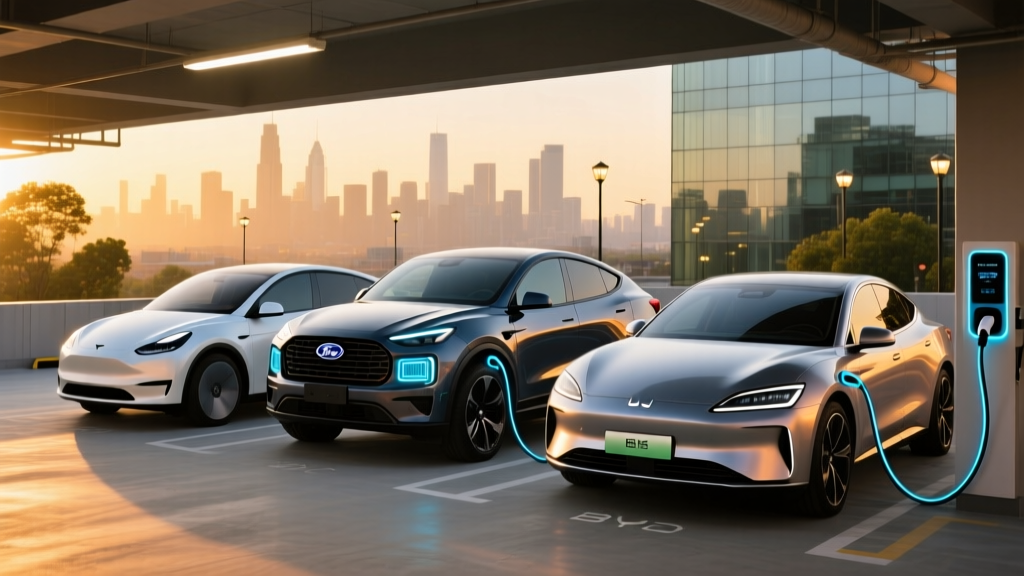
General Motors CEO Mary Barra has repeatedly flagged Chinese EV manufacturers — particularly BYD — as a serious competitive threat. The core concern is straightforward: BYD and competitors like NIO, Xpeng, and Li Auto are building EVs with competitive range, modern tech, and aggressive pricing that undercuts Western automakers by $10,000 to $20,000 per vehicle.
BYD's Seagull, a compact EV sold in China for roughly $10,000, became the poster child for this threat. While that specific model isn't coming to the US, the manufacturing efficiency behind it is real. BYD vertically integrates its own battery production (primarily LFP chemistry), controls its supply chain, and benefits from Chinese government subsidies that have scaled the domestic market to over 8 million EV sales annually.
Barra's warning to policymakers and investors is twofold: without tariff protection, Chinese EVs would rapidly capture US market share; and without competitive domestic manufacturing costs, American automakers face margin compression even in a protected market.
How Tariffs Block Chinese EVs from US Showrooms
As of 2026, the US maintains a 100% tariff on Chinese-built electric vehicles, effectively doubling the sticker price of any imported Chinese EV. A $25,000 BYD model would land at roughly $50,000 before dealer markup — eliminating the cost advantage entirely.
Beyond tariffs, the IRS §30D clean vehicle credit includes battery component and critical mineral sourcing requirements that disqualify vehicles with Chinese-sourced battery materials. Since China dominates global battery mineral refining (over 60% of lithium processing and 80% of graphite), these rules function as a secondary trade barrier.
The practical result: no Chinese-brand EV is currently sold in the United States, and none are announced for 2026-2027 model years. Even if BYD or NIO wanted to enter, they'd need to build a North American factory, source non-Chinese battery materials, and wait years for the supply chain to align with credit eligibility.
The Real US EV Market You're Shopping in 2026
With Chinese EVs off the table, US buyers are choosing among domestic (GM, Ford, Tesla, Rivian), Korean (Hyundai/Kia), Japanese (Toyota, Nissan), and European (BMW, VW, Volvo) brands. Here's how the competitive landscape breaks down for a typical buyer cross-shopping a mid-size electric SUV:
| Model | EPA Range | Battery (kWh) | Peak DC Charge | 10-80% Time | Base MSRP | §30D Credit Eligible |
|---|---|---|---|---|---|---|
| Tesla Model Y Long Range | 320 mi | 78 kWh (NMC) | 250 kW | ~22 min | $44,990 | Yes ($7,500) |
| Hyundai Ioniq 5 Limited AWD | 290 mi | 84 kWh (NMC) | 238 kW | ~18 min | $52,600 | Yes ($7,500) |
| Chevrolet Equinox EV 3RS | 319 mi | 85 kWh (NMC) | 150 kW | ~30 min | $43,400 | Yes ($7,500) |
| Ford Mustang Mach-E Premium | 300 mi | 91 kWh (NMC) | 150 kW | ~32 min | $47,995 | Yes ($7,500) |
| Toyota bZ4X Limited | 252 mi | 71.4 kWh (NMC) | 150 kW | ~30 min | $48,100 | Yes ($7,500) |
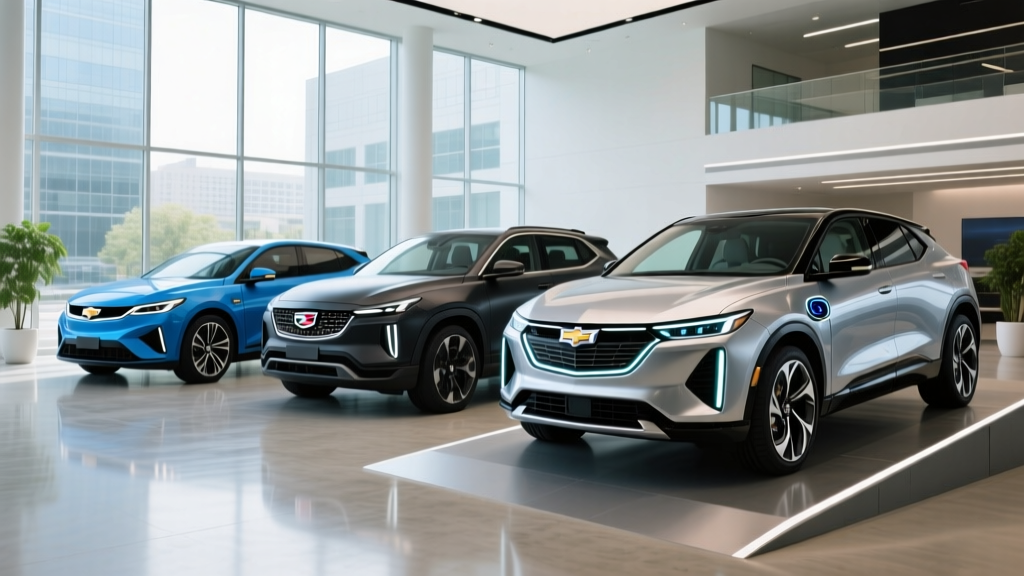
Barra's competitive pressure thesis is visible here: prices have dropped significantly since 2023, when the Model Y started above $52,000 and the Equinox EV didn't exist. The Equinox EV at $43,400 (effectively $35,900 after the point-of-sale credit transfer) represents GM's direct response to the Chinese pricing threat — offering over 300 miles of range at a price point that approaches BYD territory, adjusted for US market realities.
Real-World Range Reality: EPA estimates are measured under ideal conditions. Expect 15-25% range reduction in sustained highway driving above 70 mph, and 20-40% reduction in sub-freezing temperatures. The Equinox EV's 319-mile EPA rating translates to roughly 250-270 miles on a winter road trip. Always plan charging stops with a buffer.
EV vs Gas vs Hybrid: The Real Cost Comparison
The Chinese EV threat wouldn't matter to consumers if EVs weren't already competitive on total cost of ownership. Here's a 5-year breakdown comparing a popular EV, a comparable hybrid, and a gas vehicle in the compact SUV segment:
| Category | 2026 Chevy Equinox EV 3RS | 2026 Toyota RAV4 Hybrid | 2026 Honda CR-V EX (Gas) |
|---|---|---|---|
| Purchase Price (after credit) | $35,900 | $33,500 | $32,400 |
| Fuel/Energy Cost (5 yr) | $3,200 (home L2 @ $0.14/kWh) | $5,800 (40 MPG @ $3.40/gal) | $7,100 (30 MPG @ $3.40/gal) |
| Maintenance (5 yr) | $1,200 | $2,800 | $3,200 |
| Insurance (5 yr avg) | $9,500 | $7,200 | $6,800 |
| Estimated Depreciation | $14,000 | $11,500 | $12,000 |
| Total 5-Year Cost | $63,800 | $60,800 | $61,500 |
| Cost Per Mile | $1.06 | $1.01 | $1.03 |
The EV wins on energy and maintenance costs — electricity at $0.14/kWh is roughly equivalent to $1.20/gallon gasoline, and EVs skip oil changes, transmission fluid, and exhaust system repairs. However, EV insurance premiums run 20-40% higher due to repair complexity and battery replacement risk, and depreciation remains steeper as the used EV market stabilizes.
For buyers with home charging access and moderate annual mileage (12,000 miles), the EV's fuel savings compound. At 15,000+ miles annually, the EV pulls ahead more decisively. Below 8,000 miles per year, the hybrid's lower purchase price and insurance costs typically win.
What This Means for Your Purchase Decision
Barra's China EV warning doesn't change what you can buy today — it explains why the vehicles you can buy are getting cheaper and more capable. Here's a practical decision framework:
Should You Buy an EV, Hybrid, or Gas Car in 2026?
- Choose a BEV (full electric) if: You have reliable home Level 2 charging (240V/40A minimum), drive under 300 miles daily, live in a moderate climate or accept cold-weather range loss, and want the lowest per-mile energy cost. Target models eligible for the full $7,500 §30D credit at point of sale.
- Choose a PHEV (plug-in hybrid) if: You want 25-40 miles of electric-only commuting but need gas flexibility for longer trips or lack guaranteed home charging. Models like the Toyota RAV4 Prime (42 mi electric range, 94 MPGe) bridge both worlds.
- Choose a conventional hybrid if: You can't charge at home, live in an apartment, or drive in extreme cold regularly. You'll still save 30-40% on fuel vs. gas-only, with zero charging infrastructure dependency.
- Choose gas-only if: You drive very low annual miles (under 6,000), tow frequently beyond EV ratings, or operate in remote areas with no DC fast charging infrastructure. The cost-per-mile gap narrows at low mileage.
Common Misconceptions About the Chinese EV Threat
| Myth | Fact |
|---|---|
| "Chinese EVs are coming to the US soon and will be dirt cheap" | 100% tariffs and battery sourcing rules make Chinese-built EVs economically nonviable in the US market through at least 2028. No Chinese brand has announced a US factory. |
| "BYD makes better EVs than Tesla or Hyundai" | BYD excels at cost efficiency, but US-market EVs from Tesla, Hyundai, and GM offer faster DC charging (238-350 kW vs. BYD's typical 80-150 kW), more advanced ADAS, and established service networks. |
| "Waiting for cheap Chinese EVs will save me money" | US tariffs won't disappear quickly. Meanwhile, domestic EV prices are already falling — the Equinox EV and Tesla Model Y price cuts are the market's response. Waiting means missing current tax credits and driving an older, less efficient vehicle. |
| "Chinese EV batteries are inferior" | BYD pioneered the LFP (lithium iron phosphate) Blade Battery, which offers superior thermal stability and longer cycle life than many NMC packs. CATL, a Chinese supplier, provides batteries to Tesla and BMW. The battery tech gap is a myth. |
First-Time EV Buyer Checklist for 2026
If Barra's competitive warnings have convinced you that now is a good time to buy (prices are falling, competition is fierce), here's what you need to verify before signing:
- Home charging capability: You need a dedicated 240V/40A (minimum) circuit for Level 2 home charging. Installation costs $800-$2,500 depending on panel capacity and run length. A licensed electrician should confirm your panel has 50A+ spare capacity. If you're in an apartment or condo without charging access, a PHEV or hybrid is more practical.
- §30D tax credit eligibility: The $7,500 credit has income caps ($150K single / $300K joint), MSRP caps ($55K cars / $80K SUVs/trucks), and battery sourcing requirements. Use the IRS clean vehicle credit lookup tool at irs.gov to verify the specific trim you're buying qualifies. The credit can now be transferred to the dealer at point of sale, reducing your out-of-pocket cost immediately.
- Real-world range for your climate: If you live where winters drop below 30°F, budget 25-40% range loss. A 300-mile EPA vehicle becomes a 200-mile vehicle in a Minnesota January. Heat pumps (standard on Hyundai Ioniq 5, Tesla Model Y) reduce this loss to 15-25%.
- Charging network reliability: Tesla's Supercharger network remains the most reliable (>95% uptime). Non-Tesla EVs now access Superchargers via NACS adapters. Electrify America and EVgo are expanding but report 85-90% uptime. Download the PlugShare app and check DC fast charger density along your common routes before buying.
- Insurance quotes: Get quotes before purchasing. EV insurance averages 20-40% higher than gas equivalents. Tesla Model Y and Chevy Equinox EV tend to be more affordable to insure than luxury EVs.
Frequently Asked Questions
Will Chinese EVs ever be sold in the US?
Possibly, but not before 2028-2030 at the earliest. A Chinese automaker would need to build a North American factory, establish a dealer or direct-sales network, and source battery materials that comply with §30D critical mineral rules. BYD has expressed no public plans for US entry. Even if they did, the 100% tariff would need to be reduced by legislation or trade agreement.
Does the Chinese EV threat mean US EV prices will keep dropping?
Partially. US automakers are aware that their long-term survival depends on competitive EV pricing. GM cut the Equinox EV price by $3,000 in late 2024, Tesla has reduced Model Y pricing multiple times, and Hyundai introduced lower-trim Ioniq 5 models. However, prices are unlikely to reach Chinese domestic levels ($10,000-$15,000) due to higher US labor costs, safety requirements, and supply chain expenses.
Should I wait for 2027 models before buying an EV?
Only if your current vehicle is reliable and you're not spending heavily on gas. Each year brings incremental improvements in charging speed and battery density, but 2026 models already offer 250-350 miles of range, 18-30 minute DC fast charging, and access to the $7,500 point-of-sale credit. Tax credit rules could tighten in future years, making current eligibility valuable.
Are LFP batteries from Chinese manufacturers safe?
LFP (lithium iron phosphate) chemistry is inherently more thermally stable than NMC, meaning lower risk of thermal runaway. BYD's Blade Battery and CATL's LFP packs have excellent safety records. Tesla uses CATL LFP cells in the Model 3 Standard Range. The concern isn't safety — it's supply chain independence, which §30D sourcing rules address.
What's the cheapest US-available EV with over 300 miles of range?
The 2026 Chevrolet Equinox EV 3RS offers 319 miles EPA at $43,400 MSRP — effectively $35,900 after the $7,500 point-of-sale credit (if eligible). This is currently the best value-per-mile-of-range EV on the US market and represents exactly the kind of competitive response Barra has said GM must deliver against Chinese pricing pressure.
Sources: IRS §30D Clean Vehicle Credit, EPA Fuel Economy, manufacturer specification pages for 2026 model year vehicles.