Quick Verdict: Does Tesla's Ludicrous Mode Still Matter in 2026?
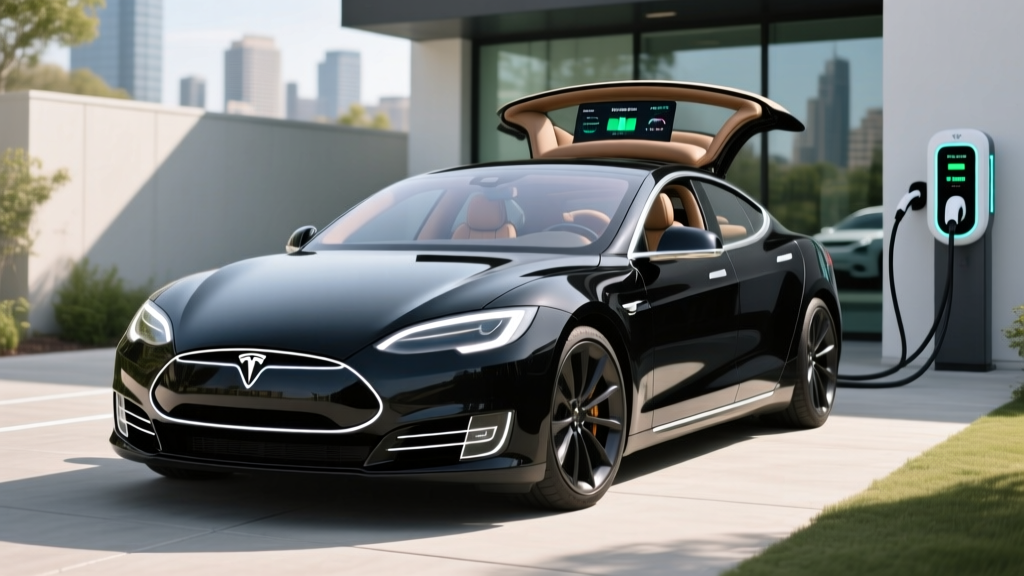
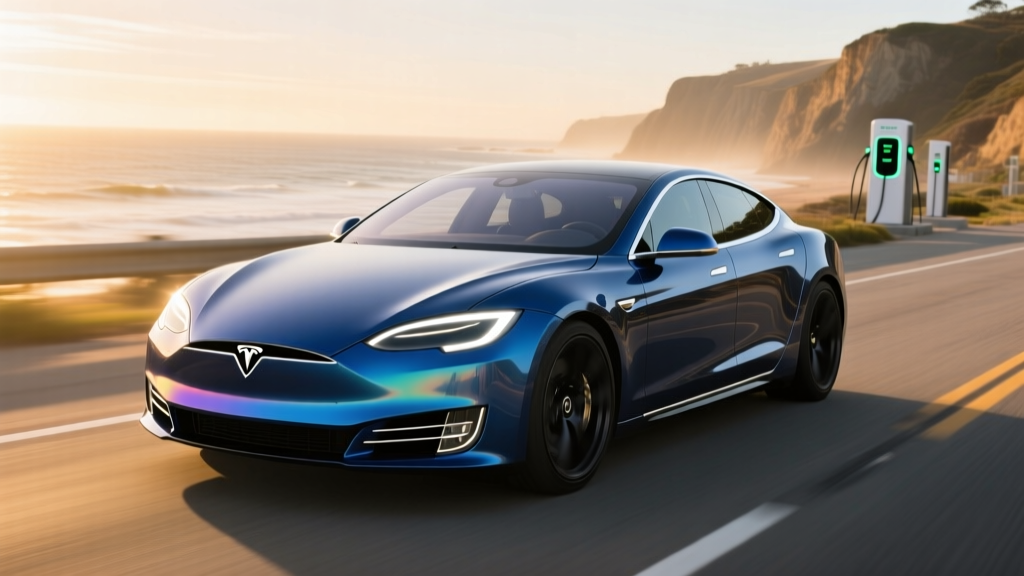
When Tesla first introduced Ludicrous Mode on the Model S P90D in 2015, it redefined what a four-door sedan could do off the line. Today, the spirit of that feature lives on in the Model S Plaid's track-oriented acceleration modes — though the "Ludicrous" badge itself has been retired in favor of Plaid branding. For 2026, the Tesla Model S Plaid remains one of the quickest production cars ever built, with a 1.99-second 0-60 mph claim and a tri-motor all-wheel-drive powertrain producing 1,020 horsepower. But raw speed is only part of the story. This review examines the real-world range, charging behavior, daily usability, and ownership economics of the 2026 Model S Plaid — the car that carries the DNA of Tesla's legendary Ludicrous Mode into the modern EV era.
If you're researching Tesla's Ludicrous Mode because you want extreme acceleration paired with genuine daily-driver practicality, the Model S Plaid is the current answer. Let's break down every number that matters.
2026 Tesla Model S Plaid: Full Spec Sheet
| Specification | Value |
|---|---|
| EPA Estimated Range | 396 miles (Long Range AWD) / 359 miles (Plaid) |
| Battery Capacity | ~100 kWh usable (NMC chemistry) |
| Powertrain | Tri-Motor AWD (Plaid) / Dual-Motor AWD (Long Range) |
| Horsepower | 1,020 hp (Plaid) / 670 hp (Long Range) |
| 0-60 mph | 1.99 sec (Plaid, rollout subtracted) / 3.1 sec (Long Range) |
| Top Speed | 200 mph (Plaid) / 155 mph (Long Range) |
| Max DC Fast Charge Rate | 250 kW (V3 Supercharger) |
| 10-80% DC Fast Charge Time | ~30 minutes |
| Level 2 Home Charging | 11.5 kW / 440V, ~34 mi/hr |
| Efficiency (Plaid) | 120 MPGe combined / 28 kWh/100mi |
| Cargo Volume | 28 cu ft rear trunk + frunk |
| Rear Legroom | 35.4 inches |
| Base MSRP (Plaid) | $89,990 (before destination) |
| Base MSRP (Long Range) | $74,990 (before destination) |
| Battery & Drive Unit Warranty | 8 years / 150,000 miles (min 70% retention) |
Source: Tesla Model S official specs; EPA fueleconomy.gov
Range & Efficiency: Real-World vs. EPA Sticker
The Model S Plaid's NMC (nickel manganese cobalt) battery pack prioritizes energy density and power delivery over the ultra-long cycle life you'd find in an LFP (lithium iron phosphate) pack. Tesla's thermal management system is among the best in the industry, using a liquid-cooled loop with a heat pump that preconditions the battery for both fast charging and cold-weather driving.
Efficiency for the Plaid variant sits at roughly 28 kWh per 100 miles — reasonable for a 1,020-hp tri-motor sedan, though noticeably thirstier than the Long Range dual-motor version, which achieves about 25 kWh/100mi. If your priority is maximum range over acceleration, the Long Range trim adds 37 miles of EPA-rated distance and sacrifices only the third motor and roughly 350 horsepower.
Cold-weather tip: Use the Tesla app to precondition the battery while still plugged in. This warms the pack using grid power rather than battery energy, preserving range and enabling faster charging at your first Supercharger stop.
Charging Speed: DC Fast, Supercharger, and Home Level 2
| Charging Level | Max Power (kW) | Speed (Miles/Hour) | Notes |
|---|---|---|---|
| Level 1 (120V) | ~1.4 kW | ~3-4 mi/hr | Emergency/top-up only |
| Level 2 (240V, 48A) | 11.5 kW | ~34 mi/hr | Full charge in ~10 hours |
| DC Fast (V3 Supercharger) | 250 kW peak | ~75 mi in 5 min | 10-80% in ~30 min |
| DC Fast (V4 Supercharger) | 250 kW (current Model S cap) | Same as V3 | Model S architecture caps at 250 kW |
The Model S Plaid charges at up to 250 kW on Tesla's V3 and V4 Supercharger network. While some competitors now accept 350 kW (Hyundai Ioniq 5, Kia EV6) or even 320+ kW on 800V architectures, Tesla's Model S remains on a 400V electrical architecture that limits peak charge rate. The practical impact: a 10-80% charge takes roughly 30 minutes, compared to 18 minutes on the quickest 800V rivals.
Charging curve reality: The 250 kW peak is sustained only between approximately 10-30% state of charge (SoC). Above 50%, the rate tapers to roughly 150 kW, and above 80%, it drops further to under 50 kW. This is standard lithium-ion behavior, but it means that charging from 80-100% at a Supercharger is rarely worth the wait — plan to charge to 80% and drive.
For home charging, the Model S accepts 11.5 kW on a 240V/48A Level 2 circuit (such as a Tesla Wall Connector). A full overnight charge from 20% to 100% takes approximately 10 hours. Most owners with a daily commute under 80 miles will rarely need a full charge, making Level 2 more than adequate for daily use.
Performance: Tesla's Ludicrous Mode Legacy in the Plaid Era
Tesla's original Ludicrous Mode — introduced as an over-the-air and hardware upgrade for the P85D and later the P90D — unlocked sub-3-second 0-60 times by temporarily increasing battery current output beyond normal limits. The name was a reference to the film Spaceballs, and it became a cultural touchstone for EV performance.
In the 2026 Model S Plaid, that concept has been fully realized and permanently integrated. The tri-motor setup (one front, two rear) with torque vectoring delivers 1,020 hp and a claimed 1.99-second 0-60 mph time (with 1-foot rollout subtracted, per drag-racing convention). In independent testing by outlets like Car and Driver and Motor Trend, the Plaid has consistently achieved 2.0-2.2 second runs in real-world conditions — still astonishing for a 4,766-pound luxury sedan.
The Plaid drive mode offers two sub-settings:
- Drag Strip mode: Preconditions the battery for maximum power output, lowers the suspension, and enables launch control. Requires approximately 15-30 minutes of preconditioning for optimal results.
- Track mode: Adjusts torque vectoring, stability control, and regen behavior for circuit driving. Includes a lap timer and G-meter in the center display.
Beyond straight-line speed, the Plaid's carbon-sleeve rotors (an optional $15,000 carbon-ceramic brake package) and adaptive air suspension give it genuine track capability — though tire wear on the stock Michelin Pilot Sport 4S rubber is rapid under hard use.
Pricing, Trims & Federal Tax Credit Eligibility
| Trim | Base MSRP | Federal §30D Credit Eligible? | Notes |
|---|---|---|---|
| Long Range AWD | $74,990 | No — exceeds $55,000 sedan MSRP cap | Sedans capped at $55K under §30D |
| Plaid (Tri-Motor) | $89,990 | No — exceeds $55,000 sedan MSRP cap | Sedans capped at $55K under §30D |
The 2026 Model S does not qualify for the $7,500 federal EV tax credit under IRS §30D. The law caps eligible sedans at an MSRP of $55,000, and both Model S trims exceed that threshold significantly. Buyers should also note that §30D has income limits ($150,000 single / $300,000 joint AGI) and battery critical-mineral sourcing requirements — though the MSRP cap alone disqualifies the Model S regardless of income. (Source: IRS §30D guidance)
Some buyers may benefit from state-level incentives (California's CVRP, Colorado's state credit, etc.), but these vary by jurisdiction and are subject to change. Consult your state's energy office or a tax professional for current local incentives.
As-tested pricing: A Model S Plaid with red multi-coat paint ($2,500), 21-inch Arachnid wheels ($4,500), Full Self-Driving capability ($8,000), and yoke steering comes to approximately $105,000 before destination and taxes. The carbon-ceramic brake package adds $15,000 further, pushing a fully-loaded Plaid past $120,000.
Interior, Tech & Daily Livability
The Model S interior remains a study in minimalism: a 17-inch center touchscreen, a 12.3-inch driver display, and a rear 8-inch screen for climate and entertainment. Build quality has improved significantly since the pre-2021 refresh, with tighter panel gaps, ventilated front seats, and genuine aluminum trim. However, the yoke steering wheel — standard on Plaid — remains polarizing. At low speeds and in parking lots, the yoke requires hand-over-hand maneuvers that a round wheel handles naturally. Tesla offers a round wheel delete option at no extra charge.
Cargo space: The rear trunk offers 28 cubic feet (expandable with 60/40 split-folding seats), and the front trunk (frunk) adds useful space for a charging cable bag or small groceries. Total cargo capacity is competitive with the Mercedes EQS and exceeds the Porsche Taycan.
Passenger room: Rear legroom at 35.4 inches is adequate for adults on shorter trips but tighter than a BMW i7 or Mercedes EQS. The low roofline also limits rear headroom for taller passengers.
Driver assistance: The Model S ships with Tesla's Basic Autopilot (adaptive cruise + lane centering). Full Self-Driving (Supervised) — a $8,000 option — adds automated lane changes, traffic light recognition, and city-street navigation.
Warranty & Long-Term Ownership
Tesla covers the Model S battery and drive units for 8 years or 150,000 miles, whichever comes first, with a minimum 70% capacity retention guarantee. The limited vehicle warranty is 4 years / 50,000 miles. This battery warranty is competitive with the Porsche Taycan (8 yr / 100,000 mi) and slightly less generous than Hyundai's 10-year / 100,000-mile coverage on the Ioniq 6.
The NMC battery chemistry in the Model S Plaid typically sees 5-8% degradation over the first 50,000 miles based on fleet data, after which the curve flattens. Owners who frequently charge to 100% or use DC fast charging exclusively may see slightly higher degradation. Tesla recommends daily charging to 80-90% for NMC packs, reserving 100% for road trips.
Insurance costs: The Model S Plaid carries higher-than-average insurance premiums due to its performance classification and Tesla's proprietary repair network. Expect annual premiums in the $3,000-$4,500 range depending on your state, driving record, and coverage level — roughly 40-60% higher than a comparably-priced BMW 5 Series.
Pros, Cons & Who Should Buy the Model S Plaid
Pros
- 1.99-second 0-60 mph — quickest production sedan available
- 359-mile EPA range is excellent for a performance EV
- Access to Tesla's 50,000+ Supercharger network
- Continuous OTA updates add features post-purchase
- Genuine 5-seat practicality with trunk + frunk cargo
- Standard adaptive air suspension with adjustable ride height
Cons
- No federal tax credit eligibility (MSRP exceeds $55K sedan cap)
- 250 kW DC charge cap trails 800V competitors (350 kW capable)
- Yoke steering is impractical for low-speed maneuvers
- Insurance premiums significantly above segment average
- Rear seat comfort trails German luxury competitors
- No Apple CarPlay or Android Auto integration
Who the Model S Plaid suits best: Performance enthusiasts who want supercar acceleration in a daily-drivable sedan with access to the best charging network in North America. It's ideal for tech-forward buyers who prioritize acceleration and software over traditional luxury materials and who have home Level 2 charging access. For families needing maximum rear-seat space or buyers who want the $7,500 tax credit, the Tesla Model Y, BMW i5, or Hyundai Ioniq 5 N are worth cross-shopping.
Who should look elsewhere: Budget-conscious buyers (no federal credit, high insurance), those who prioritize rear-seat luxury (BMW i7, Mercedes EQS), or road-trippers who want the fastest possible DC charging (800V vehicles like the Ioniq 5 or Porsche Taycan).
Frequently Asked Questions
What happened to Tesla's Ludicrous Mode?
Tesla retired the "Ludicrous Mode" nameplate when the Model S Plaid replaced the Performance variant in 2021. The Plaid's tri-motor powertrain delivers even greater acceleration (1.99s vs. the P100D Ludicrous's 2.5s 0-60) as a permanent feature rather than a toggleable mode. The spirit of Ludicrous — maximum battery current for explosive launches — is fully integrated into the Plaid's Drag Strip mode.
What is the real-world range of the Model S Plaid?
The EPA rates the Plaid at 359 miles. In real-world highway driving at 70-75 mph in moderate temperatures, expect 290-320 miles. In cold weather (below 30°F), range drops to approximately 250-280 miles. The Long Range AWD variant (396 mi EPA) delivers 330-360 highway miles in favorable conditions.
How fast does the Model S Plaid charge at home and on the road?
On a Tesla V3/V4 Supercharger (250 kW peak), a 10-80% charge takes approximately 30 minutes. At home on a 240V/48A Level 2 charger (11.5 kW), the Plaid adds roughly 34 miles of range per hour, with a full charge taking about 10 hours. Note that the Model S's 400V architecture limits it to 250 kW — it cannot utilize 350 kW chargers at full speed.
Does the 2026 Model S qualify for the federal EV tax credit?
No. Under IRS §30D rules, new sedans must have an MSRP at or below $55,000 to qualify. The Model S Long Range starts at $74,990 and the Plaid at $89,990 — both well above the cap. State incentives may still apply depending on your jurisdiction. Consult IRS.gov for current eligibility rules.
Is the Model S Plaid worth it vs. competitors like the Porsche Taycan or BMW i7?
If straight-line acceleration and Supercharger network access are your top priorities, the Plaid has no equal at its price point. The Porsche Taycan Turbo GT offers comparable performance with superior handling dynamics and 800V charging (320 kW), but with less range (283 mi EPA) and a higher price (~$160,000+). The BMW i7 M70 provides a more luxurious rear seat and qualifies for no credit either (MSRP above cap), but can't match the Plaid's 0-60. The Plaid wins on pure acceleration-per-dollar; rivals win on luxury, charging speed, or track handling.
How long will the Model S Plaid battery last?
Tesla warranties the battery for 8 years / 150,000 miles with a 70% minimum capacity retention. Fleet data suggests NMC packs in the Model S typically retain 90-93% capacity after 50,000 miles. With proper care (daily 80-90% charge limit, preconditioning, avoiding repeated 100% charges), many Model S batteries are expected to last 200,000+ miles before reaching the 70% threshold.