Quick Answer
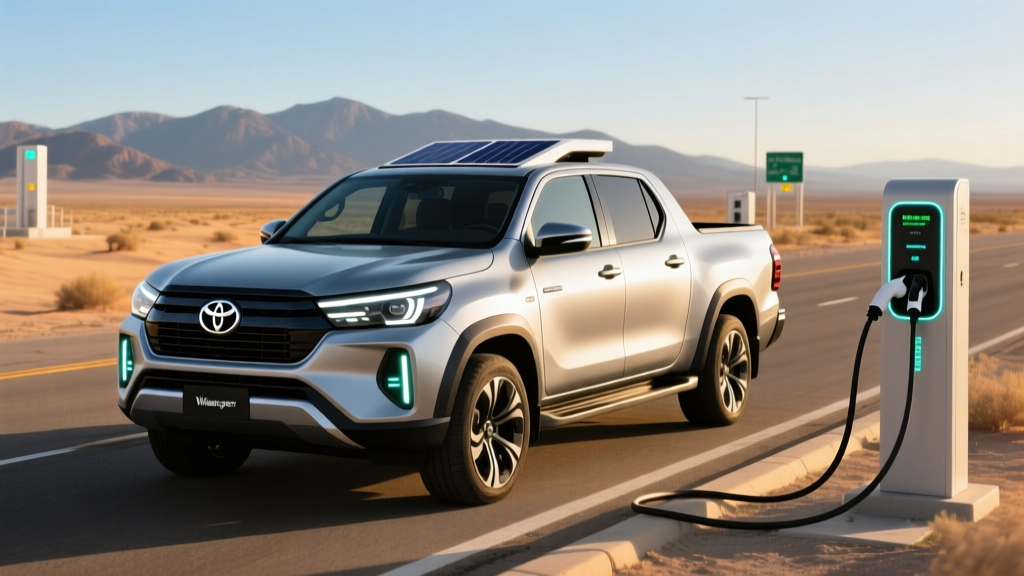
The Toyota Hilux EV is not available in the United States and is not currently confirmed for the US market. Toyota unveiled an electric Hilux concept in 2023 and has confirmed a production battery-electric pickup for global markets (targeting a 2025–2027 rollout window), but the US-market midsize pickup Toyota sells is the Tacoma — and its next-generation EV variant remains unannounced. If you're a US-based buyer researching the Hilux EV, the closest domestic equivalent is the Toyota Tacoma, currently offered only with a turbocharged gas or i-FORCE MAX hybrid powertrain. For a true electric midsize pickup in the US right now, the Ford Maverick (HEV only), Chevrolet Colorado (gas), and upcoming platforms from Rivian or Tesla are the realistic alternatives.
Why the Hilux EV Matters — and Why US Buyers Are Searching for It
The Toyota Hilux is the best-selling pickup truck in most of the world outside North America. From Southeast Asia to Africa, Australia to the Middle East, the Hilux dominates the midsize truck segment with a reputation for extreme durability. When Toyota showed the Hilux Revo BEV Concept at the 2022 Tokyo Auto Salon and reaffirmed its multi-pathway electrification strategy, global buyers took notice — and so did American truck enthusiasts who've long admired the Hilux's legendary reliability.
The search interest in "Hilux EV" in the US largely stems from two things: curiosity about whether Toyota will bring an electric midsize truck stateside, and frustration that the US-market Tacoma hasn't yet received a battery-electric option. As of early 2026, here's where things stand.
What We Know About the Hilux EV: Preliminary Specs
Toyota has been characteristically cautious with firm production specs for the Hilux EV. What has been confirmed or strongly signaled through concept reveals, patent filings, and executive statements includes the following preliminary figures. These are estimates based on available information and may change at production launch.
| Specification | Estimated / Target | Notes |
|---|---|---|
| Body Style | 4-door double cab pickup | Based on IMV platform (8th-gen Hilux architecture) |
| Battery Chemistry | LFP (lithium iron phosphate) | Expected for durability/cost; BYD partnership likely |
| Battery Capacity | ~59–75 kWh (usable) | Based on concept disclosures and platform constraints |
| Target Range | ~300 km (WLTP) / ~185 mi (est. EPA equiv.) | Toyota has cited "300 km" for the concept version |
| Drivetrain | AWD (dual motor expected) | Hilux's core identity is off-road capability |
| DC Fast Charging | ~100–150 kW peak (estimated) | LFP packs typically accept moderate C-rates |
| Payload / Towing | ~1,000 kg payload / ~2,500 kg towing (target) | Matching diesel Hilux benchmarks is a priority |
| Market Availability | Thailand, Australia, select global markets | No US confirmation as of 2026 |
Critical context on range: Toyota's stated 300 km target for the concept uses the WLTP testing cycle, which tends to produce higher range figures than the US EPA cycle. A realistic EPA-equivalent figure would be approximately 185–210 miles — adequate for urban commercial use but limited for highway or rural work-truck duty. For comparison, the Ford F-150 Lightning achieves 230–320 miles EPA depending on battery pack, and the Rivian R1T Dual-Motor posts 270–420 miles EPA with its Max Pack.
Hilux EV vs. US Electric Pickups: A Data Comparison
Since the Hilux EV won't be sold in the US, here's how its preliminary specs stack up against electric pickups American buyers can actually purchase or order in 2026:
| Spec | Hilux EV (Est.) | Ford F-150 Lightning | Rivian R1T (Dual Max) | Chevy Silverado EV |
|---|---|---|---|---|
| EPA Range | ~185–210 mi (est.) | 230–320 mi | 270–420 mi | 237–492 mi |
| Battery (kWh) | ~59–75 | 98–131 | 106–149 | 200 (Max Pack) |
| Peak DC Charge (kW) | ~100–150 | 150 | 220 | 350 |
| Starting MSRP (USD) | N/A (not US-bound) | ~$55,000 | ~$79,900 | ~$55,000 |
| Max Towing (lbs) | ~5,500 (est.) | 10,000 | 11,000 | 12,500 |
| Segment | Midsize (global) | Full-size | Midsize | Full-size |
Sources: fueleconomy.gov, manufacturer press sites. Hilux EV figures are preliminary estimates; US models reflect 2025–2026 model-year EPA data.
The gap is clear: US-market electric pickups are significantly larger, carry far bigger battery packs, and offer substantially more range. The Hilux EV's smaller platform and expected LFP chemistry prioritize affordability and durability for commercial fleets in developing markets — not the 300+ mile highway range American truck buyers increasingly expect.
Real-World Ownership: What a Hilux EV Would Mean Practically
Even if Toyota eventually brought the Hilux EV (or an electric Tacoma equivalent) to the US, here are the ownership realities any buyer should weigh:
Range Reality Check
An estimated 185–210 mile EPA range means real-world highway driving at 70+ mph would likely yield 150–175 miles before needing a charge. In cold weather (below 32°F / 0°C), expect an additional 20–30% reduction, potentially dropping usable range to 110–140 miles. This is a commercial/fleet-oriented truck designed for predictable urban routes, not cross-country road trips.
Charging Access
For fleet operators with depot charging (overnight Level 2 at 7–11 kW), a 59–75 kWh battery fully replenishes in 6–10 hours — ideal for daily work cycles. For private buyers relying on public DC fast charging, a 100–150 kW peak rate means a 10–80% session would take approximately 30–45 minutes, assuming the charger can deliver that power and the battery is preconditioned.
The LFP Battery Trade-off
Toyota's likely choice of LFP (lithium iron phosphate) chemistry is strategic:
- Pros: Lower cost, longer cycle life (3,000+ cycles vs. ~1,500 for NMC), safer thermal profile, no cobalt, can be charged to 100% daily without accelerated degradation
- Cons: Lower energy density (heavier pack for same kWh), worse cold-weather performance, slower peak charge rates
For a work truck that charges nightly and drives a fixed route, LFP is arguably the superior chemistry. For a lifestyle pickup used in Minnesota winters, the cold-weather penalty matters.
Cost Considerations: Electric Pickup Ownership in the US
Since the Hilux EV isn't US-bound, let's examine what owning a comparable electric midsize or full-size pickup actually costs American buyers today — including the §30D federal tax credit where applicable:
| Cost Category | Electric Pickup (e.g., R1T / F-150 Lightning) | Gas Midsize Pickup (e.g., Tacoma TRD) |
|---|---|---|
| Purchase Price (avg.) | $55,000–$80,000 | $38,000–$52,000 |
| Federal Tax Credit (§30D) | Up to $7,500 (subject to MSRP cap, income limits, battery sourcing rules — verify at irs.gov) | $0 |
| Fuel / Energy (5 yr, 75k mi) | $3,500–$6,000 (home + public mix) | $9,000–$12,000 (gas at $3.50/gal, 20 MPG) |
| Maintenance (5 yr) | $1,500–$2,500 | $3,500–$5,000 |
| Insurance (5 yr avg.) | $9,000–$14,000 (EV premiums run 15–25% higher) | $7,000–$10,000 |
| Home Charger Install | $500–$2,500 (Level 2, 240V) | $0 |
| Estimated 5-Year Total | $62,000–$97,500 | $57,500–$79,000 |
Estimates based on national averages. Actual costs vary significantly by state, electricity rate, driving pattern, and insurance profile. Tax credit eligibility depends on MSRP caps ($80,000 for trucks), buyer income thresholds, and battery critical-mineral sourcing rules — always verify current rules at irs.gov and consult a tax professional.
The math shows that electric pickups still carry a higher upfront cost, but fuel and maintenance savings of $5,000–$8,000 over five years narrow the gap — especially for high-mileage fleet use where daily fueling costs compound.
Will Toyota Bring an Electric Midsize Truck to the US?
This is the question behind every US-based "Hilux EV" search. Here's the honest assessment:
What Toyota has signaled: Toyota's global electrification strategy includes battery-electric versions of its IMV-platform vehicles (Hilux, Fortuner, Innova) primarily for ASEAN, Australian, and emerging markets. Toyota CEO Koji Sato has emphasized a "multi-pathway" approach — hybrids, plug-in hybrids, hydrogen, and BEVs tailored to regional infrastructure.
The US complication: Toyota sells the Tacoma in North America, which rides on the TNGA-F body-on-frame platform shared with the 4Runner and Sequoia. An electric Tacoma would require either a dedicated EV skateboard platform or a heavily modified TNGA-F — neither of which Toyota has announced for US production. The bZ-series (Toyota's global BEV brand) currently focuses on crossovers and SUVs in the US, with the bZ4X being the sole offering.
Bottom line: Don't wait for a Hilux EV in America. If Toyota introduces an electric midsize pickup for the US, it will likely be branded as an electric Tacoma — and as of early 2026, that vehicle has not been announced, shown as a concept, or given a production timeline.
What US Buyers Should Consider Instead
Decision Framework: What to Buy If You Want an Electric or Electrified Pickup
If you need a midsize electric pickup now: The Rivian R1T is the only true midsize BEV truck on the US market. Starting around $79,900 with 270+ miles of range, it's premium-priced but capable. The upcoming next-gen R1T (expected late 2026/2027) may bring a more affordable trim.
If you need a full-size electric work truck: The Ford F-150 Lightning (230–320 mi EPA, from ~$55,000) or Chevrolet Silverado EV (237–492 mi EPA, from ~$55,000) are the volume players. Fleet buyers should investigate commercial tax credits under §45W.
If you want Toyota reliability with electrification: The Toyota Tacoma i-FORCE MAX hybrid (not a plug-in) delivers improved torque and modest efficiency gains over the gas-only model. It's not an EV, but it's the closest electrified Toyota truck available.
If you can wait: Watch for announcements from Toyota regarding an electric Tacoma, and from Stellantis regarding the Ram 1500 REV (delayed but not cancelled). The midsize electric truck segment will expand by 2028–2029.
Common Hilux EV Misconceptions — Corrected
| Myth | Fact |
|---|---|
| "The Hilux EV is available to buy in the US." | False. The Hilux is not sold in the US at all (gas or electric). Toyota sells the Tacoma here. |
| "The Hilux EV has 300 miles of range." | Misleading. Toyota cited ~300 km (not miles) on the WLTP cycle for the concept. Real EPA-equivalent range is likely 185–210 miles. |
| "Toyota is abandoning the Hilux for EVs." | False. The diesel and gasoline Hilux continue in production globally. The EV variant is an addition, not a replacement. |
| "I can import a Hilux EV to the US." | Extremely difficult. NHTSA's 25-year import rule and EPA certification requirements make importing a new Hilux (any powertrain) effectively impossible for private buyers. |
| "The electric Tacoma is just around the corner." | Unconfirmed. As of 2026, Toyota has not announced, teased, or given a timeline for an electric Tacoma. The current Tacoma generation launched for 2024 with hybrid and gas options only. |
Frequently Asked Questions
Is the Toyota Hilux EV a real production vehicle?
As of early 2026, Toyota has shown the Hilux Revo BEV Concept and confirmed it is developing battery-electric IMV-platform vehicles for global markets. A production Hilux EV is expected to launch in select markets (Thailand, Australia) in the 2025–2027 window, but final specs and timing remain subject to change.
Will Toyota sell the Hilux EV in the United States?
No. Toyota does not sell the Hilux nameplate in the US under any powertrain. The US-market equivalent is the Tacoma. Toyota has not announced an electric Tacoma. US buyers interested in an electric truck should look at the Ford F-150 Lightning, Chevrolet Silverado EV, Rivian R1T, or GMC Sierra EV.
What battery chemistry will the Hilux EV use?
Industry analysis and Toyota's partnership with BYD strongly suggest the production Hilux EV will use LFP (lithium iron phosphate) battery cells. LFP offers lower cost, longer cycle life, and superior thermal safety compared to NMC — ideal for commercial fleet use — at the trade-off of lower energy density and worse cold-weather performance.
How does the Hilux EV's range compare to US electric trucks?
Significantly shorter. The Hilux EV's estimated 185–210 mile EPA-equivalent range is roughly half that of a Ford F-150 Lightning Extended Range (320 mi EPA) or Rivian R1T Max Pack (420 mi EPA). This reflects the Hilux's smaller battery (~59–75 kWh vs. 131–149 kWh in US trucks) and its design focus on cost-effective urban commercial routes rather than long-distance driving.
What is the expected price of the Hilux EV?
Toyota has not announced pricing. In the Thai market, analysts expect the production Hilux EV to be priced competitively with mid-to-high-trim diesel Hilux models — roughly equivalent to $35,000–$45,000 USD before local incentives. This pricing is not directly transferable to the US market, where regulatory, safety, and battery-sourcing requirements would significantly increase cost.
Are there any US federal tax credits for electric pickups?
Yes, but with strict conditions. Under IRS §30D, new clean vehicles may qualify for up to $7,500 in federal tax credits (available as a point-of-sale transfer since 2024). For trucks, the MSRP must not exceed $80,000. The buyer must meet income caps ($300,000 joint / $150,000 single). Battery components and critical minerals must meet phased domestic-sourcing thresholds that tighten annually. Always verify current-year eligibility at irs.gov and consult a tax professional before purchasing.