The Short Answer on the Toyota Crown EV
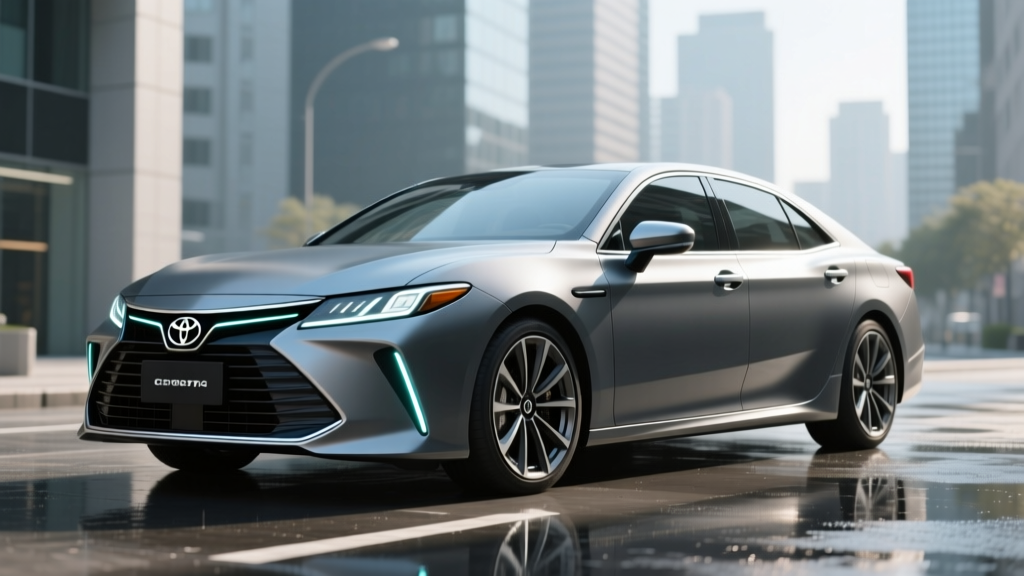
As of early 2026, the Toyota Crown EV remains an announced but not yet released vehicle. Toyota has signaled its intent to electrify the Crown nameplate as part of a broader global EV rollout, but no final EPA range, battery capacity, pricing, or on-sale date has been confirmed for the U.S. market. The current Toyota Crown sold in the United States is a hybrid-only model (HEV) with no plug. Buyers considering a Crown EV should monitor Toyota's official announcements and be prepared for a likely 2027 model-year debut at the earliest. Until then, the Crown Hybrid remains the only electrified Crown available, delivering an EPA-estimated 41 MPG combined.
What Is the Toyota Crown EV — and Why the Confusion?
The Toyota Crown has existed in various forms since 1955, primarily as a premium sedan for the Japanese market. When Toyota reintroduced the Crown to the U.S. in 2023 as a lifted crossover-sedan hybrid, it filled a niche between the Camry and the Avalon (which had been discontinued). Since then, speculation about a fully electric Crown — the Toyota Crown EV — has circulated through automotive media, fueled by Toyota's evolving EV strategy and concept vehicle reveals at international auto shows.
Here's what we can confirm versus what remains preliminary:
| Detail | Status | What We Know |
|---|---|---|
| U.S. Availability | Not yet on sale | No confirmed on-sale date; likely 2027+ model year |
| Powertrain | Announced intent | Battery-electric (BEV); specific motor config unconfirmed |
| Battery Chemistry | Preliminary | Likely NMC or Toyota's next-gen bipolar Li-ion; LFP possible for base trim |
| EPA Range | Estimated | Industry estimates suggest 280–350 miles; no EPA certification yet |
| Charging Standard | Probable | NACS (Tesla-style) connector, following Toyota's 2024 commitment to adopt NACS |
| Pricing (MSRP) | Estimated | Likely $45,000–$55,000 starting, based on Crown Hybrid positioning |
| Federal Tax Credit | Unknown | Depends on battery sourcing and assembly location per IRS §30D rules |
Toyota has historically been cautious with full battery-electric vehicles in the U.S., favoring hybrids and plug-in hybrids. The bZ4X, Toyota's first dedicated global EV, launched with modest range (EPA 252 miles for the FWD model) and middling DC fast-charge speeds. A Crown EV would need to substantially improve on those figures to compete in the premium electric sedan segment.
Crown EV vs. Crown Hybrid: The Numbers That Matter
For buyers weighing whether to wait for the Crown EV or purchase the available Crown Hybrid now, here's a data-driven comparison using the current hybrid's confirmed specs and reasonable EV projections:
| Spec | Crown Hybrid (2026, Available Now) | Crown EV (Projected/Estimated) |
|---|---|---|
| Powertrain | 2.5L 4-cyl hybrid (HEV) | Dual-motor BEV (est.) |
| Horsepower | 236 hp (combined system) | ~300 hp (est.) |
| 0–60 mph | 7.6 seconds | ~5.5 seconds (est.) |
| EPA Range / MPG | 41 MPG combined (~540 mi per tank) | ~300 miles EPA (est.) |
| Energy Cost per Mile | ~$0.11/mi (at $3.50/gal) | ~$0.04/mi (at $0.14/kWh home charging) |
| Fuel/Energy Type | Regular unleaded (87 octane) | Electricity (Level 2 home + DC fast) |
| Refueling/Recharge Time | ~5 minutes (14.5-gal tank) | ~30 min (10–80% DC fast, est.) |
| Starting MSRP | $41,440 | ~$45,000–$50,000 (est.) |
| Federal Tax Credit | Not eligible (HEV) | Up to $7,500 (if eligible under §30D) |
| Annual Maintenance | ~$400–$600 | ~$150–$250 (est.) |
A few things jump out from this comparison. The Crown Hybrid's 540-mile effective range per tank crushes any realistic Crown EV range figure — and you can refuel in five minutes anywhere in America. The EV, however, wins decisively on per-mile energy cost and maintenance, assuming you have access to affordable home charging. The tax credit, if the Crown EV qualifies, could narrow the upfront price gap substantially, potentially bringing a $48,000 EV down to an effective $40,500 — close to the hybrid's sticker price.
Real-World Ownership Costs: 5-Year Breakdown
Spec sheets only tell part of the story. Here's a five-year total cost of ownership (TCO) estimate comparing the Crown Hybrid to a projected Crown EV, assuming 15,000 miles driven annually, a mix of 70% home / 30% public charging for the EV, and current national average fuel and electricity prices:
| Cost Category (5 Years) | Crown Hybrid | Crown EV (Projected) |
|---|---|---|
| Purchase Price (base MSRP) | $41,440 | $48,000 (est.) |
| Federal Tax Credit | $0 | –$7,500 (if eligible) |
| Effective Purchase Price | $41,440 | $40,500 (est.) |
| Fuel / Electricity (75,000 mi) | $8,250 (at 41 MPG, $3.50/gal) | $3,150 (at 3.2 mi/kWh, $0.14/kWh avg) |
| Maintenance | $2,500 | $1,000 (est.) |
| Insurance (avg) | $7,500 | $8,500 (est., EVs typically 10–15% higher) |
| Estimated Depreciation | $16,000 | $18,000 (est.) |
| Total 5-Year Cost | $75,690 | $71,150 (est.) |
The EV's advantage hinges on two variables: qualifying for the full $7,500 federal credit and having affordable home charging. Without the tax credit, the EV's 5-year cost climbs to roughly $78,650 — more expensive than the hybrid. If you rely exclusively on public DC fast charging (at $0.35–$0.50/kWh), your fuel cost jumps to $7,875–$11,250 over five years, erasing the EV's energy advantage entirely.
This is why home charging access is the single most important factor in whether a Crown EV makes financial sense for you.
What a First-Time EV Buyer Must Know Before Waiting
If the Crown EV would be your first electric vehicle, several practical realities will shape your ownership experience — and none of them appear on a spec sheet:
Home Charging Is Non-Negotiable for Most Owners
Level 2 home charging (240V, typically 7.7–11.5 kW) adds roughly 25–40 miles of range per hour of charging. For a 300-mile-range Crown EV, an overnight charge from 20% to 80% would take approximately 6–8 hours on a Level 2 home charger. Installation costs range from $500 (simple outlet near the panel) to $2,500+ (panel upgrade, long conduit runs). Without home charging, you'll depend on public infrastructure, which is costlier, slower, and less reliable than most buyers expect.
Cold Weather Cuts Range by 20–30%
If you live in a climate where temperatures regularly drop below freezing, expect a Crown EV with a 300-mile EPA rating to deliver roughly 210–240 miles in winter conditions. Battery chemistry and thermal management matter here — Toyota's heat pump implementation (if included) will help, but physics is unforgiving. The Crown Hybrid, by contrast, loses minimal range in cold weather since waste heat from the engine warms the cabin.
DC Fast Charging Isn't as Fast as the Peak Number Suggests
EVs advertise peak DC fast-charge rates (e.g., 150 kW), but that rate is only sustained between roughly 10–40% state of charge. Above 80%, charging slows dramatically to protect the battery — a phenomenon called the charge curve taper. A "30-minute 10–80% charge" might become a 55-minute 10–95% charge. For road trips, plan stops around the 10–80% window to minimize time at the charger.
The Federal Tax Credit Has Strings Attached
Under current IRS §30D rules, the $7,500 new clean vehicle credit requires:
- MSRP cap: $55,000 for sedans; $80,000 for SUVs/trucks/vans
- Buyer income cap: $150,000 single / $300,000 married filing jointly (modified AGI)
- Battery sourcing: Critical minerals and battery components must meet phased-in domestic/free-trade-agreement thresholds
- Final assembly: Must occur in North America
- Point-of-sale transfer: You can apply the credit as a down-payment reduction at the dealer
Whether a future Crown EV qualifies depends on where Toyota builds it and sources its battery materials. Toyota's U.S. EV battery plant in North Carolina is ramping production, which improves the odds — but nothing is guaranteed. Consult a tax professional before counting on the credit in your budget.
Myths vs. Facts: Common Crown EV Misconceptions
| Myth | Fact |
|---|---|
| "The Crown EV is available to order now." | It is not. Only the Crown Hybrid is currently sold in the U.S. Any "Crown EV" listings are either mislabeled hybrids or speculative. |
| "EV batteries need replacement every 5 years." | Modern EV batteries are warrantied for 8 years/100,000 miles (federally mandated minimum). Data from fueleconomy.gov and long-term fleet studies show most packs retain 85–90% capacity at 150,000 miles. |
| "The Crown EV will have 500+ miles of range." | Highly unlikely for a first-generation model. Toyota's current bZ4X peaks at 252 miles EPA. Even with next-gen battery improvements, 300–350 miles is a realistic expectation. |
| "I can charge on any public charger." | Connector compatibility matters. Toyota has committed to NACS (Tesla-style) for future U.S. EVs, which would grant access to Tesla Superchargers. CCS-only stations would require an adapter. |
| "EVs cost more to insure — always." | Generally true (10–15% higher premiums on average), but the gap varies by insurer, state, and driving record. Get quotes before purchasing. |
Decision Framework: Should You Wait or Buy Now?
Buy the Crown Hybrid Now If:
- You need a vehicle within the next 6 months and can't wait for an unconfirmed release
- You don't have reliable home charging access (apartment, street parking, no garage)
- You regularly drive more than 400 miles in a single day (road trips, rural routes)
- You live in an area with limited public charging infrastructure
- You want proven, low-risk ownership with Toyota's established hybrid reliability record
- Your priority is maximum range per "refuel" (540+ miles per tank)
Wait for the Crown EV If:
- You have Level 2 home charging installed or can install it ($500–$2,500)
- Your daily commute is under 80 miles round-trip (most U.S. drivers average 37 miles/day)
- You want the lowest possible per-mile energy cost (~$0.04/mi vs $0.11/mi)
- You qualify for the §30D tax credit based on income and expect the vehicle to meet sourcing rules
- You value instant torque, quieter operation, and reduced maintenance
- You're willing to accept range uncertainty and plan around a 2027+ timeline
The Competitive Landscape: What the Crown EV Would Face
If and when the Crown EV arrives, it won't enter an empty segment. The premium electric sedan market in the $45,000–$55,000 range already includes formidable competitors:
- Tesla Model 3 (Long Range): EPA 363 miles, NACS native, Supercharger access, ~$47,000 starting
- Hyundai Ioniq 6 (SEL/Limited): EPA 361 miles (SE Long Range), 800V architecture enabling 10–80% in ~18 minutes, ~$42,000–$50,000
- BMW i4 (eDrive40): EPA 301 miles, premium build quality, ~$52,000 starting
- Polestar 2: EPA 276–320 miles depending on trim, Google-based infotainment, ~$49,000+
Toyota would need the Crown EV to match or exceed 300 miles of EPA range, support DC fast charging at 150+ kW with a reasonable charge curve, and price aggressively — ideally under $48,000 before incentives — to carve out a position. Toyota's brand strength in reliability and resale value is an asset, but EV buyers tend to prioritize range, charging speed, and tech features over traditional brand loyalty.
Frequently Asked Questions
Is the Toyota Crown EV currently available for purchase?
No. As of 2026, only the Toyota Crown Hybrid is sold in the United States. The Crown EV has been signaled as part of Toyota's future lineup, but no official on-sale date, final specs, or pricing has been confirmed. Treat any "available now" claims with skepticism.
Will the Toyota Crown EV qualify for the $7,500 federal tax credit?
It depends on battery sourcing, critical mineral content, and final assembly location — all of which must comply with IRS §30D requirements. Toyota's North Carolina battery plant improves the likelihood, but eligibility cannot be confirmed until the vehicle is officially released with a compliant battery supply chain. Always verify current-year rules before making a purchase decision.
How does the Crown Hybrid compare to a full EV on a road trip?
The hybrid wins on convenience for long-distance travel. With 540+ miles of range and 5-minute refueling at any of the 150,000+ gas stations in the U.S., you'll spend far less time stopped. An EV with 300 miles of range would require at least one 25–35 minute DC fast-charge stop on a 500-mile trip — potentially more in cold weather or if chargers are occupied or out of service.
What should I do now if I want a Toyota Crown but am interested in electric?
Consider the Crown Hybrid as a bridge vehicle. It delivers excellent fuel economy (41 MPG combined), Toyota's hybrid reliability, and strong resale value. When the Crown EV (or another Toyota BEV) launches with confirmed specs and tax-credit eligibility, you can evaluate whether to switch. Alternatively, test-drive current EVs like the Tesla Model 3 or Hyundai Ioniq 6 to understand whether the EV ownership experience fits your lifestyle before committing.
Does Toyota have other EVs available now?
Yes. The Toyota bZ4X is currently on sale with an EPA-estimated 252 miles of range (FWD) and DC fast charging up to approximately 100 kW. It's a compact crossover rather than a sedan, and its range and charging speeds fall short of segment leaders. The bZ4X is best suited for buyers who prioritize Toyota brand loyalty and daily commuting over long-distance EV travel.