Quick Verdict: Is the Solterra Worth Financing in 2026?
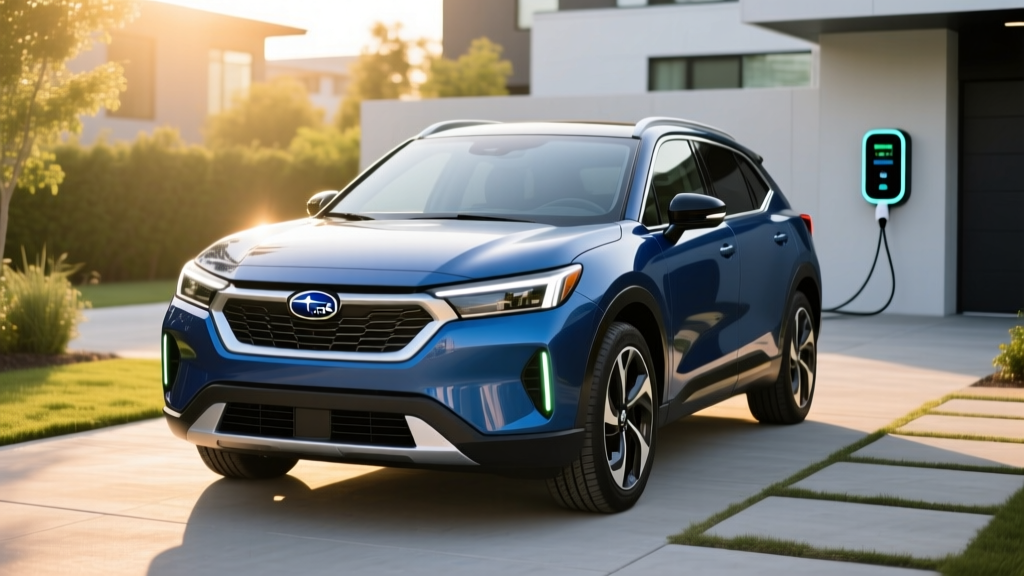
The 2026 Subaru Solterra remains the only all-electric compact SUV built on the Toyota/Subaru co-developed e-TNGA platform that comes standard with all-wheel drive across every trim. For buyers searching for Subaru Solterra finance deals, the equation has shifted meaningfully this year: a lower starting MSRP, aggressive manufacturer incentives, and federal tax credit eligibility combine to make this one of the more affordable dual-motor EVs on the market — provided you understand the range and charging limitations that still define this vehicle.
This guide walks through the real numbers — EPA range, charging speeds, battery chemistry, and total cost after credits — so you can evaluate whether the Solterra fits your driving profile and budget.
2026 Subaru Solterra At-a-Glance Specs
| Specification | 2026 Solterra (Premium trim) |
|---|---|
| EPA Range | 227 miles |
| Real-World Highway Range | ~185–200 miles (70°F); ~155–170 miles (32°F) |
| Battery Capacity | 72.8 kWh (usable ~65.4 kWh) |
| Battery Chemistry | NMC (Nickel Manganese Cobalt) |
| Max DC Fast Charge | ~150 kW peak |
| 10–80% DCFC Time | ~35 minutes |
| Level 2 Home Charge Rate | 7.6 kW (~22 miles/hr) |
| Drivetrain | Dual-motor AWD (standard all trims) |
| Horsepower | 215 hp |
| 0–60 mph | 6.5 seconds |
| Efficiency | 104 MPGe combined / 33 kWh/100mi |
| Cargo Volume | 23.8 cu ft (rear seats up) / 63.5 cu ft (folded) |
| Battery Warranty | 8 years / 100,000 miles |
| Base MSRP | $38,495 (Premium) |
Charging Speed: Home and DC Fast Charging Breakdown
Charging remains the Solterra's most debated characteristic. Subaru and Toyota upgraded the 2026 model's DC fast-charging capability compared to the original 2023 launch, but it still trails competitors like the Hyundai Ioniq 5 and Kia EV6.
| Charging Method | Power | Speed | Time to Full |
|---|---|---|---|
| Level 1 (120V household) | ~1.2 kW | ~3–4 miles/hr | ~24+ hours (empty to full) |
| Level 2 (240V home/public) | 7.6 kW | ~22 miles/hr | ~9.5 hours (empty to full) |
| DC Fast Charge (peak) | ~150 kW | 10–80% in ~35 min | N/A (tapers significantly above 80%) |
Charge curve reality: The Solterra reaches its peak ~150 kW rate only between roughly 10–30% State of Charge. From 30–60%, power holds around 100–120 kW, and from 60–80% it drops to approximately 55–70 kW. This means the advertised 10–80% time of 35 minutes is accurate, but the back half of the charge is considerably slower than the front. On a road trip, plan to charge in the 10–60% window for maximum time efficiency — that's where you'll add roughly 100 miles in about 15 minutes.
At home on a Level 2 charger (240V, 32-amp circuit), the Solterra adds approximately 22 miles of range per hour, meaning an overnight charge from 20% to 80% takes roughly 7–8 hours — perfectly suited for daily commuting use.
Pricing, Trim Levels, and Subaru Solterra Finance Deals
For 2026, Subaru offers the Solterra in three trims. Here's what each costs before incentives:
| Trim | MSRP | Key Features |
|---|---|---|
| Premium | $38,495 | 18" wheels, heated seats, EyeSight, 12.3" display |
| Limited | $41,995 | 20" wheels, SofTex seats, power liftgate, 360° camera |
| Touring | $44,995 | 20" dark wheels, panoramic roof, ventilated seats, Harman Kardon audio |
Current Subaru finance incentives (as of early 2026): Subaru has been offering competitive lease money factors and APR rates on the Solterra to maintain sales momentum. Typical offers include:
- Lease deals: Select markets advertise 36-month leases with $2,500–$3,500 due at signing on the Premium trim, with monthly payments in the $299–$379 range depending on region and credit tier. Lease cash from Subaru often supplements these offers.
- Financing APR: Qualified buyers may find promotional APR rates between 1.9%–3.9% for 36–60 month terms through Subaru Motors Finance, subject to credit approval and regional availability.
- Customer cash: Periodic $2,000–$5,000 cash incentives have appeared on 2025 and 2026 Solterra inventory — check with local dealers for current programs.
Always verify current offers on Subaru's official Solterra page or through a local dealer, as incentive programs change monthly and vary by ZIP code.
Federal Tax Credit: Does the Solterra Qualify?
The 2026 Subaru Solterra does qualify for the federal EV tax credit under IRS §30D, but the amount depends on battery sourcing compliance and your personal tax situation. Here's the eligibility checklist:
- MSRP cap: Must be under $80,000 for SUVs — all Solterra trims qualify ✓
- Buyer income cap: AGI must not exceed $150,000 (single), $225,000 (head of household), or $300,000 (joint filers)
- Battery sourcing: Critical minerals and battery components must meet phased-in thresholds per IRS guidelines — the Solterra's battery supply chain has evolved, but verify current-year compliance with your dealer
- Point-of-sale transfer: As of 2024, eligible buyers can transfer the credit to the dealer at purchase, reducing the purchase price directly rather than waiting for a tax refund
- Credit amount: Up to $3,750 (critical minerals only) or up to $7,500 (critical minerals + battery components) depending on sourcing compliance at time of purchase
| Scenario | Premium MSRP | Est. Tax Credit | Effective Price |
|---|---|---|---|
| Full $7,500 credit | $38,495 | −$7,500 | $30,995 |
| Partial $3,750 credit | $38,495 | −$3,750 | $34,745 |
| No credit (income/sourcing) | $38,495 | $0 | $38,495 |
Important: Tax credit eligibility rules under §30D are subject to change. Consult a tax professional and verify current battery-sourcing compliance with your dealer before finalizing a purchase. State and utility incentives may stack on top — check the AFDC incentive database for your location.
Performance, Efficiency, and Daily Driving
The Solterra's dual-motor AWD system produces 215 horsepower and delivers a 0–60 mph time of approximately 6.5 seconds. It's not the quickest EV in its segment — the Hyundai Ioniq 5 AWD hits 60 in about 5.1 seconds — but it provides confident merging power and Subaru's trademark X-MODE for light off-road and slippery conditions.
Efficiency lands at 104 MPGe combined (33 kWh per 100 miles) per fueleconomy.gov. That's mid-pack for the segment. Translation: at the US average electricity rate of ~$0.17/kWh, charging costs roughly $0.056 per mile — about one-third the per-mile fuel cost of a comparable gas-powered Subaru Forester.
What it drives like: The ride quality is composed and comfortable, with more ground clearance (8.3 inches) than most EV crossovers. Regenerative braking is adjustable via paddle shifters, though it doesn't offer true one-pedal driving — the car creeps at low speeds rather than coming to a complete stop. The 12.3-inch infotainment display (standard on all trims for 2026) runs Subaru's updated Starlink system with wireless Apple CarPlay and Android Auto. The standard EyeSight driver-assist suite includes adaptive cruise control, lane centering, and pre-collision braking — all Level 2 driver assistance that requires your active supervision.
Interior Space and Practicality
Interior dimensions are competitive for the compact EV SUV segment:
- Front legroom: 42.1 inches
- Rear legroom: 35.5 inches
- Cargo (seats up): 23.8 cu ft
- Cargo (seats folded): 63.5 cu ft
- Ground clearance: 8.3 inches
- Towing capacity: Not rated for towing
The flat floor (no transmission tunnel) makes the rear seat feel roomier than the numbers suggest. However, there is no front trunk (frunk) — a missed opportunity given the platform's architecture — and the cargo area is slightly smaller than the Ioniq 5's 27.2 cu ft.
Pros and Cons
- Standard dual-motor AWD on every trim — no FWD base model
- 8.3" ground clearance with X-MODE for snow/dirt confidence
- Eligible for up to $7,500 federal tax credit (verify sourcing)
- Competitive lease deals and promotional APR from Subaru
- 8-year/100,000-mile battery warranty
- Comfortable ride quality and composed highway manners
- Strong standard safety suite (EyeSight, IIHS Top Safety Pick history)
- 227-mile EPA range trails most competitors (Ioniq 5: 305 mi; EV6: 310 mi)
- DC fast charging peaks at ~150 kW — slower than 235–350 kW rivals
- No one-pedal driving mode
- No front trunk (frunk)
- Real-world cold-weather range drops below 170 miles
- Touring trim range penalty (222 mi EPA)
- Not rated for towing
Solterra vs. Key Competitors: Is It Worth Buying?
| Attribute | Solterra Premium | Hyundai Ioniq 5 SEL AWD | Kia EV6 Wind AWD | VW ID.4 AWD Pro |
|---|---|---|---|---|
| Base MSRP | $38,495 | $49,600 | $51,600 | $46,895 |
| EPA Range | 227 mi | 290 mi | 282 mi | 275 mi |
| Max DCFC | ~150 kW | ~240 kW | ~240 kW | ~175 kW |
| 10–80% Time | ~35 min | ~18 min | ~18 min | ~30 min |
| 0–60 mph | 6.5 sec | 5.1 sec | 5.2 sec | 6.7 sec |
| Ground Clearance | 8.3" | 6.1" | 6.1" | 6.7" |
| Battery Warranty | 8yr/100k mi | 10yr/100k mi | 10yr/100k mi | 8yr/100k mi |
- You want the most affordable dual-motor AWD EV after tax credits
- You prioritize ground clearance and light off-road/snow capability
- Your daily driving is under 150 miles and you charge at home
- You're a loyal Subaru buyer who values the brand's safety and AWD reputation
- You regularly road-trip and need 280+ miles of range and faster charging (Ioniq 5 or EV6)
- You want one-pedal driving or a frunk
- You need a longer battery warranty (Hyundai/Kia offer 10 years)
Frequently Asked Questions
What is the real-world range of the 2026 Subaru Solterra?
The EPA rates the Solterra at 227 miles (Premium). In real-world highway driving at moderate temperatures, expect 185–200 miles. In freezing conditions, range drops to approximately 155–170 miles. City driving with regenerative braking can push closer to the EPA figure.
How fast does the Solterra charge at home and on DC fast chargers?
On a Level 2 home charger (240V, 7.6 kW), the Solterra adds about 22 miles of range per hour, fully charging overnight in roughly 9.5 hours. On DC fast chargers, it peaks at approximately 150 kW and charges from 10–80% in about 35 minutes — slower than Hyundai/Kia's 800V platforms but adequate for planned road trips.
Does the 2026 Solterra qualify for the $7,500 federal tax credit?
The Solterra qualifies for the federal §30D credit, potentially up to $7,500 depending on battery component and critical mineral sourcing compliance at time of purchase. The buyer must also meet income caps ($150K single / $300K joint) and the vehicle MSRP must remain under $80,000 (all trims qualify). Verify current-year sourcing status with your dealer and consult a tax professional.
What are the best Subaru Solterra finance deals right now?
Subaru has been offering promotional lease rates (36-month leases around $299–$379/month with ~$3,000 due) and reduced APR financing (1.9%–3.9% for qualified buyers) on the Solterra. Manufacturer cash incentives of $2,000–$5,000 have also appeared. Check Subaru.com and local dealer inventory for current programs in your area, as these rotate monthly.
Is the Solterra worth buying over the Hyundai Ioniq 5 or Kia EV6?
It depends on your priorities. The Solterra is significantly less expensive after incentives and offers better ground clearance for snow and dirt roads. However, the Ioniq 5 and EV6 deliver 60+ more miles of range, nearly twice the DC fast-charging speed, and more cargo space. If road-trip capability and charging speed matter to you, the Korean platforms are stronger. If budget, AWD confidence, and Subaru ownership appeal to you, the Solterra is compelling at its effective price point.
What is the Solterra's battery warranty?
Subaru provides an 8-year/100,000-mile warranty on the high-voltage battery pack, covering defects and excessive capacity loss (typically below 70% State of Health). The powertrain is covered for 5 years/60,000 miles. This is in line with industry standards but shorter than Hyundai/Kia's 10-year battery coverage.