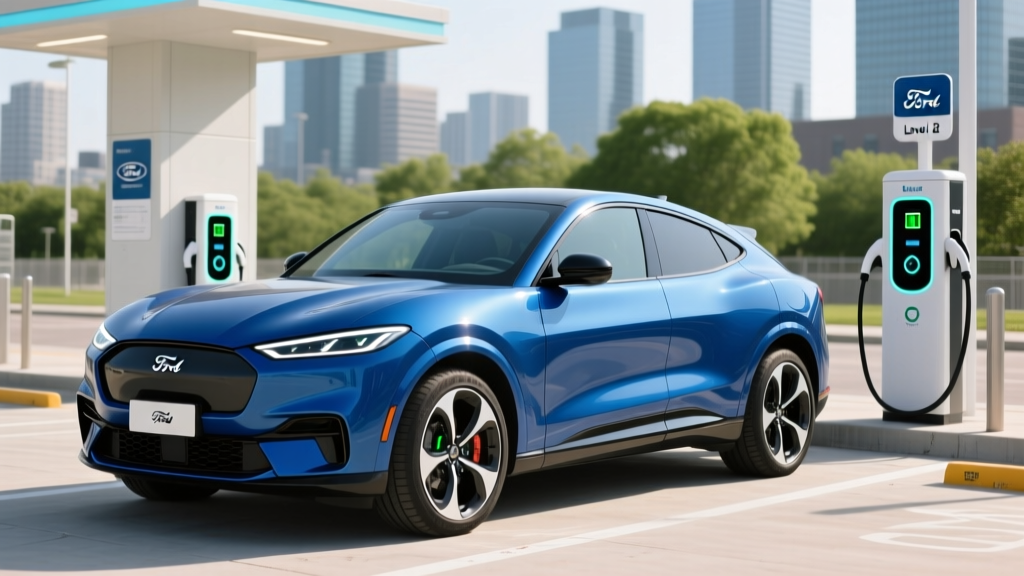
The Ford Mustang Mach-E has been one of the most talked-about electric SUVs since its launch, but as the first model-year examples push into extreme mileage territory, a pressing question emerges for used-EV shoppers and long-term owners alike: how does the Mustang Mach-E hold up at 316,000 miles? Whether you're eyeing a high-mileage fleet vehicle, evaluating long-term battery durability, or simply trying to understand what six-figure-plus electric miles look like in the real world, this deep-dive profile covers the Mach-E's specs, real-world range behavior, charging performance, and total ownership picture heading into 2026.
We'll anchor this review in the current-generation Mach-E platform (including the refreshed 2025–2026 model years with NACS native charging and updated battery packs) while addressing what extreme-mileage data tells us about the platform's longevity. Ford's decision to equip newer Mach-E models with LFP (lithium iron phosphate) battery chemistry on select trims has fundamentally changed the long-term durability conversation — and at 316,000 miles, that chemistry difference becomes the headline.
2026 Mustang Mach-E: Core Specs at a Glance
| Spec | Select (RWD) | Premium (AWD) | GT (AWD) |
|---|---|---|---|
| EPA Range | 250 mi (Standard Range) / 320 mi (Extended Range) | 290 mi (Extended Range) | 280 mi (Extended Range) |
| Battery (usable) | 70 kWh (LFP) / 91 kWh (NMC) | 91 kWh (NMC) | 91 kWh (NMC) |
| Horsepower | 266 hp | 346 hp | 480 hp |
| 0–60 mph | 6.3 sec | 5.1 sec | 3.5 sec |
| Drivetrain | RWD (single motor) | AWD (dual motor) | AWD (dual motor) |
| Max DC Fast Charge | 150 kW | 150 kW | 150 kW |
| 10–80% DC Time | ~38 min (91 kWh) / ~30 min (70 kWh) | ~38 min | ~38 min |
| Level 2 Home Charge Rate | 10.5 kW (~30 mi/hr) | 10.5 kW (~30 mi/hr) | 10.5 kW (~30 mi/hr) |
| MPGe (combined) | 105 MPGe | 98 MPGe | 86 MPGe |
| Base MSRP (2026) | $39,995 | $45,995 | $56,995 |
| Battery Warranty | 8 years / 100,000 miles (70% capacity retention) | ||
Sources: EPA fueleconomy.gov, Ford.com Mach-E specs.
Real-World Range: What the EPA Sticker Doesn't Tell You
The Mach-E's efficiency — rated at roughly 32–34 kWh/100 mi for the Extended Range RWD — is competitive but not class-leading. The Hyundai Ioniq 5 and Tesla Model Y both edge it out in energy efficiency per mile. Where the Mach-E makes ground back is in usable battery size: the 91 kWh (usable) NMC pack is one of the larger batteries in the mid-size electric SUV segment.
For the LFP-equipped Standard Range models, the 70 kWh usable pack yields a lower EPA figure (around 250 miles) but offers a critical long-term advantage we'll explore in the battery health section below. If you're evaluating a Mach-E at extreme mileage like 316,000 miles, the chemistry inside the pack matters enormously.
Charging Speed: DC Fast Charging and Home Setup
Charging speed remains one of the most consequential specs for EV ownership satisfaction, and the Mach-E's 150 kW peak DC fast-charging capability places it in the middle of the pack — adequate for road trips but not blistering by 2026 standards.
| Charging Level | Power | Miles Added per Hour | Notes |
|---|---|---|---|
| Level 1 (120V) | ~1.4 kW | ~3–4 mi/hr | Emergency/trickle only |
| Level 2 (240V, 48A) | 10.5 kW | ~30 mi/hr | Full overnight charge in ~9–10 hrs |
| DC Fast Charge | 150 kW peak | ~180 mi/hr (peak) | 10–80% in ~38 min; tapers sharply above 80% |
Charging curve reality check: The Mach-E peaks near 150 kW only between roughly 15–40% state of charge. From 40–60%, expect sustained rates around 110–120 kW. Above 80%, the charge rate drops to under 40 kW as the battery management system protects cell health. This means that charging from 10–80% takes approximately 38 minutes at a capable 150+ kW station, but a 10–90% session will take closer to 55 minutes. Plan road-trip stops accordingly — there's little value in sitting at a charger past 80%.
Starting with the 2025 refresh, Ford equipped the Mach-E with a native NACS (North American Charging Standard) port, granting access to Tesla Supercharger stations without an adapter. This was a significant practical upgrade — the Supercharger network remains the most reliable public charging infrastructure in the U.S. For 2021–2024 Mach-E owners, Ford provides a CCS-to-NACS adapter, though adapter-based charging may slightly reduce peak charge rates.
Battery Health at 316,000 Miles: What to Expect
This is where the "Mustang Mach-E at 316,000 miles" question gets genuinely interesting. Ford's high-voltage battery warranty covers 8 years or 100,000 miles against defects and excessive capacity loss (defined as dropping below 70% of original capacity). At 316,000 miles, any Mach-E is well beyond warranty coverage unless an extended service contract was purchased — making battery chemistry and degradation data the critical purchase factors.
NMC (Nickel Manganese Cobalt) packs — found in Extended Range and GT models — typically show 8–12% degradation by 100,000 miles based on fleet data and owner reports. Extrapolating conservatively with the non-linear degradation curve (most loss occurs in the first 20,000–30,000 miles, then slows), an NMC pack at 316,000 miles could retain roughly 80–85% of original capacity, assuming proper thermal management usage and avoidance of repeated 100% charges. That translates to a 320-mile EPA model dropping to an effective 255–270 miles of real-world range.
LFP (Lithium Iron Phosphate) packs — available on Standard Range models from 2024 onward — offer a fundamentally different longevity profile. LFP chemistry is rated for 3,000–5,000+ full charge cycles before reaching 80% capacity, compared to roughly 1,000–2,000 cycles for NMC. At 316,000 miles, an LFP-equipped Mach-E could theoretically retain 90%+ of original capacity, making it the far more compelling choice for extreme-mileage buyers. The trade-off is lower energy density — hence the smaller 70 kWh pack and reduced range.
Performance, Efficiency, and Daily Driving
The Mach-E's driving dynamics remain a strong point across its lifecycle. The GT trim's 480 horsepower and 3.5-second 0–60 mph time make it one of the quickest SUVs on the road, electric or otherwise. The more practical Premium AWD model's 346 hp and 5.1-second sprint are more than adequate for highway merging and passing, while the base Select RWD's 266 hp and 6.3-second time keeps things relaxed but competent.
Efficiency-wise, the RWD Extended Range model achieves 105 MPGe combined (roughly 32 kWh/100 mi), which is respectable. The GT drops to 86 MPGe — the cost of that performance. For cost-per-mile calculations, at the U.S. average electricity rate of ~$0.16/kWh, the Extended Range RWD costs approximately $0.051 per mile to fuel, compared to roughly $0.14/mile for a comparable gas SUV at 25 MPG and $3.50/gallon.
Ride quality and handling have drawn consistent praise. The Mach-E's low center of gravity (battery pack mounted in the floor) gives it car-like composure through corners, and the available MagneRide adaptive suspension on Premium and GT trims smooths out rough pavement effectively. Road noise is well-managed, though the lack of a traditional engine means tire and wind noise become more noticeable at highway speeds — something to watch as original tires age on a high-mileage example.
Interior, Cargo, and Technology
The Mach-E's cabin seats five with 41.7 inches of front legroom and 38.1 inches in the rear — competitive with the Hyundai Ioniq 5 and slightly tighter than the Tesla Model Y's second row. Cargo volume stands at 29.7 cubic feet behind the rear seats and 59.7 cubic feet with the rear seats folded. The front trunk (frunk) adds 4.7 cubic feet of drainable storage — useful for charging cables, groceries, or wet gear.
The centerpiece of the interior is Ford's SYNC 4A infotainment system running on a vertically oriented 15.5-inch touchscreen. Wireless Apple CarPlay and Android Auto are standard. The system supports over-the-air (OTA) updates, which Ford has used to add features, improve efficiency, and refine battery management even on early model-year vehicles. For a 316,000-mile example, confirming that all OTA updates have been applied is important — Ford has issued battery management refinements that can improve both range estimation accuracy and charging behavior.
Driver-assistance features include Ford's BlueCruise hands-free highway driving system on equipped models. BlueCruise is an SAE Level 2 system — it handles steering, acceleration, and braking on pre-qualified divided highways, but the driver must remain attentive and keep eyes on the road (monitored via a driver-facing camera). It is not autonomous driving. BlueCruise has been well-reviewed for smoothness and reliability, though its operational domain is limited to roughly 130,000+ miles of mapped divided highways in the U.S. and Canada.
Pricing, Tax Credits, and Value in 2026
| Trim | Base MSRP | §30D Credit Eligibility | Effective Price (if eligible) |
|---|---|---|---|
| Select RWD (Standard Range) | $39,995 | Eligible — under $80,000 SUV cap | ~$32,495 |
| Select RWD (Extended Range) | $44,995 | Eligible — under $80,000 SUV cap | ~$37,495 |
| Premium AWD (Extended Range) | $45,995 | Eligible — under $80,000 SUV cap | ~$38,495 |
| GT (Extended Range) | $56,995 | Eligible — under $80,000 SUV cap | ~$49,495 |
Federal tax credit eligibility under IRS §30D requires meeting several conditions simultaneously:
- MSRP cap: Vehicle must be under $80,000 (SUVs/vans/pickups) — all Mach-E trims qualify.
- Buyer income cap: Modified adjusted gross income must not exceed $150,000 (single), $225,000 (head of household), or $300,000 (joint filers).
- Battery sourcing: A percentage of critical minerals and battery components must be sourced from the U.S. or FTA-partner countries. These thresholds increase annually — verify current-year requirements on the IRS Clean Vehicle credit page before purchasing.
- Point-of-sale transfer: As of 2024, buyers can transfer the credit to the dealer at purchase, reducing the purchase price directly rather than waiting for a tax refund.
- VIN registration: The dealer must report the sale and VIN to the IRS via the IRS Energy Credits Online portal.
Important caveat: Battery component and critical mineral sourcing requirements tighten each year. Some 2026 Mach-E configurations may qualify for the full $7,500, while others may only qualify for $3,750 (if critical minerals requirements are met but battery component thresholds are not). Always confirm eligibility with your dealer and a tax professional before relying on the credit in your purchase decision.
Pros, Cons, and Competitor Comparison
Pros
- Strong driving dynamics and steering feel for an EV SUV
- Native NACS port (2025+) grants Supercharger access
- LFP battery option offers exceptional cycle life for high-mileage use
- Competitive cargo space with useful frunk
- BlueCruise hands-free driving on mapped highways
- All trims qualify under the $80K SUV MSRP cap for §30D
- OTA updates continue to refine the vehicle post-purchase
Cons
- 150 kW peak DC charging is mid-pack — outpaced by Ioniq 5 (350 kW) and Model Y (250 kW)
- Real-world highway range falls noticeably short of EPA sticker
- Rear legroom tighter than some competitors
- Battery warranty limited to 100,000 miles — a concern at 316,000 mi
- Early model years (2021–2022) had CCS-only charging, requiring an adapter
- Efficiency (kWh/100mi) trails the segment leaders
Versus the Tesla Model Y: The Model Y offers superior efficiency (~28 kWh/100 mi vs. 32), faster DC charging (250 kW peak), and a more extensive Supercharger-native experience. However, the Mach-E counters with a more traditional interior layout, physical controls, and a ride quality many reviewers find more refined.
Versus the Hyundai Ioniq 5: The Ioniq 5's 800V architecture enables 350 kW peak DC charging (10–80% in ~18 minutes), which is dramatically faster than the Mach-E. The Ioniq 5 also edges ahead in efficiency. But the Mach-E offers more cargo volume and available LFP chemistry for longevity-focused buyers.
Versus the VW ID.4: The ID.4 is a close competitor in price and space, but its charging speed (170 kW peak on 2024+ models) and software reliability have drawn more complaints than the Mach-E's SYNC 4A system.
Who Should Buy the Mustang Mach-E?
- You want a sporty-driving electric SUV with car-like handling
- You value native Supercharger access (2025+ models) without relying on Tesla
- You're a high-mileage driver and can source an LFP-equipped model for maximum battery longevity
- You prefer a traditional dealership purchase and service experience
- You want BlueCruise hands-free highway driving
- Fastest possible DC charging is your top priority (consider Ioniq 5 or Ioniq 6)
- Maximum efficiency per kWh matters most (consider Model Y)
- You need three rows of seating (consider the Kia EV9 or Rivian R1S)
For the commuter: The Select RWD with Standard Range is the sweet spot — low purchase price, LFP longevity, and 250 miles is more than enough for any daily round-trip. Home Level 2 charging refills overnight easily.
For the family road-tripper: The Premium AWD Extended Range gives you 290 miles EPA, dual-motor traction for rain and snow, and enough cargo room for a family vacation. Plan charging stops every 200–220 miles to stay comfortable.
For the performance enthusiast: The GT delivers supercar-rivaling acceleration in a practical package. Just accept the range and efficiency trade-offs — and budget for higher tire wear from 480 hp.
Frequently Asked Questions
What is the real-world range of the Mustang Mach-E?
The Extended Range RWD model is EPA-rated at 320 miles, but real-world mixed driving typically yields 270–295 miles in moderate temperatures. Sustained highway driving at 75+ mph drops this to 245–265 miles. Cold weather (below 32°F) can reduce range by 20–30%, bringing effective range to 190–230 miles depending on conditions and preconditioning habits.
How fast does the Mustang Mach-E charge at home and on DC fast chargers?
At home on a Level 2 (240V, 48A) charger, the Mach-E charges at 10.5 kW, adding roughly 30 miles of range per hour — a full charge takes about 9–10 hours for the Extended Range pack. On a DC fast charger, it peaks at 150 kW, achieving a 10–80% charge in approximately 38 minutes. Charging slows significantly above 80% SoC to protect battery health.
How much does the Mustang Mach-E cost after federal tax credits?
If you meet all IRS §30D requirements (income caps, battery sourcing rules), the full $7,500 credit can bring the Select RWD Standard Range down from $39,995 to approximately $32,495 via point-of-sale transfer. Higher trims like the GT ($56,995) could drop to ~$49,495. Eligibility depends on your income, the specific vehicle's battery component sourcing, and current-year IRS thresholds — always verify before purchasing.
Is the Mustang Mach-E worth buying vs. the Tesla Model Y or Hyundai Ioniq 5?
It depends on your priorities. The Model Y wins on efficiency and charging speed. The Ioniq 5 dominates in DC charging speed (350 kW peak). The Mach-E wins on driving feel, interior ergonomics, and — with LFP battery availability — potential long-term battery durability. All three are strong choices; test-drive each and compare what matters most to your driving pattern.
Can a Mustang Mach-E really last 316,000 miles?
The electric powertrain itself (motors, reduction gear) has far fewer wear components than an internal combustion engine and can realistically exceed 300,000 miles with minimal maintenance. The limiting factor is the high-voltage battery. NMC packs may retain 80–85% capacity at 316,000 miles; LFP packs could retain 90%+. If the battery retains sufficient capacity for your needs — or if you're willing to budget for a replacement ($12,000–$18,000 estimated for an out-of-warranty pack) — the platform is mechanically capable of this mileage.
Does the Mustang Mach-E qualify for the federal EV tax credit?
Yes — all 2026 Mach-E trims fall under the $80,000 MSRP cap for SUVs. However, buyer income limits ($150K single / $300K joint) and battery component/critical mineral sourcing rules must also be satisfied. The credit amount may be $7,500 or $3,750 depending on which sourcing thresholds the specific vehicle meets. Check the IRS Clean Vehicle credit page and confirm with your dealer before purchase.
This review reflects 2026 model-year specifications and current IRS §30D tax credit rules as of publication. Specs, pricing, and credit eligibility are subject to change. Always verify with Ford's official site, fueleconomy.gov, and a qualified tax professional before making a purchase decision.