The Quick Answer on the Toyota C-HR Electric
As of 2026, there is no fully electric Toyota C-HR available in the United States. Toyota sells a plug-in hybrid (PHEV) version of the C-HR in select European and Asian markets, and has unveiled a battery-electric C-HR concept for Europe, but the US lineup has never included the C-HR nameplate in any form since the gas model was discontinued after the 2022 model year. If you are searching for a Toyota C-HR Electric in America, your practical options are: (1) consider Toyota's US-available electrified alternatives like the bZ4X or Prius Prime PHEV, or (2) look at competitor compact electric crossovers such as the Hyundai Kona Electric, Kia Niro EV, or Volvo EX30.
What Is the Toyota C-HR Electric — and Can You Buy One?
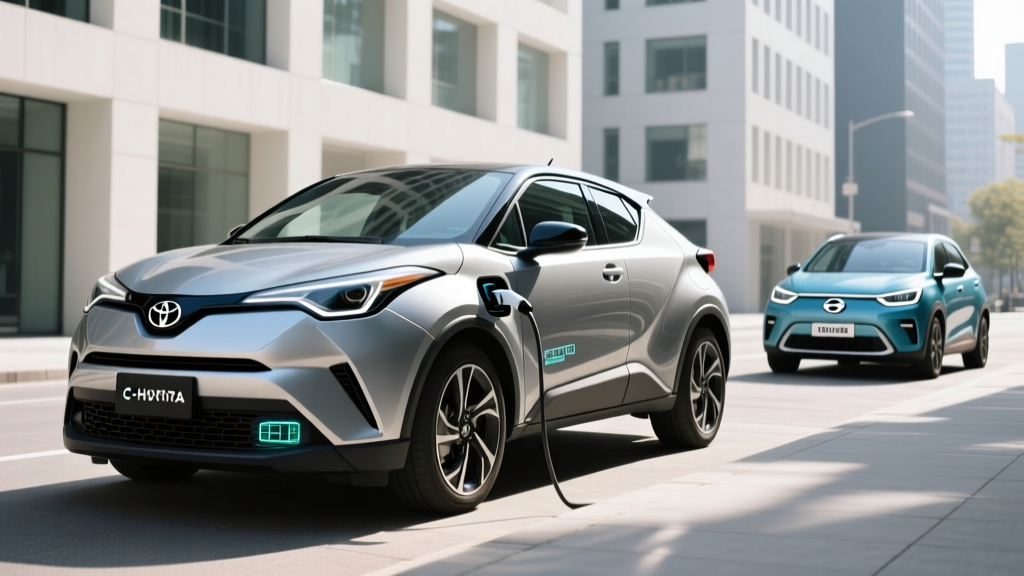
The Toyota C-HR was a subcompact crossover sold in the US from 2018 through 2022 as a gasoline-only vehicle. Toyota discontinued it stateside due to slow sales and overlap with the Corolla Cross. In Europe, Toyota launched a second-generation C-HR in 2024 with hybrid and plug-in hybrid powertrains. Toyota has also introduced a C-HR BEV concept pointing toward a future battery-electric variant for the European market, built on an evolution of Toyota's e-TNGA platform.
However, Toyota has made no official announcement regarding a battery-electric C-HR for the US market. The closest Toyota EV currently sold in America is the bZ4X, a compact electric crossover with an EPA-estimated range of up to 252 miles (FWD, per fueleconomy.gov). The bZ4X starts at approximately $37,070 MSRP for 2026.
If Toyota eventually brings a C-HR Electric to the US, industry analysts expect it would slot below the bZ4X in both size and price — potentially targeting a $30,000–$35,000 base MSRP and roughly 200–240 miles of EPA range. Until then, these remain speculative figures based on the European concept and Toyota's pricing strategy.
Compact EV Alternatives: What You Can Actually Buy in 2026
Since the Toyota C-HR Electric is not available stateside, here is how the leading compact electric crossovers compare. These are the vehicles C-HR Electric seekers should actually cross-shop:
| Specification | Hyundai Kona Electric | Kia Niro EV | Volvo EX30 | Toyota bZ4X (FWD) |
|---|---|---|---|---|
| EPA Range | 261 mi | 239 mi | 265 mi (Extended Range) | 252 mi |
| Battery (usable kWh) | 65.4 kWh (NMC) | 64.8 kWh (NMC) | 69 kWh (NMC) | 71.4 kWh (NMC) |
| Peak DC Fast Charge | ~100 kW | ~85 kW | 153 kW | 150 kW |
| 10–80% DCFC Time | ~43 min | ~45 min | ~26 min | ~30 min |
| Horsepower | 201 hp | 201 hp | 272 hp (Single Motor) | 201 hp |
| 0–60 mph | ~7.6 sec | ~7.8 sec | ~5.7 sec | ~7.1 sec |
| Base MSRP (2026) | ~$33,975 | ~$39,600 | ~$36,350 | ~$37,070 |
| Battery Warranty | 10 yr / 100,000 mi | 10 yr / 100,000 mi | 8 yr / 100,000 mi | 10 yr / 100,000 mi |
Sources: fueleconomy.gov, manufacturer spec sheets. EPA range reflects FWD/base trims where applicable. Real-world highway range is typically 15–20% lower than EPA combined figures; cold-weather losses can reach 25–30% below freezing.
EV vs. Hybrid vs. Gas: Real Cost Comparison for Compact Crossovers
A common question from C-HR Electric searchers is whether a battery-electric vehicle, a plug-in hybrid, or a traditional hybrid makes more financial sense. Let's compare five-year costs using realistic assumptions: 15,000 miles/year, $0.14/kWh home electricity, $3.40/gallon gas, and 70% home / 30% public DC fast charging for EVs.
| Cost Factor (5 Years) | Compact EV (e.g., Kona Electric) | Toyota Prius Prime (PHEV) | Toyota Corolla Cross Hybrid |
|---|---|---|---|
| Base MSRP | $33,975 | $33,475 | $28,295 |
| Est. Federal Tax Credit (§30D) | Up to $7,500* | Up to $3,750* | $0 |
| Effective Purchase Price | ~$26,475 | ~$29,725 | $28,295 |
| Fuel/Energy (5 yr) | ~$3,900 | ~$3,200 | ~$5,600 |
| Maintenance (5 yr) | ~$1,800 | ~$2,800 | ~$3,200 |
| Insurance (5 yr, est. avg) | ~$9,500 | ~$8,200 | ~$7,800 |
| 5-Year Total Cost | ~$41,675 | ~$43,925 | ~$44,895 |
*Federal §30D tax credit eligibility depends on MSRP caps, buyer income limits, battery sourcing requirements, and point-of-sale transfer rules. Per IRS guidelines, not all trims or buyers qualify. Consult a tax professional for your specific situation.
The EV wins on five-year total cost primarily due to the federal tax credit and lower fuel and maintenance expenses. However, insurance costs are typically 15–25% higher for EVs due to repair complexity and battery replacement costs. Without the tax credit, the cost advantage narrows significantly.
Real-World Ownership: What First-Time EV Buyers Must Know
If you are coming from a gas C-HR or similar subcompact crossover and considering your first EV, these practical factors matter more than spec-sheet numbers:
Home Charging Access Is the Deciding Factor
EV ownership is dramatically more convenient and cheaper if you can charge at home. A Level 2 home charger (240V, 32–48 amps / 7.7–11.5 kW) adds roughly 25–35 miles of range per hour of charging and costs $800–$2,500 installed, depending on whether your electrical panel needs an upgrade. If you live in an apartment without charging access, relying on public DC fast charging will cost 2–3x more per mile and add 20–40 minutes to your weekly routine.
Real-World Range vs. EPA Stickers
EPA range estimates assume a mix of city and highway driving at moderate temperatures. In practice:
- Highway driving at 75+ mph: Expect 15–20% less than EPA combined range
- Cold weather (below 32°F): Expect 20–30% range loss due to battery chemistry limitations and cabin heating demand
- DC fast charging taper: Peak kW rates (e.g., 150 kW) only apply at low state-of-charge; charging slows significantly above 80% SoC to protect the battery
A Kona Electric rated at 261 miles EPA will realistically deliver 200–220 miles on a cold-weather highway trip.
Battery Longevity and Warranty Reality
Modern NMC batteries in compact EVs typically lose 8–12% capacity over the first 100,000 miles based on fleet data. Federal warranty requirements mandate at least 8 years / 100,000 miles of battery coverage, with most manufacturers warranting against dropping below 70% state of health. A full battery replacement on a compact EV runs $8,000–$14,000 out of warranty — a cost worth factoring into long-term ownership plans beyond the warranty period.
Common EV Misconceptions — Fact vs. Fiction
| Myth | Fact |
|---|---|
| "EV batteries need replacing every few years" | Data from fleet operators shows most NMC packs retain 85–92% capacity at 100,000 miles. LFP chemistry packs (used in some Tesla and BYD models) show even slower degradation. |
| "EVs are worse in cold weather" | Range drops 20–30% in freezing temps, but EVs start reliably (no cold-cranking amps to worry about), and preconditioning while plugged in recovers much of the loss. A heat pump — standard on many 2026 models — reduces cabin-heating energy draw by 30–50%. |
| "Charging takes too long for road trips" | At a 150 kW DC fast charger, most compact EVs add 150–180 miles in 25–30 minutes. On a 400-mile trip, you'll stop once for ~25 minutes — comparable to a meal break. |
| "The $7,500 tax credit applies to every EV" | Per IRS §30D rules, eligibility requires meeting MSRP caps ($55,000 for SUVs, $25,000 for sedans), buyer income limits ($150K single / $300K joint AGI), and critical-mineral/battery-component sourcing thresholds that change annually. |
| "EVs cost more to insure" | True in most cases: EV insurance premiums run 15–25% higher than comparable gas vehicles due to specialized repair requirements and battery replacement costs. Shop quotes from multiple carriers before purchasing. |
Your Decision Framework: Which Electrified Compact Crossover Fits You?
Choose a battery-electric compact crossover (Kona Electric, EX30, bZ4X) if:
- You have reliable home or workplace Level 2 charging access
- Your daily driving is under 80 miles round-trip (covers 90%+ of US commutes)
- You qualify for the full or partial §30D federal tax credit
- You want the lowest per-mile energy cost (~$0.04–0.05/mile on home electricity vs. ~$0.12–0.15/mile on gas)
- You rarely drive more than 250 miles in a single day without overnight stops
Choose a plug-in hybrid (Prius Prime, RAV4 Prime) if:
- You lack reliable home charging but want some electric-only driving (typically 35–44 miles EPA)
- You frequently take road trips exceeding 300 miles and don't want to plan around DC fast chargers
- You live in a region with extreme cold where EV range loss would be a daily inconvenience
- You want electric commuting with gas-engine flexibility for longer trips
Choose a conventional hybrid (Corolla Cross Hybrid, Prius) if:
- You have zero charging access (no home, no workplace)
- Your budget is tighter and you cannot absorb the EV upfront premium even after tax credits
- You drive in a region with limited public charging infrastructure
- You want proven long-term reliability with minimal ownership complexity
Will Toyota Bring a C-HR Electric to the US?
Toyota's US electrification strategy has focused on the bZ4X as its volume EV, with the larger three-row bZ5X expected to follow. The company has publicly stated it will offer a "multi-pathway" approach including hybrids, PHEVs, hydrogen fuel cells, and BEVs. Given that the C-HR nameplate has been retired in the US market, it is unlikely — though not impossible — that Toyota would reintroduce it as an EV rather than expanding the bZ series or Corolla Cross lineup with an electrified variant.
If you are committed to the Toyota brand and want an electric vehicle today, the bZ4X is your option. If you are flexible on brand and want the closest equivalent to what a C-HR Electric would represent (a subcompact, stylish, affordable electric crossover), the Hyundai Kona Electric and Volvo EX30 are the strongest alternatives in 2026.
Frequently Asked Questions
Is there a fully electric Toyota C-HR available in the US?
No. The C-HR was discontinued in the US after the 2022 model year (gasoline only). Toyota has shown an electric C-HR concept for Europe, but there is no confirmed US launch as of 2026.
What is the closest Toyota EV to a C-HR Electric?
The Toyota bZ4X is the closest current option — a compact electric crossover with 252 miles EPA range (FWD), starting at ~$37,070 MSRP. It is larger and more expensive than a C-HR Electric would likely be.
How much does it cost to charge a compact EV at home?
At the US average electricity rate of ~$0.14/kWh, fully charging a 65 kWh battery costs approximately $9.10 and provides roughly 230–260 miles of range. That equates to about $0.04 per mile — roughly one-third the cost of gasoline at $3.40/gallon in a 30 MPG vehicle.
Do compact EVs qualify for the $7,500 federal tax credit?
Some do, but eligibility under IRS §30D depends on the vehicle's battery sourcing, your income (AGI caps of $150K single / $300K joint), and MSRP limits ($55,000 for SUVs/trucks). Many compact EVs from Korean and American manufacturers qualify; check the latest IRS eligibility list at fueleconomy.gov before purchasing, as sourcing rules tighten annually.
What happens if I buy an EV and move to an apartment without charging?
This is a real ownership challenge. Solutions include: workplace charging, public Level 2 chargers near your routine (grocery stores, gyms), DC fast charging (more expensive at $0.30–0.50/kWh, and not ideal for daily battery health), or portable Level 1 charging from a standard 120V outlet (adds only 3–5 miles per hour — viable only for low-mileage drivers). Confirm charging access before committing to an EV purchase.