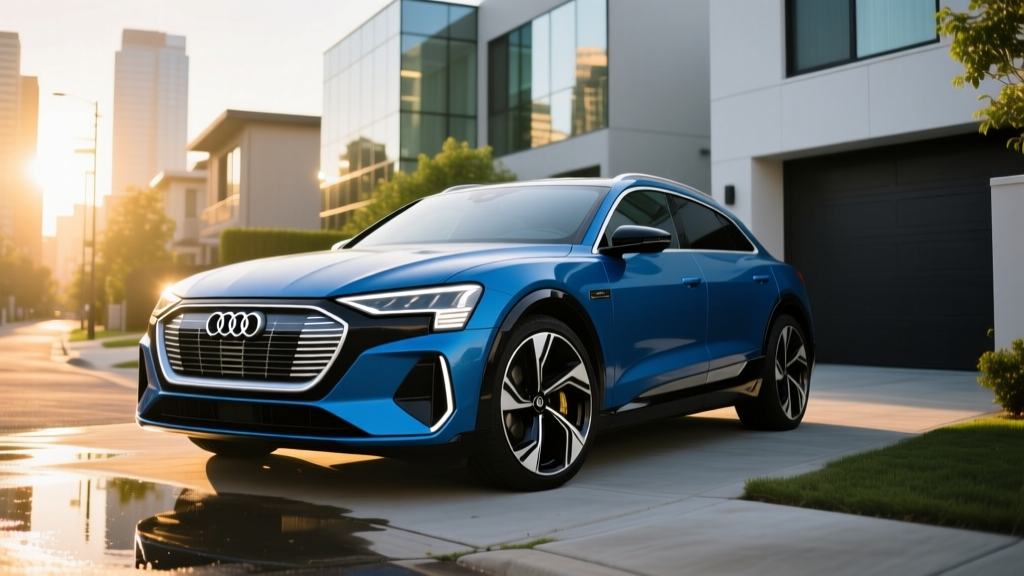
Quick Verdict: The 2022 Audi e-tron Chronos as a Used EV in 2026
The 2022 Audi e-tron Chronos Edition occupied a strange middle ground when new — a luxury electric SUV with impeccable build quality, whisper-quiet cabin isolation, and a 95 kWh battery that delivered a respectable but not class-leading 222 miles of EPA range. Audi only produced the Chronos Edition for one model year as a mid-cycle special trim, slotting between the Premium Plus and the top-tier Prestige. Today, as a used EV, it represents one of the more compelling value plays in the luxury electric SUV segment, particularly for buyers who prioritize ride refinement and charging reliability over headline-grabbing range figures.
If you're shopping for a 2022 Audi e-tron Chronos on the used market in 2026, the biggest question is whether its real-world usability matches its premium badge. We've broken down every number that matters — from sustained DC fast-charging speeds to the actual cargo space behind the second row — so you can decide with data, not marketing.
| Spec | Value |
|---|---|
| EPA Range | 222 miles |
| Battery (Gross / Usable) | 95 kWh / ~86.5 kWh (NMC) |
| Efficiency | 78 MPGe combined (43 kWh/100 mi) |
| Peak DC Fast Charge | 150 kW |
| 10–80% DC Fast Charge | ~30 minutes |
| Level 2 Home Charging | 11 kW (~22 mi/hr) |
| 0–60 mph | 5.5 seconds (Boost mode) |
| Horsepower | 402 hp (Boost) / 355 hp (normal) |
| Drivetrain | quattro AWD (dual-motor) |
| Cargo (rear seats up / down) | 28.5 cu ft / 57.0 cu ft |
| Original Base MSRP | ~$71,900 |
| Battery Warranty (original) | 8 years / 100,000 miles |
Range and Efficiency: EPA vs. the Real World
The EPA rates the 2022 e-tron Chronos at 222 miles on a full charge. That figure was competitive at launch but trails newer rivals — the BMW iX xDrive50 achieves 324 miles, and even the refreshed 2024+ Audi Q8 e-tron (the e-tron's direct successor) pushes past 285 miles thanks to a larger 114 kWh battery pack.
Real-World Range Expectations — 2022 Audi e-tron Chronos
- EPA Sticker: 222 miles
- Highway (70 mph, mild weather): ~190–205 miles
- City / mixed driving (moderate temps): ~210–225 miles
- Cold weather (below 30°F, highway): ~155–175 miles
- Cold weather + cabin heat + highway: expect 25–30% reduction from EPA
The e-tron's efficiency of 43 kWh per 100 miles (78 MPGe combined per fueleconomy.gov) is on the higher side for a luxury SUV. The vehicle's weight — roughly 5,700 lbs — and aerodynamic drag work against it at sustained highway speeds. However, the e-tron's thermal management system is one of the best in the industry. Audi's liquid-cooled battery pack maintains cell temperatures within a tight operating window, which means range degradation over time has proven slower than many competitors from the same era.
The usable battery capacity of approximately 86.5 kWh (from the 95 kWh gross pack) uses NMC (nickel manganese cobalt) chemistry. Audi reserves a generous top and bottom buffer — roughly 8.5 kWh combined — to protect long-term cell health. This is why e-tron owners consistently report minimal degradation even at high mileage.
Charging Speed: DC Fast and Home Level 2
The 2022 e-tron Chronos supports a peak DC fast-charge rate of 150 kW via its CCS1 connector. What separates the e-tron from many peers is not the peak number but the sustained charging curve. Where many EVs hit peak kW briefly and taper sharply, the e-tron holds close to 150 kW well past 50% state of charge, only beginning a meaningful taper above 70–75%.
| Level | Power / Rate | Speed / Time |
|---|---|---|
| Level 1 (120V, 12A) | ~1.4 kW | ~3 mi/hr |
| Level 2 (240V, 48A) | 11 kW | ~22 mi/hr (full charge ~9 hrs) |
| DC Fast Charge (CCS1) | Peak 150 kW | 10–80% in ~30 min |
| DC Fast Charge (taper) | ~50 kW above 80% | 80–100% adds ~25 min |
For home charging, the onboard 11 kW AC charger is a standout. Most competitors from this era use 7.2 kW or 9.6 kW chargers, meaning the e-tron replenishes faster on a Level 2 home setup. A full charge from empty takes roughly 9 hours on a 48-amp Level 2 circuit — easily achievable overnight. Note that you'll need a 60-amp dedicated circuit for a 48-amp charger; budget $500–$2,000 for professional installation depending on your panel capacity and run length.
One practical note: the e-tron uses CCS1, not NACS. As of 2026, Audi has not offered a factory NACS adapter for the 2022 model year, though aftermarket CCS-to-NACS adapters exist for Tesla Supercharger access. Check adapter compatibility and safety certifications before purchasing.
Performance and Driving Dynamics
The Chronos Edition shares its dual-motor quattro powertrain with the rest of the 2022 e-tron lineup. In normal driving, the system produces 355 horsepower and 414 lb-ft of torque. Engage Boost mode (via the drive select system), and output rises to 402 hp and 490 lb-ft for short bursts — enough to push the 5,700-lb SUV from 0 to 60 mph in 5.5 seconds.
That's not Tesla Model X Plaid territory, but the e-tron Chronos was never designed for drag races. The tuning priority is effortless, linear acceleration with near-silent operation. The adaptive air suspension — standard on the Chronos — delivers a ride quality that few EVs in this price range can match. Road imperfections are absorbed with a compliance that reminds you this is an Audi engineered in Ingolstadt, not a startup prototype.
The regenerative braking system is adjustable via steering-wheel paddles, offering three levels of regen plus an automatic mode that uses radar and navigation data to modulate deceleration. True one-pedal driving is possible at the highest regen setting, though Audi's implementation is gentler than the aggressive regen you'd find in a Nissan LEAF or Chevrolet Bolt.
Interior, Cargo, and Technology
The Chronos Edition distinguished itself with exclusive interior appointments: unique leather upholstery with contrast stitching, a head-up display, and Audi's Virtual Cockpit Plus digital instrument cluster. The dual-screen MMI infotainment system (10.1-inch upper, 8.6-inch lower) handles navigation, climate, and media with haptic-touch feedback that's responsive but demands more attention than physical knobs.
Cargo space measures 28.5 cubic feet behind the second row and 57.0 cubic feet with the rear seats folded. There is no frunk — the space under the hood houses power electronics. For a luxury family SUV, 28.5 cu ft is adequate for weekly groceries and a couple of suitcases but trails the BMW iX (35.5 cu ft) and the Tesla Model X (behind its second row).
Driver-assistance technology includes Audi's Adaptive Cruise Assist with lane centering (SAE Level 2), intersection assist, and a 360-degree camera system. The adaptive cruise is smooth and predictable on highway drives, but it requires hands-on-wheel supervision at all times — this is not a hands-free system like GM's Super Cruise or Ford's BlueCruise.
SAE Automation Level: Level 2
Audi Adaptive Cruise Assist is a Level 2 driver-assistance system. The driver must remain fully engaged, keep hands on the steering wheel, and monitor the road at all times. It does not permit inattentive or hands-off driving.
Pricing, Tax Credits, and Used-EV Value
When new, the 2022 Audi e-tron Chronos Edition carried a base MSRP of approximately $71,900 (before destination). Well-equipped examples pushed toward $78,000–$80,000. As a used vehicle in 2026, expect market pricing in the $32,000–$42,000 range depending on mileage, condition, and region.
The critical financial question is federal tax credit eligibility. Because you're buying used, the relevant incentive is the §25E Used Clean Vehicle Credit, not the §30D new-vehicle credit. Here's what the IRS requires:
- Credit amount: 30% of sale price, up to a maximum of $4,000
- Sale price cap: vehicle must sell for $25,000 or less to qualify
- Buyer income limits: AGI ≤ $75,000 (single) / $112,500 (head of household) / $150,000 (joint)
- Vehicle age: must be at least 2 model years old (2022 qualifies in 2026)
- Dealer requirement: sale must be through a licensed dealer registered with the IRS
- One-time use: buyer can only claim the used-EV credit once every 3 years
- Point-of-sale transfer: credit can be applied at purchase to reduce the upfront price
The $25,000 sale-price cap is the sticking point. Many 2022 e-tron Chronos examples on the used market in 2026 are priced above $25,000, which means the buyer would not qualify for the §25E credit. If you can find a higher-mileage example at or below $25,000, the $4,000 credit effectively drops the purchase price to $21,000 or less — an exceptional value for a luxury AWD electric SUV with this level of refinement. Consult IRS.gov §25E guidelines and a tax professional to confirm your eligibility.
Battery Health, Warranty, and Longevity
Audi backs the e-tron's battery pack with an 8-year / 100,000-mile warranty that guarantees the battery will retain at least 70% of its original capacity. For a 2022 model, that factory warranty extends through the 2030 model year or 100,000 miles — whichever comes first. As of 2026, most 2022 e-trons are still within this coverage window.
The NMC chemistry in the e-tron has demonstrated strong longevity in fleet and owner data. Audi's conservative buffer strategy (keeping roughly 4 kWh reserved at the top and 4.5 kWh at the bottom of the pack) reduces the stress on individual cells during charge and discharge cycles. Real-world reports from high-mileage e-tron owners commonly show 3–6% total degradation at 50,000–70,000 miles — well within the warranty threshold.
If the battery does require out-of-warranty replacement, expect quotes in the $15,000–$22,000 range for the pack alone, plus labor. However, individual module replacement (rather than the full pack) is sometimes possible and significantly cheaper. Always request a battery State of Health (SoH) report before purchasing a used e-tron — any Audi dealer can pull this data via the vehicle's diagnostic system.
Pros, Cons, and Who Should Buy
Pros
- Exceptional ride quality with standard air suspension
- Sustained 150 kW DC charging curve (minimal taper below 70%)
- 11 kW Level 2 onboard charger — faster home charging than most rivals
- Generous battery buffer translates to excellent long-term SoH
- Premium cabin materials and near-silent highway cruising
- quattro AWD performs well in snow and rain
- Still under factory battery warranty (through ~2030)
Cons
- 222-mile EPA range trails newer competitors by 60–100+ miles
- Heavy at 5,700 lbs — efficiency suffers on highway drives
- No frunk — limited front storage
- CCS1 connector (no native NACS / Supercharger access without adapter)
- Used prices often exceed the $25,000 §25E credit cap
- Infotainment dual-screen layout is less intuitive than competitors
- No hands-free driving mode (unlike Super Cruise or BlueCruise)
Who the 2022 Audi e-tron Chronos suits best:
- Choose the e-tron Chronos if: you prioritize ride comfort and cabin quietness over maximum range, have reliable home Level 2 charging, drive primarily in urban/suburban environments with occasional highway trips under 180 miles, and want a luxury badge with proven build quality at a used-EV price.
- Look elsewhere if: you need 300+ miles of range for frequent road trips, want access to the Tesla Supercharger network without adapters, require hands-free highway driving assists, or need maximum cargo space for family hauling.
Frequently Asked Questions
What is the real-world range of the 2022 Audi e-tron Chronos?
Expect roughly 190–210 miles in mixed driving during moderate temperatures. Highway-only driving at 70+ mph drops this to around 190–205 miles. In cold weather (below 30°F), plan for 155–175 miles, especially with cabin heat active. The e-tron's heat pump — standard equipment — helps mitigate cold-weather losses compared to EVs without one, but the 222-mile EPA figure is an optimistic ceiling in real-world conditions.
How fast does the e-tron Chronos charge at home and on the road?
On DC fast charging, the e-tron peaks at 150 kW and charges from 10% to 80% in approximately 30 minutes. The charging curve is notably flat — it sustains near-peak rates longer than many competitors. At home on a Level 2 (240V, 48A) charger, the 11 kW onboard charger delivers about 22 miles of range per hour, fully replenishing the battery in roughly 9 hours.
Does the 2022 Audi e-tron Chronos qualify for a federal tax credit?
As a used vehicle, it may qualify for the §25E Used Clean Vehicle Credit — up to $4,000 — but only if the sale price is $25,000 or less and the buyer meets income caps ($75K single / $150K joint). Many used e-tron Chronos examples are priced above $25,000, which disqualifies them. The original §30D new-vehicle credit is no longer available for used purchases. Always verify with IRS guidelines and a tax professional.
Is the 2022 e-tron Chronos worth buying vs. competitors?
Against the used Tesla Model X (2022), the e-tron offers a quieter, more refined ride and a more traditional luxury interior, but gives up significant range (348 mi for the Model X Long Range) and Supercharger network access. The BMW iX xDrive50 is a stronger all-around EV with 324 miles of range and more cargo space, but commands higher used prices. The Jaguar I-PACE (2022) offers sportier handling at a lower price but with inferior charging speeds and a less reliable track record. If ride quality and build integrity are your top priorities and your daily driving fits within 180–200 miles, the e-tron Chronos is a strong value pick.
What should I check before buying a used 2022 e-tron Chronos?
Request a battery State of Health (SoH) report from an Audi dealer — this shows remaining capacity as a percentage. Verify the vehicle has not exceeded the 8-year/100,000-mile battery warranty threshold. Check for open recalls on the NHTSA recall database. Confirm that the charging port and CCS1 inlet show no signs of corrosion or damage. And test the air suspension in all ride-height settings to verify proper compressor operation.
Can I charge the e-tron Chronos at Tesla Superchargers?
Not natively. The 2022 e-tron uses a CCS1 connector, while Tesla Superchargers use NACS. Aftermarket CCS-to-NACS adapters are available and may work at Supercharger V3/V4 stalls that support non-Tesla vehicles (Audi has not been formally included in Tesla's open Supercharger program as of early 2026, though the landscape is evolving). Always verify adapter compatibility and charging protocol support before relying on this for travel.