Introduction: The bZ4X and Toyota's Cautious EV Dawn
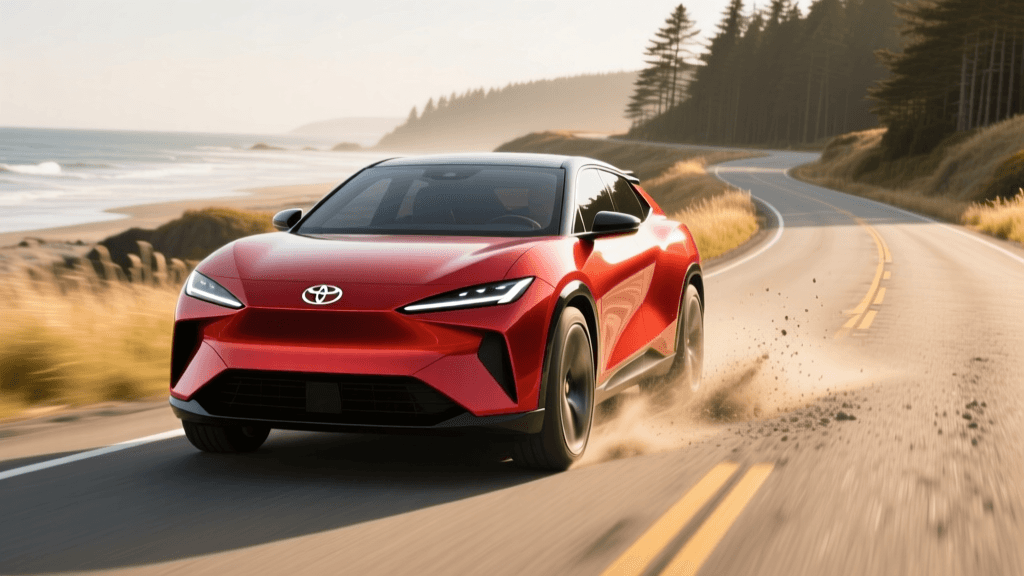
When Toyota, the undisputed global king of hybrid vehicles, finally introduced its first mass-market battery electric vehicle, the bZ4X, the automotive world watched with bated breath. Known for a cautious, multi-pathway approach to electrification, Toyota's entry into the pure EV space was highly anticipated. However, the bZ4X has become a fascinating case study in the transition from legacy automaking to the electric era. While it offers the build quality, comfort, and reliability synonymous with the Toyota badge, it has also sparked intense debates regarding real-world range, charging speeds, and the phenomenon of range anxiety.
From an industry outlook perspective, the bZ4X is more than just a compact electric crossover; it is a foundational stepping stone. It represents Toyota's current baseline for battery electric vehicles (BEVs) while the company invests billions into next-generation solid-state battery technology. In this comprehensive review, we put the Toyota bZ4X through rigorous real-world range testing, analyze the root causes of its range anxiety, and explore what this vehicle means for the future of Toyota's EV roadmap.
Real-World Range Testing: Separating EPA from Reality
The Toyota bZ4X is equipped with a 71.4 kWh lithium-ion battery pack. According to official estimates, the Front-Wheel Drive (FWD) model boasts a maximum range of 252 miles, while the All-Wheel Drive (AWD) variant drops to an EPA-estimated 228 miles. On paper, these numbers are competitive for the compact EV segment. However, as many early adopters and automotive journalists have discovered, the real-world highway and cold-weather performance tells a different story.
Unlike its South Korean rivals, such as the Hyundai Ioniq 5 and Kia EV6, which utilize advanced 800-volt electrical architectures, the bZ4X relies on a more traditional 400-volt system. This architectural choice heavily impacts both charging speeds and high-speed efficiency. During sustained highway driving at speeds of 70 mph or higher, the bZ4X's aerodynamic drag and battery management system result in a noticeable drop in efficiency. Furthermore, the AWD model's dual-motor setup, while providing excellent traction, consumes energy at a higher rate than the EPA's standardized testing cycles might suggest.
The Highway and Cold Weather Penalty
Range anxiety in the bZ4X is most pronounced during winter months or on long, high-speed road trips. Lithium-ion batteries are inherently sensitive to temperature fluctuations. When the mercury drops below freezing, the battery's internal resistance increases, and energy must be diverted from propulsion to thermal management and cabin heating. While the bZ4X is equipped with a heat pump in select markets to mitigate this, the overall range penalty in severe cold remains a significant hurdle for buyers in northern climates.
| Trim / Drivetrain | EPA Estimated Range | Real-World Highway Estimate (70 mph) | Cold Weather Estimate (Below 32°F) |
|---|---|---|---|
| FWD (20-inch wheels) | 252 miles | 210 - 225 miles | 160 - 180 miles |
| AWD (20-inch wheels) | 228 miles | 190 - 205 miles | 140 - 160 miles |
| FWD (18-inch wheels) | 252 miles | 220 - 235 miles | 170 - 190 miles |
As highlighted by extensive road tests documented on Car and Driver's Toyota bZ4X hub, the AWD model's real-world highway range can occasionally dip below 200 miles under less-than-ideal conditions. This discrepancy between the window sticker and the dashboard readout is the primary catalyst for bZ4X range anxiety.
Tackling Range Anxiety: Practical Charging Strategies
While the bZ4X may not lead the pack in raw efficiency, range anxiety can be effectively managed with the right habits and actionable strategies. Understanding the vehicle's charging curve and thermal management system is crucial for maximizing your daily usability and road-trip confidence.
- Leverage Battery Preconditioning: When using the native navigation system to route to a DC fast charger, the bZ4X will automatically begin preconditioning the battery. This warms the cells to an optimal temperature, ensuring you hit peak charging speeds upon arrival rather than waiting for the battery to warm up on the charger's dime.
- Understand the Charging Curve: The FWD bZ4X peaks at around 150 kW, while the AWD model peaks at roughly 100 kW. However, these peak speeds are only available in a narrow state-of-charge window (typically between 10% and 30%). To optimize road trips, plan to charge from 10% to 70% and then move on, as the charging speed tapers off dramatically past 80%.
- Optimize Cabin Climate: According to the U.S. Department of Energy's FuelEconomy guide, using seat heaters and the heated steering wheel consumes significantly less energy than heating the entire cabin air. In chilly weather, lower the cabin thermostat by a few degrees and rely on the contact heaters to preserve your battery's range.
- Master Regenerative Braking: Use the paddle shifters behind the steering wheel to adjust the regenerative braking levels on the fly. While the bZ4X does not offer true one-pedal driving that brings the car to a complete halt, maximizing regen in city traffic can recapture valuable energy that would otherwise be lost to the friction brakes.
The Industry Outlook: bZ4X as a Stepping Stone to Solid-State
To truly understand the bZ4X, one must view it through the lens of Toyota's broader industry outlook and future trends. Toyota has openly stated that the current generation of lithium-ion BEVs is merely the beginning of their electrification journey. The company is heavily investing in next-generation battery technologies that promise to render current range anxieties obsolete.
What Toyota's Battery Roadmap Means for Buyers
Toyota's recently unveiled battery roadmap outlines a transition to several new cell types, culminating in the highly anticipated solid-state battery. Expected to debut in commercial EVs around 2027 or 2028, solid-state technology replaces the liquid electrolyte with a solid material, offering immense benefits in energy density, safety, and charging speed.
According to research tracked by the U.S. Department of Energy's EV Battery initiatives, solid-state batteries have the potential to double the energy density of current lithium-ion packs while cutting charging times to under 10 minutes. Toyota has claimed their future solid-state EVs could achieve a range of over 700 miles on a single charge. In this context, the bZ4X is essentially a compliance and learning vehicle—a necessary data-gathering tool that allows Toyota to build out its charging network partnerships, software infrastructure, and EV manufacturing supply chains before their revolutionary battery tech hits the assembly line.
Furthermore, the industry at large is shifting toward 800-volt and even 1000-volt architectures to enable ultra-fast 350 kW+ charging. The bZ4X's 400-volt system highlights Toyota's conservative engineering philosophy, prioritizing long-term reliability and cost-efficiency over cutting-edge performance metrics. While this frustrates early EV adopters who demand instantaneous charging, it aligns with Toyota's historical strategy of letting others test the bleeding edge while they refine the technology for mass-market durability.
Final Verdict: Should You Buy the bZ4X Today or Wait?
The Toyota bZ4X is a comfortable, well-built, and practical electric crossover that excels in daily commuting and urban environments. Its spacious interior, smooth ride quality, and comprehensive suite of active safety features make it an excellent choice for cautious buyers transitioning from a traditional gas car or a hybrid. However, its real-world highway range and conservative charging speeds mean that frequent long-distance road trippers will undoubtedly experience some degree of range anxiety.
If your daily commute is under 40 miles and you have reliable home charging, the bZ4X's real-world limitations will rarely impact your lifestyle. You are buying into the Toyota ecosystem of reliability and dealer support, accepting the current technological compromises as the price of admission. Conversely, if you regularly drive long highway routes in extreme weather, competitors with 800-volt architectures and superior thermal management systems currently offer a more stress-free experience.
Looking toward the future, the bZ4X is a prologue. It is the foundational chapter in Toyota's EV story, paving the way for the solid-state revolution promised later this decade. For the forward-looking consumer, the bZ4X is a capable vehicle for today, but a clear indicator that Toyota's most disruptive electric innovations are still on the horizon.