Introduction: The Ultimate Risk vs. Reward EV Showdown
The electric vehicle market is no stranger to bold startups, but few have captured the automotive world's imagination—and subsequent anxiety—quite like the Fisker Ocean. In this head-to-head product showdown, we are pitting the visually stunning, feature-laden Fisker Ocean against the undisputed sales champion of the EV world: the Tesla Model Y. However, this is not just a battle of range, horsepower, and interior volume. It is a profound showdown between a high-risk, high-reward boutique EV and a mass-market juggernaut, heavily colored by Fisker Inc.'s catastrophic financial collapse. For prospective buyers navigating the secondary market or considering fire-sale inventory, understanding the stark contrast in company viability is just as crucial as evaluating the vehicles themselves.
Design and Exterior: Solar-Powered Flair vs. Mass-Market Minimalism
Henrik Fisker’s background in automotive design (famously penning the Aston Martin V8 Vantage and BMW Z8) is immediately evident in the Fisker Ocean. The SUV features aggressive, sculpted lines, a distinct full-width LED light bar, and recycled materials integrated into the exterior cladding. Measuring 188.0 inches in length with a 115.0-inch wheelbase, the Ocean commands a commanding, athletic stance. Its crowning exterior achievement is the available SolarSky roof, which utilizes photovoltaic cells to generate up to 1,500 miles of range annually under optimal conditions.
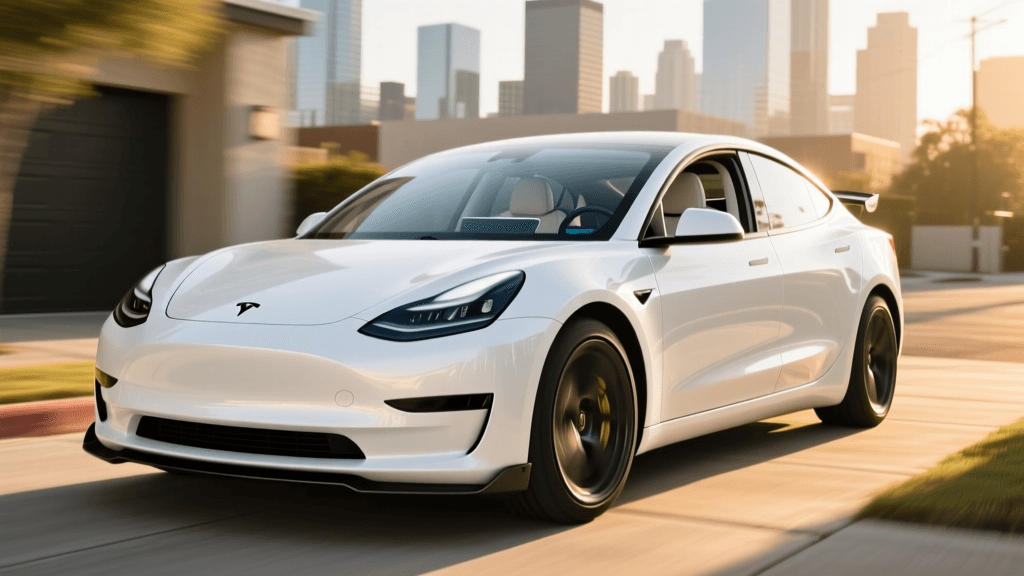
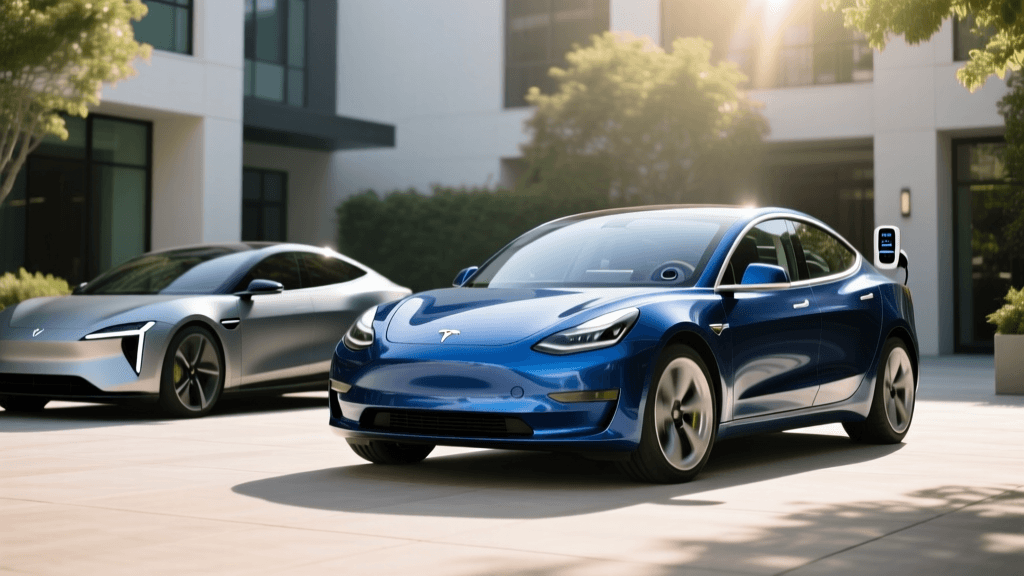
Conversely, the Tesla Model Y prioritizes aerodynamic efficiency and manufacturing simplicity over boutique styling. At 187.0 inches long with a 113.8-inch wheelbase, its dimensions are nearly identical to the Fisker, but its teardrop silhouette lacks the Ocean's muscular haunches. The Model Y’s glass roof offers excellent outward visibility but lacks the solar generation capabilities or the physical shade integration found in the Fisker. In a pure design showdown, the Fisker Ocean easily outshines the ubiquitous Tesla, turning heads at charging stations where the Model Y simply blends into the crowd.
Interior, Tech, and the 'California Mode' Experience
Stepping inside the Fisker Ocean reveals an ambitious, eco-conscious cabin. The centerpiece is the 17.1-inch Revolve screen, which rotates from a horizontal 'Control Mode' to a vertical 'Hollywood Mode' for streaming. The materials, including sustainably sourced microfiber and recycled plastics, give the cabin a premium, European luxury feel. The Ocean's party trick is 'California Mode,' which lowers all six glass panels—including the rear hatch window and rear quarter windows—simultaneously with the touch of a single button, transforming the SUV into an open-air cruiser.
The Tesla Model Y interior remains steadfastly minimalist, bordering on Spartan. The 15-inch fixed landscape touchscreen handles everything from climate control to wiper speeds, which can be distracting while driving. While Tesla's software interface is lightning-fast and highly intuitive, the lack of physical buttons and the absence of a traditional instrument cluster frustrate some traditional car buyers. The Model Y offers a fixed glass roof with no physical shade, leading to significant cabin heat in summer months, a problem Fisker addressed with a retractable solar shade.
Performance, Range, and Charging Speeds
When comparing the top-tier Fisker Ocean One (or Extreme) against the Tesla Model Y Long Range, the spec sheet tells a fascinating story of raw capacity versus software-optimized efficiency.
| Feature | Fisker Ocean One | Tesla Model Y Long Range |
|---|---|---|
| Original MSRP | $68,999 | $44,990 |
| Battery Capacity (Usable) | 113 kWh | ~75 kWh |
| EPA Estimated Range | 360 miles | 330 miles |
| 0-60 mph Time | 3.6 seconds | 4.8 seconds |
| Peak DC Fast Charging | 250 kW (Limited Curve) | 250 kW (Optimized Curve) |
| Drivetrain | Dual Motor AWD | Dual Motor AWD |
According to long-term testing by Car and Driver, the Fisker Ocean delivers impressive real-world highway range, easily surpassing the Model Y thanks to its massive 113 kWh Hyper Range battery. However, the Tesla Model Y wins the charging showdown. While both vehicles claim a 250 kW peak charging rate, Tesla's thermal management and V3 Supercharger network allow the Model Y to sustain high charging speeds much longer, resulting in faster 10-to-80 percent charging times in real-world road trip scenarios.
The Elephant in the Room: Company Viability and Ownership Risk
No review of the Fisker Ocean is complete without addressing the severe financial instability of its parent company. In June 2024, Fisker Inc. filed for Chapter 11 bankruptcy, a move that sent shockwaves through the EV community. As reported by Reuters during the filing, the company sought to sell its assets after failing to secure the necessary capital to continue operations, leading to the halt of manufacturing by Magna Steyr in Austria.
This corporate collapse drastically alters the ownership proposition. Fisker owners have already faced severe challenges, including prolonged software update delays, server outages that disabled the Fisker mobile app (temporarily locking some users out of their Bluetooth-key vehicles), and a severe shortage of replacement parts. Because production was outsourced to Magna Steyr, the supply chain for proprietary body panels, headlights, and suspension components has effectively frozen. Industry trackers at Electrek have documented the ongoing struggles of early adopters who face months-long waits for minor collision repairs.
In late 2024, rumors and memorandums of understanding regarding potential asset acquisitions by legacy automakers like Nissan offered a glimmer of hope. However, until a buyer officially assumes responsibility for Fisker's software servers, parts inventory, and warranty obligations, the Ocean remains a high-risk asset. Tesla, by contrast, offers unparalleled corporate stability, a ubiquitous global Supercharger network, and a vast, established third-party repair ecosystem.
Total Cost of Ownership and Depreciation
The financial realities of the Fisker Ocean are staggering. Vehicles that originally commanded an MSRP of $68,999 are now appearing on auction blocks and fire-sale lots for between $25,000 and $35,000. This represents one of the steepest depreciation curves in modern automotive history. While this makes the Ocean an incredible bargain for the hardware provided, it destroys traditional total cost of ownership (TCO) calculations.
Insurance premiums for the Fisker Ocean have skyrocketed due to the lack of available replacement parts and the company's bankruptcy status. Furthermore, traditional extended warranty providers are hesitant to underwrite policies for a defunct automaker. Tesla Model Y owners benefit from relatively stable resale values, widespread insurance competition, and the ability to utilize independent EV repair shops that have spent years reverse-engineering Tesla's architecture.
Final Verdict: Should You Buy a Fisker Ocean Today?
The head-to-head showdown between the Fisker Ocean and the Tesla Model Y ultimately comes down to your risk tolerance. The Tesla Model Y is the undisputed champion of convenience, efficiency, and peace of mind. It is the logical choice for a primary daily driver, offering seamless road trips and reliable service.
However, if you are an EV enthusiast looking for a secondary vehicle, the Fisker Ocean at its current fire-sale prices is a compelling, albeit risky, proposition. Actionable Advice: If you choose to purchase a Fisker Ocean, buy it outright or use a personal loan rather than an auto loan, as many lenders will not finance a vehicle from a bankrupt manufacturer. Keep a backup internal combustion engine (ICE) vehicle for daily commuting, stockpile consumable parts like cabin air filters and 12V batteries immediately upon purchase, and be prepared to treat the vehicle as a rolling piece of boutique art rather than a traditional appliance. The Fisker Ocean is a masterpiece of design hamstrung by corporate failure; buy it for the hardware, but respect the profound risks of the badge.