The $99 Toyota bZ4X Lease: What's Actually Behind the Headline
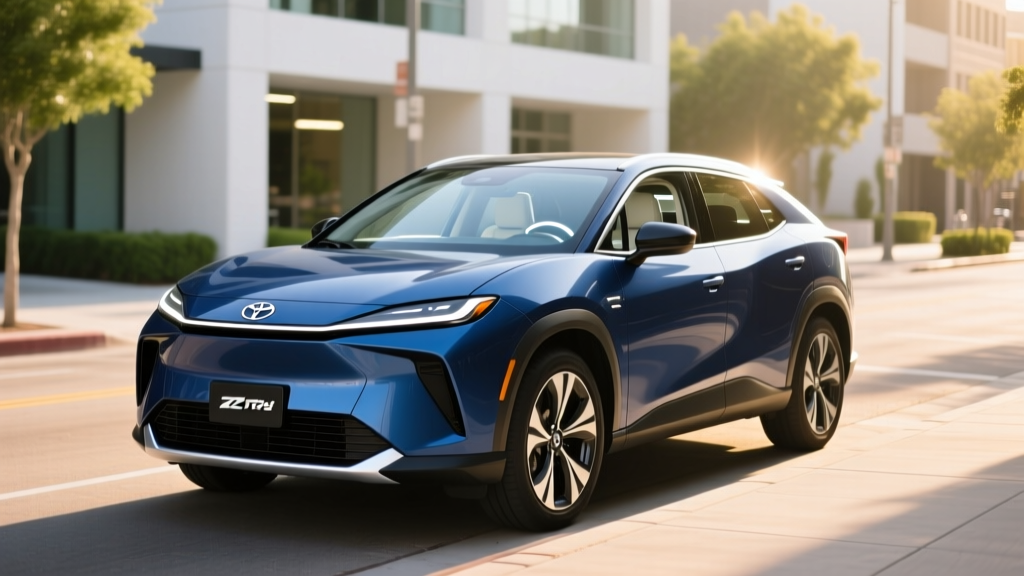
Scroll social media or dealer forums long enough and you'll see the teaser: a Toyota bZ4X for $99 per month. For a mainstream electric crossover, that number stops you mid-scroll. But before you rush to the dealership, the fine print matters — a lot. This review dissects the 2026 Toyota bZ4X as a complete package: its 252-mile EPA range, 71.4 kWh battery, 150 kW DC fast-charging capability, and the lease economics that make that $99 figure possible (and what it actually costs you out the door).
The bZ4X has been Toyota's flagship battery-electric vehicle since its launch, and the 2026 model year carries forward with refinements to software, charging stability, and Toyota Safety Sense 3.0. It sits in a brutally competitive compact electric SUV segment against the Hyundai Ioniq 5, Kia EV6, Volkswagen ID.4, and Tesla Model Y. Let's see where it lands.
| Spec | XLE FWD | XLE AWD | Limited AWD |
|---|---|---|---|
| EPA Range | 252 mi | 228 mi | 222 mi |
| Battery (usable) | 71.4 kWh, NMC lithium-ion | ||
| Peak DC Fast Charge | 150 kW (CCS1) | ||
| 10–80% DCFC Time | ~30 minutes | ||
| Level 2 Charge Rate | 7.2 kW (~25 mi/hr) | ||
| Motor Output | 201 hp / 196 lb-ft | 214 hp / 248 lb-ft | |
| 0–60 mph | 7.1 sec | 6.5 sec | |
| MPGe (combined) | 131 MPGe | 119 MPGe | 117 MPGe |
| kWh/100 mi | 26 | 28 | 29 |
| Base MSRP | $38,465 | $40,465 | $47,265 |
| Battery Warranty | 8 yr / 100,000 mi | ||
Range and Efficiency: EPA Sticker vs. Real World
The front-wheel-drive XLE achieves an EPA-estimated 252 miles on a full charge — respectable for the segment but not class-leading. The all-wheel-drive trims drop to 228 miles (XLE AWD) and 222 miles (Limited AWD), largely due to the added weight and parasitic loss of the rear motor. The 71.4 kWh usable battery uses NMC (nickel-manganese-cobalt) chemistry, which offers strong energy density but is more temperature-sensitive than LFP alternatives found in some competitors.
EPA estimate: 252 mi (XLE FWD) / 228 mi (XLE AWD)
Expect in practice: ~215–235 mi on a mix of highway and suburban driving in moderate temperatures. At sustained 75+ mph highway speeds, plan for ~195–215 mi. In freezing conditions (below 32°F), range can drop 20–30%, yielding as low as ~160–180 mi on the AWD trims. The bZ4X uses a heat pump on AWD models, which mitigates some cold-weather loss, but NMC chemistry still suffers more than LFP packs in deep cold.
Efficiency ratings from fueleconomy.gov show 131 MPGe combined for the FWD model, translating to 26 kWh per 100 miles. That's competitive with the VW ID.4 but trails the Hyundai Ioniq 5 and Tesla Model Y, both of which extract more miles per kilowatt-hour thanks to more aggressive thermal management and lower drag coefficients.
Charging Speed: DC Fast, Level 2, and the Curve
The bZ4X supports a peak DC fast-charge rate of 150 kW via its CCS1 connector. Toyota quotes a 10–80% charge time of approximately 30 minutes under ideal conditions. In real-world testing, the charge curve tells a more nuanced story: the bZ4X ramps quickly to ~130–150 kW between 10–40% state of charge, then tapers progressively. By 60% SoC, you're typically seeing 80–100 kW, and above 80% the rate drops sharply to protect battery longevity.
| Charging Level | Power | Speed / Time | Connector |
|---|---|---|---|
| Level 1 (120V household) | ~1.4 kW | ~5 mi/hr | J1772 |
| Level 2 (240V home/public) | 7.2 kW | ~25 mi/hr (full charge ~10 hr) | J1772 |
| DC Fast Charge | 150 kW peak | 10–80% in ~30 min | CCS1 |
At 7.2 kW on Level 2, a full overnight charge takes about 10 hours — adequate for daily replenishment if you're starting from 20–30% remaining. The onboard charger caps at 7.2 kW, so even a 48-amp home charger (capable of 11.5 kW) won't push it faster. Home charging installation typically runs $800–$2,500 depending on panel capacity and conduit run, so budget accordingly.
One practical note: the bZ4X does not support NACS natively. Toyota has committed to NACS adoption on future models, but for 2026, CCS1 remains the standard. At Electrify America and similar CCS networks, plug-and-charge works reliably. Tesla Supercharger access requires an adapter, and speeds may be limited depending on adapter compatibility.
Performance, Ride, and Drivetrain
The FWD XLE uses a single front-mounted motor producing 201 horsepower and 196 lb-ft of torque, reaching 60 mph in 7.1 seconds. The AWD models, co-developed with Subaru, add a rear motor for a combined 214 hp and 248 lb-ft, dropping the 0–60 time to 6.5 seconds. Neither figure is exciting by EV standards — the Ioniq 5 RWD hits 60 in 7.0 seconds and its AWD variant does it in 5.0 seconds — but the bZ4X delivers smooth, linear acceleration that feels effortless around town.
Ride quality is where the bZ4X earns points. The TNGA-e platform provides a compliant, well-damped ride that absorbs road imperfections better than the stiffer-sprung Model Y. Steering is light and predictable. The X-MODE system on AWD trims provides light off-road and snow capability with traction-control mapping, hill descent control, and a grip mode — a nod to the Subaru partnership. This isn't a trail rig, but it handles gravel roads and winter conditions with more confidence than most electric crossovers.
Regenerative braking is adjustable via paddle shifters, though the bZ4X does not offer true one-pedal driving in the way a Nissan LEAF or Tesla does. You'll still use the friction brake pedal for complete stops, which some drivers prefer for a more natural feel.
Interior, Cargo, and Technology
Inside, the 2026 bZ4X uses a 12.3-inch touchscreen running Toyota's latest multimedia system with wireless Apple CarPlay and Android Auto. The interface is responsive and logically organized, a meaningful upgrade from the sluggish systems in earlier Toyota EVs. A 7-inch digital instrument cluster sits behind the steering wheel, positioned high to minimize eye diversion — similar to a head-up display concept, though an actual HUD is reserved for the Limited trim.
Toyota Safety Sense 3.0 is standard across all trims, bundling:
- Pre-Collision System with pedestrian and cyclist detection
- Full-Speed Range Dynamic Radar Cruise Control
- Lane Departure Alert with Steering Assist and Lane Tracing Assist
- Road Sign Assist
- Automatic High Beams
- Proactive Driving Assist (low-speed braking support)
This is an SAE Level 2 driver-assistance system — it can manage steering, acceleration, and braking under driver supervision, but it is not self-driving. You must keep your hands on the wheel and eyes on the road at all times.
Cargo space measures 27.7 cubic feet behind the rear seats and 56.9 cubic feet with the 60/40 split rear seats folded. Rear legroom is generous at 42.1 inches, beating the Model Y and matching the ID.4. However, the bZ4X lacks a front trunk (frunk), which is a missed opportunity for an EV-native platform. Total interior passenger volume is 96.9 cubic feet.
- Smooth, comfortable ride quality
- Generous rear-seat legroom (42.1 in)
- AWD X-MODE adds real winter/gravel capability
- Toyota Safety Sense 3.0 standard on all trims
- Strong lease deals available via Toyota Financial Services
- 8-year/100,000-mile battery warranty
- EPA range trails Ioniq 5, EV6, and Model Y
- 150 kW peak DCFC is slower than 200–350 kW rivals
- No frunk (front trunk)
- 7.2 kW onboard charger limits Level 2 speed
- CCS1 only — no native NACS in 2026
- Infotainment lacks native EV route planning with charge stops
Pricing, the $99 Lease, and Federal Tax Credit Math
The 2026 Toyota bZ4X starts at $38,465 for the XLE FWD (including destination), with the XLE AWD at $40,465 and the Limited AWD at $47,265. Options are limited — Toyota packages most features by trim rather than à la carte — so your as-tested price typically lands within $1,000–$2,000 of the base MSRP plus taxes and registration.
Now, the headline question: the $99/month lease. This deal, periodically offered through Toyota Financial Services, typically requires:
- $3,999–$4,499 due at signing (first month + cap cost reduction + acquisition fee)
- 36-month term with 10,000 miles per year
- Excellent credit tier (Tier 1+, typically 720+ FICO)
- Regional availability — not all dealers participate
The economics work because Toyota often applies the $7,500 federal EV tax credit as a lease incentive. Under IRS rules, when a vehicle is leased (not purchased), the leasing company (Toyota Financial Services) claims the §30D credit and can pass it through as a capitalized-cost reduction. This sidesteps the buyer income caps, MSRP caps, and battery-sourcing requirements that apply to direct purchases — making the credit accessible to a wider range of lessees.
| Scenario | Upfront Cost | Monthly / Ongoing | Credit Benefit |
|---|---|---|---|
| Outright Purchase (qualifying buyer) | ~$38,465 | Loan payment varies | $7,500 §30D credit (income/MSRP/sourcing rules apply) |
| $99/mo Lease (typical deal) | ~$3,999–$4,499 due at signing | $99/mo for 36 months | $7,500 passed through as cap-cost reduction by TFS |
| Standard Lease (no promo) | ~$2,500–$3,500 due at signing | $299–$399/mo for 36 months | Varies by dealer and region |
For outright buyers, the IRS §30D federal tax credit offers up to $7,500, but eligibility depends on:
- MSRP cap: SUVs must be at or below $80,000 — the bZ4X clears this easily
- Buyer income cap: $150,000 single / $225,000 head of household / $300,000 joint MAGI
- Battery sourcing: Critical mineral and battery component requirements phase in annually; confirm current-year compliance at the IRS Clean Vehicle Provisions page or with your tax professional
- Point-of-sale transfer: As of 2024+, eligible buyers can transfer the credit to the dealer for an immediate price reduction at purchase
The lease route effectively bypasses income and sourcing restrictions because the credit flows to the lessor. This is why the $99/month deal exists — and why it's often the smartest financial move for the bZ4X, even if you'd prefer to own.
How the bZ4X Compares to Key Competitors
The compact electric SUV segment gives buyers real choices. Here's how the bZ4X stacks up against its primary rivals:
| Spec | Toyota bZ4X XLE FWD | Hyundai Ioniq 5 SE RWD | VW ID.4 Pro S RWD | Tesla Model Y RWD |
|---|---|---|---|---|
| EPA Range | 252 mi | 303 mi | 291 mi | 320 mi |
| Battery (usable) | 71.4 kWh | 77.4 kWh | 82 kWh | ~60 kWh (LFP) |
| Peak DCFC | 150 kW | 240 kW | 175 kW | 250 kW |
| 10–80% Time | ~30 min | ~18 min | ~28 min | ~22 min |
| 0–60 mph | 7.1 sec | 7.0 sec | 7.7 sec | 6.6 sec |
| Base MSRP | $38,465 | $42,600 | $44,045 | $44,990 |
| Cargo (rear seats up) | 27.7 cu ft | 27.2 cu ft | 30.3 cu ft | 30.2 cu ft |
The bZ4X's primary advantage is price — it undercuts every rival by $4,000–$6,500 at MSRP, and with aggressive lease deals, the effective monthly cost is unmatched. Its weaknesses are range (20–50 miles behind) and DC charging speed (150 kW peak vs. 240 kW for the Ioniq 5). If your commute is under 40 miles round-trip and you charge at home nightly, the range gap is academic. If you road-trip frequently, the slower charging and shorter range become tangible friction.
- You want the lowest monthly lease payment in the segment
- Your daily driving is under 50 miles and you charge at home
- You value Toyota's reliability reputation and dealer network
- You need AWD with genuine light off-road/snow capability
- Rear-seat legroom is a priority (42.1 inches)
- You regularly drive 250+ miles between charges (Ioniq 5, Model Y)
- You want the fastest DC charging for road trips (Ioniq 5 at 240 kW)
- You need maximum cargo space (ID.4 at 30.3 cu ft)
- You want native NACS / Supercharger access (Model Y)
Warranty and Long-Term Ownership
Toyota backs the bZ4X with a competitive warranty package:
- Basic vehicle: 3 years / 36,000 miles
- Powertrain: 5 years / 60,000 miles
- Hybrid/EV battery: 8 years / 100,000 miles (capacity retention above 70%)
- Rust-through: 5 years / unlimited miles
- Roadside assistance: 2 years / 25,000 miles
The 8-year/100,000-mile battery warranty aligns with federal minimum requirements and matches most competitors. Toyota guarantees the battery will retain at least 70% of its original capacity during the warranty period. Early bZ4X models (2023–2024) have shown modest degradation of 3–5% over the first 30,000 miles based on owner reports — within normal NMC expectations. Toyota's reputation for long-term durability is a genuine asset here, though the bZ4X is still too new for 100,000+ mile data.
Insurance costs tend to run 15–25% higher than comparable gas-powered RAV4 models, driven by EV repair costs and parts pricing. Get quotes before committing — premiums vary dramatically by zip code, driving record, and carrier.
Frequently Asked Questions
What is the real-world range of the Toyota bZ4X?
The EPA rates the FWD XLE at 252 miles and the AWD at 222–228 miles. In mixed real-world driving at moderate temperatures, expect 215–235 miles from the FWD and 195–215 from AWD models. Highway-only driving at 75+ mph and cold weather below freezing can push range down to 160–190 miles on AWD trims.
How fast does the bZ4X charge at home and on DC fast chargers?
On a DC fast charger, the bZ4X peaks at 150 kW and charges from 10–80% in approximately 30 minutes. At home on a Level 2 (240V) charger, it accepts up to 7.2 kW, adding roughly 25 miles of range per hour — a full charge from empty takes about 10 hours. Level 1 (120V) trickle charging adds about 5 miles per hour.
How much does the bZ4X cost after tax credits?
The XLE FWD starts at $38,465. Qualifying buyers purchasing outright may receive up to $7,500 via the IRS §30D federal tax credit (subject to income, MSRP, and battery-sourcing rules), bringing the effective price to ~$30,965. On the $99/month lease deal, the credit is typically applied by Toyota Financial Services as a cap-cost reduction, with ~$3,999–$4,499 due at signing.
Is the Toyota bZ4X worth buying over the Ioniq 5 or Model Y?
It depends on your priorities. The bZ4X wins on base price, lease affordability, ride comfort, and Toyota's dealer network. The Ioniq 5 wins on range (303 mi), charging speed (240 kW), and tech. The Model Y wins on range (320 mi), Supercharger access, and cargo space. If cost-per-month is your top metric, the bZ4X lease is hard to beat. If road-trip capability matters most, look at the Ioniq 5 or Model Y.
Does the bZ4X qualify for the federal EV tax credit?
For purchases, the bZ4X is eligible for up to $7,500 under IRS §30D, provided the buyer meets income caps ($150K single / $300K joint), the vehicle MSRP is under $80,000 (it is), and battery-sourcing requirements are met for the current model year. For leases, the credit goes to Toyota Financial Services (the lessor) and is typically passed through as a lease incentive — bypassing buyer income and sourcing restrictions. Always verify current-year rules at irs.gov or consult a tax professional.
What are the biggest drawbacks of the bZ4X?
The main limitations are its 150 kW peak DC charging speed (slower than 200–350 kW competitors), EPA range that trails the Ioniq 5 and Model Y by 50–70 miles, lack of a front trunk, and a 7.2 kW onboard charger that limits home charging speed. It also uses CCS1 only, with no native NACS connector for 2026.
Who is the Toyota bZ4X best suited for?
The bZ4X is ideal for daily commuters with home charging access, drivers who prioritize ride comfort and rear-seat space over maximum range, Toyota loyalists who value the brand's reliability and dealer network, and budget-conscious EV shoppers who can take advantage of aggressive lease deals. It's less suited for frequent long-distance road trippers or those without reliable home or workplace charging.