If you've seen headlines or social-media posts asking whether Tesla production is banned in the US, take a breath: it isn't. Tesla operates the largest EV manufacturing footprint in North America, including Gigafactory Texas (Austin), the Fremont, California plant, and Gigafactory Nevada (powertrains and batteries). No federal or state ban on Tesla manufacturing exists as of 2026.
The confusion typically stems from three sources: (1) California Air Resources Board (CARB) emissions and manufacturing regulations that affect all automakers, (2) periodic NHTSA recalls that some outlets sensationalize as "bans," and (3) tariff and battery-sourcing rules under the Inflation Reduction Act that affect tax-credit eligibility, not production legality. Below, we set the record straight and deliver a data-driven review of every current-production Tesla you can actually buy in 2026.
Where Teslas Are Actually Built in 2026
Tesla's US production footprint dwarfs that of any other EV-only automaker:
- Fremont, California: Model S, Model X, Model 3, and Model Y assembly. This facility has produced millions of vehicles since 2010.
- Gigafactory Texas (Austin): Model Y and Cybertruck production, plus the company's corporate headquarters.
- Gigafactory Nevada (Sparks): Battery cells, drive units, and energy products — a critical supply-chain node.
- Gigafactory New York (Buffalo): Solar products and Supercharger components.
According to Tesla's official site, the Austin campus alone spans over 10 million square feet. No regulatory action has halted or banned production at any of these facilities.
2026 Tesla Model 3 Long Range: The Volume Seller
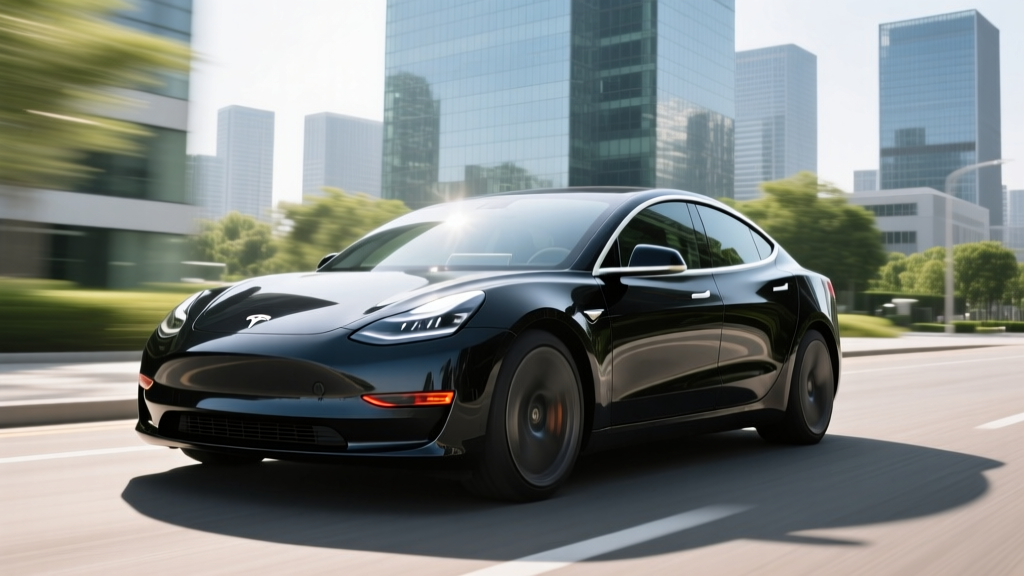
The refreshed Model 3 (internally "Highland" and its 2025-2026 iterations) remains Tesla's most accessible sedan. Here are the numbers that matter.
| Attribute | Value |
|---|---|
| EPA Range | 341 miles |
| Battery (usable) | ~75 kWh, NMC chemistry |
| Peak DC Fast Charge | 250 kW (V3 Supercharger) |
| 10–80% DC Time | ~25 minutes |
| Level 2 Home Charging | 11.5 kW / ~44 mi/hr |
| 0–60 mph | 4.2 seconds |
| Horsepower | 384 hp (dual motor) |
| Drivetrain | Dual-motor AWD |
| MPGe (combined) | 134 MPGe |
| Efficiency | 25 kWh/100 mi |
| Cargo (trunk + frunk) | 23 cu ft trunk, 3 cu ft frunk |
| Rear Legroom | 35.3 in |
| Base MSRP | $47,740 (incl. destination) |
| Battery Warranty | 8 yr / 120,000 mi (70% retention) |
2026 Tesla Model Y: The Crossover Kingpin
The Model Y continues as the best-selling EV in the US. The 2025 "Juniper" refresh carried into 2026 with updated styling, a ventilated-seat option, and ambient lighting.
| Attribute | Value |
|---|---|
| EPA Range | 320 miles |
| Battery (usable) | ~75 kWh, NMC |
| Peak DC Fast Charge | 250 kW |
| 10–80% DC Time | ~27 minutes |
| Level 2 Home Charging | 11.5 kW / ~40 mi/hr |
| 0–60 mph | 4.8 seconds |
| Horsepower | 384 hp |
| MPGe (combined) | 123 MPGe |
| Cargo (rear seats up / folded) | 30 / 72 cu ft |
| Rear Legroom | 40.5 in |
| Base MSRP | $48,240 |
| Battery Warranty | 8 yr / 120,000 mi |
For families, the Model Y's cargo volume and available third-row jump seat (small children only) make it the practical default. Efficiency dips slightly versus the Model 3 due to the taller, heavier body — fueleconomy.gov confirms the 123 MPGe combined rating.
Model S, Model X, and Cybertruck: The Premium & Utility Tier
These lower-volume models serve niche use cases but are fully in production:
| Model | EPA Range | Battery | 0–60 | Base MSRP |
|---|---|---|---|---|
| Model S LR | 402 mi | ~95 kWh NMC | 3.1s | $79,990 |
| Model S Plaid | 359 mi | ~95 kWh NMC | 1.99s | $94,990 |
| Model X LR | 335 mi | ~95 kWh NMC | 3.8s | $84,990 |
| Model X Plaid | 311 mi | ~95 kWh NMC | 2.5s | $99,990 |
| Cybertruck AWD | 340 mi | ~123 kWh NMC | 4.1s | $79,990 |
| Cybertruck Cyberbeast | 320 mi | ~123 kWh NMC | 2.6s | $99,990 |
All four use NMC (nickel manganese cobalt) chemistry, chosen for higher energy density over LFP's weight advantage. The Model S remains the longest-range sedan Tesla sells. The Cybertruck's stainless-steel exoskeleton and 48-volt architecture are engineering firsts, though its polarizing design and panel-gap inconsistencies are well documented.
Charging Speed & Infrastructure: The Supercharger Advantage
| Level | Power | Miles Added per Hour | Notes |
|---|---|---|---|
| Level 1 (120V) | ~1.4 kW | ~4–5 mi/hr | Emergency/trickle only |
| Level 2 (240V/48A) | 11.5 kW | ~38–44 mi/hr | Home Wall Connector ideal |
| DC Fast (V3 Supercharger) | 250 kW peak | ~1,000 mi/hr at peak | 10–80% in ~25 min |
| DC Fast (V4 Supercharger) | Up to 325 kW | Future rollout | Limited availability in 2026 |
A critical ownership nuance: Tesla's charge curve tapers sharply above 80% State of Charge (SoC). You'll see 250 kW briefly between 10–30% SoC, then a stepped decline. Plan road-trip stops around 10–80% for the fastest sessions — charging from 80–100% can add another 20 minutes for relatively few miles.
With NACS now adopted by Ford, GM, Rivian, Hyundai, and most major automakers, Tesla's Supercharger network — over 6,000 US stalls as of 2026 — has become the de facto national standard. Non-Tesla EVs access it via built-in NACS ports or CCS-to-NACS adapters.
Federal Tax Credit: Does Tesla Qualify Under §30D?
This is where the "banned" confusion sometimes originates. Some Tesla trims qualify for the full $7,500 federal tax credit under IRS §30D, while others receive $3,750 or nothing — depending on battery-sourcing and critical-mineral requirements that shift annually.
- MSRP cap: Sedans (Model 3/S) must be ≤ $55,000; SUVs/trucks (Model Y/X/Cybertruck) ≤ $80,000
- Buyer income cap: AGI ≤ $150K single / $225K head of household / $300K joint
- Battery sourcing: Must meet escalating critical-mineral and battery-component thresholds (tightened annually through 2030)
- Assembly: Final assembly must be in North America — all US-market Teslas qualify
- Point-of-sale transfer: You can apply the credit as a dealer discount at purchase, reducing out-of-pocket cost immediately
| Model / Trim | Base MSRP | Est. Credit | Effective Price |
|---|---|---|---|
| Model 3 RWD | $38,990 | $7,500* | ~$31,490 |
| Model 3 Long Range | $47,740 | $7,500* | ~$40,240 |
| Model Y Long Range | $48,240 | $7,500* | ~$40,740 |
| Model S Long Range | $79,990 | $0 (MSRP cap) | $79,990 |
| Model X Long Range | $84,990 | $0 (MSRP cap) | $84,990 |
| Cybertruck AWD | $79,990 | $7,500* | ~$72,490 |
*Credit eligibility depends on your AGI and the specific battery-sourcing compliance of your delivery batch. Confirm at purchase with your tax professional and Tesla's point-of-sale documentation.
Autopilot, FSD Supervised, and Tech Features
Every 2026 Tesla ships with:
- 15.4-inch center touchscreen (Model 3/Y) or 17-inch (Model S/X)
- Tesla Vision (camera-only, no radar or ultrasonics since 2023)
- Over-the-air software updates that add features post-purchase
- Native navigation with Supercharger-aware route planning and battery preconditioning
- Sentry Mode dashcam recording, Dog Mode, and theater/gaming on the center screen
FSD (Supervised) remains a $8,000 add-on or $99/month subscription in 2026. It handles city streets, stop signs, and highway lane changes impressively in many scenarios, but still requires active supervision. NHTSA continues to monitor Tesla's Autopilot crash data, and buyers should treat FSD as a convenience tool, not a replacement for attention.
Pros and Cons: Honest Ownership Assessment
- Class-leading Supercharger network reliability and coverage
- Best-in-class efficiency (kWh/100 mi) across Model 3 and Model Y
- Over-the-air updates keep the vehicle current years after purchase
- Strong resale value relative to most EV competitors
- Point-of-sale tax credit reduces upfront cost on eligible trims
- Minimal moving parts — no oil changes, no transmission fluid
- Camera-only Tesla Vision still struggles in heavy rain, fog, and direct sun glare
- Panel-gap inconsistency on Cybertruck and some Fremont-built units
- No Apple CarPlay or Android Auto — Tesla's closed ecosystem only
- Insurance premiums run 15–30% higher than comparable non-Tesla EVs
- Service center wait times can stretch weeks in underserved metro areas
- FSD (Supervised) cost is high relative to its Level 2 capability
Who Should Buy a Tesla in 2026?
- You road-trip frequently and want the most reliable DC fast-charging network
- You value OTA updates and a tech-forward cabin experience
- You want the highest efficiency per kWh in the EV market
- Home Level 2 charging is available to you (garage or driveway)
- You need Apple CarPlay / Android Auto
- You prefer a traditional dealership experience with on-site service
- Panel-gap quality and build consistency are top priorities
- You want a more conventional interior layout with physical buttons
Frequently Asked Questions
Is Tesla production actually banned in the US?
No. Tesla manufactures vehicles at scale in Fremont, California, and Austin, Texas, with additional powertrain and battery production in Nevada. No federal or state ban on Tesla manufacturing exists. Confusion arises from CARB emissions rules (which Tesla easily meets as a zero-tailpipe-emission company), periodic NHTSA recalls (standard across all automakers), and IRA battery-sourcing rules that affect tax credits, not production legality.
What is the real-world range of the 2026 Model 3 Long Range?
The EPA rates it at 341 miles. In real-world highway driving at 70–75 mph, expect 280–300 miles. In sub-freezing winter weather, plan for 230–250 miles. City driving with regenerative braking can match or slightly exceed the EPA figure.
How fast does a Tesla charge at home and on the road?
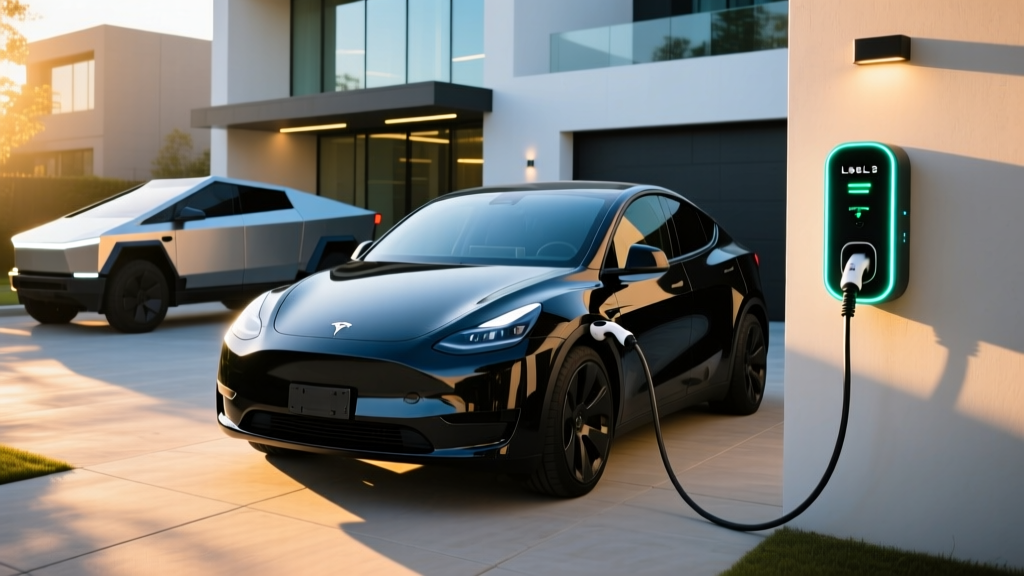
At home on a Level 2 Tesla Wall Connector (240V/48A), you'll add roughly 38–44 miles of range per hour — a full overnight charge from 20% to 100% takes about 7–8 hours. On a V3 Supercharger (250 kW DC), a 10–80% session takes approximately 25 minutes, though the charge curve tapers significantly above 80%.
Does the Tesla Model Y qualify for the $7,500 federal tax credit?
The Model Y Long Range (MSRP $48,240) falls under the $80,000 SUV cap and is assembled in the US, so it can qualify — provided your AGI is within IRS limits and the specific battery batch meets 2026 critical-mineral and component-sourcing thresholds. Confirm eligibility at the point of sale and with your tax professional.
Is a Tesla worth buying versus a Hyundai Ioniq 5 or BMW i4?
It depends on your priorities. Tesla wins on charging-network reliability, efficiency, and OTA updates. The Ioniq 5 offers faster 10–80% charging (~18 min at 350 kW chargers), 800V architecture, and Apple CarPlay. The BMW i4 delivers superior build quality, a more traditional luxury interior, and dealer service. Test-drive all three and weigh which trade-offs matter to you.
What's the battery warranty on a 2026 Tesla?
Model 3 and Model Y: 8 years or 120,000 miles (whichever comes first) with a minimum 70% capacity retention guarantee. Model S, Model X, and Cybertruck: 8 years or 150,000 miles. If your battery degrades below the 70% threshold within the warranty period, Tesla will repair or replace it at no cost.
Tesla production is not banned in the United States — it's expanding. The real questions for 2026 buyers are whether a specific model fits your driving patterns, whether you qualify for the federal credit, and whether the Tesla ecosystem's strengths outweigh its quirks for your household. The numbers above give you the data to decide.