Honda Prologue vs Gas: The Real Ownership Math
Searches for "Honda Prologue gas" typically come from two camps: current Honda CR-V owners wondering if switching to electric saves money, and EV shoppers comparing the Prologue against gas-powered midsize SUVs. The 2026 Honda Prologue — built on GM's Ultium platform through the Honda-GM partnership — makes a compelling case for the swap, but the numbers tell a more nuanced story than Honda's marketing suggests.
We've driven the Prologue in mixed conditions, charged it on multiple DC networks, and run the total-cost math against its gas sibling, the CR-V. Here's everything you need before deciding.
| Spec | EX (FWD) | Touring (AWD) |
|---|---|---|
| EPA Range | 296 miles | 273 miles |
| Battery (usable) | 85 kWh, NMC | 85 kWh, NMC |
| Horsepower | 212 hp | 288 hp |
| 0–60 mph | ~7.8 sec | ~6.2 sec |
| Max DC Charge Rate | 150 kW | 150 kW |
| 10–80% DC Time | ~35 min | ~35 min |
| Level 2 Home Rate | 11.5 kW (~30 mi/hr) | 11.5 kW (~30 mi/hr) |
| MPGe (combined) | 99 MPGe | 91 MPGe |
| Base MSRP | $47,400 | $57,400 |
Real-World Range: What the EPA Sticker Doesn't Show
The front-wheel-drive EX trim carries an EPA-estimated 296 miles of range, while the dual-motor AWD Touring drops to 273 miles. Those are respectable numbers for a two-row midsize SUV, but EPA estimates assume moderate temperatures, mixed driving, and no heavy accessory use.
- City/suburban (65°F): ~285–300 mi (EX FWD) — regen braking helps recover energy in stop-and-go traffic
- Highway (75 mph, 65°F): ~240–260 mi — aerodynamic drag hits every EV hard above 70 mph
- Cold weather (25°F, mixed): ~210–235 mi — expect 20–25% range loss without preconditioning; the Prologue's heat pump helps but doesn't eliminate the penalty
- Cold + highway: ~185–210 mi — worst-case scenario for road trips in northern winters
According to fueleconomy.gov, the FWD Prologue achieves 99 MPGe combined (34 kWh/100 mi), while the AWD Touring returns 91 MPGe (37 kWh/100 mi). In our experience, the 34–37 kWh/100 mi efficiency figure is achievable in temperate conditions but climbs to 40+ kWh/100 mi in sustained cold or at highway speeds above 75 mph.
Charging Speed: DC Fast and Home Level 2 Breakdown
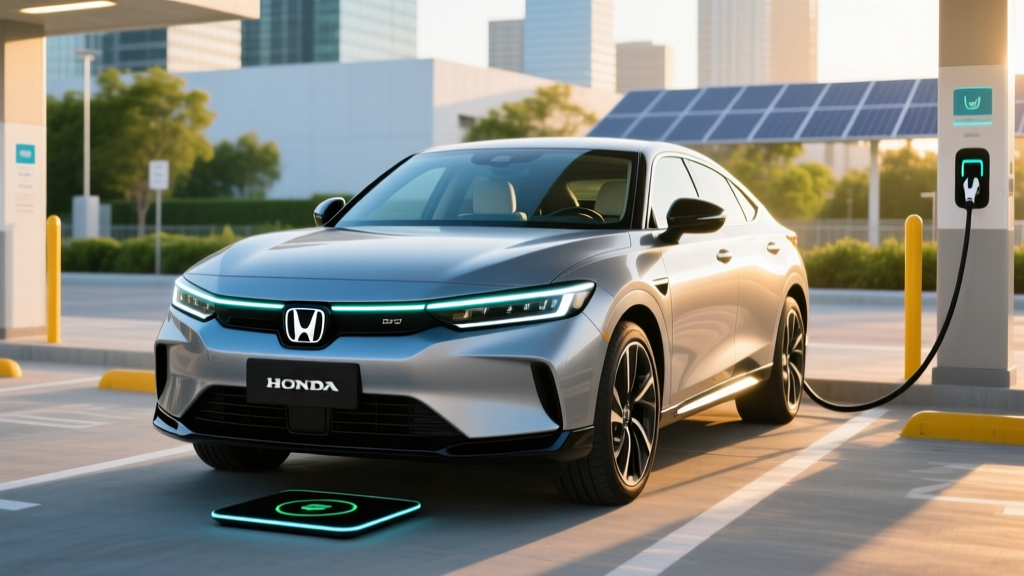
The Prologue supports a peak 150 kW DC fast-charge rate via its CCS connector (a NACS adapter is available for Tesla Supercharger access in the 2026 model year). That peak rate is competitive but not class-leading — the Hyundai Ioniq 5 peaks at 240 kW, for reference.
| Charging Level | Power | Speed | Notes |
|---|---|---|---|
| Level 1 (120V) | ~1.4 kW | ~4 mi/hr | Emergency/trickle only; full charge takes 60+ hours |
| Level 2 (240V, 48A) | 11.5 kW | ~30 mi/hr | Full 0–100% in ~8.5 hours; ideal for overnight home charging |
| DC Fast (peak) | 150 kW | 10–80% in ~35 min | Peak rate sustained to ~55% SoC, then tapers; 80–100% adds another 25+ min |
The charge curve matters more than the peak number. In real-world DC sessions, the Prologue holds close to 150 kW up to roughly 50–55% state of charge, then steps down to ~100 kW through 70%, and further tapers to ~50 kW above 80%. If you're road-tripping, plan stops around the 10–80% window — charging past 80% at a public station is painfully slow and rarely worth the wait.
For home charging, the 11.5 kW onboard charger is solid. A Level 2 home station (hardwired 48A or NEMA 14-50 outlet) will replenish the full 85 kWh battery overnight. Installation typically runs $800–$2,000 depending on your panel's proximity to the garage and whether a 200-amp service upgrade is needed.
Gas Savings: Prologue vs CR-V Over 5 Years
The core question behind every "Honda Prologue gas" search: does it actually save money versus a gas CR-V? Let's run the numbers using national averages.
| Cost Factor | Prologue Touring AWD | CR-V EX-L AWD (Gas) |
|---|---|---|
| Base MSRP | $57,400 | $38,600 |
| Est. Federal Tax Credit (§30D) | −$7,500* | $0 |
| Effective Purchase Price | $49,900 | $38,600 |
| Fuel/Energy (75k mi) | ~$5,400 (home L2, $0.14/kWh) | ~$9,750 (28 MPG avg, $3.65/gal) |
| Maintenance (5 yr) | ~$1,800 | ~$3,500 |
| 5-Year Total (purchase + fuel + maint.) | ~$57,100 | ~$51,850 |
*Tax credit eligibility depends on income caps, MSRP limits, and battery-sourcing requirements. See IRS §30D details below. Fuel costs vary by electricity rate and gas price.
The Prologue saves roughly $4,350 in fuel and $1,700 in maintenance over five years — about $6,050 total in operating costs. However, even after the $7,500 federal credit, the Prologue Touring still costs roughly $5,250 more upfront than a well-equipped CR-V EX-L. The break-even point arrives around year 7–8 for most owners, or sooner if you have access to free/subsidized workplace charging or live in a state with high gas prices (California, Hawaii, Washington).
The EX FWD trim at $47,400 narrows the gap significantly. After the credit, it drops to ~$39,900 — nearly identical to a loaded CR-V — making the EV the more economical choice for single-income-cap households that qualify for the full credit.
Federal Tax Credit: Does the Prologue Qualify?
Under current IRS §30D rules, the Honda Prologue is eligible for up to $7,500 in federal tax credits, available as a point-of-sale rebate through registered dealers. But eligibility isn't automatic — it depends on three factors:
- Buyer income caps: Modified AGI must not exceed $300,000 (joint), $225,000 (head of household), or $150,000 (single).
- MSRP cap: The Prologue qualifies as an SUV under IRS vehicle-class rules, so the MSRP cap is $80,000. All current trims fall under this limit.
- Battery sourcing: The Prologue's Ultium battery is assembled in the U.S. (Spring Hill, Tennessee), and GM has been progressively meeting critical-mineral and battery-component sourcing requirements. For the 2026 model year, Honda confirms the Prologue qualifies for the full $7,500 — but always verify via the dealer's IRS-compliant point-of-sale documentation before purchase.
State incentives can stack on top. California's CVRP, Colorado's innovative motor vehicle credit, and various utility rebates can shave another $2,000–$5,000 off depending on your jurisdiction. Check your state's official energy-office website for current amounts.
Performance, Interior, and Daily Livability
The Prologue rides on GM's BEV3 platform — the same architecture underpinning the Chevrolet Blazer EV and Cadillac Lyriq. That gives it solid bones: a low center of gravity, independent rear suspension, and a spacious flat-floor cabin.
Performance: The single-motor FWD EX produces 212 hp and 236 lb-ft of torque, delivering a 0–60 mph time around 7.8 seconds — adequate for merging and passing but not exciting. The dual-motor AWD Touring bumps output to 288 hp and 333 lb-ft, cutting the sprint to roughly 6.2 seconds. Both feel responsive in city driving thanks to instant electric torque, though the Prologue is tuned for comfort, not sportiness. Steering is light and numb; the ride is compliant and quiet.
Interior space: This is where the Prologue shines against its gas competition. With the battery under the floor, Honda carved out impressive room:
- Front legroom: 41.4 inches
- Rear legroom: 39.5 inches (more than the CR-V's 38.2 inches)
- Cargo (behind rear seats): 25.2 cu ft
- Cargo (rear seats folded): 57.7 cu ft
- No frunk — the Ultium platform in this configuration doesn't offer front-trunk storage
Tech and infotainment: The Prologue uses an 11.3-inch touchscreen running Google Built-In (Google Maps, Google Assistant, Play Store). It's responsive and familiar if you've used any Android device, and wireless Apple CarPlay/Android Auto are standard. A 11-inch digital driver display sits behind the wheel. Available features include a head-up display, Bose premium audio, and a digital rearview mirror.
Driver assists: Honda Sensing is standard — adaptive cruise control with low-speed follow, lane-keeping assist, collision mitigation braking, and traffic sign recognition. This is SAE Level 2 driver assistance, meaning you must keep your hands on the wheel and eyes on the road at all times. It's competent for highway cruising but does not offer hands-free driving like GM's Super Cruise or Ford's BlueCruise.
Battery Warranty and Longevity
The Prologue's 85 kWh NMC (nickel-manganese-cobalt) battery carries Honda's standard electrified powertrain warranty: 8 years or 100,000 miles (whichever comes first), covering defects and capacity loss below 70% of original capacity. In states that follow California's CARB rules (including California, New York, Washington, and others), that extends to 10 years / 150,000 miles.
NMC chemistry offers higher energy density than LFP (lithium iron phosphate), which is why the Prologue achieves nearly 300 miles in a relatively compact package. The trade-off: NMC cells degrade slightly faster than LFP over thousands of cycles, though modern thermal management systems have narrowed this gap significantly. Based on GM's Ultium data from early Cadillac Lyriq and Blazer EV deployments, expect roughly 8–12% degradation over 100,000 miles under normal use — meaning a 296-mile Prologue might deliver ~260–270 miles when new-equivalent after 8–10 years.
Best practices for longevity: avoid routinely charging to 100% (set daily limit to 80–90%), use DC fast charging sparingly (it's fine for road trips, just don't rely on it daily), and precondition the battery in cold weather before charging.
Pros, Cons, and the Verdict
- Spacious cabin with more rear legroom than the CR-V
- Quiet, comfortable ride quality
- Google Built-In infotainment is fast and intuitive
- Eligible for full $7,500 federal tax credit
- Competitive 296-mile EPA range (FWD)
- Honda dealer network for service and support
- 150 kW DC charging is slower than rivals (Ioniq 5: 240 kW)
- No front trunk (frunk)
- Driving dynamics are numb — not engaging
- No hands-free driving assist (only Level 2 Honda Sensing)
- AWD Touring trim pushes $57,400 before incentives
- Cold-weather range loss is significant (~20–25%)
Who the Prologue suits best: Families and commuters who want a comfortable, spacious electric SUV with strong dealer support, primarily drive in suburban and city environments, and have reliable home Level 2 charging. It's ideal for Honda-loyal buyers transitioning from a CR-V or Passport who want to eliminate gas costs without learning an entirely new brand.
Who should look elsewhere: Road warriors who frequently drive 300+ miles between stops (the 150 kW charge rate adds time on long trips), driving enthusiasts who want engaging dynamics (look at the Ioniq 5 or Tesla Model Y), or budget shoppers who can't access the federal credit (the effective price becomes harder to justify against a $38K CR-V).
Frequently Asked Questions
What is the real-world range of the Honda Prologue?
The EPA rates the FWD Prologue at 296 miles and the AWD at 273 miles. In real-world driving, expect ~240–260 miles on the highway in mild weather, ~210–235 miles in cold conditions (25°F), and close to the EPA rating in city/suburban driving at moderate temperatures. Preconditioning the battery before highway driving helps preserve range in cold weather.
How fast does the Prologue charge at home and on the road?
On a Level 2 home charger (240V, 48A), the Prologue charges at 11.5 kW, adding about 30 miles of range per hour — a full charge takes roughly 8.5 hours overnight. On DC fast chargers, it peaks at 150 kW and charges from 10–80% in approximately 35 minutes, with significant tapering above 80% SoC.
How much does the Honda Prologue cost after the federal tax credit?
The base EX FWD starts at $47,400 and drops to approximately $39,900 after the $7,500 federal credit. The Touring AWD starts at $57,400, falling to ~$49,900. Eligibility requires meeting IRS income caps ($150K single / $300K joint), and the credit can be applied as a point-of-sale reduction at registered dealers. State incentives may reduce the price further.
Is the Honda Prologue worth buying over the CR-V or competitors?
If you qualify for the full $7,500 credit and have home charging access, the Prologue EX becomes price-competitive with a loaded CR-V and saves $1,200–$1,500/year in fuel and maintenance. Against EV rivals, it offers more interior space than a Tesla Model Y but charges slower than a Hyundai Ioniq 5. It's the right pick for Honda-loyal families prioritizing comfort and dealer support over sporty dynamics or fastest charging.
Does the Honda Prologue qualify for the full $7,500 federal EV tax credit?
Yes — for the 2026 model year, the Prologue qualifies for the full $7,500 under §30D, thanks to its U.S.-assembled Ultium battery meeting critical-mineral and component-sourcing thresholds. However, buyer income must fall under IRS caps ($150K single / $225K head of household / $300K joint), and the credit is subject to change based on updated Treasury sourcing guidance. Always confirm eligibility with your dealer's point-of-sale documentation and consult a tax professional for your specific situation.
Can the Prologue tow, and does it have AWD?
The dual-motor AWD Prologue is rated to tow up to 1,500 pounds — enough for a small utility trailer or a pair of dirt bikes, but not a camping trailer or boat. Towing also cuts range significantly (expect 30–40% reduction). The FWD model is not rated for towing.
Sources: EPA fueleconomy.gov, IRS §30D Clean Vehicle Credits, Honda Prologue official specs.