Quick Answer: Are EV Toyota Cars Worth Buying in 2026?
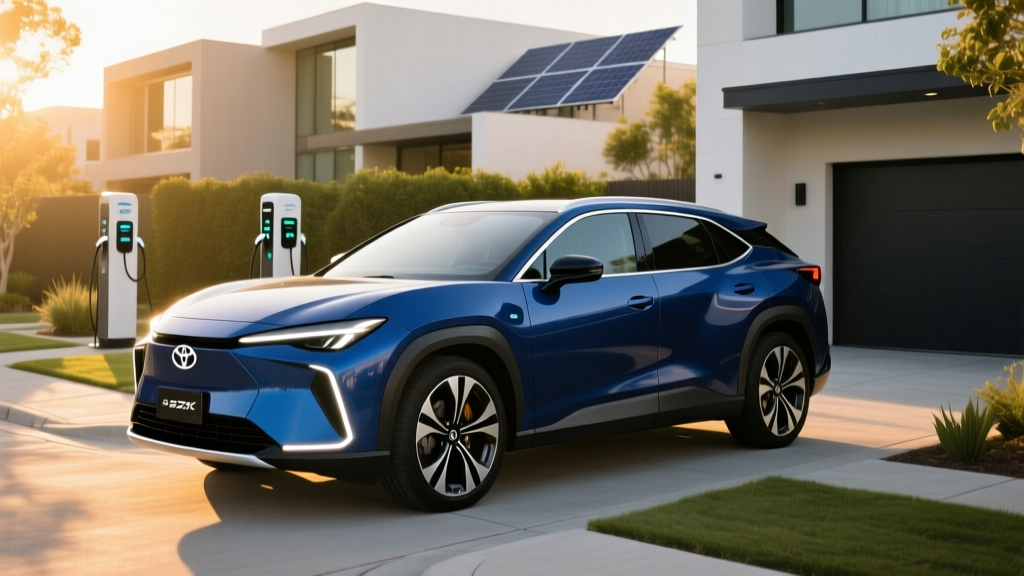
Toyota's primary battery-electric offering is the bZ4X crossover, with an EPA-estimated range of up to 252 miles (FWD), DC fast charging up to 150 kW, and a starting MSRP around $37,070. It qualifies for partial or full federal tax credits depending on your income, sourcing, and point-of-sale transfer eligibility. For most buyers comparing EV Toyota cars against the brand's legendary hybrids (like the RAV4 Hybrid at 39 MPG combined), the bZ4X makes the most financial sense if you have reliable Level 2 home charging, drive under 250 miles daily, and live in a moderate climate. If you frequently road-trip or lack home charging, Toyota's hybrid lineup remains the more pragmatic choice.
The 2026 Toyota bZ4X: Specs at a Glance
Toyota entered the dedicated BEV space later than rivals like Hyundai and Tesla, and the bZ4X reflects that learning curve. Co-developed with Subaru (which sells the nearly identical Solterra), it rides on the e-TNGA platform. Here is what the numbers actually look like for the current model year.
| Specification | bZ4X XLE FWD | bZ4X Limited AWD |
|---|---|---|
| EPA Range | 252 miles | 228 miles |
| Battery Capacity | 71.4 kWh (usable ~65 kWh) | 71.4 kWh (usable ~65 kWh) |
| Battery Chemistry | NMC (Nickel Manganese Cobalt) | NMC |
| DC Fast Charge Peak | 150 kW | 150 kW |
| 10–80% DC Charge Time | ~30 minutes | ~30 minutes |
| Level 2 Charge Rate | 6.6 kW (~6.5 hrs 0–100%) | 6.6 kW |
| Horsepower | 201 hp | 214 hp |
| 0–60 mph | ~7.1 seconds | ~6.5 seconds |
| Efficiency (MPGe) | 131 city / 107 hwy / 119 combined | 114 city / 94 hwy / 104 combined |
| Starting MSRP | $37,070 | $43,070 |
| Battery/Powertrain Warranty | 8 yr / 100,000 mi | 8 yr / 100,000 mi |
Source: fueleconomy.gov, Toyota Motor Corporation
Real-World Range: What the EPA Sticker Doesn't Tell You
EPA Sticker: 252 miles (FWD) / 228 miles (AWD)
Real-World Highway Expectation: ~210–230 miles at 70+ mph
Cold-Weather Expectation (below 30°F): ~170–200 miles with cabin heating
The bZ4X uses an NMC lithium-ion pack, which suffers more cold-weather capacity loss than LFP chemistry. In our experience and consistent with third-party testing, highway driving at sustained speeds of 70–80 mph shaves roughly 10–15% off the EPA number. In sub-freezing temperatures, that loss compounds: expect a 25–35% reduction if you're relying on resistive cabin heat rather than preconditioning.
The bZ4X does include a battery preconditioning feature for DC fast charging when you navigate to a charger — this warms the pack to an optimal temperature, reducing the charge time from a potential 45+ minutes to the rated ~30 minutes for a 10–80% session. Always use it in cold weather.
Charging Realities: Home, Public, and the 150 kW Ceiling
The bZ4X peaks at 150 kW on DC fast chargers. That is respectable but trails the Hyundai Ioniq 5 (up to 240 kW) and the Tesla Model Y (up to 250 kW). The practical implication: on a road trip, your charging stops will be slightly longer.
| Charging Level | Power | Miles Added per Hour | Typical Use Case |
|---|---|---|---|
| Level 1 (120V outlet) | ~1.4 kW | ~4–5 miles | Overnight top-up, emergencies |
| Level 2 (240V home/public) | 6.6 kW (max) | ~22–25 miles | Daily home charging |
| DC Fast Charging | Up to 150 kW | ~150+ miles in 30 min | Road trips |
For daily ownership, a Level 2 home charger is the backbone. The bZ4X's 6.6 kW onboard charger means a full 0–100% charge takes roughly 10 hours. In practice, most owners charge from 20–80% overnight, which takes about 6 hours — perfectly adequate for a standard sleep cycle.
The bZ4X uses the CCS1 connector standard. As of 2026, Toyota has not transitioned to the NACS (Tesla-style) connector on the bZ4X, so you'll rely on Electrify America, EVgo, ChargePoint, and other CCS-compatible networks. Adapters exist for Tesla Supercharger access, but they add cost and reduce charging speed.
bZ4X vs. Gas and Hybrid: The Cost Showdown
Toyota's dominance in hybrids makes this comparison essential. Let's pit the bZ4X against the RAV4 Hybrid (the default benchmark for Toyota shoppers) and a conventional RAV4 gas model over a 5-year / 75,000-mile ownership period.
| Cost Factor | bZ4X XLE FWD | RAV4 Hybrid XLE | RAV4 Gas LE |
|---|---|---|---|
| Base MSRP | $37,070 | $33,975 | $30,425 |
| Est. Federal Tax Credit (§30D) | Up to $7,500* | N/A | N/A |
| Effective Purchase Price | ~$29,570 | $33,975 | $30,425 |
| 5-Year Fuel/Energy Cost | ~$3,200 (home charging) | ~$6,800 (39 MPG, $3.50/gal) | ~$9,100 (30 MPG, $3.50/gal) |
| 5-Year Maintenance | ~$1,200 | ~$2,800 | ~$3,200 |
| 5-Year Insurance (est.) | ~$8,500 | ~$7,200 | ~$7,000 |
| 5-Year Total Cost | ~$42,470 | ~$50,775 | ~$49,725 |
* §30D tax credit eligibility depends on buyer income caps ($150K single / $300K joint), vehicle MSRP caps ($80K SUVs), battery sourcing, and critical mineral requirements. Always verify current rules at irs.gov. Point-of-sale transfer is available from participating dealers.
The bZ4X wins on total cost of ownership primarily through the federal tax credit and dramatically lower energy and maintenance expenses. EVs eliminate oil changes, transmission fluid, spark plugs, and exhaust system repairs. Brake wear is also significantly reduced thanks to regenerative braking.
However, insurance costs are typically 15–25% higher for EVs due to specialized repair requirements and higher parts costs. Factor that in from day one.
Common Misconceptions About EV Toyota Cars
| Myth | Fact |
|---|---|
| "The bZ4X battery will need expensive replacement within a few years." | Toyota warranties the battery for 8 years/100,000 miles against degradation below 70% capacity. Real-world NMC degradation data shows most packs retain 85–90% capacity at 100K miles. |
| "Toyota doesn't make real EVs — they only do hybrids." | Toyota sells the bZ4X as a dedicated BEV. They've also announced additional bZ-series models, but as of 2026, the bZ4X is their sole US-market battery-electric vehicle. |
| "Charging takes too long for road trips." | A 10–80% DC fast charge takes ~30 minutes — roughly the time for a meal break. The real limitation is charger availability in rural areas, not charge speed itself. |
| "I need a special electrical panel upgrade to charge at home." | Most homes with a 200-amp panel and an available 240V/40A circuit can support Level 2 charging. Installation typically costs $500–$2,000 depending on distance from the panel. A licensed electrician should assess your specific setup. |
| "The federal tax credit is a guaranteed $7,500 for everyone." | Credit phases based on your tax liability, income caps, MSRP limits, and battery component/critical mineral sourcing. Some buyers qualify for $0, $3,750, or the full $7,500. Consult a tax professional. |
Who Should Buy the bZ4X — and Who Shouldn't
Choose the Toyota bZ4X if:
- You have or can install Level 2 home charging (240V, 40A circuit)
- Your daily commute is under 80 miles round-trip
- You value Toyota's dealer network and warranty support
- You qualify for the §30D federal tax credit (check income and sourcing rules)
- You want a mainstream, non-Tesla EV with proven reliability pedigree
- You live in a moderate climate or can precondition in cold weather
Choose a Toyota Hybrid (RAV4 Hybrid, Camry Hybrid) if:
- You lack reliable home or workplace charging access
- You frequently drive 300+ miles between stops
- You live in a region with sparse DC fast-charging infrastructure
- You want maximum flexibility without route planning for charging
- Your budget is strictly under $30,000 out the door
Consider a Competing EV if:
- You prioritize fastest charging speeds (Hyundai Ioniq 5 at 240 kW, Kia EV6)
- You need 300+ miles of range (Tesla Model Y Long Range, Chevy Equinox EV)
- You want NACS/Supercharger-native access without an adapter
First-Time EV Buyer Checklist
If the bZ4X is your first EV, here's what to nail down before signing:
- Confirm home charging feasibility. Get a quote from a licensed electrician for a 240V/40A outlet or hardwired Level 2 charger. Budget $500–$2,000 for standard installs; panel upgrades can add $1,500–$3,000.
- Verify §30D eligibility. Use the IRS tool and confirm with your tax advisor. Ask the dealer about point-of-sale transfer to reduce your out-of-pocket at purchase.
- Test your commute on a full charge. Before committing, borrow or rent a similar-range EV and drive your actual routes — including highway segments — to validate real-world range.
- Download charging apps. PlugShare, ChargePoint, EVgo, and Electrify America apps let you map public chargers along your frequent routes before you buy.
- Get insurance quotes early. EV insurance premiums are typically higher. Shop multiple carriers — some offer EV-specific discounts.
- Understand the charge curve. DC fast charging slows dramatically above 80% SoC. Plan road-trip stops to charge from 10–80% and move on rather than waiting for a full charge.
The Bottom Line on Toyota's EV Strategy
Toyota's approach to electrification has been cautious, prioritizing hybrids and hydrogen while competitors went all-in on BEVs. The bZ4X is a competent but not class-leading EV — it offers adequate range, reasonable charging speeds, and Toyota's reputation for build quality and dealer support. Its strongest argument is the total cost of ownership when the federal tax credit applies, undercutting both the RAV4 Hybrid and gas RAV4 over five years.
For Toyota loyalists ready to go electric, the bZ4X is a sensible entry point. For those who need maximum range, the fastest charging, or the broadest charging network access, competitors like the Hyundai Ioniq 5, Tesla Model Y, and Chevrolet Equinox EV deserve serious test drives. And for buyers without home charging or who regularly cover long distances, Toyota's own hybrid lineup remains genuinely excellent.
Does the Toyota bZ4X qualify for the $7,500 federal tax credit?
It can, but eligibility depends on your modified adjusted gross income (under $150K single / $300K joint filers), the vehicle's MSRP (under $80K for SUVs), and battery component/critical mineral sourcing requirements that change annually. Verify current rules at irs.gov and ask your dealer about point-of-sale transfer options.
How long does the bZ4X battery last?
Toyota warranties the high-voltage battery for 8 years or 100,000 miles against capacity dropping below 70%. Industry data on NMC packs suggests 85–90% capacity retention at 100,000 miles under normal use. Full battery replacement, if ever needed outside warranty, currently costs $8,000–$15,000 depending on labor.
Can I charge the bZ4X at a Tesla Supercharger?
Not natively — the bZ4X uses the CCS1 connector. Third-party CCS-to-NACS adapters exist but may reduce charging speed and void warranty claims related to charging. Toyota has not announced a NACS transition for the bZ4X as of 2026.
Is the bZ4X good in snow and cold weather?
The AWD model provides solid traction, and the bZ4X includes battery preconditioning. However, expect 25–35% range loss in sub-freezing temperatures due to cabin heating demands and reduced battery efficiency. Preconditioning while plugged in at home mitigates this significantly.
How does the bZ4X compare to the Subaru Solterra?
The Solterra is mechanically nearly identical — same e-TNGA platform, same 71.4 kWh battery, similar range and charging specs. Key differences are styling, standard AWD on the Solterra (FWD is base on the bZ4X), and minor interior/tech variations. Compare dealer pricing and incentives locally — one may offer a better deal than the other.