Toyota's Electric Lineup and the Incentive Landscape in 2026
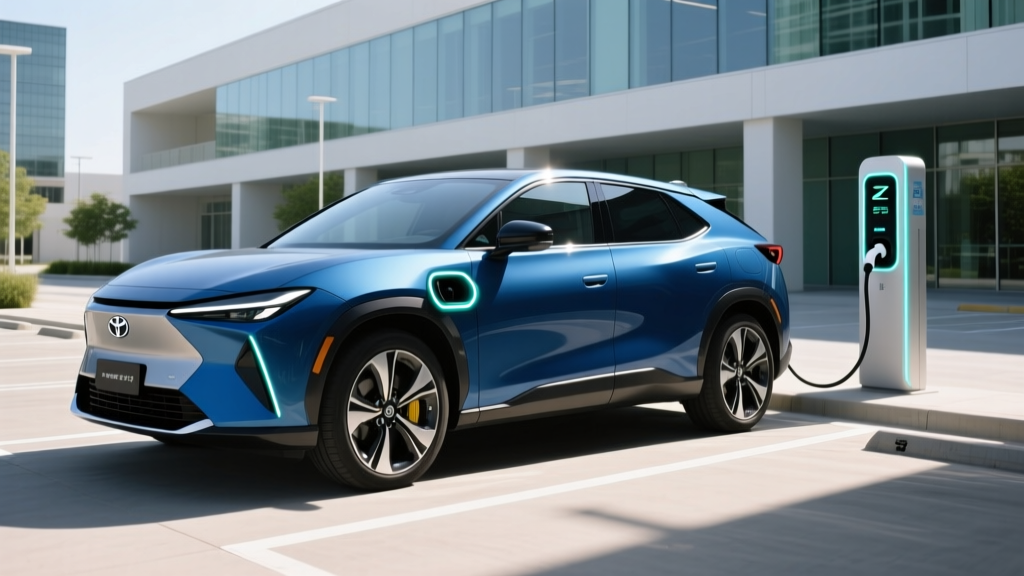
Toyota has been cautious in its EV rollout compared to rivals, but the 2026 Toyota bZ4X remains the brand's sole all-electric offering for US buyers. With a starting MSRP around $37,070 for the XLE FWD trim and an EPA-estimated range of up to 252 miles (236 miles for AWD), the bZ4X competes in the crowded compact electric crossover segment. But the real question for cost-conscious Toyota shoppers isn't just the sticker price — it's whether the vehicle qualifies for federal and state incentives, and what the true five-year ownership cost looks like against both gas-powered Toyotas and rival EVs.
This guide breaks down every available Toyota electric car incentive, the IRS §30D federal tax credit rules as they stand in 2026, and a data-driven total cost of ownership analysis. We'll be direct about where the bZ4X saves you money and where it costs more than you might expect.
Federal Tax Credit: Does the Toyota bZ4X Qualify for §30D?
The federal EV tax credit under IRS §30D offers up to $7,500 for qualifying new clean vehicles. However, eligibility depends on several requirements that have tightened considerably since the Inflation Reduction Act reshaped the rules. Here's what you need to know specifically for the Toyota bZ4X:
- Vehicle MSRP cap: SUVs/crossovers must have an MSRP at or below $80,000. The bZ4X (top trim ~$43,000) clears this easily.
- Buyer income limits: Modified adjusted gross income (MAGI) must not exceed $150,000 (single), $225,000 (head of household), or $300,000 (married filing jointly).
- Battery component sourcing: A percentage of battery components must be manufactured or assembled in North America. This threshold has increased annually — in 2026, the requirement is stringent, and Toyota's supply chain has historically relied heavily on Japanese and Asian battery manufacturing (primarily Panasonic/CATL partnerships).
- Critical minerals requirement: A percentage of critical minerals must be sourced from the US or free-trade-agreement countries. This is the hurdle where many Asian-market EVs have struggled.
- Point-of-sale transfer: As of 2024, buyers can transfer the credit to the dealer at purchase, receiving the discount upfront rather than waiting to claim it on their tax return. This applies in 2026 if the vehicle qualifies.
- Final assembly: Vehicle must undergo final assembly in North America. The bZ4X is assembled at Toyota's Motomachi plant in Japan — this has been the primary disqualifier for the bZ4X under §30D in prior years.
The critical issue: As of the most recent IRS guidance, the Toyota bZ4X's Japan-based final assembly has made it ineligible for the full §30D new vehicle credit. Toyota has signaled plans to shift some EV production to North American plants, but buyers should verify current eligibility directly on the fueleconomy.gov tax credit database before relying on this credit in their purchase math.
If the bZ4X does not qualify, buyers should explore the used EV credit (§25E), which offers up to $4,000 or 30% of the sale price (whichever is less) for qualifying pre-owned EVs purchased from a dealer for $25,000 or less. A 2-3 year old bZ4X may land in this range by 2026.
State, Local, and Utility Incentives for Toyota EVs
Incentive availability varies dramatically by location. The figures below are representative examples as of early 2026 and may change. Always verify with your state energy office, local air quality district, and utility provider before purchase.
Even if the federal credit doesn't apply, many Toyota bZ4X buyers can stack regional incentives:
- California (CVRP): Up to $2,000–$7,000 depending on income, plus potential utility rebates (PG&E, SCE, SDG&E typically offer $500–$1,500 for new EV purchases).
- Colorado: State tax credit of up to $5,000 for new EVs under certain MSRP thresholds, stackable with utility rebates from Xcel Energy.
- New York (Drive Clean Rebate): Point-of-sale rebates up to $2,000 for qualifying BEVs, income-tiered.
- Utility home-charging rebates: Many utilities nationwide offer $250–$1,000 toward Level 2 charger purchase and installation. Check with your local provider.
- HOV lane access: Several states (CA, CO, FL, GA, MD, NJ, NY, VA, WA) offer single-occupant HOV lane access for EVs — a non-monetary incentive with real commute-time value.
For the bZ4X specifically, state-level incentives do not typically require North American assembly, making them more accessible than the federal credit. A California buyer with moderate income could potentially stack $2,000–$7,000 in state rebates + $500–$1,500 utility rebate, partially offsetting the lost federal credit.
5-Year Total Cost of Ownership: Toyota bZ4X vs. Toyota RAV4 Gas
To understand the real financial picture, let's compare the 2026 Toyota bZ4X (XLE FWD, ~$37,070 MSRP) against the similarly sized 2026 Toyota RAV4 LE AWD (~$30,000 MSRP, ~30 MPG combined). We assume 15,000 miles/year, a 5-year ownership period, and no federal tax credit for the bZ4X (conservative assumption given assembly origin).
| Cost Category | bZ4X (EV) | RAV4 LE (Gas) | Difference |
|---|---|---|---|
| Purchase Price (MSRP) | $37,070 | $30,000 | +$7,070 (EV) |
| Federal Tax Credit | $0 (likely ineligible) | $0 | — |
| State/Utility Rebates (est.) | -$2,500 (avg) | $0 | +$2,500 savings (EV) |
| Fuel/Energy (5 yrs, 75k mi) | $5,400 (home charging avg) | $9,375 (gas @ $3.75/gal) | +$3,975 savings (EV) |
| Insurance (5 yrs) | $9,750 ($1,950/yr avg) | $7,500 ($1,500/yr avg) | +$2,250 (EV) |
| Maintenance (5 yrs) | $1,500 | $3,750 | +$2,250 savings (EV) |
| Depreciation (5 yrs) | $20,389 (est. 55%) | $12,000 (est. 40%) | +$8,389 (EV) |
| Total 5-Year Cost | $51,610 | $48,625 | +$2,985 (EV) |
Key takeaway: Without the federal tax credit, the bZ4X costs roughly $3,000 more to own over five years than a gas RAV4. The fuel and maintenance savings are real — nearly $6,225 combined — but they're offset by a higher purchase price, steeper insurance premiums, and significantly heavier depreciation. If the bZ4X were to qualify for the full $7,500 federal credit (e.g., through future production shifts), the math would swing approximately $4,500 in the EV's favor.
Charging vs. Gas: The Per-Mile Cost Math
| Metric | bZ4X (Electric) | RAV4 (Gas) |
|---|---|---|
| Energy/Fuel Source | Electricity | Regular Unleaded |
| Efficiency | 119 MPGe / 28 kWh/100mi | 30 MPG combined |
| Unit Cost (national avg) | $0.16/kWh (home), $0.40/kWh (DC fast) | $3.75/gallon |
| Cost Per Mile (home charging) | $0.045 | $0.125 |
| Cost Per Mile (DC fast charging) | $0.112 | $0.125 |
| Annual Cost (15,000 mi, 80% home) | $876 | $1,875 |
Home charging delivers the most dramatic savings — roughly 64% less per mile than gasoline. However, if you rely primarily on DC fast charging at public stations (Electrify America, EVgo, Tesla Superchargers open to non-Tesla vehicles), the savings shrink to about 10%. The bZ4X's 71.4 kWh battery pack (NMC chemistry) and peak DC charge rate of ~150 kW (10–80% in approximately 30 minutes) mean charging sessions are moderate in speed, and the cost advantage over gas depends heavily on your home-charging access.
Real-world note: The bZ4X's EPA-estimated 252-mile range (XLE FWD) drops to approximately 200–220 miles in sustained highway driving at 70+ mph, and further to 170–190 miles in freezing temperatures. Plan charging stops accordingly on road trips.
Maintenance Savings: Where EVs Genuinely Win
| Maintenance Item | bZ4X (EV) | RAV4 (Gas) |
|---|---|---|
| Oil Changes | None | ~$50–75 × 10 over 5 yrs = $500–$750 |
| Brake Pads | Rarely needed (regen braking) | 1–2 replacements = $300–$600 |
| Transmission Fluid | None (single-speed reducer) | $150–$250 at 60k mi |
| Air Filters | Cabin filter only (~$30) | Engine + cabin = $80–$120 |
| Coolant/Spark Plugs | None (battery thermal system sealed) | $200–$400 combined |
| Tire Rotation | Every 5,000–7,500 mi ($25) | Every 5,000–7,500 mi ($25) |
| Tire Replacement | May wear faster (heavier, instant torque) | Standard wear |
| Estimated 5-Yr Total | ~$1,500 | ~$3,750 |
The maintenance advantage is clear: roughly $2,250 in savings over five years. Regenerative braking dramatically extends brake pad life — many EV owners report original brake pads lasting 80,000+ miles. The trade-off is tire wear: the bZ4X's ~4,300 lb curb weight and instant electric torque can accelerate tire wear by 10–20% compared to a gas equivalent. Budget for a tire set at ~40,000 miles rather than 50,000+.
Toyota's hybrid battery warranty covers the bZ4X's lithium-ion traction battery for 8 years / 100,000 miles (against defects and excessive capacity loss, typically defined as dropping below 70% state of health). This provides meaningful long-term protection.
Insurance Cost Reality for the Toyota bZ4X
EV insurance premiums are typically 15–30% higher than equivalent gas vehicles, and the bZ4X is no exception. Expect annual premiums in the $1,800–$2,200 range depending on your state, driving record, and coverage level, versus $1,300–$1,700 for a RAV4.
The reasons are structural, not arbitrary:
- Higher repair costs: Battery pack damage in a collision often requires full replacement ($15,000–$20,000+ for a 71.4 kWh pack), and insurers factor this into premiums.
- Specialized repair network: Fewer body shops are certified for high-voltage EV repairs, increasing labor rates and claim turnaround time.
- Higher vehicle cost: The bZ4X's higher MSRP means higher comprehensive and collision coverage costs.
- Total-loss thresholds: Minor battery damage can push a claim past the vehicle's actual cash value, leading insurers to price in higher total-loss risk.
Cost-mitigation tip: Shop quotes from EV-friendly insurers (Progressive, State Farm, and Tesla Insurance in eligible states tend to be competitive). Bundling home and auto, maintaining a clean record, and opting for higher deductibles can narrow the gap.
Depreciation and Resale Value Trends
This is where the bZ4X — and EVs broadly — face their steepest financial headwind. Industry data from sources like iSeeCars and Kelley Blue Book show that EVs have depreciated more sharply than gas vehicles in the 2023–2025 period, driven by:
- Price wars: Tesla's aggressive price cuts on the Model Y cascaded across the segment, depressing used values for all electric crossovers.
- Rapid tech obsolescence: Newer models with 300+ mile range and 250+ kW charging make 252-mile, 150 kW vehicles like the bZ4X feel dated quickly.
- Battery anxiety in used market: Secondhand buyers discount EVs for perceived battery degradation risk, even when data shows modern packs retain 85–90% capacity at 100,000 miles.
- Lease returns flooding supply: High lease volumes for the bZ4X (driven by attractive lease deals that included the $7,500 credit passed through by the lessor) created excess used inventory.
Expect the bZ4X to retain approximately 40–50% of its MSRP after 5 years / 75,000 miles, versus 55–65% for a RAV4. On a $37,070 purchase, that translates to roughly $18,500–$20,400 in depreciation for the EV versus $10,500–$13,500 for the gas RAV4. This single factor is the largest contributor to the EV's higher total ownership cost.
Counter-strategy: Buying a 2–3 year old bZ4X lets the first owner absorb the steepest depreciation curve. At ~$20,000–$24,000 used, the bZ4X becomes a significantly more compelling value proposition — and may qualify for the §25E used EV credit ($4,000 or 30% of price, whichever is less, subject to income caps).
2026 Toyota bZ4X Key Specifications
| Specification | bZ4X XLE FWD | bZ4X Limited AWD |
|---|---|---|
| MSRP | $37,070 | ~$43,000 |
| EPA Range | 252 miles | 228 miles |
| Battery Capacity | 71.4 kWh (NMC) | 71.4 kWh (NMC) |
| Horsepower | 201 hp | 214 hp |
| 0–60 mph | ~7.1 sec | ~5.8 sec |
| Peak DC Fast Charge | ~150 kW | ~150 kW |
| 10–80% DC Charge Time | ~30 min | ~30 min |
| Level 2 Charge Rate | 6.6 kW (~25 mi/hr) | 6.6 kW (~25 mi/hr) |
| MPGe (combined) | 119 MPGe | 104 MPGe |
| Connector | J1772 / CCS1 | J1772 / CCS1 |
| Battery Warranty | 8 yr / 100,000 mi | 8 yr / 100,000 mi |
| Federal Tax Credit (§30D) | Likely ineligible (Japan assembly) | Likely ineligible (Japan assembly) |
Frequently Asked Questions
How much does it really cost to own a Toyota bZ4X over 5 years?
Based on our analysis, approximately $51,000–$52,000 over five years / 75,000 miles without a federal tax credit. This includes purchase, energy, insurance, maintenance, and depreciation. It's roughly $3,000 more than a comparable gas RAV4 over the same period, driven primarily by steeper depreciation and higher insurance costs that outweigh fuel and maintenance savings.
Do I qualify for the federal tax credit on the Toyota bZ4X?
Likely no for a new purchase under §30D, due to the bZ4X's Japan-based final assembly and battery sourcing requirements. Your income must also fall below IRS thresholds ($150K single / $300K joint). Always verify current eligibility on fueleconomy.gov and consult a tax professional. The used EV credit (§25E, up to $4,000) may apply if you buy a qualifying pre-owned bZ4X for $25,000 or less.
How much do I save on fuel and maintenance with the bZ4X?
Combined fuel and maintenance savings are approximately $6,225 over five years versus a gas RAV4, assuming mostly home charging at $0.16/kWh. Fuel alone saves about $1,000/year ($999 annually at 15,000 miles). Maintenance savings are roughly $450/year from eliminating oil changes, reducing brake wear via regenerative braking, and removing transmission and spark plug service.
Are EVs more expensive to insure than gas cars?
Yes, typically 15–30% more. For the bZ4X, expect $1,800–$2,200/year versus $1,300–$1,700/year for a RAV4. Higher repair costs (battery replacement in collisions), fewer certified EV body shops, and the higher MSRP all contribute. Shopping multiple insurers and bundling policies can help narrow the gap.
How well does the Toyota bZ4X hold its value?
Below average for a Toyota. Expect 40–50% value retention after 5 years, compared to 55–65% for the gas RAV4. The EV segment's rapid evolution, price competition, and used-market battery anxiety all depress resale values. Buying used (2–3 years old) is the most cost-effective way to acquire a bZ4X, as the first owner absorbs the steepest depreciation.
Does Toyota have other electric vehicles coming that might qualify for incentives?
Toyota has announced plans to expand its EV lineup and shift some production to North American facilities (including plants in Kentucky and Alabama). Future models assembled in the US or Canada would likely meet §30D's final-assembly requirement. However, as of early 2026, the bZ4X remains the only all-electric Toyota available in the US market. Check Toyota's official site for the latest announcements.