Quick Verdict: The Sedan That Bridges Track Day and Daily Commute
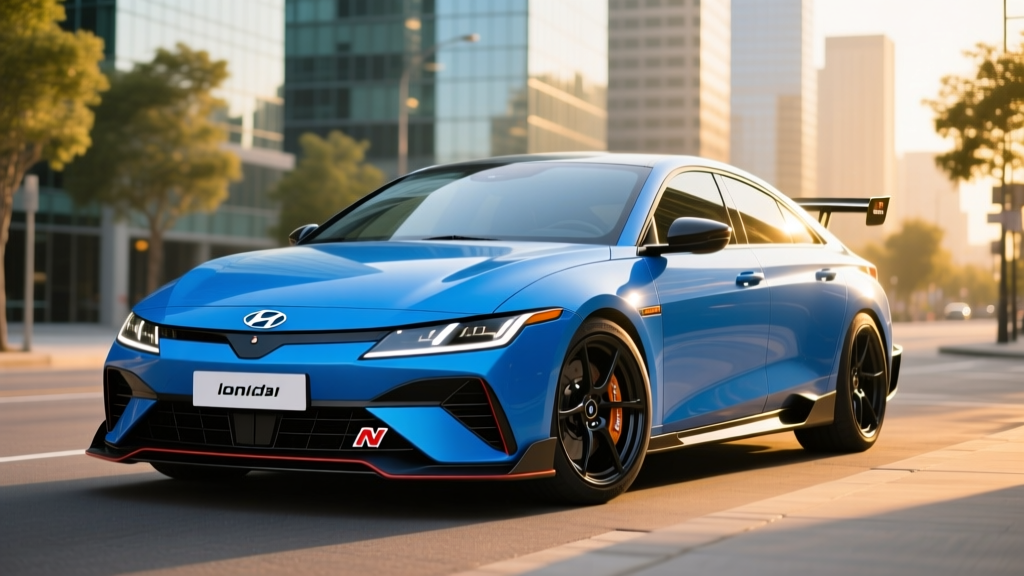
The 2026 Hyundai Ioniq 6 N is a high-performance EV sedan that threads a needle most automakers haven't attempted: delivering genuine track capability without sacrificing the everyday practicality that EV buyers demand. Built on Hyundai's E-GMP 800V architecture and packing 641 horsepower in N Grin Boost mode, it's the enthusiast answer to the Tesla Model S Plaid and Porsche Taycan — at roughly half the price of the latter.
But performance comes with trade-offs. The Ioniq 6 N's 290-mile EPA range trails the standard Ioniq 6 by over 70 miles, and its stiffened N-tuned suspension makes rough pavement noticeable on longer drives. This review breaks down every spec that matters to a real buyer — from sustained charging rates to cold-weather range loss — so you can decide whether Hyundai's electric sports sedan fits your garage.
| Spec | Value |
|---|---|
| EPA Range | 290 miles |
| Battery (usable) | 84.0 kWh, NMC lithium-ion |
| Drivetrain | Dual-motor AWD |
| Horsepower | 601 HP (641 HP w/ N Grin Boost, 10-sec burst) |
| Torque | 568 lb-ft |
| 0–60 mph | 3.2 seconds |
| Top Speed | 161 mph |
| Max DC Fast Charge | 238 kW (800V architecture) |
| 10–80% DCFC Time | ~18 minutes (preconditioned) |
| Level 2 Home Charge | 10.9 kW (~35 mi/hr) |
| MPGe (combined) | 96 MPGe |
| Efficiency | 35 kWh/100 mi |
| Cargo Volume | 12.3 cu ft (trunk) + 0.7 cu ft (frunk) |
| Rear Legroom | 35.0 inches |
| Curb Weight | 4,770 lbs |
| Battery/Powertrain Warranty | 10 years / 100,000 miles |
| Base MSRP | $68,950 (incl. $1,150 destination) |
Range and Efficiency: What the EPA Number Doesn't Tell You
The Ioniq 6 N carries a 84.0 kWh usable battery pack using nickel-manganese-cobalt (NMC) chemistry — chosen for its higher energy density and ability to sustain heavy discharge loads during track use. The EPA rates it at 290 miles of combined range, which is 72 miles less than the standard Ioniq 6 SE Long Range (362 miles). That gap comes from the N's stickier Pirelli P Zero tires, heavier curb weight, and more aggressive thermal management calibration.
- Mild weather, mixed driving: 270–290 miles achievable with moderate regen
- Highway cruising at 75 mph: Expect 230–250 miles — the low-slung aerodynamic profile helps, but the N's performance tires increase rolling resistance
- Cold weather (below 32°F): Plan for 190–220 miles; NMC cells lose efficiency in the cold, and cabin heating draws significant energy
- Track sessions: Range drops to roughly 60–90 miles of equivalent driving depending on intensity — this is a car that rewards having a home charger
At 96 MPGe combined (35 kWh per 100 miles), the Ioniq 6 N is less efficient than the Lucid Air Pure (146 MPGe) but comparable to the BMW i4 M50 (97 MPGe). For context, a 300-mile recharge at the national average electricity rate of $0.17/kWh costs roughly $17.85 — versus $38+ for premium fuel in a comparable gas sports sedan.
Charging Speed: 800V Architecture Delivers Real-World Gains
Hyundai's E-GMP platform remains one of the few 800V architectures in production, and the Ioniq 6 N takes full advantage. On a 350 kW DC fast charger (like Electrify America's newest stalls or Tesla Supercharger V4 with a NACS adapter), the Ioniq 6 N peaks at 238 kW and sustains above 180 kW through the 10–60% state-of-charge window. The result: a 10–80% charge in approximately 18 minutes when the battery is properly preconditioned.
Preconditioning is critical here. If you arrive at a DC fast charger cold — without using the navigation system's "charge preconditioning" feature — peak rates may drop to 120–150 kW, extending the 10–80% session to 25–30 minutes. Always set a charger as your navigation destination to trigger battery warming.
| Charging Level | Power | Charge Time | Miles Added |
|---|---|---|---|
| Level 1 (120V standard outlet) | 1.4 kW | ~60 hours (0–100%) | ~4 mi/hr |
| Level 2 (240V, 48A home charger) | 10.9 kW | ~8.5 hours (0–100%) | ~35 mi/hr |
| DC Fast Charge (350 kW stall) | Peak 238 kW | ~18 min (10–80%) | ~180 mi in 15 min |
| DC Fast Charge (150 kW stall) | Peak ~140 kW | ~28 min (10–80%) | ~110 mi in 15 min |
The Ioniq 6 N uses the Tesla NACS connector as standard equipment for 2026, granting native access to the Tesla Supercharger network (over 25,000 stalls in North America). It also supports CCS1 via adapter for Electrify America, EVgo, and other networks. The charge curve tapers significantly above 80% SoC — a full 80–100% top-off adds another 25+ minutes, so plan your stops to 80% on road trips.
Performance and Driving Dynamics: Where the N Badge Earns Its Keep
The dual-motor all-wheel-drive powertrain produces 601 horsepower in standard driving, surging to 641 HP with N Grin Boost engaged (a 10-second burst activated by the dedicated steering wheel button). Hyundai quotes a 3.2-second 0–60 mph time, and independent testing has confirmed figures in the 3.1–3.3 second range on prepped surfaces.
What separates the Ioniq 6 N from a merely quick EV is its chassis engineering. The N-specific suspension uses electronically controlled dampers with three settings (Normal, Sport, N), and the car features an N Torque Distribution system that can send up to 100% of available torque to either rear wheel. The result is a car that rotates eagerly through corners and feels far lighter than its 4,770-pound curb weight suggests.
Hyundai's N e-Shift software simulates an 8-speed dual-clutch transmission with artificial shift points, complete with synthetic exhaust sound and simulated torque interruptions. It's gimmicky to some, but it solves a real problem: EVs can feel monotonously linear on a track, and the e-Shift provides rhythm and feedback that helps drivers modulate speed through corners. You can turn it off entirely for a traditional single-speed EV experience.
The electro-hydraulic N brakes with regenerative blending are a highlight. Unlike many performance EVs that struggle with brake feel at the transition between regen and friction braking, the Ioniq 6 N's pedal is progressive and predictable — critical for trail-braking into corners on a track.
Interior, Tech, and Practicality: Sports Sedan Compromises
The Ioniq 6 N's interior is driver-focused but not dramatically different from the standard Ioniq 6. You get N-specific sport bucket seats with aggressive bolsters and suede inserts, a thick N-branded steering wheel with dedicated drive-mode buttons, and aluminum pedals. The dual 12.3-inch display setup (instrument cluster + infotainment) runs Hyundai's latest ccNC software, which is responsive but still relies on too many touch-capacitive buttons for climate controls — a frustration when wearing driving gloves.
Standard tech includes wireless Apple CarPlay and Android Auto, a Bose premium audio system, a head-up display with N-specific track telemetry overlays, and Hyundai's Digital Key 2 (phone-as-key via UWB).
On the ADAS front, the Ioniq 6 N includes Hyundai SmartSense with Highway Driving Assist 2 (HDA2), which provides adaptive cruise control with stop-and-go, lane centering, and automated lane changes on divided highways. This is an SAE Level 2 system — meaning you must keep your hands on the wheel and eyes on the road at all times. It is not self-driving.
Highway Driving Assist 2 is a Level 2 driver-assist system. It requires continuous driver supervision. The vehicle will not stop for obstacles outside its sensor range, navigate unmapped construction zones, or handle severe weather autonomously. You are legally and physically responsible for the vehicle at all times.
Practicality is the Ioniq 6 N's weakest suit compared to its crossover rivals. The trunk offers 12.3 cubic feet — tight for a family road trip but adequate for two carry-ons and a set of track-day tires. The frunk is a shallow 0.7 cubic feet, useful only for charging cables. Rear legroom at 35.0 inches is acceptable for adults on shorter drives, but the low roofline makes entry and exit less graceful than in the Ioniq 5 or a Model Y. If you regularly haul rear-seat passengers or cargo, the Ioniq 5 N (with 27.2 cu ft of cargo space) is the more practical N-model choice.
Pricing, Trims, and Federal Tax Credit Eligibility
The 2026 Hyundai Ioniq 6 N comes in a single, well-equipped trim at a base MSRP of $68,950 (including $1,150 destination). The only factory option is a $500 matte paint finish, bringing the as-tested ceiling to roughly $69,450 before dealer fees.
| Item | Cost |
|---|---|
| Base MSRP (incl. destination) | $68,950 |
| Matte paint option | +$500 |
| Typical dealer doc fee | +$400–$800 |
| Estimated out-the-door (no credit) | ~$70,000–$70,500 |
| Federal §30D tax credit (if eligible) | Up to $7,500 |
| Effective price after max credit | ~$62,500–$63,000 |
Regarding the federal §30D clean vehicle tax credit: the Ioniq 6 N's eligibility is complex and varies by build date and battery-sourcing compliance. Key rules for 2026:
- MSRP cap: Sedans must be under $55,000 MSRP to qualify. At $68,950, the Ioniq 6 N exceeds this cap and does NOT qualify for the new-vehicle §30D credit.
- Income caps: Even if it qualified, buyers must have a modified AGI at or below $150,000 (single) / $300,000 (joint) to claim the credit.
- Battery sourcing: The credit's critical-mineral and battery-component requirements have tightened annually. Hyundai's South Korean battery supply chain has faced compliance challenges under these rules.
- Point-of-sale transfer: For vehicles that do qualify, the credit can now be transferred to the dealer at purchase as an upfront discount — but this doesn't apply here given the MSRP cap.
The Ioniq 6 N is priced above the sedan cap. Buyers seeking the credit should consider the standard Ioniq 6 SEL ($46,950 MSRP) or look at the Ioniq 5 N, which as an SUV falls under the $80,000 MSRP cap and may qualify depending on your income and the current sourcing rules. Always verify eligibility with a tax professional and the latest IRS guidance on fueleconomy.gov before purchasing.
Ownership Costs and Warranty
Hyundai backs the Ioniq 6 N with one of the strongest warranties in the EV market: a 10-year/100,000-mile battery and powertrain warranty, plus 5 years/60,000 miles of bumper-to-bumper coverage. The battery warranty guarantees at least 70% capacity retention over the coverage period — though NMC packs in normal driving typically retain 85–90% at 100,000 miles. Track use may accelerate degradation, and Hyundai's warranty terms exclude "competition or racing" use, so repeated track sessions could complicate a future claim.
Estimated 5-year ownership costs:
- Electricity (home charging at $0.17/kWh, 12,000 mi/yr): ~$4,200 total
- Insurance: Expect $2,400–$3,200/year — performance EVs carry higher premiums. Get quotes before purchasing.
- Tires: The P Zero N-specific tires wear quickly under spirited driving; budget $1,200–$1,600 for a replacement set every 15,000–20,000 miles
- Maintenance: Minimal — cabin air filter, brake fluid check, wiper blades. Budget ~$200/year
- Depreciation: Performance EVs depreciate faster than mainstream models. Expect roughly 45–55% value retention at 5 years, though Hyundai's strong warranty helps resale
Pros and Cons: The Honest Scorecard
Pros
- Exceptional 238 kW DC fast charging via 800V architecture — 10–80% in ~18 minutes
- 641 HP and 3.2-second 0–60 at a sub-$70K price undercuts Tesla Model S Plaid and Porsche Taycan Turbo by tens of thousands
- Genuine track capability: N Torque Distribution, e-Shift, and electro-hydraulic brakes feel dialed-in
- Industry-leading 10-year/100,000-mile battery warranty
- NACS connector standard — native Tesla Supercharger access
- Striking aerodynamic design turns heads without looking overwrought
Cons
- 290-mile EPA range is modest for a $69K EV; real-world highway/cold-weather range drops to 190–250 miles
- Does NOT qualify for the $7,500 federal tax credit (MSRP exceeds $55K sedan cap)
- Tight cargo space (12.3 cu ft trunk) and low roofline make it impractical for families
- Stiff N-tuned ride is fatiguing on rough roads during daily commuting
- Insurance premiums are high for a performance EV
- Touch-capacitive climate controls frustrate during spirited driving
Who Should Buy the Ioniq 6 N?
- You want a track-capable EV sedan under $70K and don't need family-hauler practicality
- You have reliable home Level 2 charging to offset the shorter range
- You value 800V fast-charging for road trips — 18-minute stops beat most competitors
- You want a distinctive, low-slung design that isn't another crossover
- You need more than 300 miles of real-world range — consider the Lucid Air Pure (419 mi EPA, ~$70K) or a standard Ioniq 6 (362 mi EPA, ~$47K)
- You need cargo space and rear-seat comfort — the Ioniq 5 N offers similar performance in a more practical crossover body
- The federal tax credit is essential to your budget — the Ioniq 5 N or Model Y may qualify
- You commute on rough roads — the N suspension will punish you daily
Frequently Asked Questions
What is the real-world range of the 2026 Ioniq 6 N?
The EPA rates the Ioniq 6 N at 290 miles combined. In real-world driving, expect 270–290 miles in mild weather with mixed use, 230–250 miles on highway road trips at 75 mph, and 190–220 miles in cold weather below freezing. Track driving dramatically reduces range to 60–90 equivalent miles.
How fast does the Ioniq 6 N charge?
On a 350 kW DC fast charger with battery preconditioning, the Ioniq 6 N peaks at 238 kW and charges from 10–80% in approximately 18 minutes. On a 150 kW charger, expect roughly 28 minutes for 10–80%. At home on a 48-amp Level 2 charger (10.9 kW), a full charge takes about 8.5 hours and adds roughly 35 miles per hour of charging.
Does the Ioniq 6 N qualify for the federal EV tax credit?
No. The Ioniq 6 N's $68,950 MSRP exceeds the §30D sedan cap of $55,000. SUVs, vans, and trucks have an $80,000 cap, which is why the Ioniq 5 N (an SUV) may still qualify. Always verify current-year rules on IRS.gov and consult a tax professional.
Is the Ioniq 6 N worth it over the Tesla Model S Plaid or BMW i4 M50?
It depends on priorities. The Model S Plaid is faster (1.99-sec 0–60) and has more range (~396 mi EPA) but starts above $89K. The BMW i4 M50 ($67K) is similarly priced but offers only 536 HP and slower 150 kW DC charging. The Ioniq 6 N's combination of 641 HP, 238 kW charging, and sub-$70K pricing is unique in its class — if you can live with 290 miles of range and tight cargo space.
Can I take the Ioniq 6 N to a track day?
Yes — it's designed for it. The N-tuned suspension, torque-vectoring AWD, e-Shift, and electro-hydraulic brakes are track-focused. However, note that Hyundai's battery warranty excludes "competition or racing" use, so frequent track sessions could affect warranty coverage. Expect significant range consumption during track use and plan for mid-session charging if your track has EV infrastructure.
What connector does the Ioniq 6 N use?
The 2026 Ioniq 6 N comes with the NACS (Tesla) connector as standard, providing native access to the Tesla Supercharger network. CCS1 charging is supported via adapter for Electrify America, EVgo, and other networks. Hyundai includes a CCS adapter in the vehicle.