The Promise of Toyota's Aluminum-Ion Battery — and Where It Stands Today
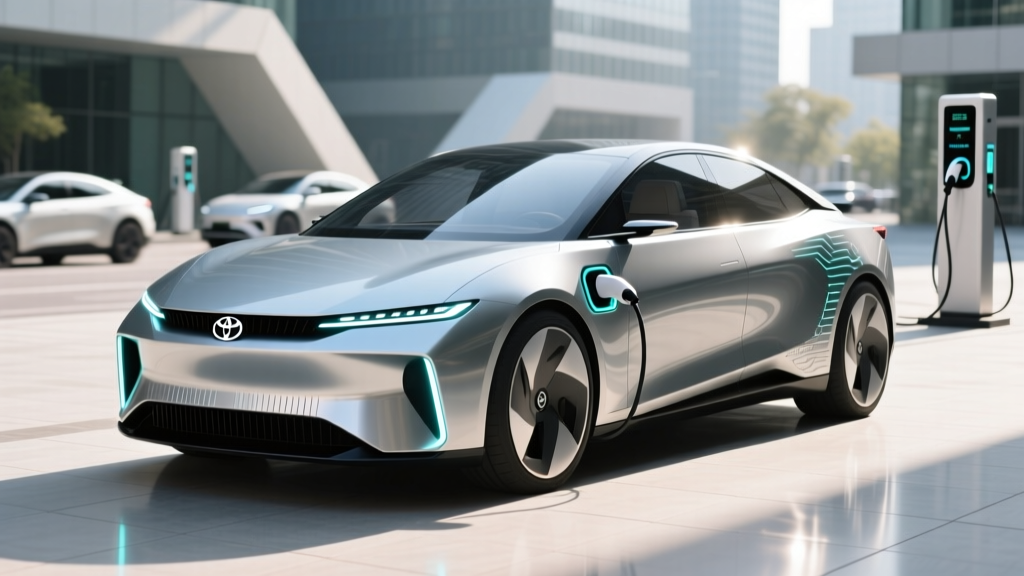
If you have been following EV battery headlines, you have likely seen the term Toyota aluminum-ion battery surface alongside promises of ultra-fast charging, lower material costs, and reduced fire risk. Toyota has invested heavily in next-generation battery research, including aluminum-based chemistries, as part of its broader electrification strategy. But what does this technology actually deliver in 2026, and how does it compare to the lithium-ion batteries powering today's EVs?
This guide cuts through the hype. We will explain what aluminum-ion chemistry actually is, how it stacks up against the LFP and NMC cells in vehicles you can buy right now, and what Toyota's timeline looks like. Along the way, we will cover the fundamentals every EV buyer needs: degradation data, warranty terms, replacement costs, and the battery-care habits that maximize longevity.
What Is an Aluminum-Ion Battery?
An aluminum-ion battery uses aluminum as the anode material instead of the graphite or silicon typically found in lithium-ion cells. Aluminum is the most abundant metal in the Earth's crust, dramatically cheaper than lithium, and carries three electrons per ion (versus lithium's one), which gives it a high theoretical charge capacity per unit of mass.
The potential advantages are significant:
- Lower raw-material cost: Aluminum trades at roughly $2,200–$2,500 per metric ton versus lithium carbonate at $15,000+ per ton (2025–2026 pricing).
- Improved safety: Aluminum-ion chemistries are less prone to thermal runaway, the chain reaction that causes lithium-ion battery fires.
- Faster charging potential: Some lab prototypes have demonstrated charge times under 10 minutes, though sustaining this in a production-grade pack with acceptable cycle life remains the central engineering challenge.
The obstacles are equally real. Aluminum-ion cells currently suffer from lower energy density (Wh/kg) than mature lithium-ion chemistries, limited cycle life in repeated charge-discharge testing, and cathode materials that degrade quickly. These are not trivial problems — they are the reason no automaker has yet put an aluminum-ion pack into a production vehicle.
How Aluminum-Ion Compares: Chemistry Trade-Offs Explained
To understand where aluminum-ion fits, you need a clear picture of the chemistries dominating the EV market today. Here is how the three main options compare:
| Attribute | NMC / NCA (Lithium-Ion) | LFP (Lithium Iron Phosphate) | Aluminum-Ion (Lab/Prototype) |
|---|---|---|---|
| Energy Density | 220–300 Wh/kg (cell-level) | 150–180 Wh/kg (cell-level) | ~80–150 Wh/kg (lab estimates) |
| Cycle Life | 1,000–2,000 cycles to 80% capacity | 3,000–6,000+ cycles to 80% capacity | ~500–2,000 cycles (varies widely by cathode) |
| Cold Performance | Moderate loss (~20–30% range at -10°C) | More sensitive to cold (~30–40% loss at -10°C) | Insufficient real-world data |
| Thermal Runaway Risk | Moderate (requires active thermal management) | Low (inherently stable chemistry) | Very low (promising safety profile) |
| Raw Material Cost | High (lithium, cobalt, nickel) | Moderate (iron, phosphate — no cobalt or nickel) | Very low (aluminum is abundant and cheap) |
| Production Maturity | Fully scaled — millions of vehicles on the road | Fully scaled — used by Tesla, BYD, Ford, and others | Lab/prototype — no production vehicles |
The practical verdict: NMC/NCA remains the best choice for maximum range in a compact package — it is what you will find in the Tesla Model Y Long Range, Hyundai Ioniq 5, and Toyota bZ4X. LFP is the cost-and-longevity champion, ideal for standard-range models and drivers who want to charge to 100% daily without degradation anxiety. Aluminum-ion is promising on paper but years from competing with either.
EV Battery Degradation: What the Real Data Shows
Battery degradation — the gradual loss of usable capacity over time — is the single biggest long-term ownership concern for EV buyers. The good news is that modern lithium-ion packs are lasting longer than early projections suggested.
Here is what real-world degradation data looks like across major chemistries and models:
Typical Degradation Trajectories (to ~80% original capacity):
- NMC packs (Tesla Model 3/Y Long Range, Hyundai Ioniq 5): Approximately 5–8% capacity loss at 100,000 miles; ~10–15% loss at 200,000 miles. Data from Recurrent Auto's fleet analysis of over 15,000 vehicles confirms most NMC packs retain 85–92% capacity at the 5-year mark under normal use.
- LFP packs (Tesla Model 3 RWD, BYD models): Slower degradation curve — typically 3–5% loss at 100,000 miles. LFP's robust iron-phosphate crystal structure resists the micro-cracking that degrades NMC cathodes over repeated cycling.
- Toyota bZ4X (NMC, 71.4 kWh usable): Toyota targets less than 10% degradation after 10 years of typical use, an ambitious benchmark for NMC chemistry, though independent long-term fleet data is still limited given the vehicle's 2023 launch.
The critical insight: degradation is not linear. Most lithium-ion packs experience a steeper initial drop of 2–4% in the first year or two, then the curve flattens significantly. A pack that has lost 8% after five years is unlikely to suddenly drop off a cliff — it will typically continue declining at a slow, predictable rate for many more years.
Battery Warranty Terms: What Is Actually Covered
Federal law mandates a minimum battery warranty of 8 years / 100,000 miles for EVs sold in the United States, but automakers set their own capacity-retention thresholds and additional terms. Here is how major warranties compare:
| Manufacturer | Coverage Period | Capacity Threshold | Notes |
|---|---|---|---|
| Toyota (bZ4X) | 8 years / 100,000 miles | 70% of original capacity | Optional 10-year/150,000-mile extension in some markets; covers defects and excessive degradation |
| Tesla (Model 3/Y) | 8 years / 100,000–120,000 miles | 70% of original capacity | Mileage varies by trim; LWD RWD model has 100k limit, Long Range/Performance has 120k |
| Hyundai / Kia | 10 years / 100,000 miles | 70% of original capacity | Among the longest coverage in the industry |
| Ford (Mustang Mach-E) | 8 years / 100,000 miles | 70% of original capacity | Covers defects and capacity loss below threshold |
What triggers a warranty claim: The warranty activates if your battery's State of Health (SoH) drops below the stated threshold (typically 70%) within the coverage period. A 70% threshold on a 75 kWh pack means the battery must still hold at least 52.5 kWh. In practice, very few modern EV batteries fall below this line within the warranty window. Most remain well above 80% at the 8-year mark.
What is NOT covered: Damage from accidents, improper modifications, use of non-approved charging equipment, or failure to follow manufacturer maintenance guidelines. Gradual degradation that stays above the threshold is considered normal wear.
EV Battery Replacement Cost: When and How Much
Battery replacement is the scenario EV skeptics cite most often — and the one most misunderstood. The reality is that the vast majority of EV batteries outlast the vehicle's useful life. Out-of-warranty replacements are rare, but if you need one, here is what to expect:
| Vehicle / Battery Size | Estimated Replacement Cost (2026) | Typical Replacement Timeline |
|---|---|---|
| Tesla Model 3 RWD (57.5 kWh, LFP) | $12,000–$16,000 | Rarely needed; most packs exceed 200,000 mi |
| Tesla Model Y Long Range (75 kWh, NMC) | $14,000–$20,000 | Rarely needed before 200,000+ mi |
| Hyundai Ioniq 5 (77.4 kWh, NMC) | $15,000–$22,000 | Covered under 10-yr warranty for most owners |
| Toyota bZ4X (71.4 kWh, NMC) | $14,000–$19,000 | Covered under 8-yr warranty; long-term data still accumulating |
| Ford F-150 Lightning Extended (131 kWh, NMC) | $25,000–$35,000 | Largest packs carry the highest replacement cost |
These figures include the battery module and labor but can vary by region, dealership, and whether you receive a new or refurbished pack. Refurbished or remanufactured packs are increasingly available and can reduce costs by 30–40%.
The important context: according to data from the U.S. Department of Energy, battery pack prices have fallen from over $1,000/kWh in 2010 to approximately $130–$150/kWh in 2025–2026. This trend means replacement costs will continue declining, and by the time most current EVs actually need a new battery (if ever), prices will be substantially lower than today's estimates.
Factors That Affect EV Battery Life — and How to Maximize It
Battery longevity is not purely a function of time and miles. How you charge, store, and drive your EV has a measurable impact on how quickly the pack degrades. Here are the factors that matter most, ranked by impact:
Battery Care Best Practices (Backed by Data):
- Avoid prolonged high State of Charge (SoC): Storing an NMC battery at 100% for days or weeks accelerates degradation. For daily driving, set your charge limit to 80% and only charge to 100% when you need the full range for a trip. (LFP batteries are an exception — manufacturers like Tesla and BYD recommend charging LFP to 100% at least weekly to maintain cell-balancing accuracy.)
- Minimize DC fast charging when possible: Repeated use of 150+ kW DC fast chargers generates significant heat inside the cells. Research published by the Idaho National Laboratory found that packs charged primarily via DCFC showed measurably higher degradation than those charged on Level 2 — though the difference was moderate (a few percentage points over 100,000 miles), not catastrophic. Use DCFC for road trips; rely on Level 2 at home for daily needs.
- Manage extreme temperatures: Battery chemistry degrades faster at sustained high temperatures (above 35°C / 95°F). If you live in a hot climate, park in shade or a garage when possible. In cold weather, use your vehicle's preconditioning feature — it warms the battery before driving or charging, improving efficiency and reducing stress on cold cells.
- Don't let SoC sit near 0%: Deep discharge stresses lithium-ion cells. If you will not be driving for an extended period, leave the battery at roughly 50% SoC.
- Use regenerative braking moderately: Aggressive regen settings send high current back into the battery during deceleration. On vehicles with adjustable regen, a moderate setting reduces charge-current spikes and marginally improves long-term cell health.
How to Check Your Battery's State of Health (SoH)
State of Health (SoH) is the metric that tells you how much capacity your battery retains compared to when it was new. A new battery has an SoH of 100%; a battery that has degraded to 85% SoH holds 85% of its original kWh capacity.
How to check SoH by manufacturer:
- Tesla: The in-car service menu (accessed via the software screen) displays battery health information. Third-party apps like Tessie or TeslaFi can also track SoH over time using telemetry data.
- Hyundai / Kia: The infotainment system's EV diagnostics page shows battery health percentage. The Hyundai Bluelink / Kia Connect apps also provide SoH data remotely.
- Toyota bZ4X: The Toyota app and in-car settings provide battery status information, though granular SoH percentage is less prominently displayed than in Tesla or Hyundai. A dealership diagnostic scan can provide a precise SoH reading.
- Universal OBD-II method: An OBD-II dongle paired with an app like Car Scanner or ABRP can read the battery management system (BMS) data on most EVs, including current capacity in kWh, cell voltage variance, and calculated SoH.
When to be concerned: If your SoH drops more than 2–3% per year after the initial break-in period, or if you notice a sudden capacity drop (rather than gradual decline), schedule a diagnostic with your dealer — this could indicate a defective cell module that may be covered under warranty.
Emerging Battery Technologies: Solid-State, Silicon Anode, and Beyond
Aluminum-ion is not the only next-generation chemistry in development. Here is where the most significant battery technologies stand as of 2026:
Solid-state batteries: Toyota has been the most vocal proponent, announcing plans for a solid-state battery that could deliver 750+ km (466 miles) of range with 10-minute fast charging. However, Toyota has revised its timeline multiple times. As of 2026, the company targets limited production in select models around 2027–2028, with broader availability not expected before 2030. Solid-state cells replace the liquid electrolyte with a solid material, improving energy density and safety, but manufacturing scalability and cost remain unsolved challenges.
Silicon anode batteries: Companies like Sila Nanotechnologies and Group14 are replacing graphite anodes with silicon-dominant materials, boosting energy density by 20–40%. Mercedes-Benz and other automakers have announced partnerships, with early production vehicles expected in the 2026–2028 timeframe. This is the most commercially imminent next-gen technology.
Sodium-ion batteries: CATL and BYD have begun producing sodium-ion cells for lower-cost, shorter-range EVs in China. Energy density is comparable to LFP (~160 Wh/kg), but sodium is far cheaper than lithium. U.S.-market vehicles with sodium-ion packs are not yet available but could appear in budget-oriented models by 2028.
Frequently Asked Questions
How long do EV batteries actually last?
Most modern EV batteries are designed to last 15–20 years or 200,000+ miles before dropping below 70–80% of their original capacity. Data from Recurrent Auto's analysis of over 15,000 EVs shows that the average battery retains approximately 88% of its original capacity at the 5-year mark. Complete battery failure before 150,000 miles is rare with current NMC and LFP chemistries.
How much does it cost to replace an EV battery?
Replacement costs in 2026 range from approximately $12,000 for a smaller LFP pack (Tesla Model 3 RWD) to $35,000 for a large pack (Ford F-150 Lightning Extended Range). Most EVs will never need a replacement — the battery typically outlasts the vehicle. Costs are declining at roughly 8–12% per year as manufacturing scales.
What does the EV battery warranty cover?
Federal law requires a minimum of 8 years / 100,000 miles of battery coverage. Most warranties guarantee that the battery will retain at least 70% of its original capacity during the coverage period. The warranty covers manufacturing defects and excessive degradation but not damage from accidents, misuse, or unauthorized modifications. Hyundai and Kia offer an industry-leading 10 years / 100,000 miles.
LFP vs NMC — which battery chemistry is better for me?
Choose NMC/NCA if you prioritize maximum range and live in a cold climate — it offers higher energy density (more miles per kg) and better cold-weather performance. Choose LFP if you want the longest possible battery life, plan to keep the car 10+ years, and mostly drive in moderate climates — LFP offers 2–3× the cycle life and can be charged to 100% daily without degradation concerns. LFP is also typically $2,000–$4,000 cheaper at the vehicle level.
Will Toyota's aluminum-ion battery be available soon?
Not for production vehicles on sale in the near term. Toyota's aluminum-ion research is part of a broader next-generation battery portfolio that also includes solid-state cells. The most optimistic timeline places aluminum-ion in commercial vehicles no earlier than the late 2020s, and more likely the early 2030s. For now, Toyota's EV lineup (the bZ4X and upcoming bZ models) uses conventional lithium-ion NMC chemistry.
Does frequent DC fast charging damage my battery?
Exclusive reliance on DC fast charging does accelerate degradation, but the effect is moderate — typically a few extra percentage points of capacity loss over 100,000 miles compared to primarily Level 2 charging. Occasional fast charging on road trips is not a concern. The biggest risk factors are sustained high temperatures during charging and regularly charging to 100% at high speeds. Preconditioning your battery before a fast-charge session helps mitigate heat-related stress.
Sources: Recurrent Auto Battery Degradation Study, U.S. DOE Fuel Economy Guide (fueleconomy.gov), manufacturer specification pages for Toyota, Tesla, Hyundai, and Ford. Pricing and availability reflect 2026 model-year data. Battery replacement costs are estimates based on current dealer and third-party service pricing and may vary by region.