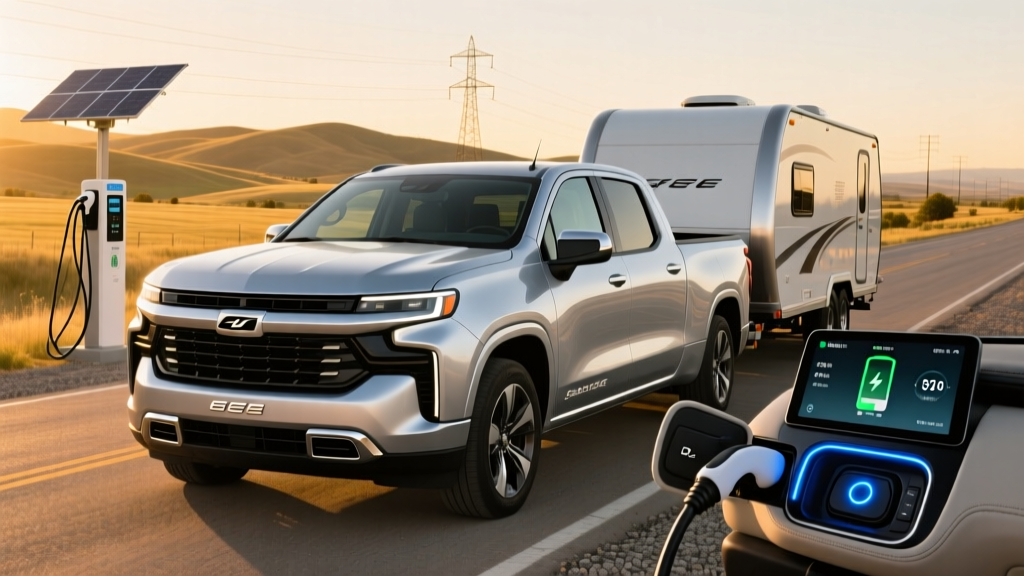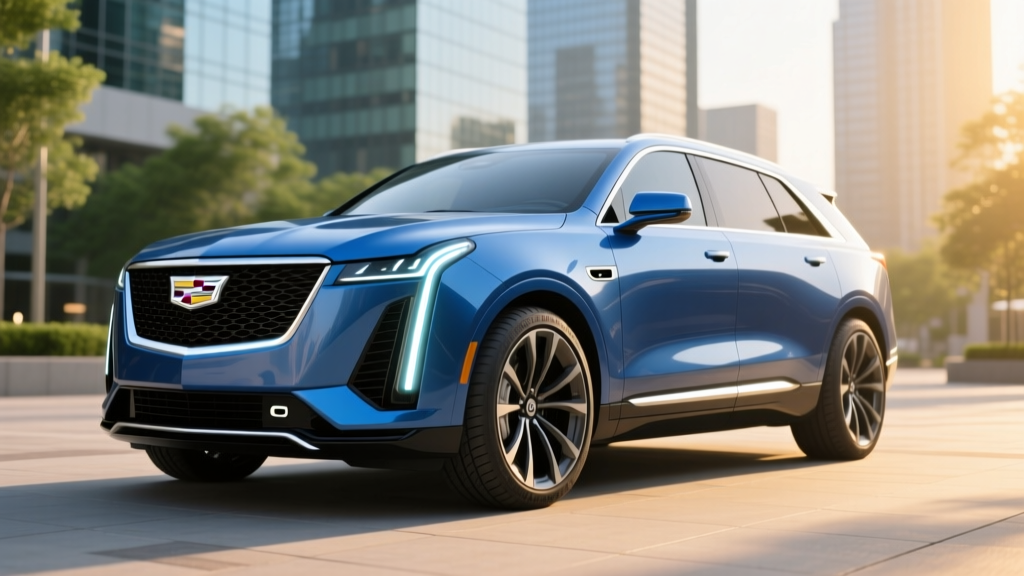
Quick Answer: Is the 2025 Electric Escalade Worth It?
The 2025 Cadillac Escalade IQ is GM's all-electric full-size luxury SUV, starting at $129,990 (including destination). It delivers an EPA-estimated 460 miles of range from a massive ~200 kWh Ultium battery, peaks at 350 kW DC fast charging (10–80% in roughly 22 minutes on a compatible charger), and produces up to 785 horsepower in Velocity mode. It seats up to seven, tows up to 8,000 lbs, and qualifies for no federal tax credit due to its MSRP exceeding the §30D cap. If you want a three-row luxury EV with class-leading range and don't blink at six-figure pricing, the Escalade IQ is currently the only game in its segment. If your budget is tighter or you lack reliable home charging, the gas Escalade or a plug-in hybrid alternative may serve you better.
Escalade IQ Specs: Range, Battery, Charging & Performance
The Escalade IQ rides on GM's BT1 electric platform (shared with the Silverado EV and Sierra EV) and uses a dual-motor all-wheel-drive powertrain. Here are the hard numbers you need before stepping into a dealership.
| Specification | 2025 Escalade IQ Luxury | 2025 Escalade IQ Sport |
|---|---|---|
| Base MSRP (incl. destination) | $129,990 | $130,490 |
| EPA Range | ~460 miles | ~460 miles |
| Battery (usable, est.) | ~200 kWh (NMC, Ultium) | ~200 kWh (NMC, Ultium) |
| Horsepower (normal / Velocity) | 615 hp / 785 hp | 615 hp / 785 hp |
| Torque | 615 lb-ft / 785 lb-ft | 615 lb-ft / 785 lb-ft |
| 0–60 mph | ~4.9 sec (normal) / ~3.6 sec (Velocity) | ~4.9 sec / ~3.6 sec |
| Peak DC Fast Charge | 350 kW (800V architecture) | 350 kW (800V architecture) |
| 10–80% DC Charge Time | ~22 min (on 350 kW station) | ~22 min |
| Level 2 Charge Rate | 19.2 kW (AC) | 19.2 kW (AC) |
| Towing Capacity | 8,000 lbs | 8,000 lbs |
| Seating | Up to 7 | Up to 7 |
| Battery/Powertrain Warranty | 8 yr / 100,000 mi | 8 yr / 100,000 mi |
| Federal §30D Tax Credit | Not eligible (MSRP cap) | Not eligible (MSRP cap) |
Real-World Range vs. EPA Sticker
The 460-mile EPA figure is impressive on paper, but real-world results will vary. Expect approximately 380–420 miles during mixed highway driving at 70–75 mph. In cold weather (below 30°F), plan for a 15–25% reduction, bringing usable range down to roughly 345–390 miles depending on cabin heating demands and whether you precondition the battery. Towing a heavy trailer will cut range more aggressively — potentially to 230–280 miles depending on weight, aerodynamics, and terrain. The Escalade IQ's heat pump helps mitigate cold-weather losses compared to resistive heating systems.
Charging the Escalade IQ: Home Setup and Public Networks
With a battery this large (~200 kWh usable), your charging strategy is critical. You simply cannot rely on a standard 120V outlet — Level 1 charging would add roughly 2–3 miles per hour, meaning a full charge from near-empty would take well over a week.
| Charging Level | Power | Miles Added Per Hour | Full Charge Time (10–100%) | Use Case |
|---|---|---|---|---|
| Level 1 (120V) | ~1.4 kW | ~2–3 mi/hr | ~80+ hours | Emergency only |
| Level 2 (240V, 48A) | 11.5 kW | ~20 mi/hr | ~22 hours | Daily overnight (partial) |
| Level 2 (240V, 80A) | 19.2 kW | ~33 mi/hr | ~12 hours | Recommended home setup |
| DC Fast (350 kW peak) | Up to 350 kW | ~200+ mi in 10 min | 10–80% in ~22 min | Road trips |
Home charging recommendation: Install a hardwired Level 2 charger on a 100-amp circuit to unlock the Escalade IQ's full 19.2 kW AC charge rate. This requires a 200-amp (minimum) electrical panel — many older homes will need a panel upgrade. Budget $1,200–$3,500 for a quality Level 2 charger (such as the ChargePoint Home Flex or Emporia V2) and $2,000–$5,000+ for professional installation, depending on your panel condition, conduit run length, and local permit fees.
On the road, the Escalade IQ uses the NACS (Tesla-style) connector natively, giving it direct access to Tesla Supercharger V4 stations and the growing network of NACS-equipped public chargers from Electrify America and others. The 800V architecture means charging speeds stay robust on compatible 350 kW stations, though expect the charge curve to taper significantly above 80% State of Charge — that last 20% can take as long as the first 70%.
Escalade IQ vs. Gas Escalade: Cost & Ownership Comparison
How does the electric Escalade stack up against the gas-powered 2025 Escalade with the 6.2L V8? The differences are stark across purchase price, fueling, and maintenance.
| Factor | 2025 Escalade IQ (Electric) | 2025 Escalade (6.2L V8 Gas) |
|---|---|---|
| Starting MSRP | $129,990 | $83,895 (Luxury trim) |
| EPA Fuel Economy | ~89 MPGe (est.) | 16 mpg combined |
| Annual Fuel/Energy Cost (12,000 mi) | ~$1,050 (home L2, $0.16/kWh avg) | ~$2,850 ($3.80/gal, 16 mpg) |
| Annual Maintenance | ~$300–$500 | ~$800–$1,200 |
| Federal Tax Credit | $0 (MSRP exceeds §30D cap) | $0 |
| Estimated Insurance (annual) | ~$3,200–$4,500 | ~$2,400–$3,200 |
| 5-Year Fuel/Energy Savings | ~$9,000 saved (IQ vs. gas) | |
The gas Escalade starts roughly $46,000 less than the IQ. Even with $9,000 in five-year energy savings and lower maintenance on the EV, the purchase price gap is not recoverable through operational savings alone. The Escalade IQ is a technology and luxury statement, not a cost-savings play.
According to fueleconomy.gov, the gas Escalade 6.2L 4WD returns just 16 mpg combined, making it one of the thirstiest vehicles in its class. If you drive 15,000+ miles annually and fuel costs in your area exceed $4/gallon, the fueling savings gap widens — but the upfront premium still dominates the math.
5-Year Total Cost of Ownership Breakdown
| Cost Category (5 Years) | Escalade IQ (Electric) | Escalade V8 (Gas) |
|---|---|---|
| Purchase Price (base) | $129,990 | $83,895 |
| Home Charger Install (one-time) | $4,500 | $0 |
| Fuel / Electricity | $5,250 | $14,250 |
| Maintenance | $2,000 | $5,000 |
| Insurance (est.) | $19,000 | $14,000 |
| Estimated Depreciation | ~$52,000 (40%) | ~$33,500 (40%) |
| Total 5-Year Cost | ~$212,740 | ~$150,645 |
Over five years, the Escalade IQ costs roughly $62,000 more to own than its gas counterpart. The biggest drivers are the purchase premium, higher insurance (EVs generally carry 15–30% higher premiums due to repair costs and battery replacement risk), and steeper absolute depreciation on a higher starting price. Where the IQ wins: dramatically lower energy costs and reduced maintenance (no oil changes, fewer brake replacements thanks to regenerative braking, no transmission fluid).
For context on federal incentive rules, see the IRS §30D clean vehicle credit page. The Escalade IQ's MSRP exceeds the $80,000 SUV cap for the new-vehicle credit, so buyers receive no federal incentive. Some states offer separate rebates — check your local DMV or energy office.
Common Misconceptions About the Escalade IQ
| Myth | Fact |
|---|---|
| "I'll get the $7,500 federal tax credit." | The Escalade IQ's MSRP exceeds the §30D SUV cap of $80,000. No federal credit applies. State incentives may exist independently. |
| "460 miles means I'll never need to charge on road trips." | Real-world highway range is closer to 380–420 miles. Cold weather and towing reduce this further. Plan charging stops on long trips. |
| "I can charge it on a regular wall outlet." | Level 1 (120V) adds ~2–3 miles per hour. With a 200 kWh battery, a full charge would take 80+ hours. A Level 2 home install is essentially mandatory. |
| "The battery will need replacing in a few years." | GM warranties the Ultium battery for 8 years / 100,000 miles against degradation below a set threshold. NMC chemistry typically retains 85–90% capacity at 100,000 miles under normal use. |
| "It's self-driving with Super Cruise." | Super Cruise is an SAE Level 2 driver-assistance system. It allows hands-free driving on mapped highways, but the driver must remain attentive and ready to take over at all times. It is not autonomous. |
Super Cruise: Level 2, Not Level 4
Cadillac's Super Cruise enables hands-free driving on over 750,000 miles of compatible roads in North America, using a combination of LiDAR-mapped HD data, GPS, cameras, and radar. A driver-attention camera monitors your eyes. However, this is SAE Level 2 automation — you are the driver, and you are legally responsible for the vehicle at all times. You must remain alert, avoid phone use, and be prepared to resume steering and braking instantly. This is fundamentally different from Level 4 robotaxi services like Waymo, which operate without any human driver in defined geofenced areas.
Real-World Ownership: What First-Time EV Buyers Need to Know
Owning a 200 kWh, 10,000-pound electric SUV introduces practical considerations that no spec sheet fully captures:
- Home charging is non-negotiable. Public DC fast charging a ~200 kWh battery regularly is expensive (often $0.35–$0.50/kWh at Electrify America or Tesla Superchargers), adding up to $70–$100 per session for a 10–80% fill. Home charging at $0.12–$0.18/kWh cuts that to $24–$36. If you live in an apartment or lack a dedicated parking spot with electrical access, ownership costs rise sharply.
- Your electrical panel may need upgrading. A 100-amp circuit for 19.2 kW Level 2 charging requires significant panel headroom. Homes with 100-amp main service will almost certainly need a $3,000–$7,000 panel upgrade to 200 amps. Consult a licensed electrician before purchasing.
- Cold weather hits big batteries hard in absolute terms. A 20% range loss on 460 miles still leaves ~368 miles — far more than most drivers need daily. But if you're towing or road-tripping in winter, that loss compounds with highway speeds and heating demands.
- Tire costs are higher. The Escalade IQ's weight (likely over 9,000 lbs curb weight) accelerates tire wear. Expect to replace tires every 25,000–35,000 miles, with a set of four 285-section rubber running $1,600–$2,800.
- Insurance premiums run higher. EV repair costs, particularly around the battery pack and high-voltage systems, push insurance rates 15–30% above equivalent gas vehicles. Get quotes before committing.
Decision Framework: Should You Buy the Escalade IQ?
Choose the Escalade IQ If:
- You want the longest-range three-row luxury EV on the market and budget is secondary.
- You have (or can install) a 19.2 kW Level 2 home charger on a 100-amp circuit.
- You regularly drive 300+ miles between stops and want to minimize charging frequency.
- You value instant torque, near-silent operation, and Super Cruise hands-free highway driving.
- You tow occasionally and need 8,000-lb capacity with zero tailpipe emissions at the vehicle.
Choose the Gas Escalade (or Wait) If:
- Your budget caps well below $130,000 — the gas Escalade starts ~$46,000 lower.
- You lack reliable home charging access (apartment, street parking, older electrical panel).
- You frequently tow heavy loads in cold weather, where EV range loss is most acute.
- You prefer the lower upfront cost and established refueling infrastructure of gasoline.
- You want to wait for potential price reductions or expanded trim options in future model years.
Frequently Asked Questions
What is the real-world range of the 2025 Escalade IQ?
The EPA estimates approximately 460 miles. In real-world highway driving at 70–75 mph, expect 380–420 miles. Cold weather (below 30°F) can reduce this to 345–390 miles. Towing a 5,000+ lb trailer may drop range to 230–280 miles depending on conditions.
Does the Escalade IQ qualify for the $7,500 federal tax credit?
No. Under IRS §30D rules, the new clean vehicle credit caps SUV MSRP at $80,000. The Escalade IQ starts at $129,990, making it ineligible regardless of buyer income or battery sourcing. Always verify current rules at irs.gov.
How long does it take to charge the Escalade IQ at home?
On a 19.2 kW Level 2 charger (recommended), a full 0–100% charge takes roughly 11–12 hours. Most owners charge from 20–80% overnight, which takes about 6–7 hours. On a standard 120V outlet, a full charge would take 80+ hours — impractical for daily use.
What connector does the Escalade IQ use?
The Escalade IQ uses the NACS (North American Charging Standard) connector natively. This provides direct access to Tesla Supercharger V4 stations, as well as NACS-equipped chargers from Electrify America and other networks. No adapter is needed.
Is Super Cruise self-driving?
No. Super Cruise is an SAE Level 2 driver-assistance system. It enables hands-free driving on compatible mapped highways, but the driver must remain attentive, eyes on the road (monitored by a cabin camera), and ready to take control at any time. It does not handle unmapped roads, construction zones, or all weather conditions.
How much does it cost to charge vs. fuel the gas Escalade?
At $0.16/kWh (national average for home electricity), a full ~200 kWh charge costs roughly $32 and delivers ~400 real-world miles — about $0.08 per mile. The gas Escalade at 16 mpg combined and $3.80/gallon costs about $0.24 per mile. Over 12,000 annual miles, that's ~$960 (electric) vs. ~$2,850 (gas) — a savings of roughly $1,900 per year on energy.
What is the battery warranty?
GM covers the Ultium battery pack for 8 years or 100,000 miles (whichever comes first) against defects and excessive capacity degradation. The specific degradation threshold is defined in the warranty documentation — typically around 60–70% retained capacity.