Rivian R1S at a Glance: Speed Meets Three-Row Utility
The Rivian R1S is one of the few electric SUVs that can legitimately claim supercar-rivaling acceleration while carrying seven passengers and their gear. For 2026, the R1S continues on Rivian's second-generation (Gen 2) platform with tri-motor and dual-motor configurations, an updated electrical architecture, and the Tesla Supercharger-competible NACS port native on all new builds. If you've been searching for Rivian R1S 0-60 figures and real-world usability data, this profile covers every number that matters — from the 2.9-second tri-motor sprint to the actual miles you'll see on a highway road trip.
Rivian's positioning is clear: this is a premium adventure-family hauler that happens to be absurdly quick. But speed is only one chapter. Charging infrastructure, battery chemistry, real-world range, and total cost after federal incentives determine whether the R1S earns a spot in your garage. Let's break down the data.
| Spec | Dual-Motor (Standard) | Tri-Motor |
|---|---|---|
| EPA Range (Max Pack) | 410 miles | 391 miles |
| Usable Battery (Max Pack) | ~141 kWh (NMC) | ~141 kWh (NMC) |
| 0-60 mph | 4.5 sec | 2.9 sec |
| Horsepower | 533 hp | 850 hp |
| Torque | 610 lb-ft | 908 lb-ft |
| Drivetrain | AWD (dual motor) | AWD (tri motor) |
| Max DC Fast Charge | ~200 kW peak | ~220 kW peak |
| 10-80% DCFC Time | ~38 min | ~35 min |
| Level 2 Home Charge | 11.5 kW (~25 mi/hr) | 11.5 kW (~25 mi/hr) |
| Towing Capacity | 7,700 lbs | 7,700 lbs |
| Base MSRP | $79,900 | $99,900 |
| EPA Efficiency | 73 MPGe (2.9 kWh/mi) | 70 MPGe (3.0 kWh/mi) |
| Battery/Powertrain Warranty | 8 yr / 175,000 mi | 8 yr / 175,000 mi |
Rivian R1S 0-60 and Performance: The Numbers Behind the Hype
The headline figure — 2.9 seconds 0-60 mph for the Tri-Motor R1S — places this three-row SUV in the territory of a Porsche 911 Turbo S. That's not a marketing exaggeration; independent testing by outlets including Car and Driver has validated sub-3.0-second runs. The physics behind it: 850 horsepower and 908 lb-ft of instantaneous torque distributed across three motors (one front, two rear) with torque vectoring on the rear axle.
But the Dual-Motor variant's 4.5-second 0-60 is hardly slow — it matches a BMW X5 M50i while delivering far superior efficiency. For most buyers, the Dual-Motor offers the better value proposition: you sacrifice a supercar launch but gain roughly 19 additional miles of EPA range and save $20,000 on the sticker.
On the road, the R1S's air suspension (standard on Adventure trim, available on others) provides five ride-height settings, from a low "Park" mode for easier entry to an 11.9-inch ground clearance "Off-Road" setting. The electro-hydraulic roll control system eliminates traditional anti-roll bars, keeping the body remarkably flat through corners despite the vehicle's 6,800-pound curb weight. This engineering matters: heavy EVs with soft suspensions often feel ponderous, but the R1S corners with a composure that defies its mass.
Real-World Range vs. EPA Estimates
Real-World Highway (70-75 mph, mild weather): ~320-350 miles
Cold Weather Highway (below 32°F): ~250-290 miles
Towing (5,000+ lb trailer): ~160-200 miles
The R1S Max Pack's 410-mile EPA rating is among the highest of any production SUV, but as with every EV, your actual mileage depends heavily on driving conditions. At sustained highway speeds of 70-75 mph in 65-75°F weather, expect roughly 320-350 miles before needing to charge. That's still enough for most day-trips without stopping, and it's a genuine advantage over competitors like the BMW iX xDrive50 (EPA 309 miles) or Audi Q8 e-tron (EPA 285 miles).
Cold weather is the equalizer. The R1S uses a heat pump for cabin and battery thermal management, which mitigates some winter range loss, but lithium-ion chemistry fundamentally slows in cold temperatures. In sub-freezing highway driving, plan for 250-290 miles of usable range. The battery's large 141 kWh capacity provides a buffer that smaller-pack EVs simply can't match — even at 65% of rated range, you're still looking at 250+ miles.
Towing is where range drops most dramatically. Pulling a 5,000-pound camper at highway speeds can cut range nearly in half. Rivian addresses this with a built-in towing range estimator that factors in trailer weight and terrain, but buyers planning frequent heavy towing should consider the Standard Pack (EPA ~270 miles) a non-starter and opt for the Max Pack.
The battery chemistry across all R1S packs is NMC (nickel manganese cobalt), chosen for its high energy density. Rivian has not adopted LFP (lithium iron phosphate) for the R1S, likely because the 141 kWh Max Pack would be prohibitively heavy with LFP's lower energy density. The trade-off: NMC cells degrade slightly faster over time and prefer not to sit at 100% state of charge for extended periods, unlike LFP which tolerates full charges better.
Charging Speed: DC Fast Charging and Home Setup
| Charging Level | Power (kW) | Speed (miles/hr added) | Notes |
|---|---|---|---|
| Level 1 (120V household) | ~1.4 kW | ~3 mi/hr | Emergency/trickle only |
| Level 2 (240V, 48A home) | 11.5 kW | ~25 mi/hr | Full overnight recharge in ~12 hrs |
| DC Fast Charge (peak) | 200-220 kW | ~550-600 mi/hr (peak) | 10-80% in ~35-38 min |
| Tesla Supercharger (NACS) | Up to 250 kW (V3 stalls) | Variable | Native NACS port on 2025+ builds |
Rivian's Gen 2 platform charges at a peak of roughly 200-220 kW on DC fast chargers. That's competitive but not class-leading — the Hyundai Ioniq 5 and Kia EV9 can peak higher on 800V architectures. However, peak kW tells only part of the story. The R1S sustains strong charging rates through the critical 10-60% window before tapering above 80% state of charge (SoC), which is standard charge-curve behavior for NMC cells managed conservatively for longevity.
A typical 10-80% session takes approximately 35-38 minutes at a functioning 250+ kW charger (such as Electrify America's 350 kW stalls or Rivian Adventure Network chargers). In practice, your experience depends heavily on charger reliability — Rivian's proprietary Adventure Network chargers along popular road-trip routes have earned strong uptime reviews, while third-party networks remain inconsistent.
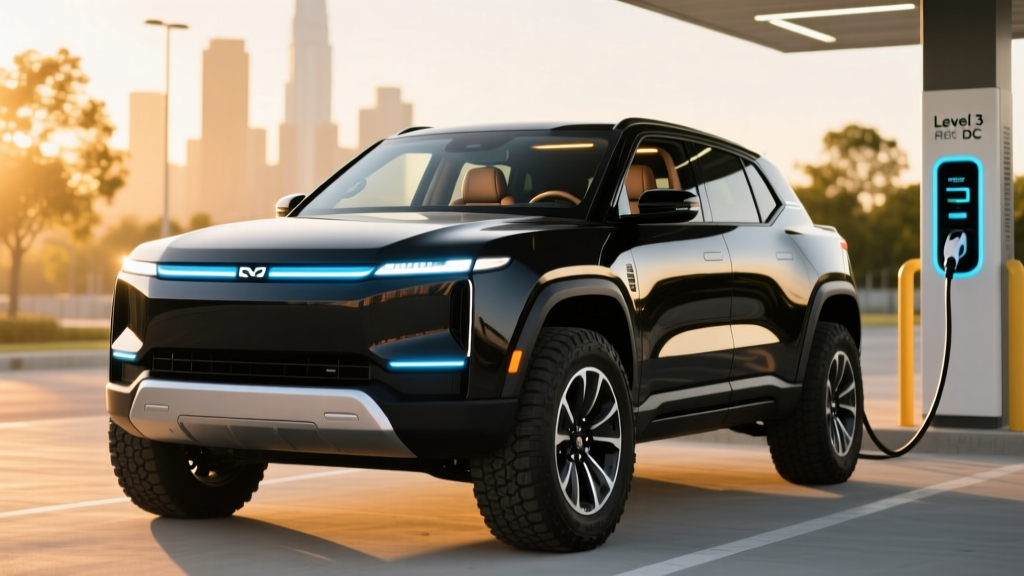
For 2026, all new R1S vehicles ship with the NACS (North American Charging Standard) connector natively, eliminating the need for a CCS-to-NACS adapter. This grants direct access to Tesla's Supercharger network — currently the most reliable DC fast-charging infrastructure in North America. Rivian owners can also use Tesla's V4 Supercharger stalls, which offer up to 350 kW.
At home, the R1S's 11.5 kW onboard charger means a full 10-to-100% recharge on a Level 2 wall connector takes roughly 12 hours for the Max Pack. Most owners will charge from 20-80% overnight (about 7 hours), which is practical for daily use. Rivian sells its own Wall Charger (rated to 11.5 kW / 48A), and installation by a licensed electrician typically costs $800-$2,000 depending on your electrical panel's capacity. Homes with older 100A panels may require a $1,500-$3,000 panel upgrade to 200A — factor this into your purchase budget.
Pricing, Trims, and Federal Tax Credit Eligibility
| Trim / Config | Base MSRP | Federal §30D Credit | Effective Price (if eligible) |
|---|---|---|---|
| Dual-Motor Standard Pack | $79,900 | Up to $7,500 | ~$72,400 |
| Dual-Motor Max Pack | $89,900 | Up to $7,500 | ~$82,400 |
| Tri-Motor Max Pack | $99,900 | Up to $7,500 | ~$92,400 |
Rivian's pricing places the R1S firmly in the premium segment, competing with the BMW iX, Mercedes EQS SUV, and Tesla Model X. The Dual-Motor Standard Pack starts at $79,900 (before destination), while a fully optioned Tri-Motor Max Pack can exceed $110,000.
Federal tax credit eligibility under IRS §30D requires meeting several conditions simultaneously:
- MSRP cap: SUVs must have an MSRP at or below $80,000. This means the Dual-Motor Standard Pack ($79,900) qualifies, but the Max Pack and Tri-Motor variants exceed the cap and are ineligible for the federal credit.
- Buyer income limits (2026 AGI): $300,000 joint / $225,000 head of household / $150,000 single filers.
- Battery sourcing: Critical minerals and battery components must meet escalating domestic-sourcing thresholds. Rivian's supply chain has been evolving; verify current-year compliance on fueleconomy.gov before purchasing.
- Point-of-sale transfer: Eligible buyers can apply the credit as an immediate price reduction at the dealer (or directly from Rivian) rather than waiting for tax filing.
The practical takeaway: only the base Dual-Motor Standard Pack consistently qualifies for the full $7,500 federal credit, and only for buyers under the income caps. State-level incentives (California's CVRP, Colorado's tax credit, etc.) may apply to higher trims — check your state's energy office for current programs.
Interior Space, Technology, and Daily Livability
The R1S is a genuine three-row SUV with seating for up to seven (six with optional second-row captain's chairs). Cargo volume measures approximately 104.7 cubic feet behind the first row, 57.7 cu ft behind the second, and 17.6 cu ft behind the third — competitive with the BMW X7 and Mercedes GLS, though the R1S lacks a traditional frunk due to its front motor and HVAC packaging.
Second-row legroom is generous at 38.9 inches, while the third row accommodates adults on shorter trips (32.9 inches of legroom) — tighter than a Chevy Tahoe but usable for children or occasional adult passengers. The panoramic glass roof floods the cabin with light and creates an airy feel unusual for a vehicle with this much battery mass underneath.
Technology centers on a 15.6-inch landscape touchscreen running Rivian's in-house software. The interface is clean and responsive, with wireless Apple CarPlay and Android Auto, over-the-air updates, and a built-in trip planner that factors in charging stops, terrain, and weather. The driver-assist suite, Rivian Driver+, provides adaptive cruise control, lane centering, and automatic lane changes on divided highways. This is an SAE Level 2 system — the driver must keep hands on the wheel and eyes on the road at all times. It is not autonomous driving, though it competes favorably with Tesla Autopilot and Ford BlueCruise for highway cruising comfort.
A standout feature is the R1S's camp mode, which maintains cabin climate control overnight while parked — ideal for car camping without the 12V drain concerns of an ICE vehicle. The vehicle also offers vehicle-to-load (V2L) capability via an available power outlet adapter, letting you run appliances or power tools directly from the 141 kWh battery pack.
Warranty, Ownership Costs, and Long-Term Battery Outlook
Rivian covers the R1S battery and drive units with an 8-year / 175,000-mile warranty (whichever comes first), with a guaranteed minimum capacity retention of 70% over that period. This is among the most generous powertrain warranties in the EV space — Tesla offers 8 years / 150,000 miles on the Model X, and BMW provides 8 years / 100,000 miles on the iX.
For long-term ownership, the NMC chemistry in the R1S Max Pack will experience gradual degradation. Industry data from Geotab's fleet battery study suggests modern NMC packs lose approximately 1.8-2.3% capacity per year under normal use, meaning a 10-year-old R1S might retain 78-82% of its original capacity — well above the warranty floor. Best practices include limiting routine charges to 80-90% SoC and using DC fast charging sparingly (rely on Level 2 for daily needs).
Insurance costs for the R1S run higher than average for the segment. Expect annual premiums in the $2,800-$4,200 range depending on your location, driving record, and coverage levels — a function of the vehicle's repair costs, performance capability, and premium parts pricing. Get quotes before purchasing to budget accurately.
Maintenance is minimal compared to an ICE equivalent: no oil changes, no spark plugs, no transmission fluid. Rivian recommends periodic cabin air filter replacement, brake fluid checks (regenerative braking means the friction brakes see light use), and tire rotation. Budget roughly $400-$600 annually for routine service.
Rivian R1S vs. the Competition
The R1S competes in a growing field of premium three-row electric SUVs. Here's how it stacks up against key rivals:
- Tesla Model X: The Model X Plaid is quicker (2.5 sec 0-60) and offers slightly more Supercharger access, but its interior quality and third-row space lag the R1S. The Model X also starts above the §30D MSRP cap for all trims.
- BMW iX xDrive50: More refined interior and better ride comfort, but only two rows of seats, 309 miles of EPA range, and a 4.4-second 0-60. The iX is a luxury cruiser, not an adventure vehicle.
- Kia EV9: Significantly cheaper ($54,900 base), three rows, and decent range (304 miles), but slower (5.0 sec 0-60 for the GT-Line AWD) and less premium throughout. The value pick for families who don't need 400+ miles of range.
- Mercedes EQS SUV: Ultra-luxurious with an EPA 305 miles, but starts above $105,000 and offers no off-road capability. A different buyer entirely.
Pros
- Tri-motor 2.9-sec 0-60 is supercar-quick in a 7-seat SUV
- 410-mile EPA range (Max Pack) leads the three-row EV segment
- Native NACS port grants direct Tesla Supercharger access
- 8 yr / 175,000 mi battery warranty is best-in-class
- Genuine off-road capability with air suspension and 11.9" ground clearance
- 7,700-lb towing capacity with integrated trailer tech
- Over-the-air updates continuously add features
Cons
- Only the base $79,900 trim qualifies for the $7,500 federal tax credit
- No front trunk (frunk) due to front motor packaging
- Third row is tight for adults on long trips
- DC fast-charge peak (~220 kW) trails 800V competitors
- Insurance premiums are above segment average
- Rivian's service center network is still expanding — rural owners may face long tow distances
- Tri-Motor range drops noticeably vs. Dual-Motor
Who Should Buy the Rivian R1S?
Choose the Dual-Motor Standard Pack if: You want the federal tax credit, commute daily with occasional road trips, and prioritize value. The 270-mile range covers most needs, and the 4.5-second 0-60 is plenty quick.
Choose the Dual-Motor Max Pack if: You road-trip frequently, live in a cold climate where range loss matters, or tow regularly. The 410-mile EPA range provides a real buffer.
Choose the Tri-Motor Max Pack if: You want maximum performance, don't need the tax credit, and value the torque-vectoring rear axle for spirited driving or off-road precision. This is the enthusiast's pick.
Look elsewhere if: You need a budget-friendly family hauler (consider the Kia EV9), prioritize ultra-luxury interiors (BMW iX or Mercedes EQS SUV), or live far from a Rivian service center and can't tolerate potential downtime logistics.
Frequently Asked Questions
What is the real-world range of the Rivian R1S?
The EPA rates the Dual-Motor Max Pack at 410 miles and the Tri-Motor at 391 miles. In real-world highway driving at 70-75 mph in mild weather, expect 320-350 miles. Cold weather (below 32°F) reduces this to approximately 250-290 miles. Towing a heavy trailer can cut range to 160-200 miles.
How fast does the Rivian R1S charge?
On DC fast chargers, the R1S peaks at approximately 200-220 kW and charges from 10-80% in roughly 35-38 minutes. At home on a Level 2 (240V / 48A) charger, it adds about 25 miles of range per hour, with a full recharge taking around 12 hours for the Max Pack.
Does the Rivian R1S qualify for the federal EV tax credit?
Only the Dual-Motor Standard Pack at $79,900 MSRP qualifies under the §30D SUV price cap of $80,000. Buyers must also meet income limits ($300K joint / $150K single) and the vehicle must satisfy current-year battery sourcing requirements. Higher trims exceed the MSRP cap and are ineligible for the federal credit, though state incentives may apply.
Is the Rivian R1S worth buying over the Tesla Model X or Kia EV9?
The R1S is the best choice if you need three rows, genuine off-road capability, and maximum range in one package. The Model X is quicker but more expensive and less practical. The EV9 is far cheaper but offers less range, less performance, and no off-road chops. Your budget and use case determine the right answer.
What is the Rivian R1S battery warranty?
Rivian provides an 8-year / 175,000-mile battery and drive unit warranty with a guaranteed minimum 70% capacity retention over that period. This exceeds most competitors, including Tesla (8 yr / 150,000 mi) and BMW (8 yr / 100,000 mi).
Can the Rivian R1S use Tesla Superchargers?
Yes. All 2025 and newer R1S vehicles are built with a native NACS port, providing direct access to Tesla's Supercharger network without an adapter. Older R1S models with CCS ports can use a NACS adapter provided by Rivian.