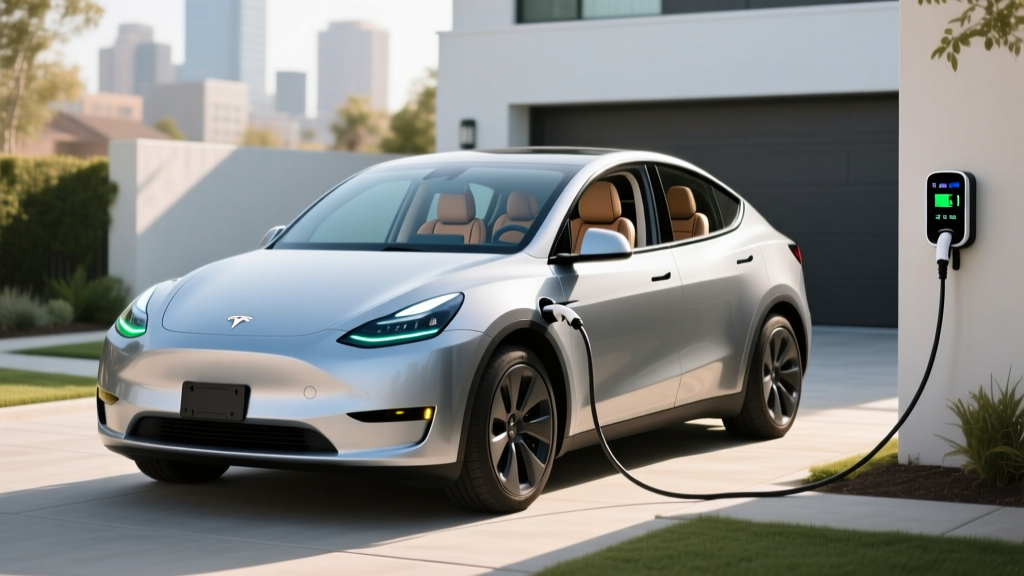
Buying an electric vehicle in the Lone Star State comes with a unique mix of opportunities and challenges. While there is no statewide purchase rebate as of 2026, Texas EV buyers can access a patchwork of utility incentives, federal tax credits, and lower per-mile operating costs. But the math isn't always straightforward. Higher insurance premiums, upfront purchase prices, and depreciation curves can offset some of the savings you've been promised.
This guide breaks down the real cost of owning an EV in Texas over five years — with exact numbers for fuel, maintenance, insurance, and depreciation — and maps out every incentive available to Texas residents right now.
Federal Tax Credit: What Texas Buyers Actually Qualify For
The IRS §30D Clean Vehicle Credit offers up to $7,500 for eligible new EVs and up to $4,000 for qualifying used EVs. But qualifying is far from automatic. The rules have tightened significantly, and battery-sourcing requirements eliminate several popular models entirely.
§30D Eligibility Checklist (2026 Tax Year)
- Income caps: Modified AGI must not exceed $300,000 (joint filers), $225,000 (head of household), or $150,000 (single filers)
- MSRP caps: Vans, SUVs, and trucks ≤ $80,000; sedans and other body styles ≤ $55,000
- Battery sourcing: A percentage of critical minerals and battery components must be sourced from the U.S. or free-trade-agreement partners — this threshold increases annually and disqualifies several models
- Point-of-sale transfer: You can transfer the credit to the dealer at purchase to reduce the sale price immediately, rather than waiting to claim it on your tax return
- Vehicle assembly: Final assembly must occur in North America
- One credit per VIN: Each vehicle can only trigger the credit once, and you're limited to one new and one used EV credit per tax year
As of 2026, vehicles like the Tesla Model Y (Long Range), Ford F-150 Lightning (certain trims), and Chevrolet Equinox EV qualify for the full or partial credit. However, models with battery components sourced from prohibited foreign entities of concern — including several Hyundai and Kia EVs — may see reduced credit amounts or none at all. Always verify current eligibility at fueleconomy.gov and cross-reference with the IRS Clean Vehicle Credit page, as the sourcing rules shift frequently.
Texas EV Rebates: Utility and Local Incentives
Note: Texas does not offer a statewide EV purchase rebate or tax credit as of 2026. The incentives below are utility-level and regional. Availability, funding caps, and eligibility requirements change frequently — always confirm with your provider before committing to a purchase.
Most Texas EV incentives come through electric utilities rather than the state government. Here's what's available across major service territories:
- Oncor (Dallas/Fort Worth metro): Historically offered rebates for Level 2 home charger installation (up to $500 in past programs). Check for current availability, as funding cycles close and reopen.
- CenterPoint Energy (Houston area): Has offered time-of-use (TOU) rate plans that significantly reduce overnight charging costs, effectively acting as an ongoing incentive rather than a one-time rebate.
- Austin Energy: Among the most EV-friendly utilities in Texas — has offered rebates up to $1,200 for Level 2 charger purchase and installation, plus access to a robust public charging network with discounted rates.
- Entergy Texas: Periodic residential EV charger rebate programs; check current offerings.
- City of San Antonio (CPS Energy): Has provided rebates for home charging equipment and offers off-peak electricity rates that cut charging costs substantially.
Beyond utility rebates, Texas offers a state emissions inspection exemption for EVs in counties that require testing (Harris, Dallas, Tarrant, Travis, and others) — saving roughly $11.50 to $30 per year depending on the county. It's modest, but it compounds over ownership.
5-Year Total Cost of Ownership: The Real Numbers
Let's model a realistic 5-year ownership scenario. We'll compare a 2026 Tesla Model Y Long Range (AWD, 310-mile EPA range, $48,990 MSRP before incentives) against a comparably equipped 2026 Toyota RAV4 XLE AWD (28 MPG combined, ~$33,500 MSRP) — a common cross-shop for Texas buyers.
| Cost Category | Tesla Model Y LR (EV) | Toyota RAV4 AWD (Gas) |
|---|---|---|
| Purchase Price (MSRP) | $48,990 | $33,500 |
| Federal Tax Credit (§30D) | −$7,500 | $0 |
| Net Purchase Price | $41,490 | $33,500 |
| 5-Year Fuel/Energy Cost | $4,725 (10.5¢/mi) | $10,500 (14¢/mi) |
| 5-Year Maintenance | $1,500 | $3,750 |
| 5-Year Insurance (avg.) | $12,500 | $8,750 |
| Estimated Depreciation (5 yr) | $20,500 (50%) | $13,400 (40%) |
| Total 5-Year Cost | $80,715 | $69,900 |
| Cost Per Mile (all-in) | $1.08 | $0.93 |
Assumptions: Texas average residential electricity at $0.15/kWh (home charging), Model Y at 28 kWh/100mi; gas at $3.00/gal, RAV4 at 28 MPG combined. Insurance based on Texas average premiums. Depreciation reflects 2024-2025 EV resale trends. Your actual costs will vary by utility rate plan, driving mix, and insurance profile.
The EV costs more over five years in this scenario — primarily due to higher insurance and steeper depreciation eating into the fuel and maintenance savings. However, the gap narrows considerably if you qualify for the full federal credit, charge primarily at home on a TOU rate, and hold the vehicle beyond five years (where depreciation flattens and maintenance savings compound).
Charging vs. Gasoline: The Per-Mile Math in Texas
| Scenario | EV (Model Y, 28 kWh/100mi) | Gas (RAV4, 28 MPG) |
|---|---|---|
| Home charging (avg. $0.15/kWh) / Gas ($3.00/gal) | $0.042/mi | $0.107/mi |
| Home TOU off-peak ($0.08/kWh) / Gas ($3.00/gal) | $0.022/mi | $0.107/mi |
| Public DC fast charging ($0.40/kWh) / Gas ($3.00/gal) | $0.112/mi | $0.107/mi |
Home charging in Texas is where the economics work best. At the state average residential rate of roughly $0.15/kWh, the Model Y costs about 4.2 cents per mile — a 60% savings over gasoline. If your utility offers a TOU plan and you charge overnight (midnight to 6 AM), rates can drop to $0.06–$0.09/kWh, pushing your per-mile cost below 2.5 cents.
But here's the honest part: exclusive public DC fast charging at $0.35–$0.48/kWh actually costs more per mile than gasoline in a fuel-efficient crossover. This is why home charging access is the single biggest factor in EV economics. If you can't install a Level 2 charger at home (apartment living, older electrical panel), the cost advantage shrinks dramatically.
Texas also has no state income tax, which helps offset the higher purchase price — but the state's electricity rates vary widely. ERCOT market pricing means your rate can fluctuate, especially in summer. Locking into a fixed-rate plan or a dedicated EV TOU rate is essential for predictable charging costs.
Maintenance Savings: Where EVs Actually Win
| Service Item | EV Cost | Gas Vehicle Cost |
|---|---|---|
| Oil changes (5-7 over 5 yr) | $0 | $400–$700 |
| Brake pads (regen reduces wear ~50%) | $200–$400 | $600–$1,200 |
| Coolant / fluid service | $100–$200 | $300–$500 |
| Transmission fluid | $0 (single-speed) | $150–$300 |
| Air filter / cabin filter | $100–$200 | $150–$300 |
| Tire rotation & replacement | $1,200–$1,800* | $1,000–$1,500 |
| Total Estimated | $1,600–$2,600 | $2,600–$4,500 |
*EVs tend to wear tires 15-20% faster than comparable gas vehicles due to higher curb weight and instant torque delivery. Budget for one extra tire set over 75,000 miles.
The maintenance story is genuinely favorable for EVs. No oil changes, no spark plugs, no timing belts, no exhaust system repairs, and regenerative braking extends pad life to 80,000–120,000 miles in many cases. Over five years, you'll save roughly $1,500–$2,500 in routine maintenance.
The caveat: tires cost more. A Model Y weighs 4,400 lbs and delivers 384 lb-ft of instant torque to the wheels. Expect OEM all-season tires to last 30,000–40,000 miles rather than the 50,000+ you'd see on a lighter RAV4. Budget $200–$300 more per tire set over the ownership period.
Insurance: The Cost Most Buyers Overlook
EV insurance in Texas runs 15% to 30% higher than comparable gas vehicles. For a Model Y, expect annual premiums of $2,200–$2,800 in the Texas market versus $1,500–$2,000 for a RAV4, depending on your zip code, driving record, and coverage level.
Why the gap? Three reasons:
- Higher repair costs: EV battery packs, power electronics, and specialized aluminum body structures require certified technicians and OEM parts. A minor rear collision that totals a battery enclosure can push repair costs above the vehicle's value.
- Higher vehicle values: Comprehensive and collision premiums scale with replacement cost. A $49,000 EV costs more to insure than a $33,500 gas crossover.
- Claims data still maturing: Insurers have less historical data on EV repair frequency and cost, so they price conservatively.
Shop quotes from EV-friendly insurers (GEICO, Progressive, and Tesla Insurance in Texas) before purchasing. Some offer discounts for vehicles with advanced ADAS features. Bundling home and auto can close the gap by 10-15%.
Depreciation: The Elephant in the Charging Bay
EV depreciation has been volatile. Between 2023 and 2025, Tesla's aggressive price cuts on new vehicles crushed resale values across the used EV market. A 2022 Model Y that sold for $65,000 new was trading at $28,000–$32,000 by late 2024 — a 50%+ loss in under three years.
As of 2026, the market has stabilized somewhat, but EVs still depreciate faster than mainstream gas vehicles on average:
- Average EV 5-year depreciation: 45–55% of purchase price
- Average gas crossover 5-year depreciation: 35–45%
- Toyota/Honda hybrid 5-year depreciation: 25–35% (best-in-class retention)
Several factors drive this: rapid technology iteration (newer models charge faster, go farther), battery degradation concerns among used buyers, and the fact that federal tax credits effectively lower the "real" purchase price, resetting the depreciation baseline.
The silver lining: if you plan to keep the vehicle 8-10 years, depreciation flattens significantly after year five, and the cumulative fuel and maintenance savings begin to outweigh the higher initial cost. Long-term ownership is where EV economics improve most dramatically.
Texas EV Ownership: Frequently Asked Questions
How much does it really cost to own an EV over 5 years in Texas?
For a mid-range EV like the Tesla Model Y Long Range, expect approximately $75,000–$85,000 in total 5-year cost (purchase after credits, energy, insurance, maintenance, depreciation) driving 15,000 miles per year. This is typically $5,000–$15,000 more than a comparable gas crossover, with the gap driven by insurance and depreciation. However, buyers who charge at home on off-peak rates, drive above-average miles (where fuel savings compound), and hold the vehicle beyond 5 years can break even or come out ahead.
Do I qualify for the federal EV tax credit?
You likely qualify if your modified AGI is under $150,000 (single) or $300,000 (joint), the vehicle MSRP is under $80,000 for SUVs/trucks or $55,000 for sedans, the vehicle was assembled in North America, and its battery meets current critical-mineral and component-sourcing thresholds. The credit is up to $7,500 for new EVs and up to $4,000 for used EVs (with a $25,000 price cap on used vehicles). Use the point-of-sale transfer option to apply the credit at purchase rather than waiting for tax filing. Verify eligibility at irs.gov before purchasing — sourcing rules change, and a model that qualified in January may not qualify by June.
How much do I save on fuel and maintenance in Texas?
A typical Texas EV owner charging at home saves $4,000–$6,000 on energy over five years compared to a 28 MPG gas crossover at $3.00/gallon. Maintenance savings add another $1,500–$2,500 over the same period (no oil changes, reduced brake wear, fewer fluid services). Combined, that's $5,500–$8,500 in operating savings. However, tire costs are modestly higher for EVs, and these savings are only fully realized with consistent home charging — exclusive public fast charging can erase the fuel-cost advantage entirely.
Are EVs more expensive to insure in Texas?
Yes. Expect to pay 15–30% more for insurance on an EV versus a comparable gas vehicle. In Texas, that translates to roughly $500–$800 more per year, or $2,500–$4,000 over five years. The higher cost reflects elevated repair expenses (specialized EV body shops, battery replacement risk) and higher vehicle values. Shopping multiple insurers and bundling policies can reduce but not eliminate the gap.
How well do EVs hold their value compared to gas cars?
EVs currently depreciate faster than mainstream gas vehicles. Expect 45–55% depreciation over five years for most EVs versus 35–45% for gas crossovers. Toyota and Honda hybrids remain the depreciation champions at 25–35%. The primary drivers are rapid technology advancement, battery health uncertainty for used buyers, and new-vehicle price volatility. If resale value is a top priority and you plan to sell within 3–4 years, a hybrid may be the more financially sound choice. If you'll keep the vehicle 7+ years, the depreciation gap becomes less relevant.
Is there a Texas state EV rebate in 2026?
No. Texas does not currently offer a statewide EV purchase rebate or tax credit. The primary financial incentives for Texas EV buyers are the federal §30D Clean Vehicle Credit (up to $7,500) and utility-level rebates or discounted rate plans from providers like Austin Energy, CPS Energy, Oncor, and CenterPoint. Some municipalities also exempt EVs from emissions inspections, saving $12–$30 annually in qualifying counties.
What's the cheapest way to charge an EV in Texas?
Home charging on a time-of-use (TOU) rate plan during off-peak hours (typically 10 PM – 6 AM) delivers the lowest cost — often $0.06–$0.09/kWh, which translates to 1.5–2.5 cents per mile in a Model Y. A Level 2 home charger installation costs $800–$2,000 (equipment plus licensed electrician), but the per-mile savings versus gas pay back that investment within 12–24 months for most drivers. If your home has a 200-amp electrical panel with available capacity, installation is straightforward. Older 100-amp panels may require a $1,500–$3,000 upgrade.
The bottom line for Texas buyers: EV ownership makes the strongest financial case when you can charge at home, qualify for the federal credit, drive above-average annual miles, and plan to keep the vehicle long-term. If any of those conditions aren't met — particularly home charging access — run the numbers carefully before committing. The fuel and maintenance savings are real, but they don't automatically overcome higher insurance, steeper depreciation, and the upfront price gap.