Quick Answer: Should You Buy the Xiaomi SU7 Electric Car?
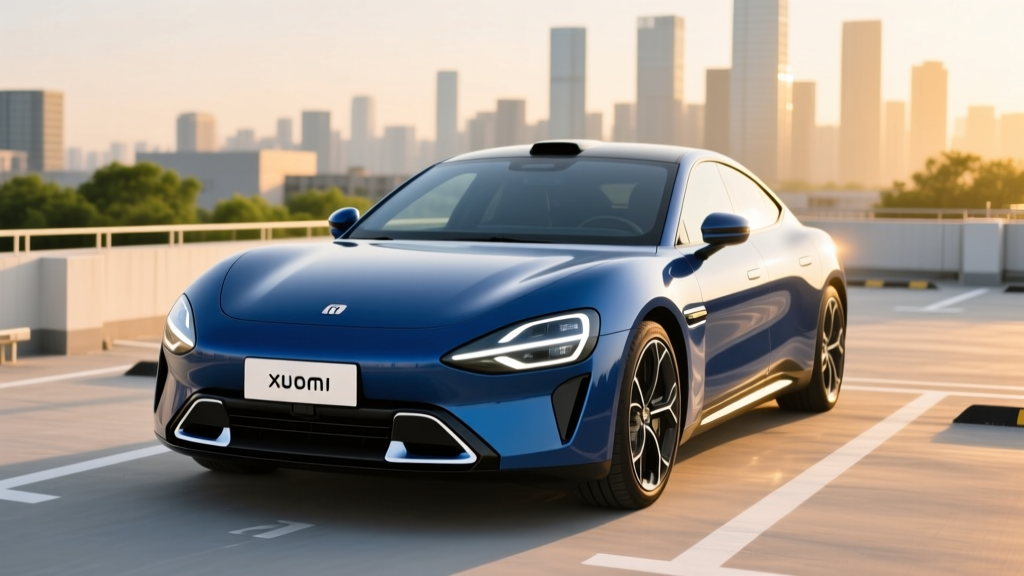
The Xiaomi SU7 is a performance-oriented electric sedan from China's Xiaomi Corporation with an impressive 800V architecture, up to 435 miles of range (CLTC), and pricing starting around $30,000 in China. However, as of early 2026, the Xiaomi SU7 is not sold in the United States and has no announced U.S. launch timeline. American buyers cannot purchase, register, or charge one domestically. If you're researching the SU7 for a potential future U.S. release or as a benchmark for comparable EVs like the Tesla Model 3, Hyundai Ioniq 6, or BMW i4, this guide covers the specs, real-world considerations, and ownership economics you need to make informed comparisons.
Xiaomi SU7 Specs: Range, Battery, and Charging
The Xiaomi SU7 launched in China in March 2024 and quickly became one of the best-selling EVs in that market. Xiaomi has since introduced the SU7, SU7 Pro, SU7 Max, and the high-performance SU7 Ultra variant. Here's what the hardware actually delivers:
| Variant | Battery (kWh) | Chemistry | Range (CLTC) | Est. EPA Equiv. | Peak DC Charge | 10–80% Time | 0–60 mph | Horsepower |
|---|---|---|---|---|---|---|---|---|
| SU7 (Standard) | 73.6 kWh | LFP (BYD Blade) | 435 mi | ~300–320 mi | ~150 kW | ~28 min | 5.3 sec | 295 hp |
| SU7 Pro | 94.3 kWh | NMC (CATL) | 516 mi | ~350–375 mi | ~200 kW | ~22 min | 5.0 sec | 295 hp |
| SU7 Max | 101 kWh | NMC (CATL) | 500 mi | ~340–365 mi | ~350 kW (800V) | ~19 min | 2.78 sec | 673 hp |
| SU7 Ultra | ~93 kWh | NMC | ~390 mi | ~270–290 mi | ~350 kW | ~18 min | 1.98 sec | 1,548 hp |
Real-World Range vs. Sticker Numbers
China's CLTC testing cycle is notoriously optimistic — typically 15–25% higher than U.S. EPA estimates. The SU7 Max's claimed 500-mile CLTC range likely translates to roughly 340–365 EPA-equivalent miles in mixed driving. Expect further reductions of 15–30% in sustained highway driving at 75+ mph or in freezing temperatures. In cold-weather testing by Chinese automotive media, the SU7 Max delivered approximately 280–310 miles at highway speeds in sub-32°F conditions — still strong, but a meaningful drop from the sticker figure.
The SU7 Max's 800V architecture is a genuine technical advantage. On a compatible 350+ kW DC fast charger, the battery can accept peak rates around 350 kW, though the sustained charge curve tapers significantly above 60% state of charge. The 10–80% time of approximately 19 minutes is competitive with the Hyundai Ioniq 5 (~18 min at 240 kW) and Porsche Taycan (~22 min at 270 kW). The standard SU7, running on a 400V platform, charges more slowly — closer to a Tesla Model 3 RWD on a Supercharger.
How the Xiaomi SU7 Compares to Gas Sedans and Rival EVs
For U.S. buyers cross-shopping the segment the SU7 targets, the most relevant comparisons are the Tesla Model 3, Hyundai Ioniq 6, BMW i4, and the gasoline BMW 3 Series. Here's how the numbers stack up:
| Spec | Xiaomi SU7 Max | Tesla Model 3 LR (2025) | Hyundai Ioniq 6 SE LR (2025) | BMW i4 eDrive40 (2025) | BMW 330i (Gas) |
|---|---|---|---|---|---|
| Base Price (MSRP) | ~$42,000 (China) | $47,740 | $42,450 | $57,900 | $44,900 |
| EPA Range (est.) | ~350 mi | 341 mi | 361 mi | 307 mi | N/A (400 mi tank) |
| Battery | 101 kWh NMC | 79 kWh NMC | 77.4 kWh NMC | 83.9 kWh NMC | N/A |
| Peak DC Charge | ~350 kW | ~250 kW | ~240 kW | ~205 kW | N/A |
| 0–60 mph | 2.78 sec | 4.2 sec | 5.1 sec | 5.5 sec | 5.6 sec |
| HP | 673 | 346 | 320 | 335 | 255 |
| Drivetrain | AWD | AWD | RWD | RWD | RWD |
| Federal Tax Credit | Not eligible (not sold in U.S.) | Up to $7,500* | Up to $7,500* | Not eligible (MSRP/sourcing) | N/A |
*Tax credit eligibility depends on current-year IRS §30D rules including buyer income caps, MSRP limits, and battery critical-mineral sourcing requirements. Check IRS.gov for current eligibility.
The SU7 Max delivers supercar-level acceleration and 800V charging at a price point that undercuts every Western rival — but only in China. In a U.S. context, the closest value proposition is the Hyundai Ioniq 6, which offers similar range, strong efficiency (up to 140 MPGe combined per fueleconomy.gov), and U.S. availability with tax-credit potential.
Real Costs: What Would SU7 Ownership Actually Look Like?
Even though the SU7 isn't available in the U.S., analyzing its hypothetical ownership costs helps benchmark what you'd spend on a comparable EV vs. a gas sedan. Below is a 5-year cost comparison using the SU7 Max's China pricing converted to USD, alongside a Tesla Model 3 Long Range and a BMW 330i gasoline sedan.
| Cost Category (5 Years) | Xiaomi SU7 Max (Hypothetical U.S.) | Tesla Model 3 LR | BMW 330i (Gas) |
|---|---|---|---|
| Purchase Price | ~$42,000 | $47,740 | $44,900 |
| Federal Tax Credit | $0 | –$7,500 (if eligible) | $0 |
| Effective Purchase | $42,000 | $40,240 | $44,900 |
| Fuel/Energy (60,000 mi) | ~$3,300 (home L2, $0.13/kWh) | ~$3,100 | ~$7,800 ($3.50/gal, 30 MPG) |
| Maintenance | ~$1,200 | ~$1,100 | ~$3,500 |
| Insurance (est. avg) | ~$9,000 | ~$8,500 | ~$7,500 |
| Depreciation (est.) | ~$18,000 | ~$17,000 | ~$16,000 |
| 5-Year Total Cost | ~$73,500 | ~$70,340 | ~$79,700 |
Key takeaways from this analysis:
- Energy savings are real but not enormous. Charging at home at $0.13/kWh saves roughly $4,500 over gas across 60,000 miles. Public DC fast charging at $0.35–$0.50/kWh narrows that gap significantly.
- Maintenance is genuinely lower for EVs — no oil changes, fewer brake replacements (regen braking saves pads), no transmission fluid. Expect roughly 60–70% less scheduled maintenance vs. a gas sedan.
- Insurance is typically 15–25% higher for performance EVs. The SU7 Max's 673 hp would likely push premiums even higher than a Model 3.
- Depreciation is the wildcard. Chinese-market EVs have seen steep depreciation curves. Without an established U.S. service network or brand reputation, a hypothetical U.S. SU7 could depreciate faster than a Tesla or Hyundai.
U.S. Availability: The Elephant in the Room
As of early 2026, Xiaomi has not announced any plans to sell the SU7 in the United States. The company is expanding into European and Southeast Asian markets, but U.S. entry faces significant hurdles:
- Homologation: The SU7 would need to meet all U.S. Federal Motor Vehicle Safety Standards (FMVSS), which differ from Chinese GB standards. This requires crash testing, lighting compliance, and software modifications — a multi-year, multi-million-dollar process.
- Tariffs: Chinese-manufactured EVs face a 100% U.S. tariff as of 2024 (raised from 25%). This would effectively double the SU7's price, destroying its value proposition.
- Service infrastructure: Xiaomi has no U.S. dealership or service-center network. Even if the car were legal to import, owners would have no authorized repair options.
- Tax credit ineligibility: Even if sold in the U.S., a China-built SU7 would not qualify for the §30D federal tax credit due to battery-sourcing and foreign-entity-of-concern (FEOC) rules detailed on IRS.gov.
Bottom line: the SU7's impressive specs and pricing are relevant only if you're buying in China or tracking it as a competitive benchmark. For U.S. buyers, the practical alternatives are the Model 3, Ioniq 6, Polestar 2, or BMW i4.
Common Misconceptions About the Xiaomi SU7
| Myth | Fact |
|---|---|
| "The SU7 has 500 miles of real-world range." | The 500-mile figure is CLTC, which inflates range by 15–25% vs. EPA. Real-world U.S. equivalent is approximately 340–365 miles for the Max, less on the highway or in cold weather. |
| "It charges at 350 kW the entire session." | No EV sustains peak charge rate. The SU7 Max peaks near 350 kW at low SoC but tapers above 60%, averaging roughly 200–250 kW across a 10–80% session. This is still excellent. |
| "You can import one to the U.S. personally." | Importing a non-FMVSS-compliant vehicle for personal use is effectively prohibited. The "25-year import rule" applies to classic cars, not new EVs. |
| "Xiaomi is just a phone company making cars." | Xiaomi invested over $10 billion in automotive R&D, built a dedicated factory in Beijing, and partnered with CATL and BYD for batteries. The SU7 is a serious, well-engineered vehicle — not a vanity project. |
| "LFP batteries are always worse than NMC." | The base SU7 uses an LFP (lithium iron phosphate) battery, which has lower energy density but offers longer cycle life, better thermal stability, and can be charged to 100% daily without degradation concerns. For city commuters, LFP is arguably the better choice. |
Decision Framework: What to Buy Instead (U.S. Buyers)
Choose Based on Your Actual Situation
Choose the Tesla Model 3 Long Range if: You want the closest U.S. equivalent to the SU7's tech-forward performance sedan formula. You'll get 341 EPA miles, access to the Supercharger network, over-the-air updates, and potential §30D tax credit eligibility. Trade-off: firmer ride, polarizing interior minimalism.
Choose the Hyundai Ioniq 6 SE Long Range if: Maximum efficiency and range are your priorities. The Ioniq 6 delivers 361 EPA miles, 140 MPGe combined, and 800V fast charging (10–80% in ~18 min). It qualifies for the tax credit and comes with a 10-year/100,000-mile battery warranty. Trade-off: RWD only, less power (320 hp vs. SU7 Max's 673 hp).
Choose the BMW i4 eDrive40 if: You want a premium driving experience with strong build quality and dealer support. Range is lower (307 EPA miles) and pricing starts at $57,900, but the i4 drives like a proper BMW. Trade-off: no tax credit eligibility, higher cost.
Choose a PHEV like the BMW 330e if: You lack reliable home charging or frequently drive in areas with sparse public charging infrastructure. A plug-in hybrid gives you 20–25 miles of electric-only commuting plus a gas engine for road trips — no range anxiety, no charging-desert risk.
Wait for the Xiaomi SU7 if: You live in China or a market where it's officially sold. For U.S. buyers, there is no realistic scenario where the SU7 becomes available before 2028 at the earliest, and tariffs would likely push pricing above $80,000.
What First-Time EV Buyers Should Know (Regardless of Model)
If the Xiaomi SU7 sparked your interest in electric vehicles, here are the foundational ownership realities every first-time EV buyer should internalize:
- Home charging is non-negotiable for most owners. Level 2 home charging (240V, 7–11 kW) adds 25–40 miles of range per hour and costs $0.10–$0.20/kWh depending on your utility. Without it, you'll rely on public DC fast charging at $0.35–$0.50/kWh — more expensive than gas per mile in some states. Budget $500–$2,000 for a Level 2 home charger installation (equipment + electrician). If your electrical panel needs an upgrade to 200A, add $1,500–$3,000.
- EPA range is a starting point, not a guarantee. Sustained highway driving at 75 mph typically reduces range by 10–15%. Cold weather (below 32°F) can cut range by 15–30% due to battery chemistry limitations and cabin heating demand. Always buy 20–30% more range than your typical daily needs require.
- kW vs. kWh — know the difference. kW (kilowatts) measures power — how fast energy flows during charging. kWh (kilowatt-hours) measures energy — how much the battery stores. A 100 kWh battery charged at 100 kW would theoretically fill in one hour, but charge curves make real-world times longer.
- Battery degradation is gradual, not catastrophic. Modern NMC batteries lose roughly 10–15% capacity over 100,000–150,000 miles. LFP batteries degrade even slower. All major manufacturers warranty batteries for 8 years/100,000 miles with a minimum 70% capacity retention threshold. Per NHTSA and manufacturer data, complete battery failure is rare.
- Tax credits have strict rules. The §30D federal credit of up to $7,500 requires the buyer to meet income caps ($150K single / $300K joint), the vehicle to be under MSRP limits ($55K sedans / $80K SUVs/trucks), and the battery to meet critical-mineral and component sourcing rules that exclude Chinese-manufactured batteries. Always verify eligibility on IRS.gov and consult a tax professional before relying on the credit.
Frequently Asked Questions
Is the Xiaomi SU7 available in the United States?
No. As of early 2026, the Xiaomi SU7 is sold only in China with limited expansion into Europe and Southeast Asia. There is no U.S. launch timeline, and 100% tariffs on Chinese EVs make a U.S. release economically unlikely in the near term.
How does the SU7's range compare to the Tesla Model 3?
The SU7 Max's CLTC range of 500 miles translates to roughly 340–365 EPA-equivalent miles, comparable to the Tesla Model 3 Long Range's 341 EPA miles. The base SU7 with its smaller LFP battery would likely rate around 300–320 EPA miles — similar to a Model 3 RWD.
What is the Xiaomi SU7's battery warranty?
In China, Xiaomi offers an 8-year/160,000 km (roughly 100,000-mile) battery warranty with a capacity retention threshold. This is in line with international norms, though U.S. warranty terms would likely differ if the vehicle were sold here.
Can I charge a Xiaomi SU7 on U.S. charging networks?
Hypothetically, the SU7 uses a GB/T charging connector in China, which is incompatible with U.S. NACS (Tesla) or CCS connectors. A U.S.-spec version would need a connector swap. Even if physically adapted, the vehicle's software and payment systems would not integrate with Electrify America, EVgo, or Tesla Superchargers.
What's the best alternative to the Xiaomi SU7 for U.S. buyers?
The Tesla Model 3 Long Range ($47,740, 341 mi EPA) is the closest match in performance, tech, and price. The Hyundai Ioniq 6 ($42,450, 361 mi EPA) offers better efficiency and range. For a premium option, the BMW i4 eDrive40 ($57,900, 307 mi EPA) provides superior build quality and driving dynamics.
Does the SU7's 800V architecture really matter?
Yes, for fast charging. An 800V system allows higher charge power at lower current, reducing heat and enabling sustained fast charging. The SU7 Max's ~350 kW peak rate on an 800V platform is among the fastest in production. Most U.S. chargers max out at 150–350 kW, so you'd need a compatible high-power station to benefit.