The Tesla Model Y has been the best-selling EV in the world for good reason, but families needing more than five seats have long been left looking at larger, more expensive alternatives. Enter the 6-seat Model Y—a configuration Tesla introduced to bridge the gap between the compact crossover and the Model X. With two captain's chairs in the second row and a compact third row, this variant targets growing families who want Tesla's Supercharger network and software ecosystem without stepping up to a six-figure SUV. But does adding a third row to a midsize crossover actually work, and what do you sacrifice in range, cargo, and comfort? Here's the data-driven breakdown.
Quick Verdict: Who the 6-Seat Model Y Is For
The 6-seat Model Y is best suited for families with small children who need occasional third-row use for short trips around town or carpools—not for regularly hauling six adults cross-country. If your third-row passengers are under about 5'4" and your road trips are under 200 miles between charges, this configuration delivers exceptional value. If you need full-size third-row comfort and maximum cargo, you'll want to look at the Kia EV9 or Rivian R1S instead.
Range, Efficiency, and Real-World Expectations
The 6-seat Model Y is built on the Long Range AWD dual-motor platform. Because the added seating hardware and structural reinforcement increase curb weight by roughly 100–130 lbs compared to the standard 5-seat Long Range, the EPA range drops slightly.
Real-World Expectation: Plan for approximately 250–275 miles in mixed highway driving at 70–75 mph. In cold weather (below 32°F), expect a 15–25% reduction, bringing usable range to roughly 230–260 miles. City driving with frequent regenerative braking can push closer to or slightly above the EPA figure. The 6-seat variant's added weight and slightly higher drag from the modified roofline account for roughly a 10–15 mile penalty versus the 5-seat Long Range AWD.
| Specification | Value |
|---|---|
| EPA Range | 305 miles |
| Battery Capacity (usable) | ~75 kWh (NMC chemistry) |
| Efficiency | 122 MPGe combined / 27 kWh/100mi |
| Drivetrain | Dual-Motor AWD |
| Horsepower | 384 hp combined |
| 0–60 mph | 4.8 seconds |
| Max DC Fast Charge Rate | 250 kW (peak) |
| 10–80% DC Fast Charge Time | ~25 minutes |
| Level 2 Home Charging | 11.5 kW (~44 miles/hr) |
| Towing Capacity | 3,500 lbs |
| Battery/Powertrain Warranty | 8 years / 120,000 miles |
| Base MSRP (6-Seat Config) | $52,490 |
The battery uses NMC (nickel manganese cobalt) chemistry, which prioritizes energy density over the LFP cells found in the base RWD Model Y. This means better range per kilogram but also a recommendation to keep daily charge limits around 80–90% for longevity, reserving 100% for road trips. Tesla's battery management system and thermal conditioning are among the best in the industry, and long-term data from the fleet suggests NMC packs in the Model Y retain approximately 88–92% of original capacity after 100,000 miles.
Charging Speed: DC Fast, Level 2, and the Supercharger Advantage
Charging speed is where Tesla ownership still holds a significant edge in 2026, even as competing networks expand and adopt NACS connectors.
| Charging Level | Power | Speed / Time |
|---|---|---|
| Level 1 (120V household) | ~1.4 kW | ~4–5 miles per hour |
| Level 2 (240V home, 48A) | 11.5 kW | ~44 miles per hour |
| DC Fast (V3 Supercharger) | Up to 250 kW peak | 10–80% in ~25 min |
| DC Fast (V4 Supercharger) | Up to 250 kW peak | 10–80% in ~25 min |
| DC Fast (non-Tesla NACS) | Varies by station | Depends on charger output |
Charging-curve reality check: The 250 kW peak rate is only sustained between roughly 10–30% state of charge. Above 50%, the rate tapers progressively—dropping to around 100 kW near 60% and further to approximately 40–50 kW above 80%. This is normal for NMC chemistry and why the 10–80% time is the more useful metric than peak kW. On a road trip, preconditioning the battery via the navigation system before arriving at a Supercharger is essential to achieving peak rates—skip this step and your first several minutes of charging may be limited to under 100 kW while the pack warms up.
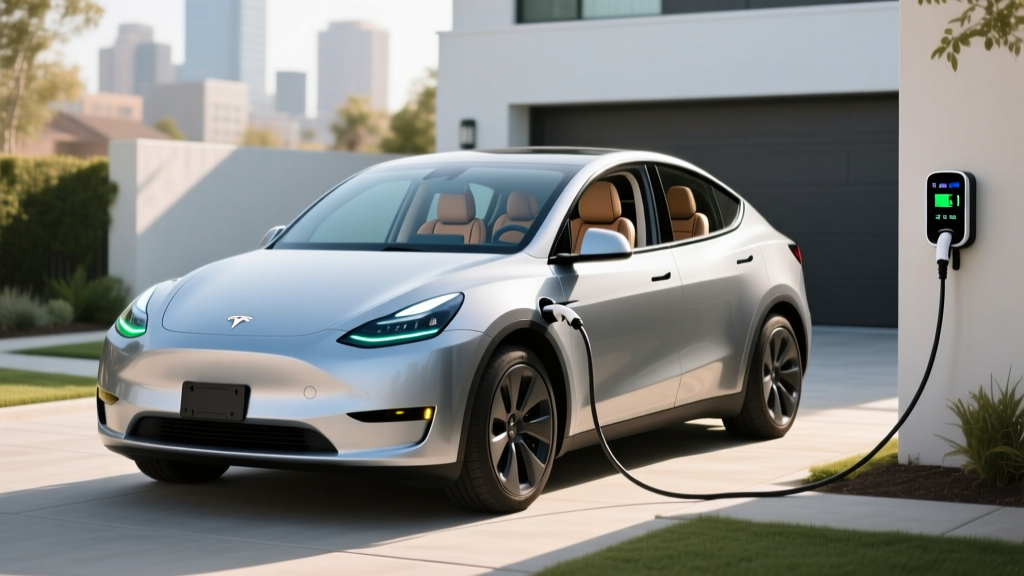
For home charging, a Wall Connector on a 60-amp circuit delivers the full 11.5 kW (48A continuous), adding roughly 44 miles of range per hour. A full overnight charge from 20% to 90% takes approximately 7 hours. Installation costs for a dedicated 240V/60A circuit typically range from $800 to $2,500 depending on panel proximity and local permitting, according to Tesla's certified electrician network.
Third-Row Practicality: Space, Cargo, and Daily Use
The 6-seat configuration replaces the standard three-across second-row bench with two individual captain's chairs and adds a two-seat third row behind. Here's what that means in concrete dimensions:
- Third-row legroom: approximately 26.5 inches — adequate for children up to roughly age 10–12 or adults on short trips under 30 minutes
- Second-row legroom: approximately 40.5 inches — generous, with the captain's chairs offering individual recline and a pass-through to the third row
- Cargo behind third row: approximately 12 cubic feet — enough for a couple of grocery bags or a small stroller, but tight for luggage
- Cargo with third row folded: approximately 34 cubic feet — comparable to the 5-seat model's rear cargo area minus the under-floor sub-trunk
- Max cargo (second and third rows folded): approximately 66 cubic feet — slightly less than the 5-seat Model Y's 72 cubic feet due to the third-row seat hardware
The trade-off is clear: the third row is a compact third row. It's ideal for school runs, playdates, and occasional carpooling with young children. It is not a substitute for a full-size three-row SUV like the Kia EV9 or Rivian R1S when it comes to adult passengers in the back. However, the 6-seat Model Y's footprint remains midsize, making it far easier to park and maneuver in urban environments than those larger competitors.
Notably, the 6-seat Model Y retains the front trunk (frunk), offering approximately 4 cubic feet of additional sealed storage—useful for charging cables, a small cooler, or groceries you want to keep separate from the cabin.
Performance and Driving Dynamics
The dual-motor AWD powertrain produces 384 horsepower and delivers a 4.8-second 0–60 mph time—quick for a family crossover carrying the weight of six potential occupants. The instant torque from the dual motors means highway merging and passing are effortless, even with a full load.
Ride quality in the 2026 Model Y benefits from Tesla's revised suspension tuning introduced with the Juniper refresh, which improved compliance over sharp bumps and reduced road noise. However, the added weight of the 6-seat hardware does make the vehicle feel slightly more ponderous over repeated expansion joints compared to the 5-seat variant. Steering remains precise and well-weighted, and the low center of gravity from the floor-mounted battery pack keeps body roll controlled in corners.
The regenerative braking system offers strong one-pedal driving capability, though Tesla removed the user-adjustable regen setting several model years ago. The default regen level is aggressive enough for most city driving but may require light brake blending at lower speeds.
Pricing, Trims, and Federal Tax Credit Eligibility
The 6-seat Model Y is available exclusively on the Long Range AWD trim. Here's the pricing breakdown for the 2026 model year:
| Item | Cost |
|---|---|
| Long Range AWD (base, 5-seat) | $49,990 |
| 6-Seat Interior Package | $2,500 |
| Base MSRP (6-Seat) | $52,490 |
| Destination Fee | $1,390 |
| Pearl White Multi-Coat Paint | $1,000 |
| 19" Gemini Wheels (standard) | Included |
| FSD (Supervised) License | $8,000 |
| As-Tested Price (with FSD + paint) | $62,880 |
Federal EV Tax Credit (§30D): The Model Y Long Range AWD qualifies for up to $7,500 in federal tax credits under current IRS rules, subject to several conditions that buyers must verify:
- MSRP Cap: The vehicle's MSRP (including options but before destination) must not exceed $80,000 for SUVs. The 6-seat Model Y clears this threshold comfortably.
- Buyer Income Limits: Modified adjusted gross income must not exceed $150,000 (single), $225,000 (head of household), or $300,000 (married filing jointly).
- Battery Sourcing Requirements: The $7,500 credit is split into two $3,750 halves—one for critical minerals sourcing and one for battery component manufacturing. Tesla has worked to localize its supply chain, and the Long Range AWD Model Y has historically qualified for the full $7,500, but sourcing rules tighten annually. Verify current-year eligibility on IRS.gov before purchase.
- Point-of-Sale Transfer: As of 2024, buyers can transfer the credit to the dealer at point of sale, effectively reducing the purchase price by $7,500 upfront rather than waiting to claim it on a tax return.
With the full $7,500 credit applied, the effective base price drops to approximately $44,990—remarkably competitive for a dual-motor AWD electric crossover with six seats.
Tech, Safety, and Driver Assistance
The 2026 Model Y features Tesla's current-generation infotainment system on a 15.4-inch center touchscreen, with a secondary 8-inch rear touchscreen for second-row passengers (a Juniper-generation addition). The interface remains one of the most responsive in the industry, though the absence of physical buttons for climate and mirror adjustment continues to polarize buyers.
Autopilot is standard and includes adaptive cruise control, lane centering, automatic emergency braking, and blind-spot monitoring. Full Self-Driving (Supervised) adds automated lane changes, traffic light and stop sign recognition, and city-street navigation assistance for $8,000 (or $99/month subscription).
Safety ratings remain strong. The Model Y earned a 5-star overall rating from NHTSA and Top Safety Pick+ from IIHS in prior model years, and the 2026 Juniper-generation model maintains these structural and active-safety standards with updated camera and sensor hardware.
Pros, Cons, and How It Stacks Up Against Competitors
Pros
- Access to the Supercharger network — still the most reliable DC fast-charging ecosystem in North America
- Competitive real-world efficiency (27 kWh/100mi) keeps per-mile charging costs low
- Strong performance (4.8s 0–60) even with six seats
- Over-the-air updates continuously add features
- Effective price under $45K after federal tax credit
- Excellent safety ratings (5-star NHTSA)
- Captain's chairs offer premium second-row comfort
Cons
- Third row is very tight — only suitable for small children
- Cargo space behind third row (12 cu ft) is minimal
- No physical buttons — all controls routed through touchscreen
- FSD (Supervised) remains an expensive Level 2 system, not true autonomy
- Insurance costs tend to run 15–25% higher than comparable non-Tesla crossovers
- Slightly reduced range vs. 5-seat Long Range (~10–15 mi penalty)
- Rear visibility is compromised by the sloping roofline and third-row headrests
Decision Framework: Should You Buy the 6-Seat Model Y?
Choose the 6-seat Model Y if: You have 2–3 small children and need occasional extra seating for carpools or grandparents; you prioritize Supercharger access for road trips; you want a midsize footprint that's easy to park; and your budget is in the $45K–$55K effective range after credits.
Look elsewhere if: You regularly carry adults or teens in the third row (consider the Kia EV9 or Rivian R1S); you need maximum cargo volume with all seats in use (the EV9 offers 20+ cu ft behind its third row); or you want physical controls and a more traditional infotainment layout.
Frequently Asked Questions
What is the real-world range of the 6-seat Tesla Model Y?
The EPA rates the 6-seat Model Y Long Range AWD at 305 miles. In real-world highway driving at 70–75 mph, expect approximately 250–275 miles. In cold weather below freezing, plan for 230–260 miles. City driving with regenerative braking can approach or slightly exceed the EPA number.
How fast does the 6-seat Model Y charge?
On a V3 or V4 Tesla Supercharger, the Model Y peaks at 250 kW and charges from 10–80% in approximately 25 minutes. Note that peak rate is only sustained at low state of charge; expect tapering above 50%. At home on a 240V/48A Level 2 charger, it adds roughly 44 miles of range per hour (11.5 kW).
How much does the 6-seat Model Y cost after tax credits?
The base MSRP is $52,490 plus a $1,390 destination fee. With the full $7,500 federal tax credit (subject to income, sourcing, and MSRP eligibility per IRS §30D rules), the effective price drops to approximately $46,380. Adding FSD and premium paint pushes the as-tested price to around $62,880 before credits.
Does the 6-seat Model Y qualify for the federal EV tax credit?
Yes, the Model Y Long Range AWD qualifies for up to $7,500 under current §30D rules, provided the buyer meets income thresholds ($300K joint / $150K single), the vehicle MSRP is under $80,000 (it is), and battery sourcing requirements are met. Because sourcing rules evolve annually, confirm eligibility on IRS.gov or through Tesla at the time of purchase. The credit can be transferred at point of sale for an immediate price reduction.
Is the 6-seat Model Y worth buying vs. the Kia EV9 or Rivian R1S?
It depends on your third-row needs. The Model Y 6-seat is the most affordable and efficient option with a usable (for children) third row, Supercharger access, and a midsize footprint. The Kia EV9 offers a significantly roomier third row and more cargo but starts around $60,000 and charges slower on public networks. The Rivian R1S is the most capable for off-road and towing but starts above $75,000. For budget-conscious families with small children, the Model Y 6-seat is the value leader.
Can adults fit in the Model Y's third row?
Adults can physically sit in the third row, but with only approximately 26.5 inches of legroom, it's uncomfortable for anyone over about 5'4" for more than 20–30 minutes. Think of it as a child-focused space or an emergency seat for short trips—not a full-time adult seat.
What is the battery warranty on the Model Y?
Tesla covers the battery and drive unit for 8 years or 120,000 miles, whichever comes first, with a minimum capacity retention of 70% during that period. Real-world fleet data suggests most Model Y NMC packs retain 88–92% capacity at 100,000 miles, well within the warranty threshold.