Why Your Tesla VIN Matters More Than You Think
Before you buy a Tesla — new or used — the 17-character Vehicle Identification Number (VIN) tells you things the window sticker sometimes obscures: which battery chemistry is under the floor, whether the car has a permanent-magnet or induction front motor, which factory built it, and even the exact production sequence. For EV shoppers comparing two seemingly identical Model 3 or Model Y listings, a Tesla VIN decode is the single fastest way to separate an LFP Standard Range from an NMC Long Range without relying on seller claims.
This guide breaks down exactly how to read a Tesla VIN, what each position means for your real-world range and charging experience, and how those decoded specs translate into daily ownership. We'll use the current 2026 Model 3 and Model Y lineup as our reference, since these represent the vast majority of Tesla VIN lookups.
How to Decode a Tesla VIN: Position-by-Position Breakdown
Every Tesla VIN follows the global ISO 3779 standard with Tesla-specific codes in positions 4 through 8. Here's what each section reveals:
| Position | Meaning | Tesla-Specific Codes |
|---|---|---|
| 1–3 | World Manufacturer Identifier (WMI) | 5YJ = Tesla USA (Fremont/Austin); 7SA = Tesla Austin (post-2022); 7G2 = Tesla Austin (truck/Cybertruck) |
| 4 | Vehicle Model | 3 = Model 3; S = Model S; X = Model X; Y = Model Y; C = Cybertruck |
| 5 | Body Type / Drive Line | Varies: indicates restraint system and body configuration |
| 6 | Body Style / Motor Config | Encodes single vs dual motor, RWD vs AWD |
| 7 | Battery / Fuel Type | Indicates battery chemistry and capacity tier (LFP vs NMC/NCA) |
| 8 | Trim / Equipment Group | Standard Range, Long Range, Performance tier |
| 9 | Check Digit | Calculated verification number (not user-meaningful) |
| 10 | Model Year | S = 2025; T = 2026; R = 2024; P = 2023 |
| 11 | Assembly Plant | F = Fremont, CA; A = Austin, TX; B = Berlin, Germany; S = Shanghai, China |
| 12–17 | Production Sequence | Sequential build number |
The most valuable positions for EV buyers are 7 and 8 (battery chemistry and trim tier) and 6 (motor configuration). A dual-motor Long Range with NMC chemistry will have distinctly different real-world behavior than a single-motor RWD with LFP — and the VIN tells you which one you're getting before you even open the Tesla app.
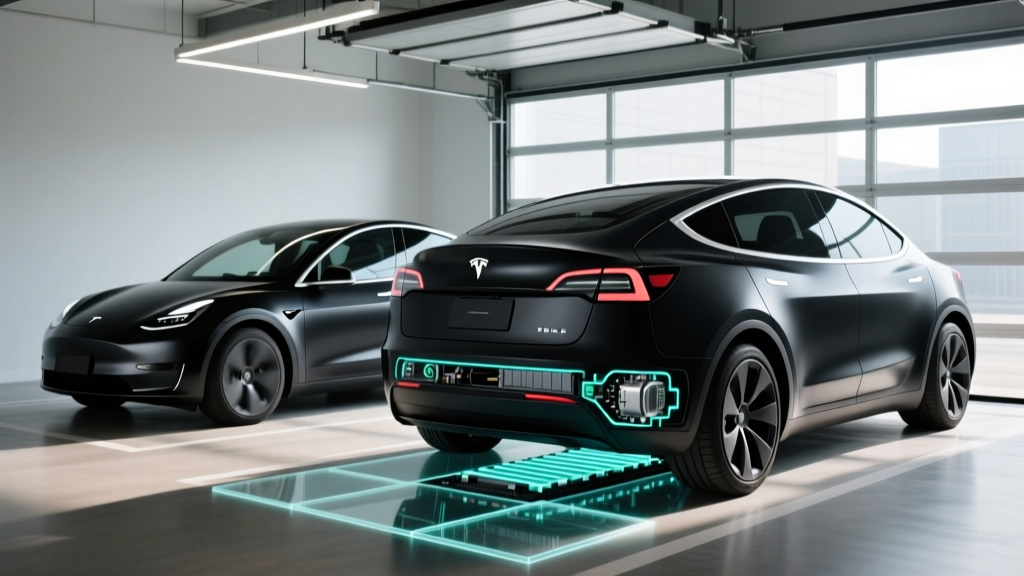
What Your Tesla VIN Tells You About the Battery
Battery chemistry is the single biggest differentiator between Tesla trims, and the VIN encodes it in position 7. Here's why it matters:
| Attribute | LFP (Lithium Iron Phosphate) | NMC/NCA (Nickel-based) |
|---|---|---|
| Energy Density | Lower — smaller total kWh for same pack volume | Higher — more range in same footprint |
| Cycle Life | 3,000+ cycles — excellent longevity | 1,500–2,000 cycles — good but less than LFP |
| Daily Charging | Can charge to 100% daily (Tesla recommends it) | Best kept at 80% daily; 100% for trips only |
| Cold-Weather Range | Greater range loss in freezing temps (~35–40%) | Less cold-weather impact (~25–30% loss) |
| Typical Trims | Model 3 RWD (Standard Range) | Model 3/Y Long Range, Performance |
| Cobalt Content | Zero cobalt | Contains cobalt and nickel |
If your Tesla VIN decode shows an LFP pack, you're getting a battery that's practically built for daily commuting with 100% charges — but you'll want to precondition more aggressively before DC fast charging in cold weather, since LFP cells warm more slowly. NMC packs deliver more range and better cold-weather performance but require more disciplined charging habits for maximum longevity.
Real-World Range by Decoded Tesla Trim (2026 Models)
| Model / Trim | Battery (kWh usable) | Chemistry | EPA Range | Real-World Highway (70–80 mph) | Cold-Weather Estimate (20°F) |
|---|---|---|---|---|---|
| Model 3 RWD | ~57 kWh | LFP | 272 mi | ~230–245 mi | ~170–190 mi |
| Model 3 Long Range AWD | ~75 kWh | NMC | 363 mi | ~295–315 mi | ~250–270 mi |
| Model 3 Performance | ~75 kWh | NMC | 315 mi | ~260–280 mi | ~220–240 mi |
| Model Y RWD | ~57 kWh | LFP | 260 mi | ~220–235 mi | ~160–180 mi |
| Model Y Long Range AWD | ~75 kWh | NMC | 330 mi | ~275–295 mi | ~230–250 mi |
| Model Y Performance | ~75 kWh | NMC | 285 mi | ~240–260 mi | ~200–220 mi |
Highway range drops are driven primarily by aerodynamic drag, which scales with the square of speed. At 80 mph, an EV uses roughly 20–25% more energy per mile than at 65 mph. Cold weather adds resistance from cabin heating and battery thermal management — the heat pump in the current Model 3/Y helps, but it can't eliminate the physics.
Charging Speed: What the VIN-Linked Trim Determines
Your Tesla's battery chemistry and pack size directly dictate how fast it can absorb DC fast charging. Larger NMC packs sustain higher charge rates longer; smaller LFP packs hit their peak sooner and taper earlier.
| Charging Level | Model 3/Y RWD (LFP) | Model 3/Y Long Range & Performance (NMC) |
|---|---|---|
| Level 1 (120V / 12A) | ~1.4 kW — ~4 mi/hr | ~1.4 kW — ~4 mi/hr |
| Level 2 (240V / 48A, home wall connector) | ~11.5 kW — ~37 mi/hr | ~11.5 kW — ~44 mi/hr |
| DC Fast Charge (peak) | 170 kW peak | 250 kW peak |
| DC 10–80% Time | ~28 minutes | ~25 minutes |
| DC Charge Curve Note | Peak holds to ~55% SoC, then tapers sharply | Peak holds to ~50% SoC, gradual taper to 80% |
A critical nuance: the peak kW figure is not the sustained kW figure. A Long Range Model Y might peak at 250 kW but averages closer to 150–170 kW across the full 10–80% session. That's why the 10–80% time is a more honest metric than peak rate alone. Always precondition the battery (the car does this automatically when you navigate to a Supercharger) — arriving at a cold battery can add 10+ minutes to your charge time.
According to Tesla's Supercharger documentation, V4 Supercharger stalls now support up to 350 kW, but current Model 3/Y vehicles are capped at 250 kW by their onboard charge management. Future OTA updates may raise this ceiling slightly, but pack chemistry and thermal limits are the real bottleneck.
Performance, Efficiency & Space: Full Spec Reference
| Spec | Model 3 RWD | Model 3 LR AWD | Model 3 Perf. | Model Y LR AWD | Model Y Perf. |
|---|---|---|---|---|---|
| 0–60 mph | 5.8 sec | 4.2 sec | 2.9 sec | 4.8 sec | 3.5 sec |
| Horsepower | 271 hp | 346 hp | 510 hp | 384 hp | 510 hp |
| Drivetrain | RWD (single motor) | AWD (dual motor) | AWD (dual motor) | AWD (dual motor) | AWD (dual motor) |
| MPGe (combined) | 132 MPGe | 134 MPGe | 113 MPGe | 122 MPGe | 111 MPGe |
| kWh / 100 mi | 25 kWh | 25 kWh | 30 kWh | 28 kWh | 30 kWh |
| Cargo (rear seats up) | 23 cu ft | 23 cu ft | 23 cu ft | 30 cu ft | 30 cu ft |
| Cargo (seats folded) | 64 cu ft | 64 cu ft | 64 cu ft | 72 cu ft | 72 cu ft |
| Rear Legroom | 35.2 in | 35.2 in | 35.2 in | 40.5 in | 40.5 in |
| Towing Capacity | Not rated | Not rated | Not rated | 3,500 lbs | 3,500 lbs |
Efficiency figures sourced from fueleconomy.gov. Note that the Performance trims sacrifice roughly 15–20 MPGe for the additional power and wider tires — a meaningful cost over 15,000 miles of annual driving.
Pricing, Tax Credits & Total Cost After Incentives
| Trim | Base MSRP (2026) | Federal §30D Credit | Effective Price |
|---|---|---|---|
| Model 3 RWD | $38,990 | Up to $7,500 (if eligible) | From $31,490 |
| Model 3 Long Range AWD | $45,240 | Up to $7,500 (if eligible) | From $37,740 |
| Model 3 Performance | $52,990 | Up to $7,500 (if eligible) | From $45,490 |
| Model Y RWD | $39,990 | Up to $7,500 (if eligible) | From $32,490 |
| Model Y Long Range AWD | $44,990 | Up to $7,500 (if eligible) | From $37,490 |
| Model Y Performance | $51,490 | Up to $7,500 (if eligible) | From $43,990 |
Federal tax credit eligibility (§30D) is not automatic. Per IRS guidelines, you must meet all of the following:
- Income caps: Modified AGI ≤ $150,000 (single), $225,000 (head of household), $300,000 (joint)
- MSRP caps: Vehicle MSRP must not exceed $55,000 (sedans like Model 3) or $80,000 (SUVs/trucks like Model Y)
- Battery sourcing: A percentage of critical minerals and battery components must be sourced from the US or free-trade-agreement countries — these thresholds tighten annually
- Point-of-sale transfer: You can transfer the credit to the dealer for an upfront price reduction, or claim it on your tax return (Form 8936)
All current Model 3 and Model Y trims fall under their respective MSRP caps. However, battery-sourcing compliance can change mid-year as supply chains shift. Always verify current eligibility on the IRS clean vehicle page or with your tax professional before relying on the credit in your budget.
Tech, Driver Assistance & Ownership Experience
Tesla's infotainment remains a 15.4-inch center touchscreen running Tesla's proprietary OS — no Apple CarPlay or Android Auto, but the native navigation, media, and vehicle controls are tightly integrated. The 2026 Model 3 (Highland refresh) and Model Y (Juniper refresh) both feature ventilated front seats, ambient lighting, a rear passenger touchscreen (Model 3), and improved cabin noise isolation.
Standard Autopilot includes Traffic-Aware Cruise Control and Autosteer (lane centering). FSD (Supervised), available as a $8,000 option or $99/month subscription, adds automatic lane changes, Navigate on Autopilot (highway interchanges), traffic light and stop sign recognition, and Autopark. Despite the name, FSD still requires full driver supervision.
Warranty coverage:
- Basic Vehicle: 4 years / 50,000 miles
- Battery & Drive Unit: 8 years / 100,000 miles (RWD) or 8 years / 120,000 miles (Long Range / Performance)
- Battery warranty guarantees minimum 70% capacity retention over the warranty period
Pros
- Supercharger network — most reliable DC fast-charging ecosystem in the US
- Over-the-air updates continuously add features
- Class-leading efficiency (kWh/100mi) in most trims
- Strong resale value relative to other EVs
- LFP option allows daily 100% charging without degradation worry
- Minimal maintenance — no oil, filters, or spark plugs
Cons
- No Apple CarPlay or Android Auto
- FSD (Supervised) costs extra and still requires full attention
- LFP trims suffer significant cold-weather range loss
- Repair costs can be high — limited third-party body shop network
- Ride quality on rough roads can be firm (improved in Highland/Juniper)
- Insurance premiums tend to run 15–30% above comparable ICE sedans/SUVs
Who Should Buy a Tesla (and Which Trim)?
Choose Model 3 RWD (LFP) if: You commute under 50 miles daily, have reliable home Level 2 charging, live in a mild climate, and want the lowest entry price with the longest battery cycle life. Charge to 100% every night and forget about it.
Choose Model 3 Long Range AWD if: You take regular road trips over 250 miles, live in a cold-weather state, or want dual-motor traction without paying for Performance acceleration. The NMC pack and 363-mile EPA range give you the widest real-world envelope.
Choose Model Y Long Range AWD if: You need cargo space for a family (30 cu ft behind the rear seats, 72 cu ft folded), want 3,500-lb towing capacity, or prefer the higher seating position. This is the best-selling EV in the US for good reason.
Choose Performance trims if: You prioritize acceleration (2.9–3.5 sec 0–60) and track-capable braking over maximum range, and you're willing to accept 15–20% lower efficiency for the privilege.
Frequently Asked Questions
Can I look up a Tesla VIN for free?
Yes. Tesla doesn't offer a dedicated public VIN decoder, but the NHTSA provides a free VIN decoder at vpic.nhtsa.dot.gov/decoder that works for any US-market vehicle. Third-party sites and Tesla forums also maintain community-maintained VIN decoders that map Tesla-specific positions to battery and motor configurations.
Does the VIN tell me if a used Tesla has Autopilot or FSD?
No. Software features like Autopilot and FSD (Supervised) are tied to the vehicle's software license, not the VIN. When buying used, verify FSD transferability in the Tesla app or with Tesla support — FSD purchased outright typically transfers with the car, but subscription-based FSD does not.
What's the real-world range of a Tesla Model 3 Long Range?
The EPA rates it at 363 miles. In real-world highway driving at 70–80 mph in moderate temperatures, expect 295–315 miles. In freezing conditions (20°F), that drops to roughly 250–270 miles with the heat pump active. Preconditioning and seat heaters help mitigate cold-weather losses.
How fast does a Tesla charge at home?
On a Level 2 Tesla Wall Connector (240V / 48A), a Model 3 or Model Y adds approximately 37–44 miles of range per hour of charging, depending on trim. A full overnight charge (8–10 hours) will replenish any trim from near-empty to full. Installation costs typically range from $500 to $2,000 depending on panel proximity and local permitting.
Does the Tesla Model 3 or Model Y qualify for the $7,500 federal tax credit?
Both vehicles fall under the §30D MSRP caps ($55,000 for sedans, $80,000 for SUVs). Eligibility depends on your income, the vehicle's battery-sourcing compliance in the current year, and proper filing. The credit can be transferred at point of sale for an immediate price reduction. Always confirm current sourcing compliance with your dealer or at the IRS clean vehicle page before purchase.
Is Tesla still worth buying vs. competitors in 2026?
Tesla's advantages remain the Supercharger network (now open to other brands via NACS adapters, but still most seamless for Tesla owners), class-leading efficiency, and strong software integration. Competitors like the Hyundai Ioniq 6, BMW i4, and Ford Mustang Mach-E have closed the gap on interior quality and ride comfort. If Supercharger access and OTA updates matter to you, Tesla still leads. If interior luxury or CarPlay support are priorities, cross-shop carefully.