The Truth About a Tesla Veteran Discount in 2026
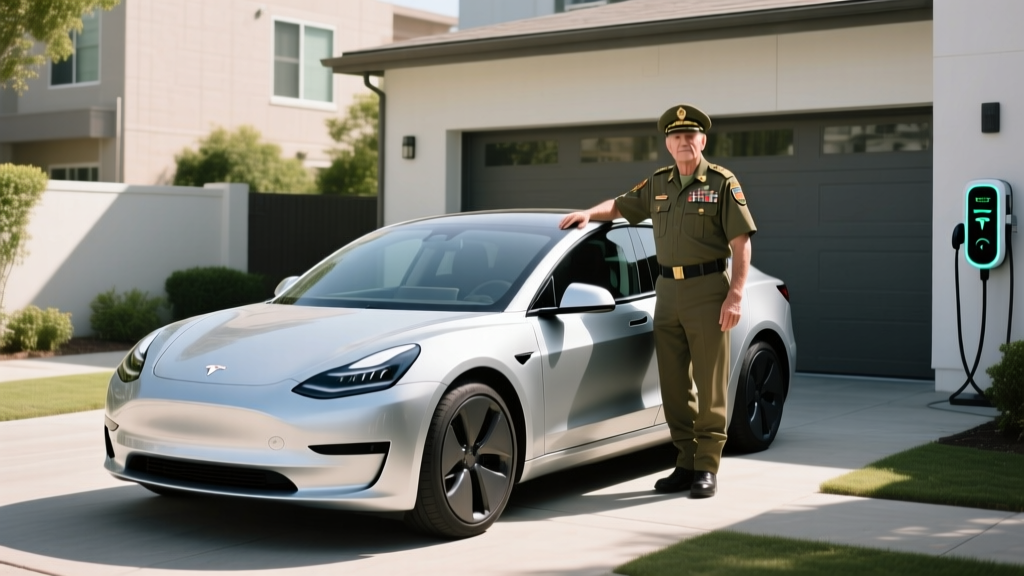
If you're a current service member, veteran, or military retiree researching your next electric vehicle, you've likely searched for a Tesla veteran discount — and found conflicting or outdated information. Here's the definitive answer: Tesla does not offer a dedicated military or veteran discount on new vehicle purchases in 2026. Unlike Ford, GM, or BMW, Tesla has never maintained a formal military appreciation program, and there is no hidden promo code or referral bonus exclusive to service members.
That doesn't mean veterans and active-duty buyers are stuck paying full sticker. Between the federal §30D EV tax credit, state-level incentives, military-specific lending programs, and Tesla's occasional inventory price adjustments, there are legitimate ways to reduce your out-of-pocket cost. This guide covers what's actually available, what's not, and how a 2026 Tesla Model Y Long Range AWD — the brand's best-selling model — pencils out for a military buyer.
2026 Tesla Model Y Long Range AWD: Full Spec Breakdown
| Specification | 2026 Model Y Long Range AWD |
|---|---|
| EPA Estimated Range | 320 miles |
| Battery Capacity (Usable) | 75 kWh (NMC chemistry) |
| Drivetrain | Dual-Motor AWD |
| Horsepower | 384 hp (combined) |
| 0–60 mph | 4.8 seconds |
| Peak DC Fast Charge | 250 kW (Supercharger V3/V4) |
| 10–80% DC Fast Charge | ~27 minutes |
| Level 2 Home Charge (48A) | ~44 miles/hour (11.5 kW) |
| Efficiency | 122 MPGe / 28 kWh/100 mi |
| Cargo Volume (rear seats up/down) | 30.2 / 72.0 cu ft |
| Rear Legroom | 37.5 inches |
| Base MSRP (2026) | $44,990 |
| Battery Warranty | 8 years / 120,000 miles (70% capacity retention) |
| Basic Vehicle Warranty | 4 years / 50,000 miles |
The 2026 Model Y Long Range continues to use an NMC (nickel manganese cobalt) battery pack, which offers higher energy density than the LFP (lithium iron phosphate) chemistry found in the base RWD model. This translates to roughly 50 additional miles of EPA range and better cold-weather performance, though LFP batteries tolerate frequent 100% charging with less degradation concern.
Charging Speed: Supercharger Network vs. Home Level 2
| Charging Method | Power (kW) | Miles Added per Hour | Notes |
|---|---|---|---|
| Level 1 (120V standard outlet) | ~1.4 kW | ~4–5 mi/hr | Emergency/trickle only |
| Level 2 (240V, 48A Wall Connector) | 11.5 kW | ~44 mi/hr | Full charge in ~7 hours |
| DC Fast (Tesla Supercharger V3) | Up to 250 kW | ~175 mi in 15 min | Peak rate, tapers above 50% SoC |
| DC Fast (CCS adapter, third-party) | Up to 150–175 kW | Varies by station | Requires Tesla CCS adapter ($175) |
The Model Y's charge curve peaks at 250 kW only when the battery state of charge is below 40% and the pack is preconditioned (navigate to a Supercharger and the car warms the battery automatically). Above 50% SoC, the rate drops to roughly 150 kW, and above 80% it falls below 50 kW. This is why Tesla quotes 10–80% in 27 minutes — the final 20% can add another 25–30 minutes and is rarely worth the wait on a road trip.
For home charging, Tesla's Wall Connector at $475 delivers 11.5 kW on a 60-amp circuit (48A continuous). Most military families with a 200-amp home panel can accommodate this without a panel upgrade, but budget $800–$1,500 for professional installation including conduit run, permit, and the breaker. If your panel is older or already near capacity, a 200A upgrade can add $2,000–$4,000.
Tesla Pricing, Military Financing, and the Federal Tax Credit
While there is no Tesla veteran discount, the financial picture for military buyers is more nuanced than the absence of a manufacturer rebate. Here's what actually moves the needle on price:
| Cost Factor | Amount |
|---|---|
| 2026 Model Y Long Range AWD MSRP | $44,990 |
| Destination Fee | $1,390 |
| Federal §30D Tax Credit (if eligible) | Up to $7,500 |
| Point-of-Sale Transfer (effective Jan 2024+) | Applied at delivery, reduces cash due |
| Estimated Price After Max Credit | ~$38,880 |
The IRS §30D clean vehicle credit remains the single largest price reduction available. For the 2026 Model Y Long Range AWD, eligibility depends on three factors that trip up many buyers:
- MSRP Cap: SUVs must be at or below $80,000. The Model Y qualifies at $44,990.
- Income Cap: Modified AGI must not exceed $150,000 (single), $225,000 (head of household), or $300,000 (joint). Military BAH and certain allowances are typically excluded from AGI, which can help active-duty members qualify even at higher pay grades.
- Battery Sourcing: Critical minerals and battery component requirements tighten annually. Tesla's North American sourcing has improved, but confirm the VIN qualifies on fueleconomy.gov before committing.
Since January 2024, buyers can transfer the credit to the dealer as a point-of-sale reduction, meaning the $7,500 comes off your purchase price at delivery rather than waiting until tax filing. Tesla supports this transfer in the checkout flow.
Military-specific financing: While Tesla doesn't offer military pricing, several lenders cater to service members. Navy Federal Credit Union, USAA, and PenFed offer competitive EV auto loan rates, and some provide slight rate reductions for military members. The VA does not directly guarantee auto loans the way it guarantees mortgages, but USAA's EV loan program occasionally features rate promotions.
Performance, Tech, and Daily Ownership Reality
The 2026 Model Y Long Range AWD delivers 384 hp from its dual-motor setup, hitting 0–60 mph in 4.8 seconds — quick enough for confident highway merging and passing, though the Performance trim ($48,990) drops that to 3.5 seconds for enthusiasts willing to sacrifice roughly 15 miles of range.
Inside, the minimalist cabin centers on a 15.4-inch touchscreen handling all vehicle functions, navigation, media, and climate. There are no physical gauges — speed, range, and navigation appear on the screen, which takes roughly two weeks of daily driving to internalize. The rear-seat entertainment screen (8-inch) is standard, and the ventilated front seats and power-folding second row are meaningful upgrades from the pre-refresh model.
Autopilot is standard and includes Traffic-Aware Cruise Control and Autosteer. Full Self-Driving (Supervised) remains a $8,000 option (or $99/month subscription) and is classified as SAE Level 2 — meaning the driver must remain fully attentive with hands available to take over immediately. It is not autonomous driving. FSD Supervised handles most highway scenarios competently and has improved in urban environments, but it still requires active monitoring and will not navigate construction zones, unmapped roads, or severe weather without intervention.
Notable drawbacks include the absence of Apple CarPlay/Android Auto (Tesla uses its own infotainment exclusively), limited rear visibility due to the sloping roofline, and panel-gap consistency that, while improved, still varies by Fremont vs. Austin build origin.
Pros and Cons at a Glance
- 320-mile EPA range covers most commutes and road trips without mid-day charging
- Supercharger network remains the most reliable DC fast-charging ecosystem in the US
- 72 cu ft cargo space with seats folded rivals mid-size gas SUVs
- Over-the-air updates continuously add features without dealer visits
- Low operating cost: ~$0.04–$0.08/mile on home electricity vs. ~$0.12–$0.15/mile for gas equivalent
- No dedicated Tesla veteran discount or military appreciation program
- No Apple CarPlay or Android Auto integration
- Insurance premiums run 15–25% higher than comparable gas SUVs (national average)
- FSD Supervised ($8,000) remains Level 2 — not a hands-off system
- Repair wait times for body/paint damage can stretch weeks due to parts availability
Who the 2026 Model Y Suits Best
Buy this if: You're a military family with home charging access, a combined household income under the §30D cap, and a daily commute under 80 miles round-trip. The 320-mile range eliminates range anxiety for weekend trips, the Supercharger network handles cross-country travel, and the point-of-sale tax credit brings the effective price below $40,000. The cargo space handles two car seats plus a week's groceries, and the dual-motor AWD provides confidence in rain or light snow.
Look elsewhere if: You need a third row (consider the Model X or a Kia EV9), you require Apple CarPlay for your workflow, you lack reliable home or workplace charging, or you're stationed in a region with limited Supercharger coverage (parts of the rural Mountain West and Deep South still have gaps). If budget is the primary driver and you can accept 260 miles of range, the Model Y RWD with its LFP battery starts at $39,990 and may be a smarter financial choice.
Frequently Asked Questions
Does Tesla offer any military or veteran discount in 2026?
No. Tesla does not have a military appreciation program, veteran discount, or active-duty pricing. The most significant price reductions come from the federal §30D tax credit (up to $7,500), state incentives, and competitive financing through military-focused lenders like USAA or Navy Federal.
What is the real-world range of the 2026 Model Y Long Range?
The EPA estimates 320 miles. In real-world highway driving at 70–75 mph, expect 260–285 miles. In freezing temperatures with cabin heat, that drops to 220–250 miles. City driving with regenerative braking can match or slightly exceed the EPA figure.
How fast does the Model Y charge at home and on the road?
On a Tesla Wall Connector (Level 2, 11.5 kW), you gain roughly 44 miles of range per hour, filling the battery in about 7 hours. On a V3 Supercharger (250 kW peak), you can add 175 miles in 15 minutes, with a 10–80% charge taking approximately 27 minutes.
Does the 2026 Model Y qualify for the $7,500 federal EV tax credit?
It can, but eligibility depends on your income (AGI under $300,000 for joint filers), the vehicle's MSRP (under $80,000 for SUVs — it qualifies), and battery component/critical mineral sourcing requirements. Verify your specific VIN on fueleconomy.gov and confirm with a tax professional before relying on the credit.
Is the Model Y worth it compared to the Ford Mustang Mach-E or Hyundai Ioniq 5?
The Model Y wins on Supercharger network access, cargo volume, and software ecosystem. The Ioniq 5 offers faster 800V charging (10–80% in 18 minutes) and a more conventional interior. The Mach-E provides a more traditional driving feel and Apple CarPlay. If charging infrastructure reliability is your top priority, Tesla's network advantage remains significant.
Can I use a VA loan to buy a Tesla?
No. VA loans are guaranteed mortgages for real estate and cannot be used for vehicle purchases. However, military-focused credit unions (Navy Federal, USAA, PenFed) offer competitive EV auto loans, and some provide rate discounts for service members.