Quick Answer: As of early 2026, Honda does not sell a dedicated electric sedan in the U.S. The Honda Prologue is a two-row electric SUV (EPA range up to 308 miles, starting at $47,400), while the upcoming Honda Saloon concept previews a dedicated EV sedan expected for the 2027 model year. If you need a Honda sedan with electrification today, the Accord Hybrid (48 MPG combined) is the closest option. If a Honda-branded electric sedan is a must-wait, plan for late 2026 or 2027 availability.
The Current State of Honda's Electric Sedan Plans
Honda's path to a battery-electric sedan has been anything but linear. The company initially partnered with General Motors to use the Ultium platform for both the Prologue SUV and a planned Acura ZDX. That partnership produced vehicles, but Honda has since pivoted toward its own dedicated EV architecture — the "Honda e:Architecture" — first previewed by the Honda Saloon concept at the 2024 CES show and subsequently confirmed for production.
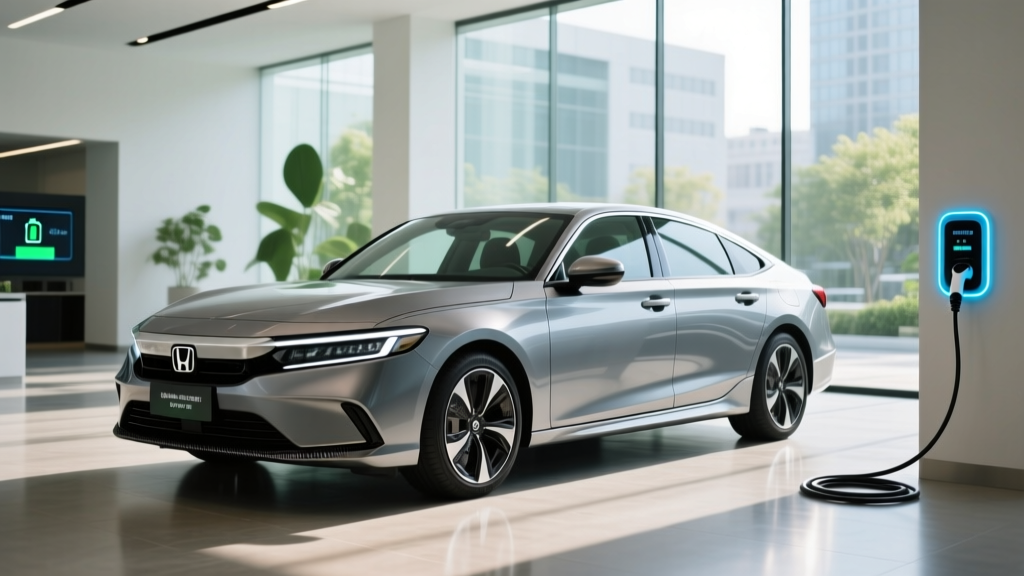
The Saloon is designed as a low-slung, rear-wheel-drive (with available AWD) electric sedan targeting the midsize segment — think Accord proportions with a battery-electric powertrain. Honda has confirmed the production version will ride on the new architecture, but as of this writing, final EPA range, battery capacity, pricing, and an on-sale date remain preliminary. Industry estimates place the production Saloon's debut in late 2026 as a 2027 model.
Meanwhile, the Prologue — built on GM's Ultium platform at the Spring Hill, Tennessee plant — remains Honda's only battery-electric vehicle (BEV) available to U.S. buyers. It's an SUV, not a sedan, but it offers a useful window into Honda's current EV execution, charging behavior, and ownership costs.
Honda Prologue: The Closest EV Honda Sells Today
Since many shoppers searching for a "Honda electric sedan" end up cross-shopping the Prologue, here are the exact figures you need to evaluate it.
| Spec | FWD EX | AWD EX / Touring | Elite AWD |
|---|---|---|---|
| EPA Range | 308 mi | 296 mi | 281 mi |
| Battery (usable) | 85 kWh, NMC lithium-ion | ||
| Motor Output | 212 hp / 236 lb-ft | 288 hp / 333 lb-ft | |
| 0–60 mph | ~7.8 sec | ~6.0 sec | |
| Peak DC Fast Charge | 150 kW (CCS1) | ||
| 10–80% DC Charge Time | ~35 minutes | ||
| Level 2 Rate (AC) | 11.5 kW (~32 mi/hr) | ||
| MPGe (combined) | 114 MPGe | 108 MPGe | 102 MPGe |
| Base MSRP | $47,400 | $50,400 | $57,400 |
| Battery Warranty | 8 years / 100,000 miles | ||
Real-World Range Reality: The Prologue FWD's EPA estimate is 308 miles. In mixed highway driving at 70–75 mph, expect ~255–275 miles. In freezing temperatures (below 32°F), that drops to roughly 220–245 miles due to cabin heating demands and increased battery resistance. Honda does not currently include a heat pump on the Prologue, which amplifies cold-weather range loss compared to competitors like the Hyundai Ioniq 5.
The Prologue's 150 kW peak DC charge rate is serviceable but trails the 200+ kW rates found on Hyundai/Kia E-GMP vehicles and Tesla's Supercharger network. The charge curve tapers noticeably above 80% state of charge (SoC) — a 10–80% session takes about 35 minutes at a properly rated CCS station, but topping from 80–100% can add another 25–30 minutes. Plan road-trip stops around the 10–80% window.
EV vs. Hybrid: Honda Accord Hybrid Comparison
For sedan-minded buyers, the Accord Hybrid is the immediate alternative. Here's how the ownership math stacks up against the Prologue and a representative electric sedan competitor (the Tesla Model 3 RWD, since Honda lacks a direct BEV sedan).
| Metric | Prologue FWD (BEV) | Accord Hybrid (HEV) | Model 3 RWD (BEV) |
|---|---|---|---|
| EPA Efficiency | 114 MPGe | 48 MPG combined | 132 MPGe |
| Annual "Fuel" Cost | ~$620 (home L2) | ~$1,050 (gas) | ~$540 (home L2) |
| Annual Maintenance | ~$250 | ~$550 | ~$250 |
| Insurance (avg.) | ~$2,100 | ~$1,500 | ~$2,000 |
| Base MSRP (2026) | $47,400 | $34,000 | $40,240 |
| Federal Tax Credit | Up to $7,500* | None | Up to $7,500* |
| Effective Price After Credit | ~$39,900 | $34,000 | ~$32,740 |
*§30D tax credit eligibility depends on buyer income caps ($150K single / $300K joint), vehicle MSRP caps ($80K SUV / $55K sedan), and battery critical-mineral sourcing requirements. Verify current eligibility at IRS.gov. Credit may be applied at point of sale.
The Accord Hybrid wins on upfront cost and flexibility — no charging infrastructure required, and its 48 MPG combined (fueleconomy.gov) means roughly $1,050/year in gas at $3.20/gallon. The Prologue costs more initially but saves approximately $680/year in fuel and maintenance, narrowing the gap over a 5-year ownership window. The break-even point versus the Accord Hybrid lands around 4.5 to 5.5 years depending on local electricity rates and driving patterns.
Real Costs of Honda EV Ownership
| Category | Prologue FWD | Accord Hybrid |
|---|---|---|
| Purchase (after credit) | $39,900 | $34,000 |
| Fuel / Electricity (5 yr) | $3,100 | $5,250 |
| Maintenance (5 yr) | $1,250 | $2,750 |
| Insurance (5 yr) | $10,500 | $7,500 |
| Home Charger Install | $800–$2,000 | $0 |
| Estimated Depreciation | $16,000 | $11,500 |
| Total (5 yr) | $71,550–$72,750 | $61,000 |
Key ownership considerations often overlooked:
- Home charging is critical. Without Level 2 home charging, the Prologue's convenience advantage erodes. Public DC fast charging costs $0.30–$0.48/kWh nationally, pushing annual "fuel" costs to $1,200–$1,600 — eliminating the cost advantage over gas. Confirm your residence supports a 240V/40A circuit before committing.
- Insurance premiums run 25–40% higher on the Prologue versus the Accord Hybrid, driven by higher repair costs and battery replacement risk. Get a quote before signing.
- Depreciation remains uncertain. EV resale values have softened since 2023 as price wars and rapid tech advancement compressed used-EV pricing. Honda's brand strength helps, but plan for steeper depreciation than a mainstream hybrid.
- Tire costs are higher. The Prologue's ~4,600-lb curb weight accelerates tire wear by roughly 20–30% versus the Accord. Budget for replacement rubber at 25,000–35,000 miles.
What First-Time Honda EV Buyers Need to Know
| Myth | Fact |
|---|---|
| "The Prologue qualifies for the full $7,500 credit automatically." | Credit eligibility depends on your income, the vehicle's battery sourcing, and MSRP cap compliance. Sourcing requirements tighten annually. Check IRS §30D rules and confirm with your dealer at purchase. |
| "308 miles of range means I'll get 308 miles." | EPA tests include low-speed city cycles. Sustained 75 mph highway driving yields ~255–275 miles. Cold weather (below 32°F) can drop range to ~220–245 miles. |
| "DC fast charging is always 150 kW." | 150 kW is the peak rate, sustained only between ~10–50% SoC at an adequately rated CCS station. Above 80%, charging slows dramatically to protect battery health. Average session power is closer to 90–110 kW. |
| "I don't need a home charger — public stations are everywhere." | The U.S. has roughly 180,000 public charging ports, but reliability varies. Electrify America, EVgo, and ChargePoint stations experience 10–20% downtime in some markets. Home L2 charging is dramatically cheaper ($0.12–$0.18/kWh vs. $0.35+/kWh public). |
| "EV batteries need replacing every few years." | Honda warrants the Prologue's battery at 8 years/100,000 miles for 70% capacity retention. Real-world NMC degradation data shows ~10–15% capacity loss over 8 years/150,000 miles for liquid-cooled packs. Full replacements are rare and cost $12,000–$18,000 if out of warranty. |
Charging Infrastructure Reality Check
The Prologue uses the CCS1 connector for DC fast charging and J1772 for Level 2 AC. Honda does not currently include a NACS adapter with the Prologue, though GM has signaled future adapter availability for Ultium-based vehicles. If you regularly drive corridors dominated by Tesla Superchargers (now opening to non-Tesla vehicles via NACS), verify adapter compatibility before relying on that network.
For home charging, budget $800–$2,000 for a quality Level 2 wallbox (Emporia, ChargePoint, or Wallbox) plus electrician labor. If your panel is near capacity (common in older homes with 100A service), a panel upgrade to 200A adds $1,500–$3,500. A licensed electrician should assess your panel before purchase.
Honda Saloon: What We Know About the Upcoming Electric Sedan
The production Honda Saloon is expected to be the first vehicle on Honda's dedicated e:Architecture, featuring:
- Targeted range: Honda has referenced "over 300 miles" for the e:Architecture platform — expect an EPA estimate in the 300–350 mile range for the sedan variant.
- Battery chemistry: Likely NMC for energy density, though Honda has invested in LFP partnerships for future lower-cost variants.
- Charging: Honda has committed to 350 kW-capable architecture for future EVs, though sustained rates and 10–80% times remain unconfirmed.
- Connector: Honda has announced a transition to NACS for North American models — the Saloon is expected to ship with a native NACS charge port.
- Pricing: Unannounced. Industry analysts project a starting MSRP of $45,000–$55,000 to compete with the Tesla Model 3, Hyundai Ioniq 6, and BMW i4.
- ADAS: Next-generation Honda Sensing with expanded highway assist capabilities — expected to remain SAE Level 2 (driver must remain engaged and supervise at all times).
All Saloon specifications above are preliminary and subject to change. Honda has not published final EPA or production specs as of this writing.
Decision Framework: Which Honda Electrified Vehicle Is Right for You?
Choose the Honda Prologue if:
- You want a Honda-branded BEV now and need SUV cargo space
- You have reliable Level 2 home charging
- Your daily commute is under 80 miles round-trip (covers 95%+ of driving within 308-mi range)
- You qualify for the §30D tax credit, reducing the effective price below $40K
Choose the Honda Accord Hybrid if:
- You cannot install home charging (apartment, street parking, landlord restrictions)
- You frequently drive 400+ mile trips where charging stops add unwanted time
- You want a lower purchase price ($34K vs. $47K) and proven long-term reliability
- You live in a region with extreme cold or limited public DC charging infrastructure
Wait for the Honda Saloon if:
- You specifically want a Honda electric sedan and can defer purchase to late 2026 or 2027
- You want native NACS charging and next-gen 350 kW-capable architecture
- You prefer sedan driving dynamics and styling over an SUV
Frequently Asked Questions
Does Honda make an electric sedan in 2026?
No. Honda's only current U.S. BEV is the Prologue, an SUV. The Honda Saloon electric sedan concept previews a production model expected for the 2027 model year, but final specs and pricing have not been released.
How much does it cost to charge the Honda Prologue at home?
At the U.S. average residential electricity rate of ~$0.16/kWh, a full 85 kWh charge costs about $13.60 and provides roughly 280–300 real-world miles. That's approximately $0.045 per mile — compared to $0.07–$0.08 per mile for the Accord Hybrid at current gas prices.
Does the Honda Prologue qualify for the $7,500 federal tax credit?
It may, but eligibility depends on multiple factors: your modified adjusted gross income (under $150K single / $300K joint filers), the vehicle's battery critical-mineral and component sourcing (requirements that tighten each year), and the MSRP cap ($80,000 for SUVs). The Prologue's MSRP falls under the cap. Verify your personal eligibility at IRS.gov or with a tax professional before relying on the credit.
Is the Honda Prologue built by GM?
Yes. The Prologue is built on General Motors' Ultium platform at the Spring Hill, Tennessee assembly plant. It shares its underlying architecture with the Chevrolet Blazer EV and Cadillac Lyriq, though Honda tuned the suspension, interior, and software independently.
Will the Honda Saloon support Tesla Superchargers?
Honda has announced a transition to the NACS connector for future North American EVs. The production Saloon is expected to feature a native NACS port, enabling direct access to Tesla's Supercharger network without an adapter. This is unconfirmed until Honda publishes final production specifications.
What is the Prologue's real-world highway range?
In 70–75 mph highway driving in moderate temperatures (60–80°F), expect approximately 255–275 miles from the FWD model. In cold weather (below 32°F), range drops to roughly 220–245 miles. These figures assume minimal preconditioning; using the Prologue's battery preconditioning feature (if equipped) before DC fast charging can help recover some efficiency.