The Short Answer: Yes, Leave It Plugged In
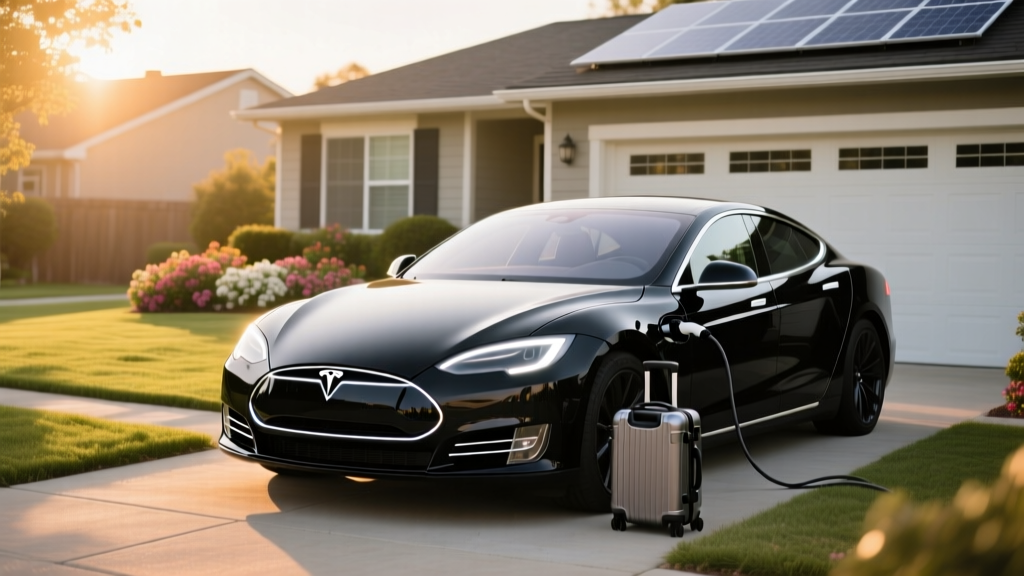
If you're asking should I leave my Tesla plugged in while on vacation, the answer from Tesla's own engineering guidance and years of owner data is a clear yes — but with specific settings dialed in first. Leaving your Tesla connected to a Level 2 home charger is the single best way to protect your high-voltage battery from vampire drain, phantom load, and deep-discharge damage during extended absences.
But simply plugging in isn't enough. You need to configure your charge limit, disable power-hungry features like Sentry Mode and Cabin Overheat Protection, and understand how your specific battery chemistry (LFP vs. NMC) changes the ideal storage state of charge. This guide walks through the exact settings, the real numbers behind vampire drain, and how each current Tesla model handles extended parking — using 2026 Model 3 and Model Y specifications as our reference platform.
Understanding Vampire Drain: What Happens When Your Tesla Sits
Teslas are never truly "off." Even parked, the vehicle's computers periodically wake to check connectivity, monitor battery temperature, and maintain cellular and Bluetooth links. This background activity — called vampire drain or phantom drain — consumes energy from your high-voltage pack.
Here's what real-world data shows for drain rates across different configurations:
- Minimal drain (everything off, no apps checking): ~1-2 miles of range per day
- Typical drain (cellular connected, Tesla app polling): ~2-4 miles per day
- Sentry Mode active: ~1 mile of range per hour, or 24+ miles per day
- Cabin Overheat Protection on: Variable, can add 5-15 miles/day in hot climates
- Third-party apps polling via API: Can prevent sleep entirely, adding 10-20+ miles/day
Over a two-week vacation with Sentry Mode left on, you could return to a car that's burned through 300+ miles of range — potentially leaving a Standard Range model near zero. That's not just inconvenient; deep discharge below 5% state of charge (SoC) causes real, measurable lithium plating and capacity loss in both LFP and NMC cells.
2026 Tesla Model 3 & Model Y: Battery, Range, and Charging Specs
To understand why leaving your Tesla plugged in matters, you need to know exactly what's under the floor. Here are the key specifications for Tesla's two highest-volume vehicles as of the 2026 model year:
| Spec | Model 3 Long Range AWD | Model 3 RWD | Model Y Long Range AWD |
|---|---|---|---|
| EPA Range | 363 mi | 272 mi | 320 mi |
| Battery Capacity (usable) | ~75 kWh (NMC) | ~57.5 kWh (LFP) | ~75 kWh (NMC) |
| Battery Chemistry | NMC (Nickel Manganese Cobalt) | LFP (Lithium Iron Phosphate) | NMC |
| Efficiency | 132 MPGe / 25 kWh/100mi | 132 MPGe / 25 kWh/100mi | 122 MPGe / 28 kWh/100mi |
| Max DC Fast Charge | 250 kW (peak) | 170 kW (peak) | 250 kW (peak) |
| 10-80% DC Fast Charge | ~25 min | ~30 min | ~27 min |
| Level 2 Home Charge Rate | 11.5 kW (~44 mi/hr) | 7.6 kW (~30 mi/hr) | 11.5 kW (~44 mi/hr) |
| 0-60 mph | 4.2 sec | 5.8 sec | 4.8 sec |
| Horsepower | 346 hp | 271 hp | 384 hp |
| Drivetrain | Dual Motor AWD | Rear-Wheel Drive | Dual Motor AWD |
| Cargo Volume | 23 cu ft (rear) + 3.1 cu ft frunk | 23 cu ft + 3.1 cu ft frunk | 30 cu ft (rear seats up) + 4.1 cu ft frunk |
| Rear Legroom | 35.2 in | 35.2 in | 40.5 in |
Sources: fueleconomy.gov, Tesla specifications
The LFP vs. NMC Factor: Why Chemistry Changes Your Vacation Settings
This is where most generic Tesla vacation guides fall short. Your ideal plugged-in state of charge depends entirely on which battery chemistry your car uses.
| Factor | LFP (Model 3 RWD) | NMC (Model 3 LR, Model Y LR) |
|---|---|---|
| Ideal Storage SoC | 100% — Tesla recommends charging to 100% at least weekly | 50-60% for extended storage |
| Calendar Degradation at 100% | Minimal — LFP tolerates full charge well | Accelerated — sustained 100% speeds capacity loss |
| Cold Tolerance | Moderate — slower cold-weather charging without preconditioning | Better low-temp performance, still benefits from preconditioning |
| Energy Density | Lower (heavier pack for same range) | Higher (lighter, more range per kWh) |
| Cycle Life | 3,000-5,000+ cycles to 80% SoH | 1,000-2,000 cycles to 80% SoH |
What this means for your vacation: If you drive a Model 3 RWD with an LFP battery, set your charge limit to 100% and leave it plugged in. The BMS (Battery Management System) will maintain it without degradation concern. If you drive a Long Range or any NMC-equipped Tesla, set the charge limit to 50-60% before you leave. The car will maintain that level, topping up only to compensate for vampire drain — keeping the pack in its lowest-stress state.
Exact Settings to Configure Before You Leave
Here's the precise checklist to run through the night before your trip:
- Set charge limit appropriately: 100% for LFP, 50-60% for NMC. Do this via the Tesla app or in-car touchscreen under Charging settings.
- Disable Sentry Mode: This is the single biggest vampire drain culprit. Go to Controls > Safety > Sentry Mode and turn it off. If you want security footage, consider a dedicated dashcam with its own battery instead.
- Turn off Cabin Overheat Protection: Unless you're parking in extreme heat (110°F+) and have pets or sensitive items inside, disable this. It can fire the A/C compressor repeatedly, draining significant energy.
- Disable Scheduled Departure and preconditioning: If you have a daily precondition schedule set, it will fire every morning while you're gone, wasting energy heating or cooling a car nobody's driving.
- Close all third-party apps: Apps like TeslaFi, Stats, or TezLab poll the car's API and can prevent it from entering sleep mode. Log out or disable API access before leaving.
- Enable "Energy Saving" mode (if available): In some firmware versions, this reduces the frequency of connectivity checks.
- Plug into your Level 2 home charger: A 240V Level 2 connection provides more than enough power to offset vampire drain. Even a standard 120V Level 1 outlet (adding ~3-5 miles of range per hour) is sufficient for countering typical drain over days.
What If You Can't Plug In? Unplugged Storage Guidelines
Sometimes you're parking at an airport, a friend's house, or a garage without EV charging access. Here's how to manage an unplugged Tesla for extended periods:
- Leave with 60-70% charge (NMC) or 100% (LFP): This gives you a buffer against drain while avoiding high-SoC stress for NMC packs.
- Expect 1-3% SoC loss per week with all power-saving measures in place. A car parked at 60% should hold above 50% for a month.
- Never leave an NMC Tesla unplugged at 100% for more than a few hours, let alone days. Calendar degradation accelerates sharply above 80% SoC at ambient temperatures.
- Avoid letting any Tesla drop below 5% SoC. Below this threshold, the 12V auxiliary battery may also begin to discharge, and the high-voltage contactors can open — requiring a jump-start or Tesla service to recover.
Pricing, Tax Credits, and 2026 Ownership Costs
For buyers considering a Tesla in 2026, here's where the numbers stand on pricing and federal incentives:
| Model/Trim | Base MSRP | Est. Federal Credit (§30D) | Effective Price |
|---|---|---|---|
| Model 3 RWD | $38,990 | Up to $7,500* | ~$31,490 |
| Model 3 Long Range AWD | $45,990 | Up to $7,500* | ~$38,490 |
| Model 3 Performance | $52,990 | Up to $7,500* | ~$45,490 |
| Model Y Long Range AWD | $44,990 | Up to $7,500* | ~$37,490 |
| Model Y Performance | $48,990 | Up to $7,500* | ~$41,490 |
*Federal §30D tax credit eligibility depends on multiple factors. Consult IRS.gov and a tax professional. Credit can be applied at point of sale as of 2024+.
Key §30D eligibility requirements for 2026:
- MSRP caps: Sedans (Model 3) must be under $55,000; SUVs/trucks/vans (Model Y) under $80,000.
- Buyer income caps: Modified AGI must not exceed $150,000 (single), $225,000 (head of household), or $300,000 (joint).
- Battery sourcing: A percentage of critical minerals and battery components must be sourced from the US or free-trade-agreement countries. This threshold increases annually and can reduce or eliminate the credit for some trims.
- Point-of-sale transfer: You can transfer the credit to the dealer at purchase, reducing your out-of-pocket cost immediately rather than waiting for tax filing.
Tesla Warranty Coverage: Battery and Powertrain
Tesla's warranty is one of the more robust in the EV space, but it has important exclusions every owner should understand:
- Basic Vehicle Limited Warranty: 4 years / 50,000 miles, whichever comes first.
- Battery and Drive Unit Warranty (Model 3 RWD): 8 years / 100,000 miles, with a minimum 70% capacity retention threshold.
- Battery and Drive Unit Warranty (Model 3 LR, Model Y): 8 years / 120,000 miles, with a minimum 70% capacity retention threshold.
The 70% retention threshold means Tesla will replace or repair the battery if its capacity drops below 70% of original within the warranty period. Real-world degradation data from high-mileage Teslas shows most NMC packs retain 88-92% capacity at 100,000 miles when properly maintained — well above the warranty floor. LFP packs show even slower degradation, with many owners reporting 95%+ retention at similar mileage.
However, Tesla's warranty explicitly does not cover damage from:
- Leaving the vehicle unplugged resulting in deep discharge (0% SoC)
- Using the battery as a stationary power source (V2H/V2G not supported or warranted)
- Aftermarket modifications to the battery or charging system
Standout Tech and Notable Drawbacks
What Tesla still does better than most competitors:
- Supercharger Network: Over 60,000 Superchargers globally with near-flawless plug-and-charge reliability. Non-Tesla EVs now access Superchargers via NACS adapters, but Tesla owners still get the most seamless experience.
- Over-the-air updates: Tesla's software platform remains the industry benchmark, with meaningful feature additions arriving quarterly.
- Route planning with charging: The built-in navigation automatically routes through Superchargers, preconditions the battery for optimal charge speed on arrival, and estimates SoC at each stop.
- Autopilot (Level 2): Tesla's basic Autopilot includes Traffic-Aware Cruise Control and Autosteer. FSD (Supervised) adds more capability but remains a Level 2 driver-assist system requiring full driver engagement at all times.
Notable drawbacks:
- No Apple CarPlay or Android Auto: Tesla uses its proprietary infotainment exclusively. If you rely on phone mirroring, this is a dealbreaker.
- Minimalist interior controls: Nearly all functions route through the 15.4-inch touchscreen, including glovebox release, mirror adjustment, and vent direction. Some drivers find this distracting.
- Panel gaps and build consistency: Improved significantly since 2023, but Tesla still trails legacy automakers in fit-and-finish consistency across units.
- Insurance costs: Tesla insurance premiums remain 20-40% higher than comparable gas vehicles due to repair costs and parts pricing. Always get a quote before purchasing.
Pros
- Best-in-class charging network access (Supercharger)
- Excellent efficiency (25-28 kWh/100mi)
- Strong real-world range, especially Model 3 LR at 363 mi EPA
- Continuous OTA improvements
- Competitive pricing after §30D credit
- LFP option for buyers who want maximum cycle life
Cons
- No Apple CarPlay / Android Auto
- Touchscreen-only controls for basic functions
- Above-average insurance premiums
- FSD (Supervised) still requires full driver attention despite the name
- Build quality variability between units
- Service center wait times can be long in some regions
Who Is the Tesla Model 3/Y Best For?
Choose the Model 3 RWD if: You're a commuter with home charging, want the lowest entry price, and value LFP battery longevity over maximum range. At ~$31,490 after the federal credit, it's one of the most affordable EVs in its class.
Choose the Model 3 Long Range if: You take regular road trips and need 363 miles of EPA range, want dual-motor AWD for snow or rain, and can manage NMC storage habits (50-60% for extended parking).
Choose the Model Y Long Range if: You need crossover cargo space (30 cu ft behind the rear seats, 76 cu ft folded), prefer the higher seating position, or have a family that needs the extra rear legroom (40.5 inches vs. the Model 3's 35.2).
Frequently Asked Questions
Should I leave my Tesla plugged in while on vacation?
Yes. Leaving your Tesla plugged into a Level 2 home charger is the best way to protect your battery during extended absences. The car will maintain your set charge limit, offsetting vampire drain automatically. Set the limit to 100% for LFP batteries or 50-60% for NMC, disable Sentry Mode and Cabin Overheat Protection, and close third-party apps.
How much range does a Tesla lose per day when parked?
With all power-saving settings enabled and no third-party apps polling, expect 1-2 miles of range loss per day. With Sentry Mode active, drain jumps to roughly 24 miles per day. A properly configured Tesla parked for two weeks should lose no more than 20-30 miles of range.
Can Sentry Mode drain my Tesla battery completely?
Yes, over a long enough period. Sentry Mode consumes approximately 1 mile of range per hour, which totals about 24 miles per day. On a Model 3 RWD with 272 miles of EPA range parked at 50% SoC (~136 miles), Sentry Mode alone could deplete the battery in under 6 days. Always disable it before extended parking.
What happens if my Tesla battery hits 0% while parked?
If the high-voltage battery reaches 0% SoC and sits for an extended period, the cells can suffer irreversible chemical damage. Tesla's warranty does not cover this scenario. The 12V auxiliary battery may also deplete, requiring service intervention. Always leave your car plugged in or with sufficient charge buffer.
Is it safe to leave a Tesla plugged in for weeks at a time?
Yes — this is exactly what Tesla designs its Battery Management System (BMS) to handle. When plugged in, the car draws only the small amount of power needed to maintain your set charge limit and power essential systems. It does not overcharge or stress the battery. Many owners leave their Teslas plugged in continuously without issue.
Does the Tesla Model 3 qualify for the $7,500 federal tax credit in 2026?
The Model 3 RWD and Long Range AWD currently qualify for up to $7,500 under IRS §30D, subject to buyer income limits ($150K single / $300K joint), MSRP caps ($55,000 for sedans), and battery-sourcing requirements that tighten annually. The credit can be transferred at point of sale. Always verify current eligibility on IRS.gov and consult a tax professional.
What's the real-world range of the 2026 Tesla Model 3 Long Range?
The EPA rates the 2026 Model 3 Long Range AWD at 363 miles. In real-world highway driving at 70-75 mph, expect 300-320 miles. In freezing weather, plan for 250-280 miles due to heating load and reduced battery efficiency. The Model 3 RWD (LFP) posts 272 miles EPA; expect ~230 highway, ~190 in deep cold.
How fast does the Tesla Model 3 charge at home and on DC fast chargers?
On a Level 2 home charger at 11.5 kW (48A), the Model 3 Long Range adds approximately 44 miles of range per hour, fully recharging overnight. On a 250 kW DC fast charger (V3 Supercharger), it peaks at 250 kW and charges from 10-80% in roughly 25 minutes, though the charge curve tapers significantly above 60% SoC. The RWD model peaks at 170 kW DC with a 10-80% time of about 30 minutes.