Rivian R1T at a Glance: Bed, Battery, and Bottom Line
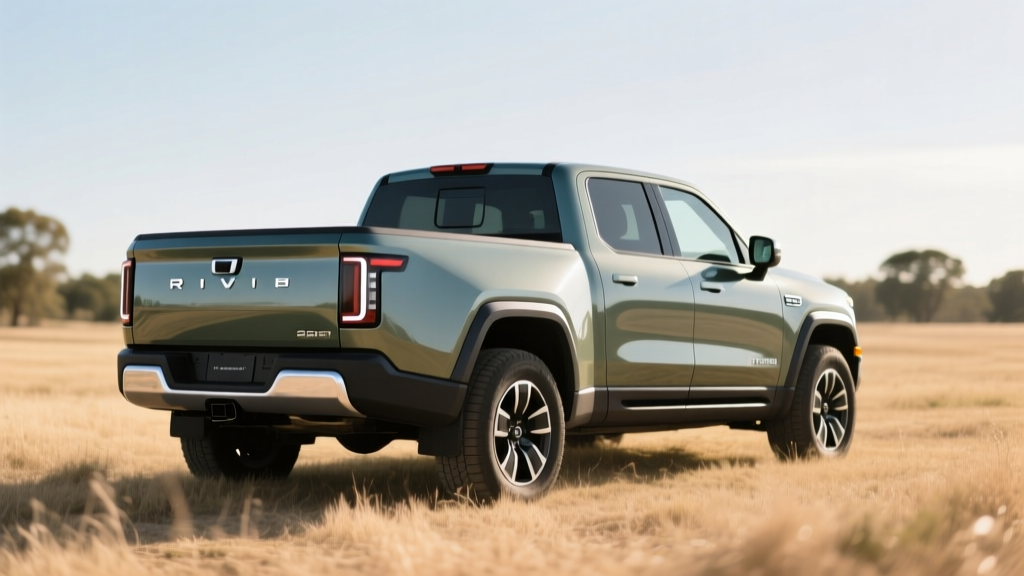
If you've been searching for the Rivian R1T truck bed length, the quick answer is 54.3 inches (4.5 feet) with the tailgate up, extending to roughly 67 inches with the tailgate down. That's shorter than a traditional full-size half-ton pickup, but the R1T compensates with a 4,500-pound payload capacity, a lockable Gear Tunnel, and a front trunk (frunk) that adds another 11 cubic feet of sealed cargo space. For 2026, Rivian has streamlined the R1T lineup around its second-generation Dual-Motor and Quad-Motor powertrains, paired with Standard, Large, and Max battery packs.
This review covers every number that matters to a truck buyer going electric: real-world range, DC fast-charging speed, towing efficiency, IRS §30D tax credit eligibility, and whether the R1T's compact bed is a dealbreaker or a clever trade-off.
| Spec | Dual-Motor (Large Pack) | Tri-Motor (Max Pack) | Quad-Motor (Max Pack) |
|---|---|---|---|
| EPA Range | ~342 miles | ~420 miles | ~420 miles |
| Battery (usable) | ~109 kWh (NMC) | ~141 kWh (NMC) | ~141 kWh (NMC) |
| Horsepower | 665 hp | 850 hp | 1,025 hp |
| 0-60 mph | ~4.5 sec | ~3.5 sec | ~2.9 sec |
| Max DC Fast Charge | ~200 kW | ~220 kW | ~220 kW |
| 10-80% DC Time | ~28 min | ~35 min | ~35 min |
| Level 2 Home Rate | 11.5 kW (~30 mi/hr) | 11.5 kW (~30 mi/hr) | 11.5 kW (~30 mi/hr) |
| Bed Length (tailgate up) | 54.3 in (4 ft 6.3 in) | ||
| Towing Capacity | 11,000 lbs (max rated) | ||
| Base MSRP | ~$79,900 | ~$99,900 | ~$119,900 |
Source: Rivian official specs and fueleconomy.gov. Figures reflect 2025-2026 model-year data; verify trim-specific numbers at purchase.
Truck Bed Length and Cargo: What 54.3 Inches Really Means
The Rivian R1T truck bed length of 54.3 inches is the single most debated spec on the vehicle. For context, a Ford F-150 short bed measures 67.1 inches, and a standard bed runs 78.9 inches. So the R1T's bed is undeniably compact — but Rivian has engineered around this limitation in ways that matter for real truck work.
With the multi-position tailgate lowered, usable floor length stretches to approximately 67 inches, enough for a pair of dirt bikes or standard 4x8 sheets of plywood laid diagonally. The bed features integrated tie-downs, a 120V outlet, and built-in LED lighting. But the real cargo story is the Gear Tunnel: a 11.7-cubic-foot, lockable, pass-through compartment behind the rear seats accessible from both sides of the truck. It's ideal for long items like skis, fishing rods, or tools that would otherwise eat bed space.
The front trunk (frunk) adds 11 cubic feet of waterproof, lockable storage — enough for two carry-on bags and a cooler. Combined with the bed and Gear Tunnel, the R1T offers three distinct, secure cargo zones that partially offset the short bed for most adventure and light-duty hauling use cases.
For heavy-duty work — hauling gravel, towing a horse trailer daily, or regularly carrying 8-foot lumber — the R1T's bed length is a genuine constraint. Buyers in those use cases should cross-shop the Ford F-150 Lightning (67.1-in short bed) or the Chevrolet Silverado EV (which offers a midgate that extends the bed into the cab). But for weekend warriors, overlanders, and suburban truck owners who rarely max out a full-size bed, the R1T's cargo ecosystem is surprisingly practical.
Range and Efficiency: EPA Sticker vs. Real-World Miles
Real-World Expectation: Expect 340-370 miles on the Max Pack at highway speeds (70-80 mph), dropping to ~270-300 miles in sub-30°F winter conditions with cabin heat. The Large Pack delivers roughly 280-310 real-world highway miles, falling to ~220-250 in cold weather.
Towing Impact: When towing near the 11,000-lb max, expect range to drop 40-55% — plan for 180-220 miles per charge with a heavy trailer.
The R1T's efficiency is measured in MPGe and kWh/100mi. The Dual-Motor Large Pack achieves approximately 70 MPGe combined (roughly 48 kWh/100mi), which is respectable for a 7,000-pound electric truck but thirstier than lighter EVs. The Max Pack variants are slightly less efficient per mile due to added battery weight, landing around 65-68 MPGe combined.
For daily commuting under 80 miles round-trip, even the Large Pack provides multiple days between charges. Road-trippers will appreciate the Max Pack's ability to stretch past 350 real-world miles at moderate speeds, reducing stop frequency on routes like Denver-to-Moab or Seattle-to-Portland. However, cold-weather owners in northern states should budget conservatively: lithium-ion batteries lose efficiency below freezing, and cabin heating in a large truck cab draws significant energy.
Charging Speed: DC Fast Charge and Home Level 2
| Charging Level | Power / Rate | Speed | Notes |
|---|---|---|---|
| Level 1 (120V household) | ~1.4 kW | ~3-4 mi/hr | Emergency/top-up only; ~100+ hrs for full charge |
| Level 2 (240V home) | 11.5 kW | ~25-30 mi/hr | Full charge in ~12-14 hrs; requires 48A+ circuit |
| DC Fast Charge (peak) | 200-220 kW | ~140 mi in 20 min | Peak rate sustained to ~60% SoC, then tapers |
| DC 10-80% (Large Pack) | ~200 kW peak | ~28 min | Charge curve flattens above 80% |
| DC 10-80% (Max Pack) | ~220 kW peak | ~35 min | Larger battery = longer session despite higher peak |
The R1T uses the NACS (North American Charging Standard) connector as of the 2025 model year, giving it native access to Tesla Supercharger V3 and V4 stations without an adapter. This is a significant practical advantage: the Tesla Supercharger network remains the most reliable DC fast-charging infrastructure in the U.S., with over 25,000 stalls nationwide.
A critical nuance for road-trippers: the R1T's charge curve is not flat. Peak kW (200-220) is achieved between roughly 10-60% state of charge. Above 80%, charging slows substantially to protect battery longevity — a 80-100% top-off can add another 25-30 minutes. For highway trips, plan your stops around the 10-80% sweet spot to minimize time plugged in.
For home charging, Rivian recommends a hardwired Level 2 wall connector on a 60-amp circuit (delivering up to 48 amps continuous). At 11.5 kW, the R1T gains roughly 25-30 miles of range per hour — adequate for overnight replenishment of daily driving. Installation costs vary widely: expect $500-$2,500 for the electrician and panel work, depending on whether your home's electrical panel needs an upgrade to 200A service.
Performance, Drivetrain, and Towing Capability
Every R1T comes with standard all-wheel drive. The Dual-Motor configuration uses one motor per axle for 665 horsepower and a 0-60 mph time of approximately 4.5 seconds — quick for any truck, absurd for one rated to tow 11,000 pounds. The Tri-Motor adds a second rear motor for 850 hp and a ~3.5-second sprint, while the Quad-Motor (one motor per wheel) delivers 1,025 hp and a sub-3-second 0-60 that rivals supercars.
But straight-line speed is a party trick. What matters more for truck buyers is the R1T's off-road and towing hardware. The air suspension provides up to 14.9 inches of ground clearance (in Off-Road mode), approach/departure angles competitive with body-on-frame trucks, and a wading depth of over 3 feet. The quad-motor system enables true torque vectoring — individual wheel torque control that improves traction on loose surfaces beyond what a traditional locking differential can achieve.
Towing capacity peaks at 11,000 pounds (properly equipped), though real-world range while towing is the R1T's most significant practical limitation. At 8,000-10,000 pounds, expect energy consumption to roughly double, cutting effective range to 180-220 miles on the Max Pack. Rivian's integrated trailer brake controller and tow-assist camera views help, but long-distance towing still requires careful route planning around DC fast chargers that can accommodate a truck-trailer combination.
Pricing, Trims, and Federal Tax Credit Eligibility
| Trim / Configuration | Base MSRP | Federal §30D Credit | Estimated Net Price |
|---|---|---|---|
| Dual-Motor, Standard Pack | ~$69,900 | Up to $7,500* | ~$62,400 |
| Dual-Motor, Large Pack | ~$79,900 | Up to $7,500* | ~$72,400 |
| Tri-Motor, Max Pack | ~$99,900 | $0 (exceeds MSRP cap) | ~$99,900 |
| Quad-Motor, Max Pack | ~$119,900 | $0 (exceeds MSRP cap) | ~$119,900 |
*Federal tax credit eligibility under IRS §30D is subject to buyer income limits ($150K single / $300K joint MAGI), vehicle MSRP caps ($80,000 for trucks/vans/SUVs), and battery critical-mineral and component sourcing requirements. Credits may be applied at point of sale. Verify current eligibility with a tax professional and the IRS before purchasing.
The critical takeaway for tax-credit shoppers: the R1T Dual-Motor trims priced under the $80,000 MSRP cap for trucks can potentially qualify for the full $7,500 federal credit — but only if the buyer meets income thresholds and the specific vehicle's battery satisfies critical-mineral and foreign-entity-of-concern (FEOC) sourcing rules. Rivian has worked to localize its battery supply chain, but sourcing requirements tighten annually. Always confirm eligibility for your specific VIN before finalizing a purchase.
The Tri-Motor and Quad-Motor variants exceed the $80,000 MSRP cap and do not qualify for the new-vehicle §30D credit, regardless of buyer income. However, leasing any R1T may allow the lessor (Rivian's financing arm) to claim the commercial clean vehicle credit and pass savings through as a capitalized-cost reduction — a workaround worth discussing with your dealer.
Tech, Driver Assists, and Interior
The R1T's interior blends premium materials with utilitarian design. A 15.6-inch center touchscreen runs Rivian's proprietary infotainment OS, which has improved significantly through over-the-air updates since launch. Wireless Apple CarPlay and Android Auto are now standard. The digital driver display is a 12.3-inch cluster, and a head-up display projects speed and navigation onto the windshield.
Rivian's Driver+ suite provides SAE Level 2 driver assistance — adaptive cruise control with lane centering on divided highways. It is not autonomous driving; the system requires continuous driver supervision, hands on the wheel (or torque detection), and eyes on the road. In our experience, Driver+ performs competently on interstate cruises but is less aggressive than GM's Super Cruise or Ford's BlueCruise in hands-free scenarios. Rivian has not yet launched a true hands-free highway system as of early 2026.
Standout tech features include:
- Camp Kitchen (optional): A slide-out kitchen module that integrates into the Gear Tunnel with an induction cooktop, sink, and utensil storage — unique to the R1T platform.
- Powered tonneau cover with integrated bed lighting and 120V/240V outlets for job-site or campsite power.
- Over-the-air updates that have added features like battery preconditioning for DC fast charging, improved regen profiles, and new drive modes post-delivery.
- Phone-as-key with automatic unlock and walk-away locking, plus a backup key card.
Notable drawbacks: rear-seat legroom (37.3 inches) is adequate but trails the F-150 Lightning's back seat. The R1T lacks Apple CarPlay integration in earlier model years (now resolved). Some owners report that the large glass roof increases cabin heat in southern summers, requiring more climate-control energy.
Warranty, Ownership Costs, and Who Should Buy
Rivian covers the R1T with a 5-year/60,000-mile bumper-to-bumper limited warranty and an 8-year/175,000-mile battery and driveunit warranty. The battery warranty guarantees a minimum of 70% capacity retention over the coverage period — competitive with the broader EV market. Rivian's service model combines mobile service vans for minor repairs with dedicated service centers for major work; coverage and wait times vary by region.
Insurance premiums for the R1T tend to run 15-30% higher than comparable gas trucks, reflecting the vehicle's repair costs, performance, and price. Shop quotes from EV-friendly insurers (Geico, Progressive, and Hagerty have competitive EV rates) before committing.
Who the R1T suits best:
- Adventure-oriented owners who want off-road capability, Gear Tunnel storage, and the Camp Kitchen ecosystem for weekend overlanding.
- Suburban truck buyers who want a daily-driver EV with truck utility for Home Depot runs and bike-hauling but don't need a full-size bed.
- Tech-forward early adopters who value OTA updates, native Supercharger access, and a startup's rapid iteration over legacy-dealer familiarity.
Who should look elsewhere:
- Commercial fleet operators and heavy-duty haulers who need an 8-foot bed, 15,000+ lb towing, or established fleet service networks.
- Budget-conscious buyers — even the base R1T starts near $70K before options, and the most affordable trims still command premium-truck pricing.
- Frequent long-distance towers — the range penalty of towing makes gas or diesel trucks more practical for daily heavy-trailer work.
Pros
- Native NACS / Tesla Supercharger access — best-in-class charging network
- Gear Tunnel + frunk add versatile cargo beyond the 54.3-in bed
- Up to 420 miles EPA (Max Pack) — longest-range electric pickup available
- Air suspension with 14.9-in ground clearance; genuine off-road capability
- Sub-3-second 0-60 (Quad-Motor) with 11,000-lb tow rating
- Strong OTA update track record adding real features post-purchase
Cons
- 54.3-in bed is shorter than any full-size competitor's short bed
- Tri/Quad-Motor trims exceed $80K MSRP cap — no federal tax credit
- Towing cuts range 40-55%; limited DC charger access for truck+trailer
- Rear-seat legroom trails F-150 Lightning and Silverado EV
- Service network still expanding; rural owners may face longer wait times
- Insurance premiums 15-30% above comparable gas trucks
Frequently Asked Questions
What is the Rivian R1T truck bed length?
The Rivian R1T truck bed length is 54.3 inches (4 feet 6.3 inches) with the tailgate up. With the tailgate lowered, usable floor length extends to approximately 67 inches. The Gear Tunnel (11.7 cu ft) and front trunk (11 cu ft) supplement the bed for total cargo versatility across three secure compartments.
What is the real-world range of the Rivian R1T?
The EPA rates the R1T Max Pack at approximately 420 miles and the Large Pack at roughly 342 miles. In real-world highway driving at 70-80 mph, expect 340-370 miles (Max) and 280-310 miles (Large). Cold weather below 30°F can reduce range by 20-30%. Towing near max capacity cuts range roughly in half.
How fast does the R1T charge at home and on the road?
On a Level 2 home charger (11.5 kW), the R1T gains about 25-30 miles of range per hour, fully charging overnight in 12-14 hours. At a DC fast charger, the R1T peaks at 200-220 kW and charges from 10-80% in approximately 28 minutes (Large Pack) or 35 minutes (Max Pack). Charging slows significantly above 80% SoC.
Does the Rivian R1T qualify for the federal EV tax credit?
The Dual-Motor R1T trims priced under the $80,000 MSRP cap for trucks may qualify for up to $7,500 under IRS §30D, provided the buyer meets income limits ($150K single / $300K joint) and the vehicle's battery satisfies critical-mineral and component sourcing rules. Tri-Motor and Quad-Motor variants exceed the MSRP cap and do not qualify for the new-vehicle credit. Leasing may offer an alternative path via the commercial clean vehicle credit. Always verify eligibility with a tax professional.
Is the Rivian R1T worth buying over the F-150 Lightning or Silverado EV?
The R1T wins on off-road capability, native Supercharger access, and adventure-focused features like the Gear Tunnel and Camp Kitchen. The F-150 Lightning offers a longer bed (67.1 in short), a more established dealer service network, and lower starting prices. The Silverado EV provides a midgate that extends bed length into the cab and competitive range. Choose the R1T if off-road performance and charging infrastructure matter most; choose the Lightning or Silverado EV if bed length, budget, or dealer proximity are your priorities.
What is the R1T's towing capacity and how does towing affect range?
The R1T is rated to tow up to 11,000 pounds when properly equipped. However, towing at or near this capacity reduces range by approximately 40-55%, bringing a Max Pack R1T down to roughly 180-220 miles per charge. For frequent long-distance towing, plan routes carefully around DC fast chargers that accommodate truck-trailer combinations.