Tesla's pricing power has defined the electric-vehicle market for a decade, but aggressive competition from Hyundai, Ford, BMW, and Chinese-market entrants has reshaped what "value" means in 2026. The Tesla value proposition is no longer just about being the only viable EV option — it's about whether the combination of Supercharger access, software integration, and manufacturing efficiency still delivers the best total cost of ownership in a crowded field.
This review dissects the two vehicles that anchor Tesla's lineup for most buyers: the 2026 Model 3 (sedan) and 2026 Model Y (compact crossover SUV). We examine real-world range versus EPA stickers, charging-curve realities, §30D federal tax credit eligibility, and how the numbers stack up against the Hyundai Ioniq 6, Ford Mustang Mach-E, and BMW i4.
2026 Tesla Model 3: Range, Battery & Efficiency
The refreshed Model 3 (internally called "Highland") continues into the 2026 model year with three primary trims. The entry Rear-Wheel Drive uses a lithium iron phosphate (LFP) battery, while Long Range and Performance trims use nickel-manganese-cobalt (NMC) chemistry for higher energy density.
| Specification | RWD (Base) | Long Range AWD | Performance |
|---|---|---|---|
| EPA Range | 272 mi | 341 mi | 315 mi |
| Battery (usable) | ~57.5 kWh (LFP) | ~75 kWh (NMC) | ~75 kWh (NMC) |
| Efficiency | 132 MPGe / 25 kWh/100mi | 132 MPGe / 25 kWh/100mi | 119 MPGe / 28 kWh/100mi |
| 0-60 mph | 5.8 sec | 4.2 sec | 2.9 sec |
| Horsepower | 271 hp | 384 hp | 510 hp |
| Drivetrain | RWD (single motor) | AWD (dual motor) | AWD (dual motor) |
| Base MSRP | $38,990 | $45,990 | $52,990 |
Real-World Range Reality Check
EPA Sticker: 272 mi (RWD) / 341 mi (Long Range)
Real-World Expectation: On sustained 70-mph highway driving in moderate temperatures (60-80°F), expect 235-250 miles from the RWD and 290-310 miles from the Long Range. In cold weather (below 32°F), range drops 20-30% due to battery heating demands and cabin climate load — yielding as low as 185-200 miles for the RWD on winter highway trips.
The Model 3's heat pump (standard since 2021) mitigates some cold-weather loss compared to older EVs without thermal management, but physics still governs: LFP chemistry in the RWD trim is more resistant to cold degradation than NMC, partially offsetting the smaller battery.
Charging Speed: Supercharger Network & Home Level 2
Charging speed is where the Tesla value proposition remains strongest. The Supercharger network — now open to non-Tesla EVs via Magic Dock adapters and the NACS standard — still leads in reliability and geographic coverage. But peak kW ratings don't tell the full story; the charge curve matters.
| Charging Level | Power / Rate | Time or Miles Added |
|---|---|---|
| Level 1 (120V household) | ~1.4 kW | ~3-4 mi/hr |
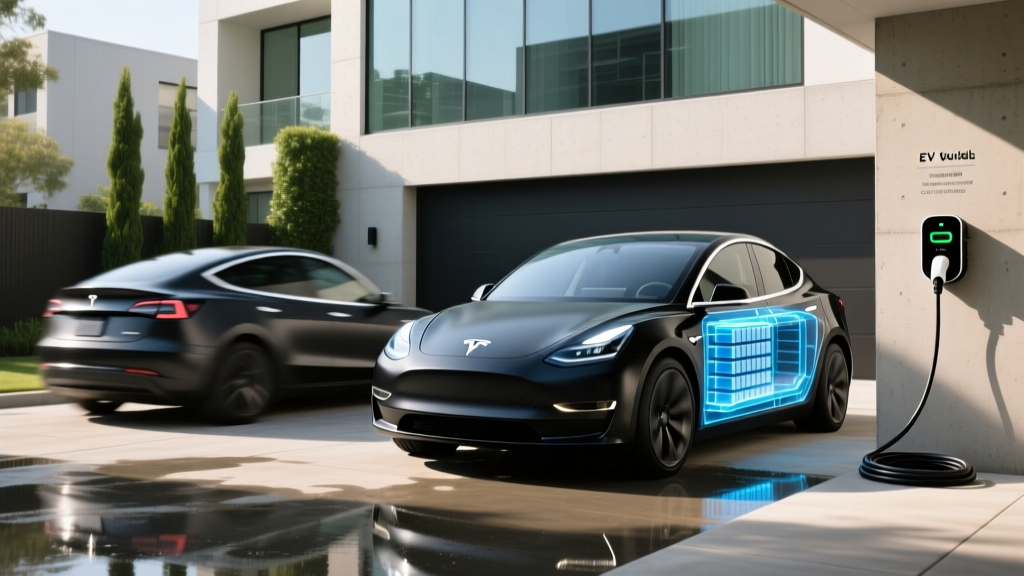
| Level 2 (240V home, 48A) | 11.5 kW | ~37 mi/hr (full in ~6-7 hrs) |
| DC Fast Charge (V3 Supercharger) | Peak 170 kW (RWD) / 250 kW (LR/Perf) | 10-80% in ~25 min (RWD) / ~18 min (LR) |
| DC Fast Charge (V4 Supercharger) | Up to 250 kW | Same as V3 for current Model 3 architecture |
Charge-curve reality: The Long Range Model 3 peaks at 250 kW only between roughly 10-30% state of charge. From 30-60%, it sustains around 150-180 kW, then tapers to ~100 kW by 70%, and drops below 50 kW past 85%. This is why Tesla quotes 10-80% times — charging to 100% at a DC fast charger is inefficient and unnecessary for most trips.
The LFP battery in the RWD trim can (and should) be charged to 100% regularly without degradation concerns — a notable ownership advantage over NMC, which Tesla recommends keeping between 20-80% for daily use. This means the RWD's practical daily range is closer to its full 272 miles, while the Long Range's daily usable range is effectively ~270 miles at an 80% charge ceiling.
2026 Tesla Model Y: The Family Crossover Numbers
The Model Y remains the best-selling vehicle in the world by unit volume, and for 2026, the Juniper refresh brings updated styling, improved suspension tuning, and a slightly revised battery pack. Here's how the specs break down:
| Specification | Long Range AWD | Performance |
|---|---|---|
| EPA Range | 320 mi | 293 mi |
| Battery (usable) | ~75 kWh (NMC) | ~75 kWh (NMC) |
| Efficiency | 122 MPGe / 27 kWh/100mi | 111 MPGe / 30 kWh/100mi |
| 0-60 mph | 4.8 sec | 3.5 sec |
| Horsepower | 384 hp | 510 hp |
| Drivetrain | AWD (dual motor) | AWD (dual motor) |
| Base MSRP | $44,990 | $51,490 |
Cargo and passenger space is where the Model Y earns its family-vehicle reputation. Behind the second row, you get 34.3 cu ft of cargo volume, expanding to 72.1 cu ft with the rear seats folded. The optional third row (best suited for children) reduces cargo space but adds seating for up to seven. Rear legroom measures 41.6 inches, competitive with midsize SUVs.
The Model Y Long Range's real-world highway range mirrors the Model 3 Long Range's pattern: expect 270-290 miles at 70 mph in fair weather, dropping to 210-230 miles in sub-freezing conditions. The taller, heavier crossover body creates more aerodynamic drag than the sedan, which is why the EPA rating is lower despite sharing the same battery pack.
Pricing, Tax Credits & Total Cost of Ownership
The headline question for 2026: does the Tesla value proposition hold after accounting for federal incentives, insurance, and long-term costs?
| Model / Trim | Base MSRP | §30D Credit | Effective Price | Destination |
|---|---|---|---|---|
| Model 3 RWD | $38,990 | Up to $7,500* | ~$31,490* | $1,390 |
| Model 3 Long Range | $45,990 | Up to $7,500* | ~$38,490* | $1,390 |
| Model 3 Performance | $52,990 | Up to $7,500* | ~$45,490* | $1,390 |
| Model Y Long Range | $44,990 | Up to $7,500* | ~$37,490* | $1,390 |
| Model Y Performance | $51,490 | Up to $7,500* | ~$43,990* | $1,390 |
*Credit eligibility depends on multiple factors. See checklist below.
- MSRP Cap: Sedans (Model 3) must be under $55,000; SUVs/pickups/vans (Model Y) under $80,000. All current trims qualify.
- Buyer Income Cap: Modified AGI must not exceed $150,000 (single), $225,000 (head of household), or $300,000 (joint filing).
- Battery Sourcing: The full $7,500 requires meeting both critical-mineral (≥60% from US/FTA partners in 2026) and battery-component (≥100% manufactured in North America) requirements. Tesla's US-built LFP and NMC packs have progressively met these thresholds, but partial credit ($3,750) applies if only one requirement is satisfied.
- Point-of-Sale Transfer: Under current IRS §30D rules, the credit can be transferred to the dealer at purchase, reducing your out-of-pocket cost immediately rather than waiting for a tax refund.
- Verification Required: Always confirm current eligibility on the IRS qualified vehicles list before purchase — sourcing rules tighten annually.
5-year ownership economics: According to fueleconomy.gov, the Model 3 Long Range costs approximately $550-$650 per year in electricity (at $0.16/kWh national average) versus $1,800-$2,200 in gasoline for a comparable BMW 330i. Over five years and 75,000 miles, that's roughly $6,000-$8,000 in fuel savings. However, Tesla insurance premiums run 15-25% higher than segment averages in most states due to repair-cost data, partially offsetting those savings.
Tech, Driver Assistance & Interior
Tesla's tech stack is both its greatest strength and most polarizing feature. The 15.4-inch center touchscreen (Model 3) and 15-inch screen (Model Y) handle all vehicle controls — there are no physical stalks for turn signals or drive selection in the 2026 Highland/Juniper refresh, which frustrates some buyers and delights others.
Autopilot (standard) includes adaptive cruise control, lane-centering, and automatic emergency braking. Full Self-Driving (Supervised) — a $8,000 option or $99/month subscription in 2026 — adds automated lane changes, traffic-light recognition, and city-street navigation.
SAE Automation Level: Level 2
Both Autopilot and FSD (Supervised) are SAE Level 2 driver-assistance systems. The driver must remain fully attentive, keep hands on the wheel (or demonstrate engagement via camera monitoring), and be prepared to take over at any moment. These are not self-driving systems. Only Level 4 services like Waymo operate without a human driver in defined geographic areas.
Notable tech features include over-the-air software updates that add functionality post-purchase, a built-in dashcam and Sentry Mode security system, and access to Tesla's integrated navigation with real-time Supercharger routing and preconditioning (which warms the battery before arrival at a fast charger to maximize charge speed).
Notable Drawbacks
- No physical turn-signal stalk or gear selector — all controls are touchscreen or steering-wheel buttons
- No Apple CarPlay or Android Auto integration
- Minimalist interior lacks traditional luxury materials at this price point
- Panel gaps and paint quality remain inconsistent across Fremont and Austin build plants
- Repair costs and wait times for body damage can exceed competitor averages
Warranty & Battery Longevity
Tesla's warranty coverage is competitive but not class-leading:
- Basic Vehicle Warranty: 4 years / 50,000 miles
- Battery & Drive Unit (RWD): 8 years / 100,000 miles, minimum 70% capacity retention
- Battery & Drive Unit (Long Range / Performance): 8 years / 120,000 miles, minimum 70% capacity retention
The 70% retention threshold is standard across the industry (Hyundai offers a slightly better 10-year/100,000-mile battery warranty on the Ioniq 5/6). Real-world degradation data from fleet analyses shows Tesla NMC packs typically retain 88-92% capacity at 100,000 miles, while LFP packs show even slower degradation curves due to the chemistry's inherent cycle-life advantage. Full battery replacement outside warranty currently runs $12,000-$16,000 depending on pack size.
Tesla Value Proposition vs. Key Competitors
How does the Tesla value proposition compare head-to-head with the strongest alternatives in 2026?
| Attribute | Tesla Model 3 LR | Hyundai Ioniq 6 SE | BMW i4 eDrive40 |
|---|---|---|---|
| EPA Range | 341 mi | 361 mi | 307 mi |
| Base MSRP | $45,990 | $42,750 | $57,900 |
| Peak DC Charge | 250 kW | 240 kW | 200 kW |
| 10-80% DC Time | ~18 min | ~18 min | ~31 min |
| 0-60 mph | 4.2 sec | 5.1 sec | 5.5 sec |
| §30D Credit | Up to $7,500 | Up to $7,500 | Up to $7,500 |
| Charging Network | Supercharger (native) | NACS adapter needed | NACS adapter needed |
Best Range per Dollar: Hyundai Ioniq 6
361 miles EPA at $42,750 — the efficiency king with 4.1 mi/kWh.
Best Charging Ecosystem: Tesla Model 3
Native NACS + Supercharger network with integrated routing and preconditioning.
Best Build Quality: BMW i4
Superior materials, panel consistency, and dealer service — at a premium price.
Choose Tesla If:
- You road-trip frequently and want the most seamless DC fast-charging experience
- You value OTA updates, integrated navigation, and software-first features
- You want strong performance (AWD, sub-5-sec 0-60) at a mainstream price
- You prefer the LFP option for daily 100% charging without degradation anxiety
Look Elsewhere If:
- You want physical controls, Apple CarPlay, or a traditional luxury interior
- Maximum EPA range per dollar is the top priority (Ioniq 6 wins)
- Dealer service relationships and body-shop accessibility matter to you
- You dislike touchscreen-only climate and mirror adjustments
Who Should Buy a Tesla in 2026?
The Model 3 RWD suits single commuters and couples who charge at home, drive under 40 miles daily, and want the lowest entry price into the Supercharger ecosystem. The LFP battery's tolerance for daily 100% charging makes it the most "fire and forget" EV ownership experience available.
The Model 3 Long Range is the road-trip sedan — 341 EPA miles and dual-motor AWD make it viable for 300-mile Interstate runs with a single 15-20 minute Supercharger stop. It's the sweet spot for two-car households replacing a gas commuter with longer weekend reach.
The Model Y Long Range fits families needing car-seat space, cargo volume, and the optional third row. With 320 miles of range and class-leading charging infrastructure, it remains the default EV for households that can only own one vehicle.
Pros
- Supercharger network reliability (17,000+ US stalls) remains unmatched
- Class-leading efficiency (25 kWh/100mi for Model 3 LR)
- OTA updates continuously add features post-purchase
- LFP option (RWD) allows worry-free 100% daily charging
- Strong resale value relative to most EV competitors
- Integrated trip planning with battery preconditioning
Cons
- Touchscreen-only controls frustrate some drivers
- No Apple CarPlay / Android Auto
- Insurance premiums 15-25% above segment average
- Build quality inconsistency (panel gaps, paint)
- FSD remains Level 2 despite the name — $8,000 for supervised assist
- Body repair network limited vs. legacy automaker dealers
Frequently Asked Questions
What is the real-world range of the 2026 Tesla Model 3?
The EPA rates the Model 3 Long Range at 341 miles, but sustained highway driving at 70 mph yields approximately 290-310 miles in moderate weather. In cold conditions (below 32°F), expect 220-250 miles. The RWD trim delivers about 235-250 real-world highway miles in fair weather, dropping to 185-200 in winter. City driving with regenerative braking recovers more energy, often exceeding EPA estimates.
How fast does the Tesla Model Y charge at home and on the road?
At home on a 240V/48A Level 2 charger, the Model Y adds approximately 32-37 miles of range per hour, reaching a full charge in about 7-8 hours. On a V3 Supercharger, the Long Range peaks at 250 kW and charges from 10-80% in roughly 20 minutes. The charge curve tapers significantly above 80%, so plan to unplug at 80% during road trips for optimal time efficiency.
Does the 2026 Tesla Model 3 qualify for the $7,500 federal tax credit?
Yes — all Model 3 trims fall under the $55,000 MSRP cap for sedans under IRS §30D rules. However, the buyer must also meet income caps ($150K single / $300K joint), and the full $7,500 depends on battery-component and critical-mineral sourcing requirements. Tesla's North American battery production has largely met these thresholds for 2026, but always verify on the IRS qualified vehicles list before purchase. The credit can be applied at point of sale.
Is a Tesla still worth buying vs. the Hyundai Ioniq 6 or Ford Mustang Mach-E?
It depends on your priorities. The Ioniq 6 SE offers more EPA range (361 mi) at a lower price ($42,750) and charges nearly as fast. The Mach-E provides a more traditional crossover feel with physical controls. Tesla wins on charging-network seamlessness, software integration, and performance per dollar. If you road-trip often and value Supercharger reliability, Tesla's value proposition remains strong. If you prioritize interior quality, physical buttons, or maximum range per dollar, competitors now offer compelling alternatives.
What are the biggest long-term ownership costs with a Tesla?
Beyond the purchase price, budget for: higher-than-average insurance premiums (get quotes before buying), tire replacement every 25,000-35,000 miles (EVs wear tires faster due to instant torque and weight), cabin air filter replacement (~$100-150 every 2-3 years), and potential out-of-warranty battery replacement ($12,000-$16,000) if you plan to keep the vehicle past 150,000 miles. Brake wear is minimal thanks to regenerative braking.
Is Tesla's Full Self-Driving worth the $8,000 cost?
FSD (Supervised) is a Level 2 driver-assist system, not autonomous driving. It handles many city-street and highway scenarios but requires constant driver supervision. For most buyers, the standard Autopilot (included) provides adequate adaptive cruise and lane-centering. The $8,000 FSD purchase or $99/month subscription is best suited for high-mileage commuters who want the most advanced assist available — but understand you are paying for a supervised system, not a chauffeur. NHTSA continues to monitor ADAS safety data.
How does the Supercharger network compare to Electrify America or ChargePoint in 2026?
Tesla's Supercharger network maintains a significant uptime advantage (typically 97-99% availability per stall) compared to Electrify America and other CCS networks, which have historically struggled with broken chargers and payment-system failures. With the industry-wide shift to NACS, non-Tesla EVs now access Superchargers via adapter, but Tesla owners still benefit from native plug-and-charge integration, automatic billing, and battery preconditioning that optimizes charge speed on arrival.
Sources: EPA fuel economy data via fueleconomy.gov, IRS §30D qualified vehicle list via irs.gov, Tesla official specifications. Pricing and tax credit rules reflect 2026 model year and are subject to change. Consult a tax professional for personal credit eligibility.