The Short Answer on the Buick EV Convertible Concept
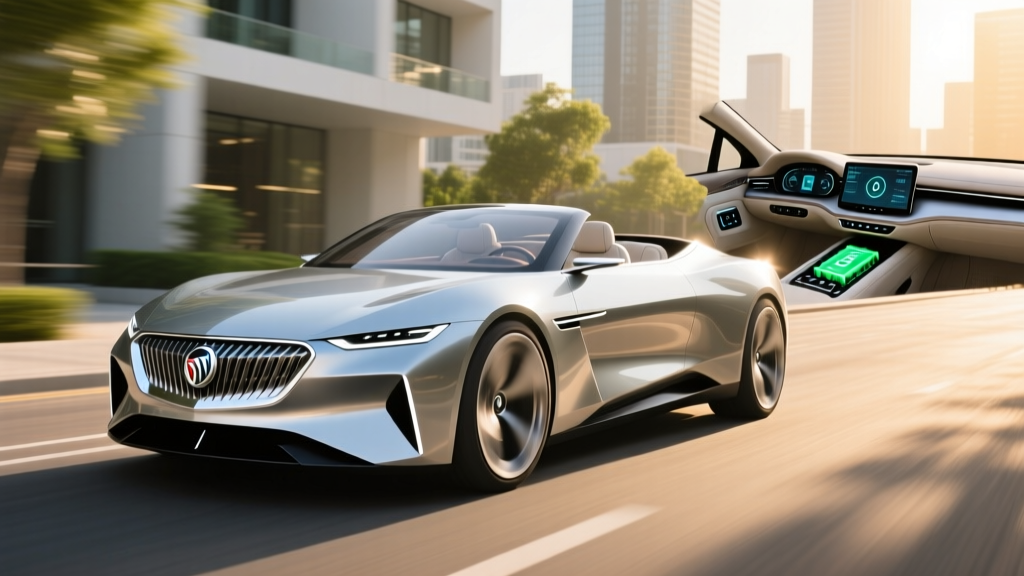
As of early 2026, the Buick EV convertible concept remains an unreleased design study — not a vehicle you can buy or reserve. GM has not confirmed production dates, final specs, or pricing. What we do know is that it rides on GM's Ultium platform (now branded as the next-generation BEV3 architecture), which underpins vehicles like the Cadillac Lyriq and Chevrolet Blazer EV. If the concept reaches production, expect a starting MSRP north of $55,000, an EPA-estimated range in the 280–330 mile bracket based on platform siblings, and DC fast charging peaking around 190 kW. Until GM makes an official production announcement, treat all circulating specifications as preliminary and conceptual.
Why the Buick EV Convertible Concept Matters Now
Buick's electrification strategy has accelerated faster than most legacy luxury brands anticipated. The brand committed to an all-electric lineup by the end of the decade, and the Electra-X concept (debuted 2022) signaled the design direction. The EV convertible concept extends that vision into open-air luxury — a segment where Tesla's Roadster remains perpetually delayed, and few mainstream automakers have committed resources.
For buyers researching the Buick EV convertible concept, the practical question isn't "should I order one?" — it's whether this concept signals a production vehicle worth waiting for, or whether you should redirect your budget toward available EVs today. This guide breaks down what's confirmed, what's projected based on platform data, and how to make that decision with real numbers.
Projected Specs: What the Ultium Platform Tells Us
Because the Buick EV convertible concept shares GM's BEV3/Ultium underpinnings, we can extrapolate reasonable estimates from existing production vehicles on the same architecture. The table below compares confirmed platform siblings to projected concept figures.
| Specification | Cadillac Lyriq (2025 AWD) | Chevy Blazer EV RS AWD | Buick EV Convertible (Projected) |
|---|---|---|---|
| Battery (usable) | 100.4 kWh (NMC) | 102 kWh (NMC) | ~95–102 kWh (NMC est.) |
| EPA Range | 307 mi | 283 mi | ~280–330 mi (est.) |
| Peak DC Fast Charge | 190 kW | 190 kW | ~190 kW (est.) |
| 10–80% DC Charge Time | ~30 min | ~32 min | ~28–34 min (est.) |
| Level 2 Charging | 19.2 kW (AC) | 11.5 kW (AC) | ~11.5–19.2 kW (est.) |
| 0–60 mph | 4.6 sec | 4.8 sec | ~4.5–5.5 sec (est.) |
| Horsepower | 500 hp | 557 hp | ~400–550 hp (est.) |
| Starting MSRP | $58,590 | $56,595 | ~$55,000–$65,000 (est.) |
Real-World Range Expectation: If the concept achieves a 310-mile EPA sticker, plan for approximately 240–270 miles in mixed highway driving at 70+ mph. In cold weather (below 30°F), expect an additional 15–25% range reduction — potentially dropping real-world range to 190–220 miles on a full charge. Convertible body styles may face additional thermal efficiency challenges due to reduced insulation in retractable roof mechanisms.
EV vs. Gas Convertible: The Cost Reality
The closest current market comparison to a potential Buick EV convertible is the BMW 4 Series Convertible or Mercedes-Benz CLE Cabriolet — both gas-powered luxury drop-tops in the $55,000–$65,000 range. Here's how a five-year ownership projection compares.
| Cost Factor (5 Years / 75,000 mi) | Gas Luxury Convertible (e.g., BMW 430i) | Buick EV Convertible (Projected) |
|---|---|---|
| Purchase Price (base MSRP) | $58,100 | $60,000 (est.) |
| Federal Tax Credit (§30D) | $0 | Up to $7,500 (eligibility varies) |
| Fuel / Electricity | $8,400 (28 MPG avg, $3.50/gal) | $2,700 (home charging at $0.14/kWh) |
| Maintenance | $3,200 | $900 (no oil, fewer moving parts) |
| Insurance (avg) | $7,800 | $9,200 (EV premium ~15–18%) |
| Estimated Depreciation | $26,000 | $28,000 (luxury EVs depreciate steeply) |
| Total 5-Year Cost | $103,500 | $102,800 (est.) |
The numbers are close — and heavily dependent on whether you qualify for the federal §30D clean vehicle credit. For 2026, the credit requires meeting MSRP caps ($80,000 for SUVs/vans/pickups; $55,000 for sedans/other body styles — a convertible may fall under the lower cap), buyer income limits ($150,000 single / $300,000 joint AGI), and critical-mineral/battery-component sourcing thresholds that shift annually. Always verify eligibility with a tax professional before counting on the credit.
Charging Realities: What First-Time EV Buyers Must Plan For
If the Buick EV convertible concept enters production, owners will face the same charging infrastructure decisions every EV buyer confronts. Here's the practical breakdown.
| Charging Level | Power | Miles Added per Hour | Typical Use Case |
|---|---|---|---|
| Level 1 (120V outlet) | ~1.4 kW | ~3–5 mi/hr | Overnight trickle; emergency top-up |
| Level 2 (240V home) | 7.7–19.2 kW | ~25–60 mi/hr | Daily home charging; full overnight refill |
| DC Fast Charging | 50–190 kW | ~150–600 mi/hr (peak) | Road trips; rapid top-up (10–80%) |
Home charging installation is the critical variable. A Level 2 home charger (like the ChargePoint Home Flex or Emporia Level 2) costs $500–$800 for the unit. Professional electrical installation ranges from $800–$2,500 depending on panel capacity and run distance. If your home needs a 200-amp panel upgrade, add $1,500–$3,500. Total realistic budget: $1,800–$5,000 for a fully operational home Level 2 setup.
Public charging costs vary wildly. Networks like Electrify America and EVgo charge $0.35–$0.55/kWh for DC fast charging. A 10–80% session on a ~100 kWh battery would cost roughly $25–$40 — significantly more than home charging at $0.14/kWh ($9–$10 for the same session). Relying exclusively on public DC fast charging erases much of the EV fuel-cost advantage.
Common Misconceptions About EV Convertibles
| Myth | Fact |
|---|---|
| "EV convertibles don't exist yet" | The MG Cyberster (China/UK market) is a production EV roadster with ~320 miles of WLTP range. The Buick concept would not be first-to-market globally, but would be the first from a US legacy luxury brand. |
| "A convertible roof ruins EV range" | Retractable hardtops add weight (~80–120 lbs over a fixed roof), which can reduce range by 2–5%. Soft-tops are lighter but may compromise thermal insulation, increasing HVAC energy draw in extreme temperatures. |
| "EV batteries won't last in a convertible" | Battery degradation is driven by charge cycles, thermal management, and chemistry — not body style. GM's Ultium batteries carry an 8-year/100,000-mile warranty (minimum 70% capacity retention). Expect 10–15% degradation over 150,000 miles under normal use. |
| "The tax credit makes it cheap" | The §30D credit has strict income, MSRP, and battery-sourcing requirements. Many luxury EV buyers exceed the income cap or the vehicle fails the critical-minerals threshold. Never assume the full $7,500 without verifying against fueleconomy.gov listings. |
| "I can charge anywhere on a road trip" | DC fast charging deserts persist in rural areas of the Mountain West, Great Plains, and parts of the Southeast. Plan routes using PlugShare or A Better Route Planner, and always maintain a 50+ mile buffer. |
Should You Wait or Buy an Available EV Now?
Decision Framework: Wait for the Buick EV Convertible or Buy Today?
Wait for the Buick EV convertible concept to reach production IF:
- You specifically want an open-air luxury EV and have no urgency to replace your current vehicle within 18 months.
- You have reliable home Level 2 charging access already installed or feasible to install.
- Your annual driving stays under 12,000 miles, making a 280–330 mile range sufficient even with real-world reductions.
- You're comfortable with concept-to-production timelines that typically run 2–4 years after a debut, meaning a potential 2028–2029 model year at earliest.
- You value Buick's specific design language and dealership network over competitors like BMW, Mercedes, or Tesla.
Buy an available EV today IF:
- You need a vehicle within 6 months — the Buick concept has no confirmed production date or reservation system.
- You lack home charging access and your local public infrastructure is limited. Waiting 2–3 more years may allow charging networks to expand further.
- You want to lock in current §30D tax credit eligibility before sourcing rules tighten further in 2027+.
- A convertible is a "nice to have" but not essential — excellent luxury EVs like the Cadillac Lyriq ($58,590, 307 mi EPA), Genesis Electrified GV70 ($66,950, 236 mi EPA), or BMW iX ($87,250, 307 mi EPA) are available now with confirmed specs and warranty coverage.
- You want real-world ownership data, reliability history, and resale-value track records that concept vehicles cannot yet provide.
What First-Time EV Buyers Should Know Before Committing
Whether you're waiting for the Buick EV convertible concept or purchasing a different EV, these ownership realities apply universally:
kWh vs. kW — the essential distinction. kWh (kilowatt-hours) measures battery capacity — think of it as the "gallon" equivalent. The concept's projected ~100 kWh battery holds that much energy. kW (kilowatts) measures power flow rate — the 190 kW DC fast charge rate is how quickly energy flows into the battery. A larger kWh battery gives more range; a higher kW charge rate fills it faster.
Charge curves are real. No EV sustains its peak charge rate for the entire session. A 190 kW peak typically applies between 10–40% state of charge. Above 60%, the rate tapers significantly — often dropping below 50 kW past 80%. This is why manufacturers quote "10–80%" times rather than 0–100%. Charging from 80–100% on a DC fast charger can take as long as the 10–80% portion.
Cold weather affects every EV. Lithium-ion batteries lose efficiency in cold temperatures, and cabin heating draws substantial energy (especially without a heat pump, which we'd expect GM to include on a luxury model). Plan for 20–30% range loss in sustained sub-freezing conditions. Preconditioning the battery while plugged in mitigates some of this loss.
Insurance costs more. EV insurance premiums run 15–25% higher than comparable gas vehicles due to repair complexity, battery replacement costs, and specialized labor requirements. Get quotes before purchasing — the difference can be $200–$500+ annually for a luxury EV.
Frequently Asked Questions
Is the Buick EV convertible concept available to order?
No. As of 2026, it remains a design concept with no confirmed production timeline, pricing, or reservation system. GM has not announced when or if it will enter production.
What platform will the Buick EV convertible use?
The concept is based on GM's BEV3/Ultium platform, the same architecture used by the Cadillac Lyriq, Chevrolet Blazer EV, and GMC Sierra EV. This means shared battery modules, power electronics, and software architecture — allowing reasonable spec projections from existing production vehicles.
Will the Buick EV convertible qualify for the federal tax credit?
It depends on the final MSRP, your income, and battery sourcing at the time of purchase. Under current IRS §30D rules, vehicles classified as sedans/other (non-SUV) face a $55,000 MSRP cap. If the convertible is classified as a sedan and starts above $55,000, it would not qualify regardless of your income. The SUV classification carries an $80,000 cap, which would be more favorable. Final classification depends on how GM registers the vehicle with the EPA.
How does a convertible body style affect EV efficiency?
Convertible mechanisms add 80–150 lbs of structural weight and may reduce aerodynamic efficiency with the top down. Expect a 3–7% range penalty compared to an equivalent fixed-roof vehicle on the same platform. Thermal insulation is also typically reduced, increasing HVAC energy consumption in extreme temperatures.
What's the best available alternative if I want an EV convertible now?
In the US market, options are extremely limited. The Tesla Roadster remains unproduced. The MG Cyberster is not sold in the US. Your closest practical alternatives are luxury EV coupes/SUVs with panoramic glass roofs (Cadillac Lyriq, Hyundai Ioniq 5 with optional Vision Roof) that offer open, airy cabins without the convertible mechanism. If a true drop-top is essential, you may need to wait for the Buick or another OEM to commit to production.
How long do EV batteries last, and what does replacement cost?
Modern NMC lithium-ion batteries (like those in the Ultium platform) typically retain 85–90% capacity after 100,000 miles and 80–85% after 150,000 miles under normal use. GM provides an 8-year/100,000-mile battery warranty guaranteeing at least 70% capacity retention. Out-of-warranty replacement for a ~100 kWh pack currently runs $12,000–$18,000 including labor, though prices are declining as battery costs fall industry-wide.