Tesla V2H: What It Actually Means for Tesla Owners
If you've searched for "Tesla V2H" hoping to plug your Model Y into your house and power it during an outage, the short answer is: Tesla does not currently offer a true vehicle-to-home (V2H) system that feeds energy from any Tesla car battery back into your home's electrical panel. But the story is more nuanced than a simple no. Tesla's Cybertruck ships with a feature called Powershare, which provides vehicle-to-load (V2L) capability — meaning you can plug appliances and tools directly into the truck's bed outlets. And Tesla's broader ecosystem, anchored by the Powerwall home battery, is designed to integrate with solar and grid services in ways that partially overlap with what V2H promises.
This guide cuts through the hype. We'll explain what Tesla actually offers in 2026, how Powershare works on the Cybertruck, why Tesla has resisted full V2H, what competitors are doing, and whether the Tesla ecosystem can still solve your home-backup needs.
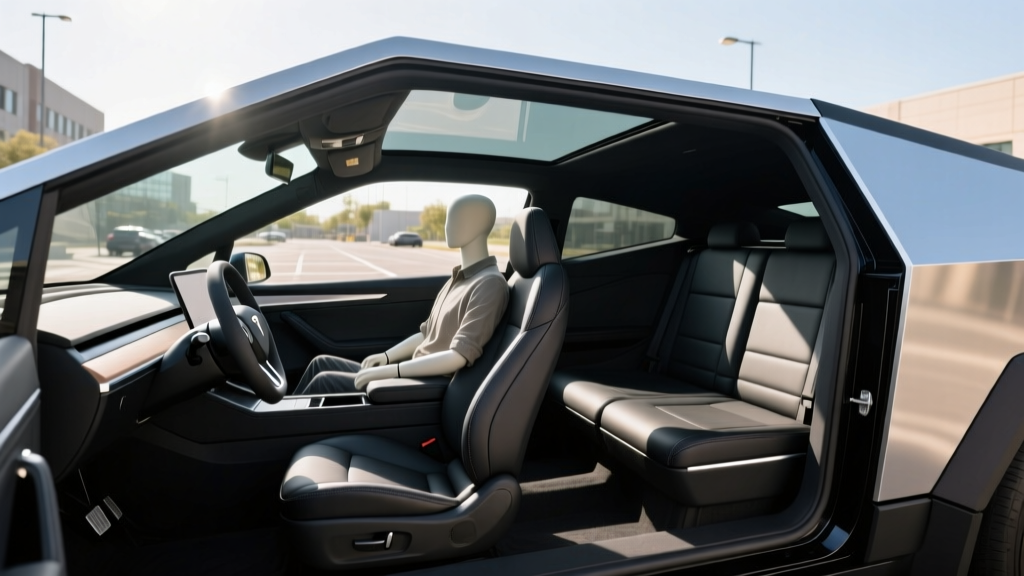
Cybertruck Powershare: Tesla's Closest Thing to V2H
The Cybertruck is the only Tesla product with any form of vehicle-to-X energy export. Tesla calls it Powershare, and it launched with the Cybertruck's production ramp in late 2024. Here's what it actually delivers:
| Spec | Cybertruck AWD | Cybertruck Cyberbeast |
|---|---|---|
| EPA Range | 340 mi | 320 mi |
| Battery Capacity | ~123 kWh (est.) | ~123 kWh (est.) |
| Battery Chemistry | NMC (2170 cells) | NMC (2170 cells) |
| Powershare V2L Output | Up to 11.5 kW (240V) | Up to 11.5 kW (240V) |
| V2L Outlets | 2× 120V (bed), 1× 240V (bed) | 2× 120V (bed), 1× 240V (bed) |
| Max DC Fast Charge | 250 kW | 250 kW |
| 10–80% DC Charge Time | ~28 min | ~28 min |
| Level 2 Home Charge | 11.5 kW (~44 mi/hr) | 11.5 kW (~44 mi/hr) |
| 0–60 mph | 3.9 sec | 2.6 sec |
| Horsepower | 600 hp | 845 hp |
| Drivetrain | Dual-Motor AWD | Tri-Motor AWD |
| MPGe (combined) | 72 MPGe | 69 MPGe |
| Base MSRP | $79,990 | $99,990 |
| Battery Warranty | 8 yr / 120,000 mi | 8 yr / 120,000 mi |
Powershare lets you run job-site tools, camping gear, or tailgate equipment directly from the Cybertruck's battery. At 11.5 kW continuous, it can run a refrigerator, microwave, and several lights simultaneously — roughly the draw of a small home during moderate use. However, Powershare is V2L, not V2H. The energy flows from the truck's outlets to plugged-in devices. It does not push energy backward through a charger into your home's breaker panel.
Why Tesla Hasn't Shipped Full V2H (Yet)
The absence of true V2H from Tesla is deliberate, not an oversight. Several factors explain the gap:
- Powerwall strategy: Tesla sells the Powerwall 3 as its dedicated home battery product. A 13.5 kWh Powerwall 3 with integrated inverter delivers 11.5 kW continuous output — enough to back up most of a home. Tesla's business model prefers selling you a $9,000–$12,000 Powerwall rather than cannibalizing that revenue with car-to-home functionality.
- Battery degradation concerns: Using a vehicle battery for home backup adds charge cycles. Tesla's battery warranty (8 years / 120,000 miles, with a 70% capacity retention threshold) is calibrated for driving cycles, not daily home-discharge cycles. Full V2H would complicate warranty terms.
- Hardware requirements: Bidirectional charging requires a compatible bidirectional EVSE (charger) and a home energy management system that can safely island from the grid. Tesla's Wall Connector is unidirectional. Replacing it with a bidirectional unit means new hardware, new UL certifications, and new utility interconnection agreements.
- Regulatory complexity: Grid-tied bidirectional systems must comply with IEEE 1547 interconnection standards and local utility rules. Tesla may be waiting for the regulatory landscape to stabilize before committing hardware.
How Tesla's Ecosystem Handles Home Backup Instead
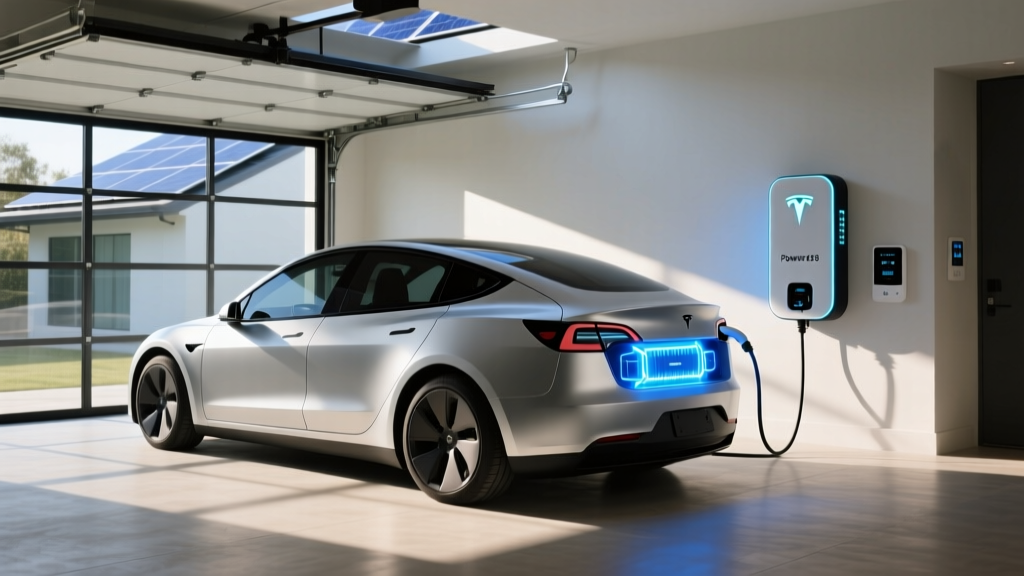
Even without V2H, Tesla owners can build a credible home-energy-resilience system using Tesla products:
| Component | Role | Capacity / Output | Approx. Installed Cost (2026) |
|---|---|---|---|
| Powerwall 3 | Home battery backup | 13.5 kWh / 11.5 kW continuous | $9,000–$12,000 |
| Solar Roof or Panels | Generation & recharge | Varies by system size | $15,000–$40,000+ |
| Wall Connector | EV Level 2 charging | 11.5 kW (48A) | $400 + $500–$2,000 install |
| Tesla App | Energy management & Storm Watch | Software layer | Included |
The Storm Watch feature in the Tesla app detects incoming severe weather and automatically charges the Powerwall to 100% before the grid fails. During an outage, the Powerwall seamlessly takes over, keeping critical circuits live. If you also have solar, the Powerwall recharges during daylight hours, extending backup indefinitely.
This is a mature, well-integrated system — but it keeps the car battery and the home battery separate. Your Model Y charges from the Powerwall (or solar), it doesn't become the Powerwall.
Competitors With Real V2H and V2G Capability
Several automakers have moved ahead of Tesla on bidirectional energy. If V2H is a priority for your purchase, consider these alternatives:
| Vehicle | Bidirectional Type | Max Export Power | Home Integration Hardware |
|---|---|---|---|
| Ford F-150 Lightning | V2H (Intelligent Backup Power) | 9.6 kW | Ford Charge Station Pro + Home Integration System |
| Hyundai Ioniq 5 | V2L (interior + exterior) | 3.6 kW | Plug-in only (no panel tie-in) |
| Kia EV9 | V2L + V2H (announced) | 3.6 kW V2L | V2H via partner hardware (limited markets) |
| GMC Sierra EV | V2H (Energy Transfer Pro) | Up to 12 kW | GM Energy V2H Enablement Kit |
| Cybertruck (Tesla) | V2L (Powershare) | 11.5 kW | Outlet-based only, no panel integration |
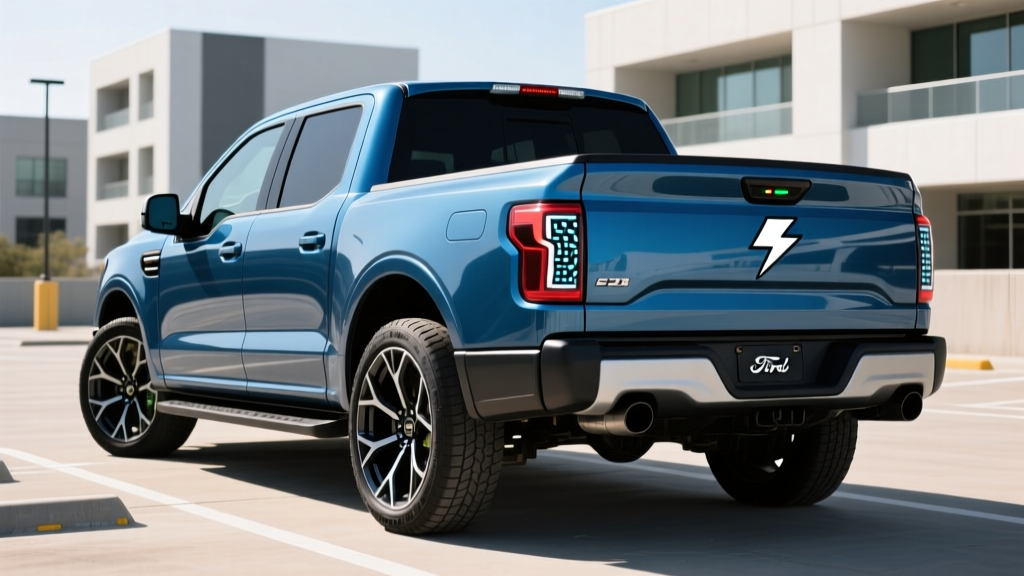
The Ford F-150 Lightning remains the benchmark for true V2H. With Ford's 80-amp Charge Station Pro and the Home Integration System (a transfer switch), the Lightning can power an average home for up to three days during an outage, feeding energy directly into your breaker panel. This is the functionality Tesla owners often assume they have — but don't.
Real-World Range, Charging, and Efficiency: Cybertruck Deep Dive
For buyers evaluating the Cybertruck as both a truck and a potential energy asset, the numbers matter:
On DC fast charging, the Cybertruck peaks at 250 kW on Tesla's V3 Superchargers. The charge curve tapers significantly above 60% state of charge — you'll see peak speeds only between roughly 10% and 40%. The 10–80% session takes approximately 28 minutes under ideal thermal conditions. Preconditioning the battery (initiated automatically when you navigate to a Supercharger) is essential for hitting peak rates.
At home on a Level 2 Wall Connector at 48 amps (11.5 kW), the Cybertruck gains roughly 44 miles of range per hour. A full 10–100% charge from empty takes about 11–12 hours — plan for overnight charging.
Efficiency is the Cybertruck's weak point. At roughly 72 MPGe combined (AWD), it consumes about 47 kWh per 100 miles. Compare that to the Model Y Long Range at 122 MPGe combined and 28 kWh/100 mi. The Cybertruck's mass (~6,600 lbs) and angular aerodynamics are the culprits. If energy cost per mile matters to you, the Cybertruck is one of the least efficient EVs on the road.
Pricing, Tax Credits, and the V2H Value Proposition
| Trim | Base MSRP | Federal §30D Credit Eligibility | Effective Price (if eligible) |
|---|---|---|---|
| Cybertruck AWD | $79,990 | Not eligible (exceeds $80,000 MSRP cap for trucks) | $79,990 |
| Cybertruck Cyberbeast | $99,990 | Not eligible (exceeds $80,000 MSRP cap for trucks) | $99,990 |
Under current IRS §30D rules, the federal EV tax credit caps eligible trucks, SUVs, and vans at an MSRP of $80,000. The Cybertruck AWD at $79,990 technically falls under the cap, but buyers must also meet income limits ($150,000 single / $300,000 joint for modified AGI) and the vehicle must satisfy critical-mineral and battery-component sourcing requirements. As of 2026, Tesla has not confirmed that the Cybertruck meets all §30D battery-sourcing criteria. Consult a tax professional before assuming credit eligibility.
Even if you qualify, the Cybertruck's V2L-only Powershare system doesn't replace a Powerwall. To get true home backup from Tesla, budget for a Powerwall 3 installation ($9,000–$12,000) on top of the truck. That pushes total investment well above $90,000 before solar.
By comparison, the Ford F-150 Lightning XLT starts around $54,995 and qualifies for up to $7,500 in federal credits (subject to income and sourcing rules), bringing effective pricing to roughly $47,495. Add Ford's Home Integration System (~$3,895 installed) and you have a true V2H-capable truck for under $52,000 — nearly $28,000 less than a Cybertruck AWD that can't power your panel.
Who Should Consider Tesla's Ecosystem (and Who Shouldn't)
Pros
- Cybertruck Powershare delivers 11.5 kW V2L — best-in-class outlet-based power
- Powerwall 3 + Solar + Tesla App is a seamless, single-brand home energy ecosystem
- Supercharger network remains the most reliable DC fast-charging network in North America
- Storm Watch provides automated outage preparation
- Strong over-the-air update track record adds features post-purchase
Cons
- No true V2H on any Tesla vehicle — Powershare is V2L only
- Cybertruck is ineligible for or unlikely to receive the $7,500 federal tax credit
- Cybertruck efficiency (72 MPGe) is poor relative to passenger EVs
- Requires separate Powerwall purchase ($9,000–$12,000+) for home backup
- Real-world range falls well below EPA estimates, especially in cold weather
- No bidirectional Wall Connector available as of 2026
Buy into the Tesla ecosystem if: You want a unified solar + Powerwall + EV charging experience under one app, you value Supercharger access, and you don't need your vehicle to back up your home's breaker panel.
Look elsewhere if: True V2H — using your truck battery to power your home during outages — is your primary use case. The Ford F-150 Lightning with Intelligent Backup Power or the GMC Sierra EV with Energy Transfer Pro deliver this functionality today at lower cost.
Frequently Asked Questions
Can I use my Tesla Model Y to power my house during an outage?
No. The Model Y, Model 3, Model S, and Model X have no bidirectional charging capability. They cannot export energy to your home's electrical system or to external devices. Only the Cybertruck offers energy export, and only through its V2L bed outlets (Powershare), not through a home-panel connection.
What is the difference between V2H, V2L, and V2G?
V2L (vehicle-to-load) powers individual devices plugged into the vehicle's outlets. V2H (vehicle-to-home) feeds energy into your home's breaker panel through a compatible bidirectional charger and transfer switch, powering entire circuits. V2G (vehicle-to-grid) sends energy back to the utility grid for grid services and demand response. Tesla currently offers only V2L (on Cybertruck).
Will Tesla add V2H to existing vehicles via software update?
Extremely unlikely. Bidirectional charging requires hardware changes in the vehicle's onboard charger and inverter, plus a compatible bidirectional EVSE. This is not a feature that can be enabled over the air. Any future Tesla V2H would require new vehicle hardware and a new bidirectional Wall Connector.
Does the Cybertruck qualify for the federal EV tax credit?
Under IRS §30D rules, trucks with an MSRP above $80,000 are ineligible. The Cybertruck AWD at $79,990 is at the threshold, but buyers must also meet income caps ($150K single / $300K joint) and the vehicle must satisfy battery-sourcing requirements. As of 2026, eligibility remains uncertain — check the latest fueleconomy.gov listings and consult a tax professional.
How much does a Powerwall 3 cost installed?
A single Powerwall 3, including the integrated inverter and professional installation, typically costs $9,000–$12,000 in 2026. Costs increase if your home requires a panel upgrade, additional conduit runs, or a backup gateway switch. Tesla offers the Powerwall directly through its website, and installation is handled by Tesla-certified electricians.
Is the Ford F-150 Lightning a better choice for home backup?
If your primary goal is using your EV to power your home during outages, yes. The F-150 Lightning with Ford's Home Integration System provides true V2H at up to 9.6 kW, can back up an average home for up to three days, and starts at a significantly lower price point than the Cybertruck. The trade-off is that Ford's public DC charging network access doesn't match Tesla's Supercharger ecosystem.