Why Tesla Dominates the Used Electric SUV Market
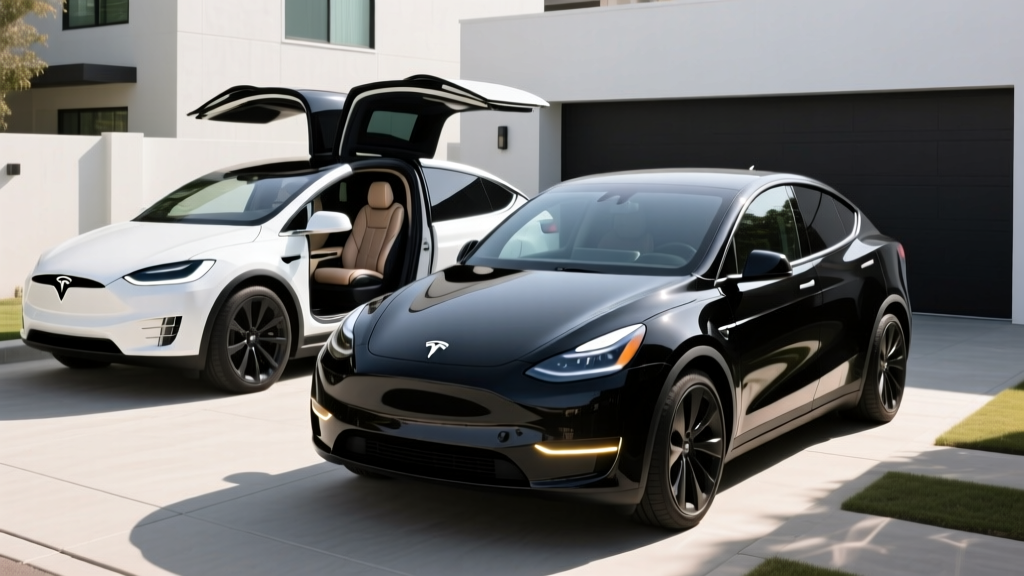
If you're searching for a Tesla used SUV, you're looking at two vehicles: the compact Model Y and the full-size Model X. Together, they account for the lion's share of pre-owned electric SUV listings in 2026 — and for good reason. Tesla's Supercharger network (now open to NACS-equipped competitors but still the most reliable DC fast-charging ecosystem), over-the-air software updates, and strong battery longevity data make used Teslas among the safest bets in the pre-owned EV market.
But "used Tesla" spans a wide range. A 2020 Model Y Long Range with 60,000 miles is a fundamentally different purchase from a 2024 Model Y with the Juniper refresh — different battery chemistries, different range, different charging curves. This guide cuts through the noise with exact specs, real-world range data, and the ownership math that matters.
Model Y: The Default Used Tesla SUV Pick
The Model Y has been Tesla's volume seller since 2020, which means the used market is flush with examples. Here's what you need to know by model year and trim.
| Spec | 2020–2022 Long Range AWD | 2023–2025 Long Range AWD | 2024–2025 RWD (LFP) |
|---|---|---|---|
| EPA Range | 303–330 mi | 303–310 mi | 260 mi |
| Battery Capacity (usable) | ~75 kWh (NMC) | ~75 kWh (NMC) | ~60 kWh (LFP) |
| 0-60 mph | 4.8 sec | 4.8 sec | 6.6 sec |
| Horsepower | 384 hp (dual motor) | 384 hp (dual motor) | 295 hp (single motor) |
| Peak DC Fast Charge | 250 kW | 250 kW | 170 kW |
| 10–80% DC Charge Time | ~27 min | ~27 min | ~32 min |
| Level 2 Home Charge (kW) | 11.5 kW (~44 mi/hr) | 11.5 kW (~44 mi/hr) | 7.7 kW (~30 mi/hr) |
| MPGe (combined) | 117–122 MPGe | 117 MPGe | 123 MPGe |
| Efficiency | 28–29 kWh/100mi | 29 kWh/100mi | 27 kWh/100mi |
| Cargo (rear seats up / down) | 30.2 / 76.2 cu ft | 30.2 / 76.2 cu ft | 30.2 / 76.2 cu ft |
| Battery Warranty | 8 yr / 120,000 mi | 8 yr / 120,000 mi | 8 yr / 100,000 mi |
Source: EPA / fueleconomy.gov
Real-World Range: What to Actually Expect
EPA sticker: 303–330 miles (Long Range AWD)
Highway driving (70–80 mph): Expect 250–275 miles. Tesla's efficiency is strong, but aerodynamic drag at highway speed consumes ~15–20% more energy than the combined EPA cycle.
Cold weather (below 30°F): Plan for 200–240 miles. Lithium-ion batteries lose efficiency in the cold, and cabin heating draws significant power. Models with a heat pump (standard on 2021+ builds) lose ~15–20% range rather than the 25–35% seen on older resistive-heater EVs.
City / moderate climate: You can approach or occasionally exceed the EPA number thanks to regenerative braking recapturing energy.
Charging: The Supercharger Advantage
On a V3 Supercharger (250 kW peak), a used Model Y Long Range charges from 10% to 80% in roughly 27 minutes. However, peak rate is not sustained rate — the charge curve tapers significantly above 50% State of Charge (SoC). You'll see 250 kW briefly around 10–15% SoC, dropping to ~150 kW by 40%, and ~75 kW by 70%. This is normal lithium-ion behavior, not a defect.
At home on a Level 2 wall connector (11.5 kW / 48A circuit), you'll add approximately 44 miles of range per hour — a full overnight session from 20% to 80% takes about 4.5 hours. The RWD (LFP) model charges slower at 7.7 kW on Level 2 but Tesla recommends periodically charging LFP batteries to 100%, which offsets the slower rate with usable capacity.
| Charging Level | Power (kW) | Miles of Range Added per Hour | Typical Use Case |
|---|---|---|---|
| Level 1 (120V outlet) | ~1.4 kW | ~3–5 mi/hr | Emergency / trickle |
| Level 2 (240V, Wall Connector) | 11.5 kW (LR) / 7.7 kW (RWD) | ~44 mi/hr (LR) / ~30 mi/hr (RWD) | Daily home charging |
| DC Fast (V3 Supercharger) | 250 kW peak (LR) / 170 kW (RWD) | ~1,000+ mi/hr (peak) | Road trips |
Battery Chemistry Matters: NMC vs LFP on Used Model Ys
This is a critical distinction many used buyers miss:
- 2020–2025 Long Range / Performance (NMC — Nickel Manganese Cobalt): Higher energy density, faster DC charging, but Tesla recommends daily charging to 80% for longevity. Best for buyers who need maximum range and fast road-trip charging.
- 2022+ RWD Standard Range (LFP — Lithium Iron Phosphate): Lower energy density (hence 260-mile range) and slower DC charging, but LFP cells tolerate daily 100% charging with minimal degradation. LFP also uses no cobalt or nickel. Best for commuters with predictable daily driving under 150 miles.
Check the vehicle listing or Tesla app for battery type. If the listing says "Standard Range" or "RWD" from 2022 onward, it's almost certainly LFP.
Model X: The Premium Used Tesla SUV Option
The Model X targets a different buyer: families needing three rows, buyers who want falcon-wing rear doors, and those towing up to 5,000 pounds. Used inventory is thinner and prices are higher, but the vehicle offers capabilities no Model Y can match.
| Spec | 2020–2021 Long Range Plus / LR | 2022–2025 Long Range | 2022–2025 Plaid |
|---|---|---|---|
| EPA Range | 328–348 mi | 329–348 mi | 303–311 mi |
| Battery Capacity (usable) | ~100 kWh (NMC) | ~100 kWh (NMC) | ~100 kWh (NMC) |
| 0-60 mph | 3.8 sec | 3.8 sec | 2.5 sec |
| Horsepower | 670 hp | 670 hp | 1,020 hp |
| Peak DC Fast Charge | 250 kW | 250 kW | 250 kW |
| 10–80% DC Charge Time | ~32 min | ~32 min | ~32 min |
| Level 2 Home Charge | 11.5 kW (~34 mi/hr) | 11.5 kW (~34 mi/hr) | 11.5 kW (~34 mi/hr) |
| MPGe (combined) | 98–101 MPGe | 98–103 MPGe | 95–98 MPGe |
| Cargo (behind 3rd / 2nd / 1st row) | — / 37.1 / 83.1 cu ft | — / 37.1 / 83.1 cu ft | — / 37.1 / 83.1 cu ft |
| Towing Capacity | 5,000 lbs | 5,000 lbs | 5,000 lbs |
| Battery Warranty | 8 yr / 150,000 mi | 8 yr / 150,000 mi | 8 yr / 150,000 mi |
Source: EPA / fueleconomy.gov
Model X Real-World Range Reality
EPA sticker: 329–348 miles (Long Range)
Highway driving (70–80 mph): Expect 270–300 miles. The Model X is larger, heavier, and less aerodynamic than the Model Y (those falcon-wing doors add weight and the SUV profile increases drag).
Cold weather: Plan for 220–260 miles with the heat pump (standard on refreshed 2021+ models). Pre-2021 models with resistive heating will lose more.
Towing: Range drops dramatically when towing — expect 150–180 miles at highway speeds with a loaded trailer. Plan charging stops accordingly.
Used Tesla SUV Pricing in 2026: What You'll Actually Pay
Used EV prices have stabilized considerably since the 2022–2023 spike. Here's where the market sits in early 2026 for well-maintained examples with 30,000–60,000 miles:
| Model & Year | Typical Price Range | Notes |
|---|---|---|
| 2020–2021 Model Y Long Range AWD | $22,000–$28,000 | Pre-refresh; check for MCU1 vs MCU2 |
| 2022–2023 Model Y Long Range AWD | $28,000–$34,000 | Best value sweet spot; newer battery |
| 2024–2025 Model Y (Juniper refresh) | $38,000–$46,000 | Updated interior, quieter cabin |
| 2020–2021 Model X Long Range | $38,000–$48,000 | Pre-refresh; watch for air suspension issues |
| 2022–2025 Model X Long Range | $55,000–$72,000 | Refreshed interior, yoke optional |
| 2022–2025 Model X Plaid | $62,000–$85,000 | Performance niche; higher insurance |
The Used-EV Federal Tax Credit (§25E)
Here's a major advantage of buying a used Tesla SUV: you may qualify for the §25E Previously-Owned Clean Vehicle Credit, which provides up to $4,000 (or 30% of the sale price, whichever is lower) on qualifying used EVs.
- Sale price cap: Vehicle must sell for $25,000 or less
- Buyer income caps (AGI): $75,000 single / $112,500 head of household / $150,000 married filing jointly
- Vehicle age: Must be at least 2 model years old (so 2024 or older when buying in 2026)
- Dealer requirement: Must be purchased from a licensed dealer (private-party sales don't qualify)
- First-time transfer: The credit applies only to the first qualifying sale after August 16, 2022
This means a 2021 Model Y Long Range listed at $24,500 from a dealer could net you a $4,000 credit, bringing your effective cost to $20,500 — an extraordinary value for a 300+ mile electric SUV. Note: the §30D new-vehicle credit (up to $7,500) does not apply to used purchases. Consult a tax professional and review current rules at IRS.gov §25E.
What to Inspect Before Buying a Used Tesla SUV
Used Teslas require different pre-purchase checks than conventional vehicles. Skip the oil-analysis — focus on these:
Battery Health (State of Health)
Request the current State of Health (SoH) percentage. You can check this in the Tesla Service menu or via third-party apps like Tessie or TeslaFi. Most Model Y and Model X batteries show 88–95% SoH after 50,000 miles — Tesla's NMC and LFP cells degrade slowly in the first few years. If SoH is below 85%, negotiate aggressively or walk away. Tesla's battery warranty covers capacity below 70% for 8 years.
Drive Unit and Suspension
Early Model X vehicles (2016–2019) had documented air suspension and drive unit failures. While 2020+ models are improved, check service records for any drive unit replacements. For the Model Y, inspect the front upper control arms — some 2020–2022 examples developed clunking noises from worn ball joints (a relatively inexpensive fix).
Software and Hardware Generation
Tesla has shipped multiple hardware revisions under the same model name. Key distinctions:
- HW3 vs HW4 (Autopilot computer): HW4 (introduced ~2023) has improved cameras and processing. Both support FSD Supervised, but HW4 is more future-proof.
- MCU1 vs MCU2 vs MCU3 (Media Control Unit): MCU1 (pre-2018 Model X) is sluggish and no longer receiving feature updates. Avoid MCU1 vehicles or budget for a $1,500–$2,000 upgrade.
- Heat pump vs resistive heater: 2021+ Model Y and refreshed Model X have heat pumps — significantly more efficient in cold weather. Pre-2021 Model Y still uses a heat pump (it was introduced at Model Y launch), but early Model X does not.
Autopilot and FSD Transferability
Be aware: Tesla's Full Self-Driving (Supervised) capability does not always transfer to a new owner on used vehicles. Tesla has periodically offered FSD transfers as promotions, but as a rule, FSD purchased by a prior owner may not carry over. Verify FSD status in the Tesla app before purchase. Basic Autopilot (lane-keeping and adaptive cruise) is included with every vehicle. Remember: Autopilot and FSD Supervised are SAE Level 2 driver-assistance systems — you must remain engaged and ready to take over at all times.
Model Y vs Model X: Which Used Tesla SUV Is Right for You?
Choose the Used Model Y If:
- You're a daily commuter driving under 200 miles round-trip
- You want the lowest total cost of ownership in a used electric SUV
- You need cargo flexibility (76.2 cu ft with seats folded is class-leading)
- You want access to the largest used inventory and best pricing
- You qualify for the §25E used-EV credit (vehicle must be ≤$25,000)
Choose the Used Model X If:
- You need a third row for kids or occasional adult passengers
- You tow a boat, camper, or trailer (5,000 lb capacity)
- You want falcon-wing doors for easy car-seat access in tight parking
- You prioritize a premium, air-suspension-equipped ride
- Budget allows $45,000+ for a well-maintained refreshed example
Pros and Cons of Buying a Used Tesla SUV
Pros
- Supercharger network remains the gold standard for road-trip charging reliability
- Over-the-air updates continue adding features years after purchase
- Strong battery longevity data — most packs retain 88%+ capacity at 100k miles
- Minimal maintenance: no oil changes, no transmission fluid, brake pads last 100k+ miles thanks to regen
- §25E used-EV credit can knock up to $4,000 off qualifying purchases
- Class-leading efficiency (Model Y: ~28 kWh/100mi) keeps charging costs low
Cons
- Insurance premiums run 15–30% higher than comparable gas SUVs (get quotes before buying)
- Tesla service center availability varies widely by region — some areas have weeks-long wait times
- Build quality inconsistency on 2020–2022 vehicles (panel gaps, rattles) — inspect in person
- FSD Supervised may not transfer to second owner — verify before paying a premium
- No Apple CarPlay or Android Auto — you're locked into Tesla's native infotainment
- Model X air suspension and falcon-wing door mechanisms can be costly to repair out of warranty
Competitors to Consider in the Used Electric SUV Market
A used Tesla SUV isn't the only option. Key competitors worth cross-shopping:
- Used Ford Mustang Mach-E (2021–2024): Competitive range (~230–314 mi EPA), more conventional SUV feel, often priced $2,000–$5,000 below a comparable Model Y. Downsides: slower DC charging on early models, smaller Supercharger-adjacent network access.
- Used Hyundai Ioniq 5 (2022–2024): 800V architecture enables 10–80% charging in ~18 minutes — faster than any Tesla. Quirky styling, great interior. Downsides: smaller cargo area, no frunk on some trims, less public charging infrastructure optimization.
- Used Kia EV6 (2022–2024): Shares the Ioniq 5's 800V platform, sportier driving dynamics, ~232–310 mi EPA range. Similar charging-speed advantage over Tesla.
- Used BMW iX (2022–2024): Premium luxury competitor to the Model X. Excellent build quality, ~300–324 mi EPA range, but significantly higher used pricing ($50,000–$70,000) and smaller service network.
Frequently Asked Questions
What is the real-world range of a used Tesla Model Y?
For a 2020–2025 Model Y Long Range AWD (EPA-rated 303–330 miles), expect approximately 250–275 miles on highway road trips at 70–80 mph, and 200–240 miles in sub-freezing winter conditions. City driving with regenerative braking can approach or exceed the EPA number in moderate temperatures.
How fast does a used Tesla SUV charge at home and on road trips?
At home on a Level 2 Tesla Wall Connector (240V, 48A), a Model Y Long Range adds about 44 miles of range per hour (11.5 kW). On a V3 Supercharger, it peaks at 250 kW and charges from 10% to 80% in approximately 27 minutes. The Model X charges at similar rates but takes ~32 minutes due to its larger 100 kWh battery.
How much does a used Tesla SUV cost after tax credits?
A qualifying 2020–2021 Model Y Long Range purchased from a dealer for $25,000 or less can receive the §25E used-EV credit of up to $4,000 (buyer income caps apply: $75k single / $150k married filing jointly). This can bring effective cost as low as $20,000–$21,000 for a well-equipped 300-mile electric SUV. The Model X rarely qualifies for §25E because its sale price typically exceeds the $25,000 cap.
Is a used Tesla SUV worth buying versus a used Ford Mach-E or Hyundai Ioniq 5?
If charging infrastructure reliability is your top priority, the Tesla's Supercharger access is still unmatched for road trips. If you value faster DC charging sessions, the Ioniq 5's 800V architecture charges 10–80% in ~18 minutes versus Tesla's ~27 minutes. The Mach-E offers a more traditional SUV driving feel. All three are strong choices — test-drive each and compare local service availability.
Does a used Tesla qualify for the federal EV tax credit?
Used Teslas can qualify for the §25E Previously-Owned Clean Vehicle Credit (up to $4,000), not the §30D new-vehicle credit. Key requirements: sale price ≤$25,000, buyer income under AGI caps, vehicle at least 2 model years old, purchased from a licensed dealer. The §30D credit of up to $7,500 applies only to new EV purchases. Always verify current eligibility at IRS.gov and consult a tax professional.
How long will a used Tesla battery last?
Tesla's battery warranty guarantees at least 70% capacity retention for 8 years / 120,000 miles (Model Y) or 8 years / 150,000 miles (Model X). Real-world data from high-mileage Teslas shows most NMC packs retain 88–92% capacity at 100,000 miles. LFP packs (Model Y RWD) show even slower degradation. Full battery replacement, if ever needed, runs approximately $12,000–$16,000 for a Model Y and $18,000–$22,000 for a Model X at Tesla Service.
Should I be concerned about Tesla service and parts availability?
This varies significantly by metro area. Major cities with multiple Tesla Service Centers generally have 1–2 week appointment availability. Rural or underserved regions may face 3–6 week waits. Mobile Ranger service handles many common repairs at your home or office. Before buying, check the nearest Tesla Service Center location and read local owner-community feedback.