Quick Verdict: The Cybertruck in 2026
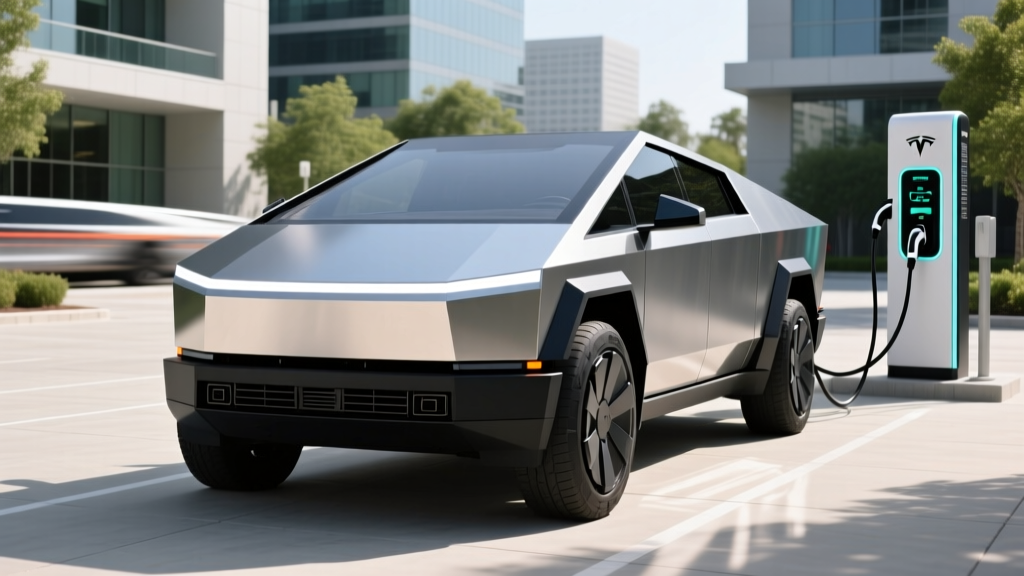
The Tesla Cybertruck enters its third full model year in 2026 with expanded exterior wrap options, incremental software refinements, and a lineup that now includes the long-awaited dual-motor AWD variant alongside the tri-motor Cyberbeast. While the stainless-steel exoskeleton remains the truck's most polarizing feature, the conversation among buyers increasingly centers on practical questions: which Cybertruck colours actually hold up in daily use, how far can you really drive on a charge, and does it still qualify for the federal EV tax credit? This guide answers all of those questions with real numbers, not marketing copy.
Tesla Cybertruck Colours and Exterior Options
The Cybertruck's bare stainless-steel body panels are its default "colour" — an unpainted, cold-rolled 30X stainless finish that Tesla says is dent-resistant and eliminates the need for a traditional paint shop. But for buyers searching for tesla truck colours that stand out or suit a fleet livery, Tesla and the aftermarket offer several paths:
- Stealth Matte Black Wrap — A factory-installed satin PPF (paint protection film) that transforms the truck into a monochrome matte-black silhouette. This is the most popular dealer-applied option and adds roughly $3,000 to the build.
- Satin White Wrap — A lighter PPF option that contrasts sharply with the dark trim and wheel arches; favored by buyers in hot climates for its solar reflectance.
- Aftermarket Vinyl Wraps — The flat, angular panels of the Cybertruck are ideal for custom wraps. Shops charge $2,500–$5,000 for full-body colour changes in hues like Nardo Grey, British Racing Green, or color-shift finishes.
- Unwrapped Stainless — The raw finish develops a unique patina over time. Owners report that light surface scratches blend into the brushed grain, but fingerprints and water spots require frequent wiping with a microfiber cloth and stainless-steel cleaner.
If you're ordering new, Tesla's configurator typically lists the Stealth Black wrap as the sole factory colour option beyond bare steel. Third-party wraps void no mechanical warranty, though Tesla service centers may require wrap removal for certain body-panel work.
Range, Battery, and Real-World Efficiency
The 2026 Cybertruck lineup uses a structural battery pack with an estimated 123 kWh usable capacity (NMC chemistry, 4680-format cells). Here's how the trims stack up on paper and on the road:
| Spec | AWD (Dual-Motor) | Cyberbeast (Tri-Motor) |
|---|---|---|
| EPA Est. Range | 340 miles | 320 miles |
| Battery (Usable) | ~123 kWh, NMC | ~123 kWh, NMC |
| Drivetrain | Dual-Motor AWD | Tri-Motor AWD |
| Horsepower | 600 hp | 845 hp |
| 0-60 mph | 4.1 sec | 2.6 sec |
| Efficiency (MPGe) | 67 MPGe combined | 63 MPGe combined |
| kWh/100 mi | ~48 kWh/100 mi | ~52 kWh/100 mi |
| Towing Capacity | 11,000 lbs | 11,000 lbs |
The Cybertruck's angular shape creates a high drag coefficient (~0.38 Cd estimated), which penalizes highway efficiency far more than a sleeker SUV like the Model X. Around town, regenerative braking and lower aero drag help the truck approach or even exceed its EPA city rating.
Charging Speed: DC Fast, Level 2, and the Charge Curve
Charging speed is where the Cybertruck's 4680 cells show their advantage — and their limitations.
| Charging Level | Max Rate | Speed / Time |
|---|---|---|
| DC Fast Charge (Supercharger V4) | 250 kW peak | 10-80% in ~28 minutes |
| DC Fast Charge (CCS adapter, 350 kW station) | 250 kW peak (vehicle-limited) | 10-80% in ~28 minutes |
| Level 2 Home (Tesla Wall Connector, 48A) | 11.5 kW | ~37 miles of range per hour |
| Level 2 Home (NEMA 14-50, 40A) | 9.6 kW | ~31 miles of range per hour |
| Level 1 (120V standard outlet) | 1.4 kW | ~4-5 miles of range per hour |
Understanding the charge curve: The 250 kW peak rate is not sustained across the entire session. The Cybertruck hits peak charge rate between roughly 10-35% SoC, then tapers progressively. From 80-100%, charging slows dramatically to protect the NMC cells — a full 80-100% top-off can take as long as the 10-80% session itself. For road trips, plan your stops around 10-80% increments to minimize total charging time.
At home on a 48A Wall Connector, a full overnight charge (8-10 hours) replenishes the pack easily. Buyers without a 240V outlet should budget $500-$1,500 for a licensed electrician to install a NEMA 14-50 receptacle, or $1,200-$2,500 for a hardwired Wall Connector installation depending on panel proximity and local permit costs.
Pricing, Trims, and Federal Tax Credit Eligibility
Tesla's pricing has stabilized after the volatile launch period of 2023-2024. Here's the 2026 lineup:
| Trim | Base MSRP | As-Tested (typical options) | Federal §30D Credit Eligible? |
|---|---|---|---|
| AWD (Dual-Motor) | $79,990 | $83,000-$86,000 | No — exceeds MSRP cap |
| Cyberbeast (Tri-Motor) | $99,990 | $102,000-$107,000 | No — exceeds MSRP cap |
Tesla discontinued the previously announced rear-wheel-drive "base" Cybertruck ($60,990 target) that was teased during the 2019 unveiling. As of 2026, the AWD at $79,990 is the entry point.
Interior, Cargo, and Everyday Usability
The Cybertruck seats five across two rows. Interior materials have improved since launch, with a vegan leatherette that resists the scuffing early owners reported. Rear legroom measures approximately 38.5 inches, adequate for adults but tighter than a Ford F-150 Lightning's back seat.
- Bed length: 6 feet (72 inches) with the tonneau cover closed
- Bed width (between wheel wells): ~48 inches
- Cargo volume (bed): ~67 cu ft
- Frunk: ~7 cu ft lockable front trunk
- Sail pillars / vault: The triangular C-pillar area houses the 120V/240V PowerShare outlets
The motorized tonneau cover is standard and supports up to 300 lbs of distributed weight. However, the angled bed sides and vault design make loading wide items (like full sheets of plywood flat) more challenging than in a conventional pickup.
Tech, Autopilot, and Notable Drawbacks
The Cybertruck runs Tesla's latest vehicle software on an 18.5-inch front touchscreen with a secondary 9.4-inch rear screen for passengers. Key tech features:
- Autopilot (included): SAE Level 2 adaptive cruise + lane centering. Driver must remain fully attentive.
- Full Self-Driving Supervised ($8,000 option): SAE Level 2 — adds automatic lane changes, traffic-light recognition, and city-street navigation. This is not autonomous driving; the driver is responsible at all times.
- Steer-by-wire: No mechanical connection between the yoke and wheels. Enables the variable-ratio steering (less than one full turn lock-to-lock) and eliminates the traditional steering column.
- 48V electrical architecture: Reduces wiring harness weight and enables higher-power accessories.
- Bioweapon Defense Mode: HEPA filtration system for cabin air quality.
Notable drawbacks:
- The yoke steering demands a significant learning curve, especially in parking lots and three-point turns.
- Stainless-steel panels show fingerprints and water spots aggressively — the "tesla truck colours" question often resolves to "wrap it or clean it constantly."
- No Apple CarPlay or Android Auto; you're locked into Tesla's native infotainment.
- The rear visibility is limited by the vault/sail-pillar design; the digital rearview camera is essential.
- Insurance premiums run 20-40% higher than comparable trucks due to repair costs for the stainless body and steer-by-wire system.
Warranty Coverage
| Component | Coverage |
|---|---|
| Limited Vehicle Warranty | 4 years / 50,000 miles |
| Battery & Drive Unit | 8 years / 120,000 miles (min. 70% retention) |
| Restraint System | 5 years / 60,000 miles |
Tesla's battery warranty guarantees at least 70% capacity retention over 8 years or 120,000 miles, whichever comes first. The NMC 4680 cells are expected to degrade roughly 10-12% over the first 100,000 miles based on current fleet data, though long-term 200,000+ mile data is still accumulating.
Who Should Buy the 2026 Cybertruck?
Choose the Cybertruck AWD if: You want a distinctive daily-driver truck with strong towing capability (11,000 lbs), reasonable range for commuting and weekend trips, and you value Tesla's Supercharger network access. Best for tech-forward buyers who don't need a traditional work-truck bed layout.
Choose the Cyberbeast if: Performance is a priority and the 2.6-second 0-60 time justifies the $20,000 premium. You accept the range penalty (~20 fewer EPA miles) and higher insurance costs.
Look elsewhere (F-150 Lightning, Rivian R1T, Chevy Silverado EV) if: You need maximum rear-seat space, a conventional bed for flat-load work use, CarPlay integration, or eligibility for the $7,500 federal tax credit.
- Distinctive design; stainless exoskeleton is genuinely dent-resistant
- Strong 11,000-lb towing with integrated trailer brake controller
- Access to Tesla Supercharger network (17,000+ stalls in North America)
- 250 kW DC fast charging keeps road-trip stops reasonable
- Steer-by-wire enables tight turning radius for a full-size truck
- Over-the-air updates continuously add features
- Does not qualify for $7,500 federal tax credit (MSRP cap)
- Real-world highway range falls 15-20% below EPA estimate
- Yoke steering has a steep learning curve
- No Apple CarPlay / Android Auto
- Bed design limits flat-load utility vs. conventional trucks
- Insurance costs significantly above segment average
Frequently Asked Questions
What is the real-world range of the 2026 Tesla Cybertruck?
The AWD trim carries a 340-mile EPA estimate, but real-world highway driving at 70+ mph yields approximately 270-290 miles. In cold weather (below 30°F), expect 220-250 miles. Towing reduces range to roughly 160-170 miles with a 7,000-lb trailer.
How fast does the Cybertruck charge at home and on the road?
On a DC fast charger (Supercharger V4 or CCS-equipped 350 kW station), the Cybertruck peaks at 250 kW and charges from 10-80% in approximately 28 minutes. At home on a 48A Tesla Wall Connector (11.5 kW), it adds about 37 miles of range per hour — a full overnight charge covers daily needs easily.
How much does the Cybertruck cost after tax credits?
The Cybertruck does not qualify for the $7,500 federal §30D tax credit because the as-tested price exceeds the $80,000 MSRP cap for trucks. Expect to pay the full $79,990+ MSRP (AWD) or $99,990+ (Cyberbeast), plus destination and any wrap or FSD options. Some state-level incentives may still apply — check your local energy agency.
Is the Cybertruck worth buying vs. the F-150 Lightning or Rivian R1T?
If you prioritize Supercharger network access, steer-by-wire novelty, and Tesla's software ecosystem, the Cybertruck is compelling. If you need maximum rear-seat comfort, a work-friendly flat-load bed, CarPlay, or the $7,500 federal tax credit, the F-150 Lightning or Rivian R1T may be better fits. Test-drive all three before deciding.
What tesla truck colours are available from the factory?
From the factory, the Cybertruck comes in bare stainless steel (no paint) or with a dealer-installed Stealth Matte Black PPF wrap. Satin White wraps are occasionally offered. For other colours, buyers turn to aftermarket vinyl wrap shops, which charge $2,500-$5,000 for full-body applications in any colour imaginable.
Does the Cybertruck qualify for the federal EV tax credit?
No, not in practice. While the base AWD MSRP of $79,990 technically falls under the $80,000 truck cap, any factory option (wrap, FSD, accessories) pushes the price above the threshold. Additionally, buyer income caps ($150K single / $300K joint) and battery-sourcing rules under IRS §30D apply. Consult a tax professional for your specific situation.
How long will the Cybertruck battery last?
Tesla warranties the battery for 8 years / 120,000 miles with a minimum 70% capacity retention guarantee. Based on 4680 NMC cell data from the broader Tesla fleet, expect roughly 10-12% degradation over the first 100,000 miles, with the curve flattening afterward. Full pack replacement (if ever needed outside warranty) is estimated at $15,000-$20,000+ based on current labor and cell costs.