Why Tesla Owners Are Searching for a Turn Signal Stalk Retrofit
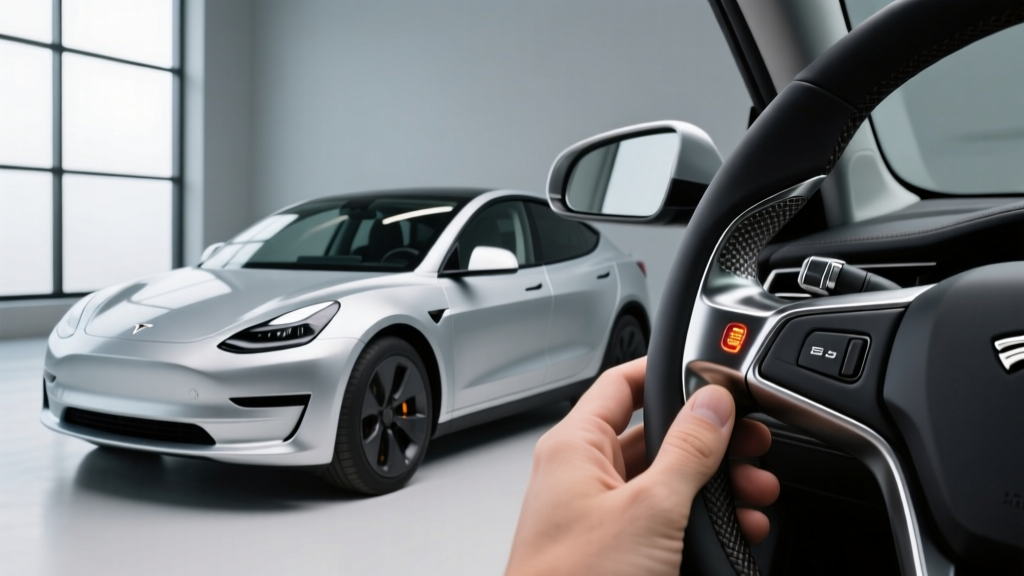
When Tesla launched the refreshed Model 3 (the "Highland" project) in late 2024 and carried that design language into the 2025 Model Y ("Juniper"), it eliminated one of the most universally understood controls in automotive history: the turn signal stalk. Instead, Tesla embedded capacitive touch buttons on the steering wheel rim. For roundabouts, highway lane changes, and low-speed maneuvering, many owners found the wheel-mounted buttons counterintuitive — your thumb must hunt for a button that rotates with the wheel.
This frustration has driven a growing search for a Tesla turn signal stalk retrofit — an aftermarket solution to restore a physical, column-mounted indicator lever. In this guide, we examine whether such a retrofit is possible in 2026, what it costs, what the alternatives are, and we provide a full ownership review of the vehicles at the center of the controversy: the current-generation Tesla Model 3 and Model Y.
Is a Tesla Turn Signal Stalk Retrofit Actually Possible?
The short answer: not easily, and not through any Tesla-sanctioned channel. Here is why:
- Hardware architecture: The current Model 3 and Model Y steering columns were redesigned without the physical mounting point, wiring harness, or clock-spring integration for a traditional stalk. Retrofitting one requires fabricating a custom bracket and splicing into the vehicle's CAN bus.
- Software integration: Tesla's firmware expects turn signal inputs from the steering wheel button matrix. A physical stalk would need a signal translator module to mimic those digital inputs — no plug-and-play adapter existed as of early 2026.
- Warranty risk: Any modification to the steering column or CAN wiring almost certainly voids the affected portions of Tesla's New Vehicle Limited Warranty, and could trigger a software flag that disables related systems.
- Safety and regulation: The steering column is a crash-safety component. Modifying it may affect NHTSA compliance and insurance coverage in the event of a collision.
Workarounds Tesla Owners Are Using Instead
While a full stalk retrofit remains impractical, owners have developed coping strategies:
- Muscle-memory adaptation: Most owners report adjusting to wheel-mounted buttons within 2–4 weeks of daily driving. The learning curve is steepest for roundabout-heavy routes.
- Auto-cancel behavior awareness: Tesla's software uses GPS and steering-angle data to auto-cancel signals. Understanding when the car will (and won't) cancel helps reduce manual intervention.
- Steering wheel covers with tactile markers: Some aftermarket covers add a raised bump or textured zone over the signal buttons, making them easier to find by feel.
- Voice command fallback: Saying "Turn signal left" via Tesla's voice assistant works, though it is slower than a physical input.
- Wait for a mid-cycle update: Industry speculation suggests Tesla may reintroduce a stalk option in a future refresh, though this is unconfirmed.
2026 Tesla Model 3 Review: Range, Charging, and Real-World Ownership
Since the turn signal stalk debate centers on the current Model 3, here is a comprehensive spec profile for the 2026 model year.
| Spec | Model 3 RWD | Model 3 Long Range AWD | Model 3 Performance |
|---|---|---|---|
| EPA Range | 363 mi | 341 mi | 315 mi |
| Battery (usable) | ~57.5 kWh (LFP) | ~75 kWh (NMC) | ~75 kWh (NMC) |
| Max DC Fast Charge | 170 kW | 250 kW | 250 kW |
| 10–80% DCFC Time | ~25 min | ~21 min | ~21 min |
| Level 2 Home Charge | 11.5 kW (~44 mi/hr) | 11.5 kW (~44 mi/hr) | 11.5 kW (~44 mi/hr) |
| 0–60 mph | 5.8 sec | 4.2 sec | 2.9 sec |
| Horsepower | 271 hp | 346 hp | 510 hp |
| Drivetrain | RWD | AWD (Dual Motor) | AWD (Dual Motor) |
| EPA Efficiency | 132 MPGe (25 kWh/100mi) | 131 MPGe (26 kWh/100mi) | 119 MPGe (28 kWh/100mi) |
| Cargo Volume | 23 cu ft (rear + frunk) | 23 cu ft | 23 cu ft |
| Rear Legroom | 35.3 in | 35.3 in | 35.3 in |
| Base MSRP (2026) | $38,990 | $44,990 | $52,990 |
Charging Speed in Practice: What the Curve Really Looks Like
| Charging Level | Power | Miles Added per Hour | Best Use Case |
|---|---|---|---|
| Level 1 (120V outlet) | ~1.4 kW | ~4–5 mi/hr | Overnight trickle, emergencies |
| Level 2 (240V, 48A) | 11.5 kW | ~44 mi/hr | Daily home charging |
| DC Fast Charge (RWD) | Peak 170 kW | ~650 mi/hr (peak) | Road trips, 25 min 10–80% |
| DC Fast Charge (LR/Perf) | Peak 250 kW | ~1,000 mi/hr (peak) | Road trips, 21 min 10–80% |
Charging curve reality: The 250 kW peak on Long Range and Performance models is sustained only between roughly 10% and 35% State of Charge. Above 50%, the rate tapers to ~100 kW, and above 80% it drops below 50 kW. This is normal lithium-ion behavior but means a 10–90% session takes closer to 35 minutes, not 21. Always precondition the battery via the Tesla navigation system before arriving at a Supercharger for optimal speeds.
Pricing, Tax Credits, and What You Actually Pay
| Trim | MSRP | Est. Fed Credit (§30D) | Effective Price |
|---|---|---|---|
| Model 3 RWD | $38,990 | $0–$7,500* | $31,490–$38,990 |
| Model 3 Long Range AWD | $44,990 | $0–$7,500* | $37,490–$44,990 |
| Model 3 Performance | $52,990 | $0–$7,500* | $45,490–$52,990 |
- *§30D Credit Eligibility Caveats (2026 rules): The $7,500 credit requires the vehicle's battery to meet critical-mineral and battery-component sourcing thresholds set by the IRS. These thresholds tighten annually. Additionally:
- Buyer AGI must not exceed $150,000 (single) / $300,000 (joint).
- Vehicle MSRP must not exceed $55,000 for sedans (Model 3 qualifies; Performance trim at $52,990 is under the cap).
- The credit can be transferred to the dealer at point of sale as an instant discount.
- Tesla's LFP battery (RWD trim) sources cells from CATL — eligibility for the full credit depends on current-year sourcing rules. Always verify on the IRS qualified vehicles list before purchasing.
Tech, Driver Assistance, and the Stalk-less Interior
The current Model 3 interior is defined by minimalism — a single 15.4-inch center touchscreen handles virtually all vehicle functions. Key tech includes:
- Autopilot (standard): SAE Level 2 driver assistance with adaptive cruise and lane centering. Requires hands-on-wheel supervision at all times.
- Full Self-Driving Supervised ($8,000 option): Adds automatic lane changes, intersection handling, and parking. Still SAE Level 2 — the driver must remain fully attentive. This is not autonomous driving.
- Ventilated front seats, ambient lighting, and rear-seat touchscreen (8-inch display for climate/entertainment) were added in the Highland refresh.
- Turn signal buttons on steering wheel: The controversial design. Left/right capacitive buttons sit at the 9 and 3 o'clock positions on the wheel rim. A swipe gesture on the touchscreen can also activate signals.
Warranty Coverage
| Coverage | Term |
|---|---|
| Basic Vehicle | 4 years / 50,000 miles |
| Battery & Drive Unit (RWD) | 8 years / 100,000 miles (70% minimum retention) |
| Battery & Drive Unit (LR/Perf) | 8 years / 120,000 miles (70% minimum retention) |
Tesla's battery warranty guarantees that the pack will retain at least 70% of its original capacity during the warranty period. Real-world data from Tessie and Recurrent Auto suggest most Tesla packs lose only 8–12% capacity over the first 100,000 miles, with LFP packs showing particularly flat degradation curves.
Pros and Cons of the Current Model 3
✅ Pros
- Class-leading efficiency (132 MPGe on RWD)
- Extensive Supercharger network (20,000+ stalls in North America)
- Excellent real-world range (290+ mi highway on RWD)
- Quiet, refined cabin after Highland sound-deadening upgrades
- Strong over-the-air update cadence
- Competitive pricing under $40K for RWD
❌ Cons
- No physical turn signal stalk — steep learning curve
- No physical gear selector (touchscreen swipe for Drive/Reverse)
- FSD at $8,000 remains Level 2 — questionable value
- Rear seat still tight for tall passengers (35.3" legroom)
- No Apple CarPlay / Android Auto
- Insurance costs above segment average
Who Should Buy the Model 3 — and Who Should Look Elsewhere?
Choose the Model 3 if: You prioritize efficiency and range per dollar, have reliable home Level 2 charging access, value the Supercharger network for road trips, and can adapt to minimalist, screen-centric controls.
Look elsewhere if: You need maximum rear-seat space (consider the Hyundai Ioniq 6 or BMW i4), you want Apple CarPlay, you require physical controls for turn signals and gear selection, or you frequently drive in dense roundabout-heavy cities where the wheel-mounted signals frustrate you.
Frequently Asked Questions
What is the real-world range of the 2026 Tesla Model 3?
The EPA rates the RWD at 363 miles and the Long Range AWD at 341 miles. In real-world highway driving at 70–75 mph, expect ~290–310 miles (RWD) and ~275–295 miles (Long Range). In sub-freezing temperatures, subtract 20–30% from those figures. LFP chemistry in the RWD also means range drops off more abruptly near 5% SoC — avoid running it to near-empty.
How fast does the Model 3 charge at home and on the road?
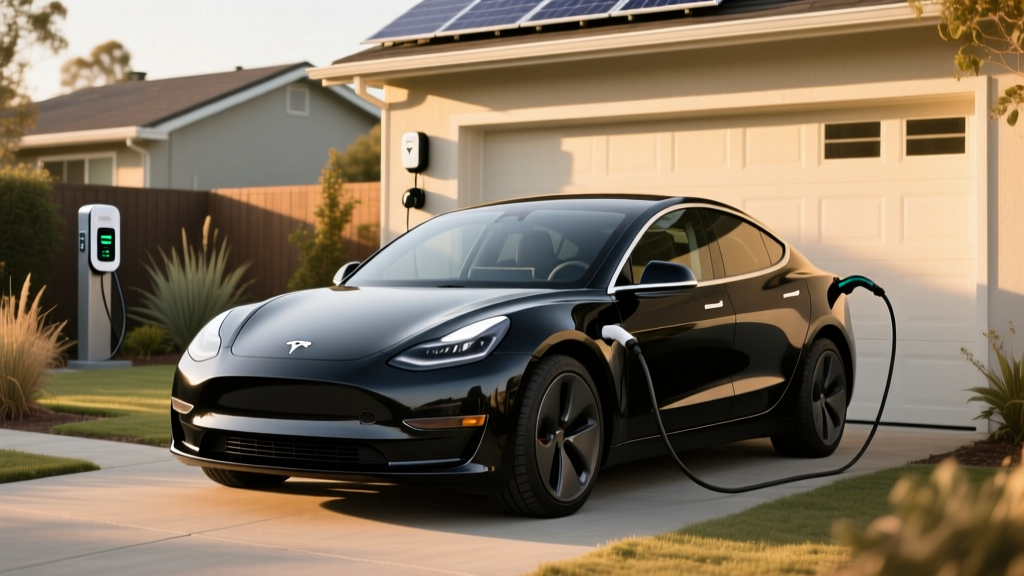
At home on a 240V/48A Level 2 charger, the Model 3 adds ~44 miles of range per hour — a full overnight session restores the entire battery. On DC fast charging, the RWD peaks at 170 kW (10–80% in ~25 minutes), while the Long Range and Performance peak at 250 kW (10–80% in ~21 minutes). Actual session times are longer due to charge-curve taper above 50%.
How much does the Model 3 cost after federal tax credits?
The RWD starts at $38,990. If you qualify for the full $7,500 §30D credit (subject to income limits, battery sourcing rules, and MSRP caps), the effective price drops to ~$31,490. However, credit eligibility is not guaranteed — verify on the IRS qualified vehicles page before purchasing. The credit can be applied as a point-of-sale discount at the dealer.
Is the Tesla Model 3 worth buying vs. competitors in 2026?
The Model 3 RWD offers the best range-per-dollar ratio in its class. Competitors like the Hyundai Ioniq 6 (361 mi EPA, physical stalk included), BMW i4 (lower range but more premium interior), and the upcoming refreshed Polestar 2 are strong alternatives. The Model 3 wins on Supercharger access and efficiency, but loses on physical controls and rear-seat comfort. If the missing turn signal stalk is a dealbreaker, the Ioniq 6 or i4 may suit you better.
Does the Model 3 qualify for the $7,500 federal EV tax credit?
It can — but eligibility depends on three factors: (1) your adjusted gross income (under $150K single / $300K joint), (2) the vehicle MSRP (under $55K for sedans — all Model 3 trims qualify), and (3) battery-component and critical-mineral sourcing thresholds that change annually. The LFP battery in the RWD trim uses CATL cells, and its credit eligibility may differ from the NMC Long Range. Always confirm current status on the IRS website.
Can I install a turn signal stalk on my Model 3 myself?
Technically, some hobbyists have attempted DIY retrofits using CAN bus translators and custom brackets, but no certified, commercially available kit exists as of 2026. This modification risks voiding your warranty, compromising steering-column safety integrity, and creating insurance liability. We do not recommend it. If the stalk is critical to your driving comfort, consider a competitor vehicle with a conventional column stalk.
Will Tesla bring back the turn signal stalk in a future update?
Tesla has not announced any plans to reintroduce a physical turn signal stalk. However, the company has reversed design decisions before (e.g., restoring radar sensors, adding ultrasonic sensors back to some models). A mid-cycle refresh could address this, but there is no confirmed timeline.