Tesla's 10-to-1 Stock Split: An EV Buyer's Primer
When Tesla executed its 3-for-1 stock split in August 2022, it brought shares under $300 and reignited retail interest. The conversation around a potential Tesla stock split 10 to 1 has persisted in investor forums and EV communities ever since, resurfacing periodically as TSLA's share price climbs. But for prospective Tesla buyers — not day traders — the real question isn't about share price. It's about what corporate financial moves signal for vehicle pricing, production scale, and the long-term viability of the brand you're about to drop $40,000+ on.
This article breaks down what a 10-to-1 split would actually mean for the EV market, then pivots to what matters more: the concrete specs, pricing, tax-credit eligibility, and ownership realities of Tesla's 2026 lineup. Whether you're cross-shopping a Model 3 against a Hyundai Ioniq 6 or weighing a Model Y against a Ford Mustang Mach-E, the numbers below are what determine your total cost of ownership — not how many shares Elon Musk controls.
How a 10-to-1 Stock Split Affects (and Doesn't Affect) EV Pricing
A stock split is a purely cosmetic financial event. If Tesla's board authorized a 10-to-1 split, each existing share would become ten shares at one-tenth the price. Market capitalization remains identical. No new capital is raised. No factory gets built. The Model 3's MSRP doesn't change because TSLA trades at $90 instead of $900.
What a split does signal is management's desire to broaden retail ownership and improve liquidity — a bet on sustained or growing demand. For EV buyers, the relevant takeaway is indirect: a company confident enough to split its stock is typically scaling production, which historically correlates with price reductions over time (Tesla cut Model 3 pricing multiple times between 2022 and 2024 as Fremont and Berlin output climbed).
The more direct factors affecting your wallet in 2026:
- IRS §30D federal tax credit — up to $7,500 at point of sale, subject to MSRP caps ($55,000 sedans, $80,000 SUVs/trucks), buyer income limits ($150K single / $300K joint), and battery critical-mineral sourcing requirements
- Tesla's own pricing adjustments — the company has historically used price as a demand lever, cutting or raising MSRP with little notice
- State incentives — vary widely by jurisdiction; check your state's energy office for current rebates
2026 Tesla Lineup: Range, Charging, and Performance Specs
Forget the stock ticker for a moment. Here's what you're actually buying when you configure a 2026 Tesla. These figures reflect the latest EPA data and manufacturer specifications.
| Spec | Model 3 Long Range AWD | Model Y Long Range AWD | Model S Long Range |
|---|---|---|---|
| EPA Range | 363 mi | 330 mi | 402 mi |
| Battery (usable) | ~79 kWh (NMC) | ~79 kWh (NMC) | ~95 kWh (NMC) |
| Drivetrain | Dual-Motor AWD | Dual-Motor AWD | Dual-Motor AWD |
| Horsepower | 384 hp | 384 hp | 670 hp |
| 0–60 mph | 4.2 sec | 4.8 sec | 3.1 sec |
| Max DC Fast Charge | 250 kW | 250 kW | 250 kW |
| 10–80% DC Time | ~25 min | ~25 min | ~30 min |
| Level 2 (11.5 kW) | ~44 mi/hr | ~44 mi/hr | ~44 mi/hr |
| MPGe (combined) | 132 MPGe | 122 MPGe | 120 MPGe |
| EPA Efficiency | 25 kWh/100mi | 28 kWh/100mi | 28 kWh/100mi |
Source: fueleconomy.gov and Tesla specifications.
EPA estimates assume a mix of city and highway driving at moderate temperatures. In real-world highway testing at 70+ mph, expect roughly 10–15% less than the sticker — so a Model 3 Long Range delivers approximately 310–325 miles on the highway. In cold weather (below 30°F), range can drop 20–30% due to battery chemistry limitations and cabin heating demands, potentially reducing the Model 3 to 250–290 miles. Tesla's heat pump (standard on all current models) mitigates this compared to resistive heating, but physics is physics. Plan charging stops around 200–220 miles of usable range in winter road-trip conditions.
Charging Speed: DC Fast Charging and Home Setup
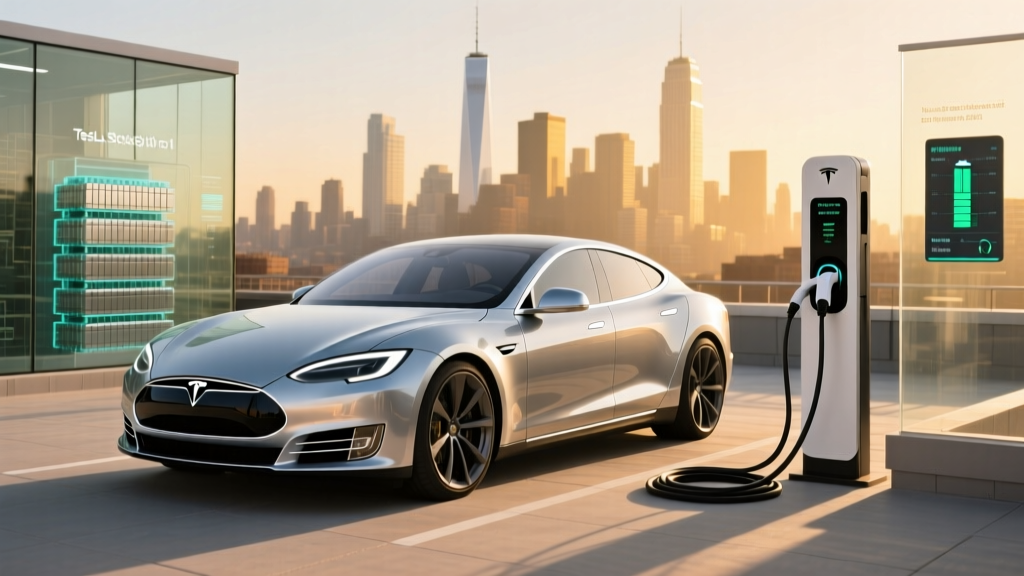
Tesla's Supercharger network remains the most reliable DC fast-charging infrastructure in North America, with over 6,000 stalls in the U.S. alone. Here's what charging actually looks like:
| Charging Level | Power | Speed (Model 3 LR) | Typical Use Case |
|---|---|---|---|
| Level 1 (120V) | ~1.4 kW | ~5 mi/hr | Emergency / overnight trickle |
| Level 2 (240V, 48A) | 11.5 kW | ~44 mi/hr | Home daily charging |
| DC Fast (Supercharger V3) | Peak 250 kW | ~175 mi in 15 min | Road trips |
Charging-curve reality: The 250 kW peak only holds at low state-of-charge (roughly 10–30% SoC). Above 50%, the rate tapers significantly, and above 80% it drops to under 50 kW. This is why the 10–80% time (~25 minutes) is the meaningful metric, not peak kW. For road-trip planning, Tesla's navigation system preconditions the battery when a Supercharger is set as your destination — warming the pack to optimize charge speed. Skip preconditioning and you'll see significantly slower rates, especially in cold weather.
Home charging note: Tesla's Wall Connector ($420) delivers up to 11.5 kW on a 60-amp circuit (48A continuous). Installation typically runs $500–$2,000 depending on panel proximity and whether your home's electrical panel needs upgrading from 100A to 200A service — a $1,500–$3,000 job on its own. Hire a licensed electrician; don't guess on wire gauge.
Since late 2024, Tesla's North American Charging Standard (NACS) connector has become the industry standard, with Ford, GM, Rivian, Hyundai, and others adopting it. Tesla Superchargers now serve non-Tesla EVs at many locations via built-in adapters or Magic Dock connectors, though Tesla owners still get priority pricing.
Pricing, Tax Credits, and Total Cost of Ownership
Tesla's pricing has been volatile — the company adjusts MSRPs more frequently than legacy automakers. As of early 2026, here's where the core lineup stands before incentives:
| Model / Trim | Base MSRP | §30D Credit Eligible? | Effective Price (est.) |
|---|---|---|---|
| Model 3 RWD | $38,990 | Partial — depends on battery sourcing & buyer income | $31,490–$38,990 |
| Model 3 Long Range AWD | $45,490 | Partial — same sourcing/income rules | $37,990–$45,490 |
| Model Y Long Range AWD | $48,990 | Partial — SUV cap $80K; sourcing rules apply | $41,490–$48,990 |
| Model S Long Range | $79,990 | Yes (under $80K sedan cap) — sourcing/income rules apply | $72,490–$79,990 |
Critical tax credit caveats (IRS §30D, 2026 rules):
- Income caps: Modified AGI must not exceed $150,000 (single), $225,000 (head of household), or $300,000 (joint filing)
- MSRP caps: $55,000 for sedans (Model 3), $80,000 for SUVs and trucks (Model Y, Model X, Cybertruck)
- Battery sourcing: The full $7,500 requires both critical-minerals AND battery-component requirements to be met. Tesla has shifted some sourcing to comply, but eligibility can change — always verify on IRS.gov before purchasing
- Point-of-sale transfer: You can transfer the credit to the dealer at purchase, reducing your out-of-pocket cost immediately rather than waiting for a tax return
Tesla's eligibility for the full credit has fluctuated as battery-sourcing rules tightened in 2024–2025. Confirm current status at fueleconomy.gov before finalizing your order.
Interior Space, Tech, and Driver-Assist Systems
Cargo and passenger volume:
- Model 3: 23 cu ft trunk + rear seats fold; 42.3 in front legroom, 35.3 in rear. The "Highland" refresh (introduced 2024) added ventilated front seats, rear-seat touchscreen, and improved sound insulation.
- Model Y: 30 cu ft behind second row, 72 cu ft with seats folded; optional third row (best for children only). 41.8 in front legroom, 41.6 in rear — genuinely spacious for a crossover.
- Model S: 28 cu ft trunk + frunk; 42.4 in front legroom, 35.4 in rear. The most refined interior in the lineup, though it still trails Mercedes EQS in material quality.
Infotainment: All Teslas run a proprietary 15.4-inch touchscreen (17-inch in Model S/X) with no Apple CarPlay or Android Auto. Navigation, media, and vehicle controls are fully integrated. The system is fast and well-designed, but the lack of phone projection remains a dealbreaker for some buyers accustomed to CarPlay.
Tesla's Autopilot (standard) and Full Self-Driving Supervised ($8,000 option) are both SAE Level 2 driver-assistance systems. This means the driver must remain fully engaged, hands on or near the wheel, and eyes on the road at all times. FSD Supervised handles city streets, stoplights, and highway lane changes more capably than basic Autopilot, but it is not autonomous. Only Level 4 services like Waymo operate without driver supervision. Tesla's steering-wheel torque monitoring has drawn NHTSA scrutiny; always maintain active attention regardless of which system is active.
Standout tech: Tesla's over-the-air update cadence remains unmatched — meaningful feature additions (improved regen profiles, UI refinements, entertainment apps) arrive regularly without dealer visits. The Sentry Mode dashcam system, Dog Mode climate control, and built-in trip planner with charging integration are practical daily-use features that competitors are still catching up to.
Notable drawbacks: Minimalist interior means no physical buttons for climate, mirrors, or glovebox — everything routes through the screen. Panel gap quality has inconsistent across Fremont vs. Berlin vs. Shanghai builds. Insurance premiums for Teslas tend to run 15–30% higher than comparable EVs due to repair costs and collision data.
Pros, Cons, and Who Should Buy a Tesla in 2026
- Best-in-class Supercharger network (6,000+ U.S. stalls, high uptime)
- Class-leading efficiency (25–28 kWh/100mi) maximizes range per kWh
- Over-the-air updates add features post-purchase
- Strong resale value relative to most EVs
- NACS connector is now the industry standard
- No Apple CarPlay or Android Auto
- FSD Supervised is expensive ($8,000) and still Level 2
- Insurance premiums above segment average
- Touchscreen-only controls frustrate some drivers
- Tax credit eligibility uncertain due to battery-sourcing rules
Who this EV suits best:
- Commuters with home charging: The Model 3 RWD at ~$39K (potentially ~$31.5K after credit) is one of the lowest-cost ways into a 270+ mile EV with access to the best charging network. Ideal if you can install a Level 2 charger at home.
- Families needing cargo space: The Model Y remains the default EV crossover for families — 30 cu ft of cargo, available third row, and road-trip range. Cross-shop against the Hyundai Ioniq 5 (faster 10–80% charging at 350 kW on 800V architecture) and Ford Mustang Mach-E.
- Road-trip warriors: Tesla's Supercharger integration — automatic routing, preconditioning, and payment — still makes multi-state EV travel easier than any competitor, even as CCS networks expand.
- Performance seekers: Model S Plaid (1,020 hp, 1.99 sec 0–60) is a supercar-killer at $89,990, though it sits above the §30D MSRP cap for sedans.
Tesla vs. Key Competitors: Is It Worth Buying?
The Tesla-buying decision in 2026 isn't the default it was in 2020. The competitive landscape has matured:
| Factor | Tesla Model 3 LR | Hyundai Ioniq 6 SE | BMW i4 eDrive40 |
|---|---|---|---|
| EPA Range | 363 mi | 361 mi | 301 mi |
| DC Fast Charge Peak | 250 kW | 350 kW (800V) | 200 kW |
| 10–80% Time | ~25 min | ~18 min | ~31 min |
| Base MSRP | $45,490 | $42,500 | $52,200 |
| Apple CarPlay | No | Yes (wireless) | Yes (wireless) |
| Charging Network | Supercharger (NACS) | CCS → NACS adapter | CCS → NACS adapter |
The Ioniq 6 charges faster on paper (800V architecture hits 350 kW), but real-world 350 kW chargers are sparse compared to Tesla's ubiquitous 250 kW V3 Superchargers. The BMW i4 offers a more traditional luxury experience with physical controls and CarPlay, at a price premium. Tesla wins on network access and efficiency; Hyundai wins on charging speed and CarPlay; BMW wins on interior refinement.
Frequently Asked Questions
Does a Tesla stock split 10 to 1 affect vehicle pricing?
No. A stock split changes the per-share price and number of outstanding shares, not corporate revenue or vehicle MSRPs. Tesla's pricing is driven by production costs, demand, and competitive positioning — not share price. However, splits often signal management confidence in scaling, which can correlate with future price adjustments.
What is the real-world range of a 2026 Tesla Model 3?
The EPA rates the Model 3 Long Range AWD at 363 miles. In real-world highway driving at 70–75 mph, expect approximately 310–325 miles. In cold weather below 30°F, plan for 250–290 miles depending on cabin heating use and driving style. Tesla's heat pump helps, but cold-weather range loss is unavoidable with current lithium-ion chemistry.
How fast does a Tesla charge at home and on the road?
At home on a Level 2 Tesla Wall Connector (11.5 kW, 48A), you'll add roughly 44 miles of range per hour — enough to fully recharge overnight. On a V3 Supercharger (peak 250 kW), the 10–80% charge takes approximately 25 minutes, adding roughly 175 miles in 15 minutes at optimal conditions. Charge speed tapers significantly above 80% SoC.
Does the Tesla Model 3 or Model Y qualify for the federal EV tax credit?
Both models are potentially eligible for up to $7,500 under IRS §30D, but eligibility depends on three factors: your income (must be under $150K single / $300K joint), the vehicle MSRP (under $55K for sedans, $80K for SUVs), and battery critical-mineral/component sourcing (rules that have tightened since 2024). The credit can be transferred at point of sale. Always verify current eligibility on IRS.gov before ordering.
Is Tesla's Full Self-Driving actually self-driving?
No. FSD Supervised is an SAE Level 2 driver-assistance system. It handles highway lane changes, city-street navigation, and stoplight recognition, but the driver must remain fully attentive and ready to take over at any moment. It is not autonomous. Only Level 4 robotaxi services (Waymo, Zoox in limited areas) operate without a driver in the loop.
Is buying a Tesla worth it vs. competitors in 2026?
It depends on your priorities. If charging-network reliability, efficiency, and OTA updates matter most, Tesla still leads. If you want faster DC charging (800V architecture), wireless CarPlay, or a more traditional interior, the Hyundai Ioniq 5/6 or Ford Mustang Mach-E are strong alternatives. For luxury, the BMW i4 and Mercedes EQB compete. Test-drive at least two options and compare total cost of ownership — not just MSRP — including insurance, charging costs, and expected depreciation.