Why Cybertruck Safety Is Under the Microscope
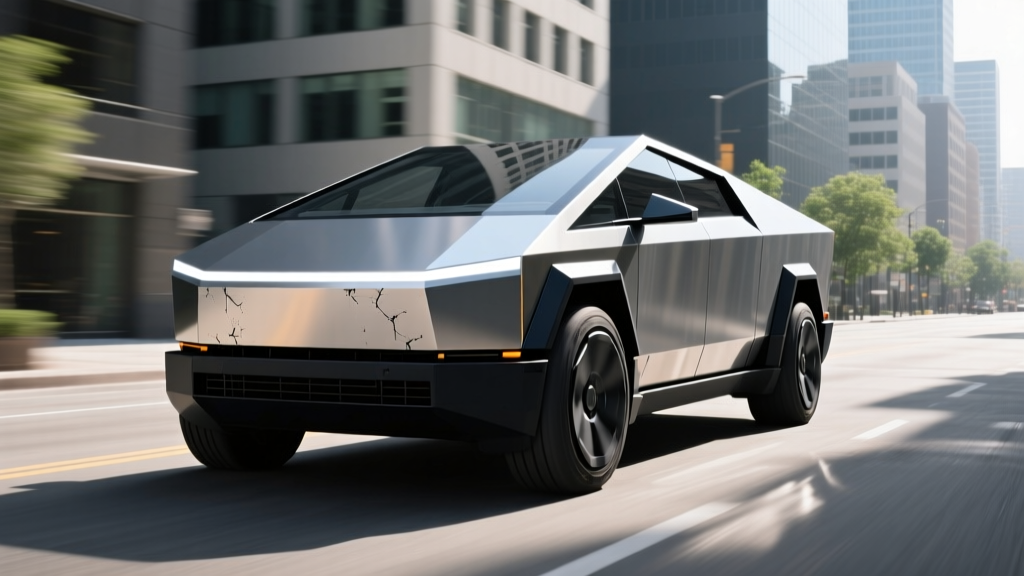
The Tesla Cybertruck's angular stainless-steel exoskeleton, massive curb weight, and blistering acceleration make it one of the most polarizing vehicles on the road. Since deliveries began in late 2023, searches around cybertruck deaths and crash safety have persisted — not because the truck has a uniquely high fatality rate, but because its unconventional design, 6,800+ lb GVWR, and 0-60 times rivaling sports cars raise legitimate questions about occupant and bystander protection.
This review separates verified incident data from internet speculation, then delivers the full ownership picture: EPA range, charging speed, pricing, tax-credit eligibility, and how the Cybertruck stacks up against the Ford F-150 Lightning and Rivian R1T for buyers weighing safety alongside capability.
What We Know About Cybertruck Deaths and Incidents
As of the first quarter of 2026, publicly confirmed Cybertruck-involved fatalities remain extremely low in absolute numbers — consistent with the vehicle's limited production volume relative to mainstream pickups. Several high-profile incidents have drawn media attention:
- Single-vehicle crashes: A small number of reported fatalities involved high-speed single-vehicle impacts, often with fixed objects. The Cybertruck's extreme mass (curb weight ~6,600–6,800 lbs depending on trim) means kinetic energy at speed is substantially higher than a typical mid-size sedan.
- Pedestrian/cyclist risk: The blunt, flat front-end design has drawn scrutiny from the IIHS and European safety advocates, who note that rigid, non-deformable hood structures transfer more energy to pedestrians in a collision. The U.S. lacks the pedestrian-safety crash-test mandates common in Europe, so domestic ratings don't penalize this.
- Recall history: Tesla issued multiple Cybertruck recalls through 2024–2025, including an accelerator-pedal trim cover that could dislodge and trap the pedal (NHTSA Recall 24V-288), and a drive-inverter fault that could cause a loss of propulsion. Recalls were addressed via service campaigns and OTA updates.
- Fire incidents: Isolated post-collision thermal events have been reported, consistent with high-energy NMC battery packs in severe structural impacts. No pattern of spontaneous fire has emerged in NHTSA data.
For context, the NHTSA recall database and IIHS remain the authoritative sources. Searches of NHTSA's complaints portal show dozens of filings — mostly related to build quality, panel gaps, and the steer-by-wire system — but not a disproportionate fatality cluster relative to vehicles sold.
2026 Tesla Cybertruck: Full Spec Sheet
| Spec | AWD | Cyberbeast |
|---|---|---|
| EPA Range | 340 mi | 320 mi |
| Battery (usable) | ~123 kWh, NMC (4680 cells) | ~123 kWh, NMC (4680 cells) |
| Horsepower | 600 hp | 845 hp |
| 0-60 mph | 3.9 sec | 2.6 sec |
| Drivetrain | Dual-motor AWD | Tri-motor AWD |
| Max DC Fast Charge | 250 kW (peak) | 250 kW (peak) |
| 10–80% DC Time | ~28 min | ~28 min |
| Level 2 Home Rate | 11.5 kW / ~34 mi/hr | 11.5 kW / ~34 mi/hr |
| Efficiency | 58 MPGe / 58 kWh/100mi | 54 MPGe / 62 kWh/100mi |
| Towing Capacity | 11,000 lbs | 11,000 lbs |
| Bed Length / Volume | 6 ft / 67 cu ft | 6 ft / 67 cu ft |
| Base MSRP | $79,990 | $99,990 |
| Battery/Drive Warranty | 8 yr / 120,000 mi | 8 yr / 120,000 mi |
Charging Speed: DC Fast, Level 2, and the 4680 Curve
The Cybertruck uses Tesla's 4680 structural battery pack with NMC chemistry, optimized for power delivery over pure energy density. On a V3 Supercharger or equivalent 250 kW DC fast charger, the pack peaks near 250 kW but tapers meaningfully above 60% SoC — the 10–80% time of ~28 minutes is respectable but not class-leading versus the F-150 Lightning's extended-range pack on 350 kW chargers.
| Level | Power | Miles Added per Hour | Use Case |
|---|---|---|---|
| Level 1 (120V) | ~1.4 kW | ~4 mi/hr | Emergency only |
| Level 2 (240V/48A) | 11.5 kW | ~34 mi/hr | Overnight home |
| DC Fast (V3 SC) | 250 kW peak | ~200 mi in 15 min | Road trips |
Preconditioning is automatic when a Supercharger is set in navigation — critical for achieving peak charge rates, especially in cold climates. The Cybertruck's NACS port is native; no adapter is needed for Tesla's Supercharger network, which remains the most reliable DC network in the U.S.
Design, Safety Tech, and Notable Drawbacks
The Cybertruck's 30X cold-rolled stainless-steel body panels are dent-resistant but complicate collision repair — Tesla has restricted body-shop certification, and insurance claims data reflects higher repair costs. The 48-volt electrical architecture and steer-by-wire system eliminate the mechanical steering column, which Tesla argues improves crash-energy management by removing a rigid intrusion path.
Driver Assistance
Standard Autopilot includes adaptive cruise and lane-centering. Full Self-Driving (Supervised) remains a SAE Level 2 system — the driver must monitor the road at all times. It is not autonomous driving.
Standout Features
- Steer-by-wire with rear-wheel steering (tight turning circle for a full-size truck)
- Adaptive air suspension with 16" of ground clearance in Off-Road mode
- Powershare: up to 11.5 kW of V2H/V2L bi-directional output
- Vault bed with motorized tonneau, 2,500-lb payload
- 18.5" front touchscreen, 9.4" rear screen
Notable Drawbacks
- Visibility compromised by thick A-pillars, small rear window, and bed-rail height
- Build-quality variability (panel gaps, trim issues reported in early builds)
- Insurance premiums 30–50% above F-150 Lightning per industry data
- No Apple CarPlay / Android Auto
- Frunk space modest (~7 cu ft) compared to Lightning's massive front trunk
Pricing, Trims, and Federal Tax Credit Eligibility
| Trim | MSRP | §30D Credit Eligible? | Effective Price* |
|---|---|---|---|
| AWD | $79,990 | Yes (truck MSRP cap $80k) | ~$72,490 |
| Cyberbeast | $99,990 | No (exceeds $80k truck cap) | $99,990 |
*Assumes buyer meets all §30D requirements. Credit applied at point of sale per IRS rules.
Federal EV Tax Credit Checklist (§30D, 2026)
- Vehicle must be a qualifying truck (MSRP cap: $80,000) — only the AWD trim qualifies
- Buyer AGI limits: $150k single / $225k HOH / $300k married filing jointly
- Battery critical-mineral and component sourcing thresholds must be met (Tesla sources vary by build date)
- Vehicle must be assembled in North America (Cybertruck: Austin, TX — qualifies)
- Credit is transferable to dealer at point of sale as of 2024+ tax years
- Verify current eligibility at IRS.gov and fueleconomy.gov — rules shift annually
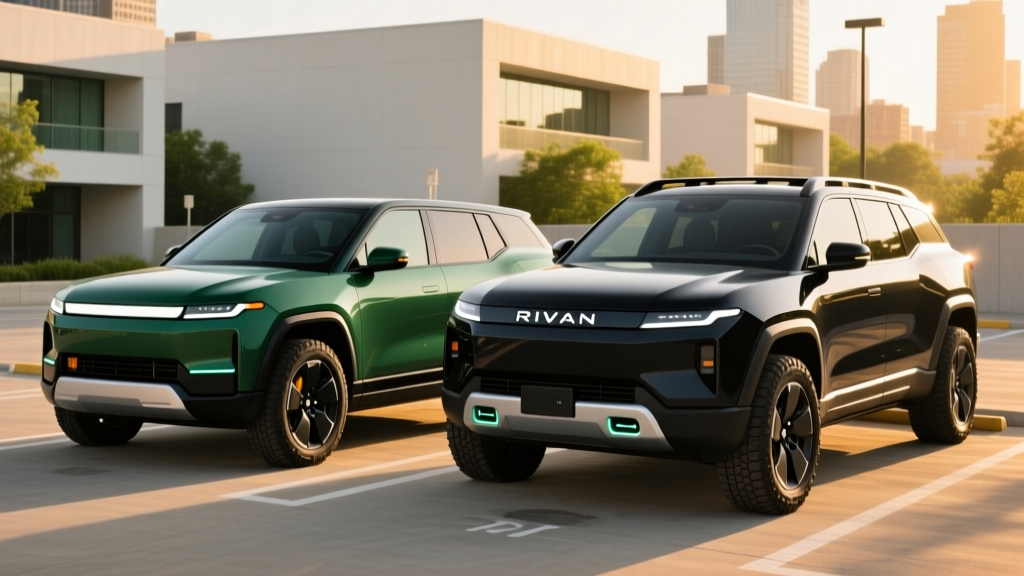
Cybertruck vs. F-150 Lightning vs. Rivian R1T
| Attribute | Cybertruck AWD | F-150 Lightning Ext. Range | Rivian R1T Dual-Motor Max |
|---|---|---|---|
| EPA Range | 340 mi | 320 mi | 410 mi |
| Peak DC Charge | 250 kW | ~195 kW | ~220 kW |
| 0-60 mph | 3.9 sec | 3.8 sec | ~3.5 sec |
| Towing | 11,000 lbs | 10,000 lbs | 11,000 lbs |
| Base MSRP | $79,990 | ~$77,000 | ~$87,000 |
| §30D Eligible? | AWD only | Select trims | Select trims |
Choose F-150 Lightning if: You prioritize conventional truck ergonomics, dealer-service access, a massive frunk, and lower insurance premiums.
Choose Rivian R1T if: Range, adventure-oriented design (gear tunnel), and off-road capability outweigh the higher entry price and smaller service network.
Who the Cybertruck Actually Suits
Best for: Tesla-ecosystem owners wanting a performance truck with Supercharger access, home-backup power (Powershare), and distinctive styling. Towing-heavy users benefit from the 11,000-lb rating, but range while towing is steep — plan charging stops accordingly.
Poor fit for: Fleet buyers needing predictable service SLAs, budget-conscious shoppers (insurance alone adds ~$1,500–$2,500/yr vs. conventional trucks), and buyers in regions without robust Supercharger coverage.
- Best-in-class Supercharger access
- Extreme acceleration and towing
- 11.5 kW bi-directional power
- Stainless body resists dents/corrosion
- OTA updates add features post-purchase
- High insurance and repair costs
- Poor rear visibility
- Cyberbeast ineligible for §30D credit
- Real-world range drops sharply towing/in cold
- Build-quality inconsistency early on
Frequently Asked Questions
How many Cybertruck deaths have been confirmed?
No authoritative aggregate fatality count specific to the Cybertruck has been published by NHTSA as of early 2026. Isolated fatal crashes have been reported in news outlets, but absolute numbers remain low relative to the vehicle's production volume. Always verify against NHTSA data rather than viral claims.
Is the Cybertruck safe in a crash?
Tesla claims a rigid stainless-steel exoskeleton and 48V architecture improve crashworthiness, but full IIHS and NHTSA ratings had not been fully published at last check. The lack of deformable front structures raises pedestrian-safety concerns that U.S. tests don't yet evaluate.
Does the Cybertruck qualify for the $7,500 federal tax credit?
The AWD trim (MSRP $79,990) qualifies under the §30D truck cap of $80,000, provided the buyer meets income limits and battery-sourcing requirements. The Cyberbeast at $99,990 exceeds the cap and is ineligible. Confirm current rules at IRS.gov.
What is the real-world range of the Cybertruck?
EPA rates the AWD at 340 miles. Expect ~270–290 miles at 75 mph highway, ~230–250 miles in sub-freezing weather, and roughly 150–200 miles when towing at or near max capacity.
How fast does the Cybertruck charge at home and on the road?
Level 2 home charging at 11.5 kW adds ~34 miles per hour (full charge overnight). DC fast charging peaks at 250 kW, reaching 10–80% in roughly 28 minutes with preconditioning.
Is the Cybertruck worth buying over the F-150 Lightning?
If Supercharger access, bi-directional home power, and acceleration are top priorities, yes. If dealer service, lower insurance, and a traditional truck layout matter more, the Lightning is the more pragmatic choice.
Sources: fueleconomy.gov, NHTSA, IIHS, IRS §30D guidance, Tesla.com Cybertruck specs. Pricing and credit rules reflect 2026 model-year data; verify before purchase.